Connect with us

Technology

Innovation at work

Published

on

Shares

Innovation is driving advancement of technologies and growth of the cement packaging segment globally. India must be able to take part and reap benefits from them.
While innovation is changing the way every work is done in every field of activity, cement packaging cannot be too different. Though there is hardly any change in the material consumed for manufacturing cement packaging, the new technologies and processes are making them high on productivity, safer, quicker to fill, load and re-load, leak-proof and amenable to automation, when compared to yester years when it was dangerous, hazardous and labour-intensive.
Bags are a common way of distribution in the industry, accounting for about 60 per cent of the product shipped to consumers/users. This also holds true for other developing countries, according to industry sources, which put the figure at 45 per cent on an average. Bulk packaging though is yet to catch up on a large scale in India, it is being patronised by some major cement manufacturers and bulk consumers.
Though there are several manufacturers of cement packaging bags in the country, most of the highly advanced automated machinery and systems are being imported from countries like Germany, Italy, Switzerland, the US, Taiwan, etc.
Innovation has been the key for sustained growth of global players like Windm?ller & H?lscher during the recent years, particularly when it has introduced hot air to seal the moisture-proof sacks that used to be closed with adhesives earlier, thereby reducing production costs and technical process limitations. Another global player, FLSmidth offers complete automation solutions by integrating various product types with that of fully automated packing plants, automating even loading and unloading activities.
Packing plants have not only become part of cement production lines, but also grinding stations or cement terminals. A single packing line produces up to 15 to 50 million bags per year based on the material used and the process adopted. That way, packing plants have evolved into complex, fully automated operations, driven by innovation in the recent years.Options
There are three options for cements sacks: Paper, woven and film. "Paper sacks are a comparatively cost-effective form of packaging made from a renewable source," says spokesperson of Windm?ller & H?lscher, which claims to be the market leader in the field of paper sack systems, with over 90 per cent share globally.
Woven polypropylene (PP)/plastic sacks are very lightweight and tear-resistant, which is particularly useful if the sacks are to be used in tougher environments. So, many Indian companies have embraced the option till the regulatory intervention, citing higher loss of cement in wrong handling. But they face a challenge – necessary deaeration of product.
A natural side effect of packing cementitious material into a polypropylene bag is trapped air. In order to make PP packaging a viable option for cement, this air needed to be managed back out of the process to achieve a uniform and stable
pack, which is a crucial ingredient for efficient palletisation. Achieving this, while maintaining the intended waterproof credentials of polypropylene and maintaining process speed is no mean task. However, this has been enabled by the latest technologies.
Film valve sacks, on the other hand, provide excellent moisture protection, and advertising on them is more effective as they hold print well, a factor which is key, particularly in the field of premium packaging.
"Valve sacks have the important benefit of being able to be filled on nozzle packers, which ensure a high filling output. Valve sack concepts are available in all three major materials (paper, pp-woven, PE-film). Important factors regarding filling speed and automated handling are deaeration performance and form stability," says W&H.
Packaging in cement production has to fulfil multiple needs like moisture protection, extended shelf-life, clean appearance and good handling, says W&H, while explaining the prerequisites for a cement bag. "Better stackability, pilfer-resistance, anti-counterfeit solution and better aesthetics are some of the reasons why the hot air sealed woven sacks have been preferred in the Indian market," added the W&H spokesperson. Besides, less flying of packaged product also helps cement users save cost. These benefits also help cement companies create a better brand image in the market-domestic or export.Store appearance
Look and feel of packaging, which was till recently confined to consumer goods packaging, is becoming an important parameter while selecting the medium of packaging even for the cement industry. Their importance is gaining prominence when it comes to product placement and communication to the end-customer, particularly about the sustainability angle of the product and/or its special strengths and features. As such, sacks need to present all marketing messages in an attractive way.
"Currently additional packaging features like carrying handle or easy opening feel an increasing market demand as those features present an added value regarding sack handling for the end-user," says W&H.
W&H is also seeing acceptance in India of high-end Biaxially-Oriented Polypropylene (BOPP) laminated hot air sealed block bottom bags, which are much more expensive than the conventional sewn bags, and are amenable for printing very high quality photographic images. New automatic range
Automation is catching up with packaging processes of cement industry, of late. The technique of making an apparatus, a process, or a system operate automatically as it is described is being opted for by the industry for taking advantage of its well-known attributes – increased productivity, more efficient use of materials, better product quality, improved safety and reduced factory lead times. The packaging automation has extended to loading of closed top and open top trucks or containers by now.
"In India, hot air sealed block bottom bags are the most used for high automation production. The benefit for bag producers is lower manpower requirement for producing as these bags are produced with high speeds and advance automation," says the W&H spokesperson.
AD PROTEX valve bags produced on CONVERTEX platform by W&H ideally combine minimum raw material usage, adhesive-free sack production and unequalled functionality of their box-shaped design. As a result, they are made in a particularly economical way, but can also be filled and palletized similarly as the conventional pasted valve bags. "Our new production line for cement valve packaging ensures the production of paper sacks which fulfil the requirements for automated high speed filling," the company said.
Packaging for dry powdered materials like cement has changed little in the last 40 years leaving the end user to cope with the problems associated with the industry standard paper valve sack. As a result problems such as dust, spillage and a relatively high wastage return rate caused by the ingress of water brought about by poor storage conditions have largely remained unchallenged.
However, domestic packaging manufacturer, Arodo has introduced it brand of vacuum bagging system that produces fully deaerated plastic packs that don’t feature perforations of any kind, addressing the concerns of cement manufacturers and their customers. It is projected as a waterproof and tamper-proof cement pack.
"The absence of perforations allows each individual pack to be stored or placed in the most arduous of weather conditions without risk of spoiling the product through water ingress," says Vikas Marwaha, Director, Arodo India Pvt Ltd. These packs have been placed outside and completely underwater for weeks before retrieving and using the product as if it had been freshly packed, Marwaha claims.
Windm?ller & H?lscher has developed CONVERTEX, which heat seals woven PP cross bottom bags and thus eliminates the need of glue for this type of bags. "During the last 10 years the output of the bottomer was more than doubled: from 60 bags per minute to 140 in the last model. This speed represents the technological leadership in this type of equipment," W&H said, stating that today, CONVERTEX forms the backbone of its extensive portfolio of the woven PP business.
High-quality PP tapes with tenacity up to 7 g/den and indexed micro-perforation provide the technological tools to be able to produce e.g. cement bags with a weight of 65 grams instead of the current global market standard of 80 grams. Drop tests with the LS Bags are done – with the result that LS bags easily excel conventional bags, W&H claims.
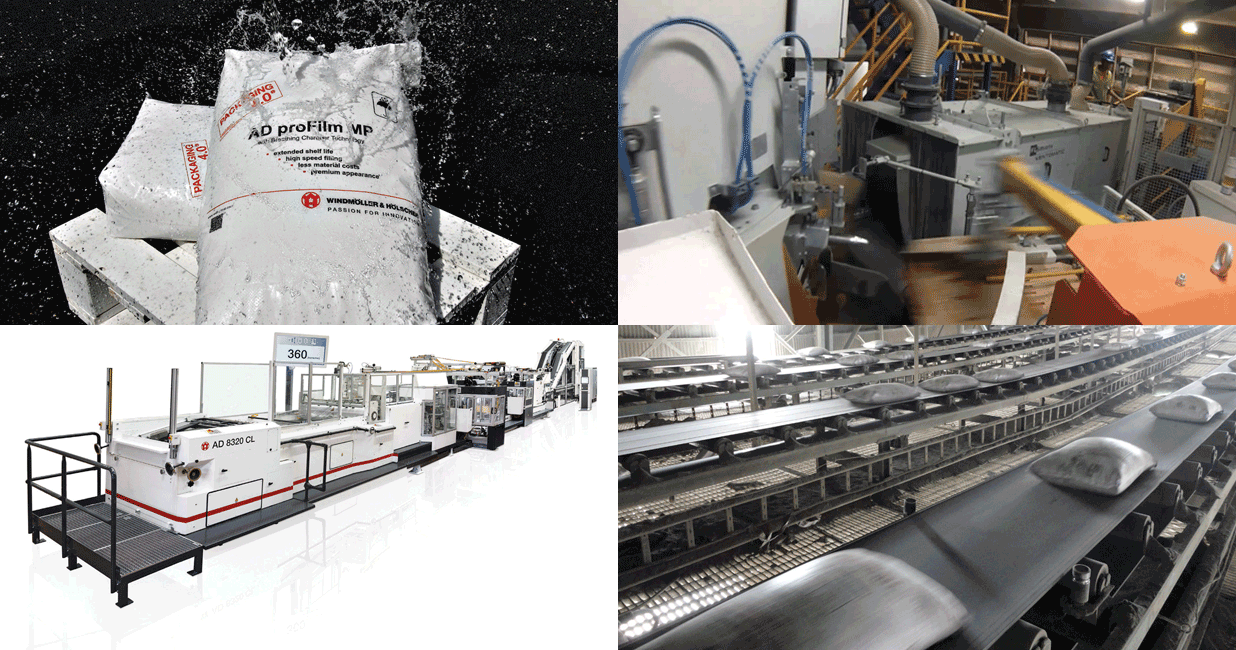
The AD proFilm MP sack, launched in 2015, is unusual in the sense that it uses hot air to seal the sacks. This means that it does not require adhesives, which can be the source of significant production costs and technical process limitations. It is manufactured on the AD PLASTIC 2 valve bottomer.
When the company was developing the new AD proFilm MP film valve sack, it chose to focus on two key factors: high moisture protection (MP = moisture-proof), and extending the product’s shelf life. It achieved these through the use of its innovative Breathing Chamber Technology – a ventilation chamber along the longitudinal seam of the sack. "This technology means that effective ventilation and high moisture protection are no longer mutually exclusive", explains Uwe K?hn, Head of Processing Products at W&H.
In a presentation made on June 21, 2017, Francesco Ferrandico, President-FLSmidth Ventomatic Cement Packaging said that the company’s automation systems range extends beyond filling of sacks to loading into trucks – open or closed. "FLSmidth Ventomatic provides the key product types and integrates them for fully automated packing plants," Ferrandico said while explaining about different packaging processes that include electronic rotary and inline packers; empty bag applicators; palletizing systems; loaders for closed trucks/containers; and loaders for open top trucks.
FLSmidth claims that its loaders for closed trucks/containers were the first full automatic pallet loading system in the market. Truck/container loaders significantly increase safety level and productivity and they do not use forklifts and relevant operators, it said. Its electronic rotary and inline packer’s equipment for filling bulk cement from silos into bags have an output from 60 tons/h up to 250 tons/h.
Depending on level of automation, packing plants consist of 2 – 8 packing lines, and at full automation, reduces required manpower per shift from 12 to 2 when going from complete manual to automation packing, but with the same output, FLSmidth added.Cementing growth
W&H has seen a huge growth in consumption of hot air sealed woven sacks in Indian market with several plants running already and more on order. It has also seen a trend in the market of use of high-end Biaxially-Oriented Polypropylene (BOPP) laminated hot air sealed Block Bottom bags. "These bags are much more expensive than the conventional sewn bags, but are finding good acceptance in the Indian market. These bags can be printed with very high quality photographic images," W&H spokesperson said. We also expect increase in consumption of multiwall paper bags in the Indian market. The reasons are very interesting, innovations like high strength paper and water soluble paper done by paper industries.
As packaging industry’s growth is tied to the Indian economy and demand for cement and cement products, growth in these two elements are of critical importance for sustainability and growth of packaging industry in the country. Though the current trends in cement demand do not augur well for the packaging industry, the Union Budget released recently have some good news to bask under.
During the first eight months of FY2018 (2017-18), cement production witnessed a marginal growth of 0.6 per cent at 190.0 million MT compared to 188.8 million MT during the same period the previous year, leading rating agency ICRA said, citing various factors like weak real-estate activity, sand shortage and issues related to implementation of GST as reasons. Based on the current trend, it projected that cement demand is likely to report a modest demand growth of around 2 percent in FY2018.
In a pre-budget (January 31, 2018) analysis, Sabyasachi Majumdar, Senior Vice President & Group Head, ICRA Ratings, said "Going forward, the demand growth is likely to be driven by a pick-up in the housing segment – primarily affordable and rural housing, and infrastructure segment – primarily road and irrigation projects. However, new project announcements from the private sector continue to remain weak and revival of public-private partnership is crucial to improve the pace of infrastructure development."
"ICRA expects the capacity overhang and moderate demand growth to continue to keep the industry’s capacity utilisation level between 60-65 per cent over the medium term," Majumdar added.
However, the Union Budget 2018-19 released on February 1, 2018, has some good news for the cement industry. The move to boost the capital outlay of Pradhan Mantri Awas Yojana (housing scheme) -Urban (PMAY-U) five-fold to Rs 31,500 crore, will aid some recovery in the otherwise muted urban-housing demand, which accounts for 30 per cent of cement demand, said leading rating firm, CRISIL in a post-budget report. Besides, increase in outlays for the Ministry of Road Transport and Highways (MoRTH) and Railways by 11 per and 22 per cent respectively are expected to impact cement demand positively.
However, CRISIL had added a word of caution, when it said, "Healthy budget outlay for cement-intensive infrastructure segments like roadways, irrigation and railways should cement growth (infrastructure share estimated at 20 per cent). However, achievement of budgeted outlay to be key monitorable as some shortfall was observed in the previous fiscal."
There is a marginal negative stroke for the sector from the budget in the form of social welfare surcharge of 10 per cent on customs duty, which replaces the earlier 3 per cent education cess on custom duty of all imports. This will particularly affect the advanced packaging equipment imports.Looking ahead
Innovations are driving advancement of technologies and growth of the cement packaging segment globally over the recent years. India being one of the major producers of cement has to make inroads into the top echelons of the sector by increasing spending on research and development and entering into joint ventures with major global manufacturers to lower our import dependency in the long run.
Major cement manufacturers like UltraTech Cement, ACC, India Cement and Ambuja have to take the lead in this initiative. This is an imperative when all the major manufacturers have to take advantage of latest technologies and improve their global competitiveness. Full automation may come in handy in this regard by boosting productivity and quality. Reduction of manpower may not be as important for India as it is for many other countries. Labour being cheaper in the country, the companies have to weigh the social impact of full automation in comparison with social benefit of utilising the cheap manpower, if other parameters like quality and productivity are not affected.
Adoption of advanced technologies also means guarding against health hazards for employees and stakeholders, which will lead to attraction and retention of talent, a critical resource for success of any business. It will also lead to optimisation of costs and leads to higher competitiveness, which are essential for the prosperity of companies and the country.– BS SRINIVASALU REDDY
Factors to be considered for best packaging
The factors one should consider while searching for the best packaging production are:

  • Sack geometry
  • Sack converting
  • Sack design
  • Appearance
  • Stack design

Each aspect can be more or less important depending on the region and market the customer is looking for. Furthermore, different applications, availability of the respective materials, or even regional differences, sometimes with historical root causes may influence the decision. The supplier must be able to provide machines for the production of each sack type and after installation service.
Windm?ller & H?lscherCritical success factors in India
The following are the critical success factors (CSFs) that determine the future of a company or business, particularly for a player in the packaging equipment industry in India:

  • Technology
  • Price
  • Delivery
  • Performance standards
  • Cost of equipment, and
  • Low running cost
  • Possible upgrades to the product and
  • Aftersales/installation service
  • Compiled from different sources

Growth through productivity: FLSmidth CARICATECHTM automatic truck loader

  • Innovative development for loading all type of bags on all kind of trucks
  • Bag layers are picked up by a fork with a special roller way (no vacuum system required) while maintaining the traditional loading from the top Addresses trend of productivity improvements through automation in developing markets
  • CARICATECHTM replaces existing loading equipment without major process changes or rebuilds – targeting upgrades of existing packing lines


Continue Reading
Click to comment

Leave a Reply

Your email address will not be published. Required fields are marked *

Concrete

Reimagining Logistics: Spatial AI and Digital Twins

Published

on

By

Shares

Digital twins and spatial AI are transforming cement logistics by enabling real-time visibility, predictive decision-making, and smarter multi-modal operations across the supply chain. Dijam Panigrahi highlights how immersive AR/VR training is bridging workforce skill gaps, helping companies build faster, more efficient, and future-ready logistics systems.

As India accelerates infrastructure investment under flagship programs such as PM GatiShakti and the National Infrastructure Pipeline, the pressure on cement manufacturers to deliver reliably, efficiently, and cost-effectively has never been greater. Yet for all the modernisation that has taken place on the production side, the end-to-end logistics chain, from clinker dispatch to the last-mile delivery of bagged cement to construction sites, remains a domain riddled with inefficiencies, opacity and manual decision-making.
The good news is that a new generation of spatial computing technologies is now mature enough to transform this reality. Digital twins, spatial artificial intelligence (AI) and immersive augmented and virtual reality (AR/VR) training platforms are converging to offer cement producers something they have long sought: real-time visibility, autonomous decision-making at the operational edge, and a scalable solution to the persistent skills gap that hampers workforce performance.

Advancing logistics with digital twins
The cement supply chain is uniquely complex. A single integrated plant may manage limestone quarrying, kiln operations, grinding, packing and despatch simultaneously, with finished product flowing through rail, road, and waterway networks to reach hundreds of regional depots and distribution points. Coordinating this network using spreadsheets, siloed ERP data, and phone calls is not merely inefficient; it is a structural liability in a competitive market where delivery reliability is a key differentiator.
Digital twin technology offers a way out. A cement logistics digital twin is a continuously updated, three-dimensional virtual replica of the entire supply chain, from the truck loading bays at the plant to the inventory levels at district depots. By ingesting data from IoT sensors on conveyor belts and packing machines, GPS trackers on road and rail fleets, weighbridge records, and weather feeds, the digital twin provides planners with a single, authoritative picture of where every ton of cement is, in real time.
The value, however, goes well beyond visibility. Because the digital twin mirrors the physical system in dynamic detail, it can run scenario simulations before decisions are executed. If a primary rail corridor is disrupted, logistics managers can model alternative routing options, shifting volumes to road or coastal shipping, and assess the cost and time implications within minutes rather than days. If a packing line at the plant is running below capacity, the twin can automatically recalculate dispatch schedules downstream and alert depot managers to adjust receiving resources accordingly.
For cement companies operating multi-plant networks across geographies as varied as Rajasthan and the North-East, this kind of end-to-end situational awareness is transformative. It collapses information latency from hours to seconds, enables proactive rather than reactive logistics management, and creates the data foundation upon which AI-driven decision-making can be built. Companies that have deployed logistics digital twins in comparable heavy-industry contexts have reported reductions in transit time variability of up to 20 per cent and meaningful decreases in demurrage and detention costs, savings that flow directly to the bottom line.

Smart logistics operations
A digital twin is only as powerful as the intelligence layer that sits on top of it. This is where Spatial AI becomes the critical differentiator for cement logistics.
Traditional logistics management systems are reactive. They record what has happened and flag exceptions after the fact. Spatial AI systems, by contrast, are proactive. They continuously analyse the state of the logistics network as represented in the digital twin, identify emerging bottlenecks before they crystallise into delays, and recommend corrective actions.
At the plant gate, AI-powered visual inspection systems using spatial depth-sensing cameras can assess truck conditions, verify load integrity and confirm seal tamper status in seconds, replacing the manual checks that currently slow throughput. At the depot level, Spatial AI can monitor stock drawdown rates in real time, cross-reference them against pending customer orders and inbound shipment ETAs, and automatically trigger replenishment orders when safety thresholds are approached. In transit, AI systems processing GPS and telematics data can detect anomalous vehicle behaviour, including extended stops, route deviations, speed irregularities and alert fleet managers instantly.
Perhaps most significantly for Indian cement logistics, Spatial AI can optimise the complex multi-modal routing decisions that are central to competitive cost management. Given the variability in road quality, seasonal accessibility, rail rake availability, and regional demand patterns across India’s vast geography, the combinatorial complexity of routing optimisation is beyond human planners working with conventional tools. AI systems can process this complexity continuously and adapt routing recommendations as conditions change, reducing empty running, improving vehicle utilisation and cutting fuel costs.
The agentic dimension of modern AI is particularly relevant here. Agentic AI systems do not merely analyse and recommend; they act. In a cement logistics context, this means an AI system that can, within pre-authorised boundaries, directly communicate revised dispatch instructions to plant teams, update booking confirmations with freight forwarders and reallocate available rail rakes across plant locations, all without waiting for a human to process a recommendation and make a call. For logistics executives, this represents a genuine shift from managing a workforce to setting the rules of engagement and reviewing outcomes. The operational tempo achievable with agentic AI simply cannot be matched by human-in-the-loop systems working at the pace of emails and phone calls.

Bridging the skills gap
Technology investments in digital twins and spatial AI will deliver diminishing returns if the human workforce cannot operate effectively within the new systems they create. This is a challenge that India’s cement industry cannot afford to underestimate. The sector relies on a large, geographically dispersed workforce, including truck drivers, depot managers, despatch supervisors, fleet maintenance technicians, many of whom have been trained on paper-based processes and manual workflows. Retraining this workforce for a digitised, AI-augmented environment is a substantial undertaking, and conventional classroom or on-the-job training methods are poorly suited to the scale and pace required.
Immersive AR and VR training platforms offer a fundamentally different approach. By creating photorealistic, interactive simulations of logistics environments, such as a plant dispatch bay, a depot yard, the interior of a cement truck cab, allow workers to practice complex procedures and decision-making scenarios in a safe, consequence-free virtual environment. A depot manager can work through a simulated rail rake delay scenario, making decisions about customer allocation and communication
without the pressure of real orders being affected. A truck driver can practice the correct procedure for securing a load of bagged cement without the risk of a road incident.
The learning science case for immersive training is compelling. Studies consistently show that experiential, simulation-based learning produces faster skill acquisition and higher retention rates than didactic instruction, with some research indicating retention rates three to four times higher for VR-based training compared to classroom methods. For complex operational procedures where muscle memory and situational awareness matter as much as conceptual knowledge, the advantage of immersive simulation is even more pronounced.
Today’s leading cloud-based spatial computing platforms enable high-fidelity AR and VR training experiences to be delivered on standard mobile devices, removing the hardware barrier that has historically made immersive training impractical for large, distributed workforces. This is particularly relevant for cement companies with depots and logistics operations in tier-two and tier-three locations, where access to specialised training hardware cannot be assumed.
The integration of AR into live operations also creates ongoing learning opportunities beyond formal training programs. As an example, maintenance technicians equipped with AR overlays can receive step-by-step guidance for equipment procedures directly in their field of view, reducing error rates and service times for critical plant and fleet assets.

New strategy, new horizons
India’s cement industry is entering a period of intensifying competition, rising logistics costs, and demanding customers with shrinking tolerance for delivery variability. The companies that will lead over the next decade will be those that treat logistics not as a cost centre to be minimised, but as a strategic capability to be built.
Digital twins, spatial AI and immersive AR/VR training are not distant future technologies, they are deployable today on infrastructure that Indian cement companies already operate. The question is not whether to adopt them, but how quickly to do so and where to begin.

About the author:
Dijam Panigrahi is Co-Founder and COO of GridRaster Inc., a provider of cloud-based spatial computing platforms that power high-quality digital twin and immersive AR/VR experiences on mobile devices for enterprises. GridRaster’s technology is deployed across manufacturing, logistics and infrastructure sectors globally.

Continue Reading

Concrete

Beyond Despatch: Building a Strategic Supply Chain Process

Published

on

By

Shares

Dr SB Hegde, Global Cement Industry Leader discusses the imperative need for modern cement plants to recognise packaging and bag traceability as critical components of quality assurance and supply chain management.

In cement manufacturing, considerable attention is given to clinker quality, kiln operation, grinding efficiency and laboratory control. Yet the final stage of the process, cement packaging and despatch, often receives less strategic focus. The cement bag leaving the plant gate represents the final interface between the manufacturer and the customer. Even if clinker chemistry, fineness and strength development are well controlled, weaknesses in packaging, handling, or distribution can affect product quality before it reaches the construction site.
Operational experience from cement plants across different regions shows that packaging efficiency and bag traceability have a significant influence on product reliability, logistics performance and brand credibility. In modern cement plants, packaging systems are no longer viewed merely as despatch equipment. They are increasingly recognised as an important part of quality assurance, supply chain management and customer confidence.

Operational importance of packaging
Cement packaging systems must operate with high speed, accuracy and reliability to support efficient despatch operations. Rotary packers equipped with electronic weighing systems have improved packing accuracy and productivity in many plants.
However, maintaining operational discipline remains essential. Regular calibration of weighing systems, maintenance of packer spouts and proper bag application are important for maintaining consistent bag weights and preventing cement loss.
Operational benchmarks observed in many cement plants are summarised in Table 1.
Plants that improved calibration discipline and equipment maintenance have reported packing loss reductions of about 1 per cent to 1.5 per cent, which represents significant annual savings.

Quality assurance beyond the plant gate
Quality control in cement plants traditionally focuses on laboratory parameters such as fineness, compressive strength and chemical composition. However, the condition of cement when it reaches the customer is equally important.
Cement bags may travel through several stages including plant storage, transport vehicles, dealer warehouses and retail outlets before reaching the construction site. During this journey, cement may be exposed to humidity, rough handling and improper storage conditions.
Table 2 shows common factors that may affect cement quality during distribution.
Studies indicate that cement stored under humid conditions for long periods may experience 10 per cent to 20 per cent reduction in early strength. Therefore, maintaining proper packaging integrity and traceability is essential.

Role of cement bag traceability systems
Traceability systems allow manufacturers to identify when and where cement was produced and despatched. These systems connect packaging operations with production records and logistics data.
When customer complaints occur, traceability enables manufacturers to identify:

  • Production batch
  • Packing date and time
  • Plant location
  • Laboratory test results

Several technologies are used to implement bag traceability, as shown in Table 3.
Among these technologies, QR code authentication systems are becoming popular because customers can verify product authenticity through smartphones.

Digital transformation
Digital technologies are transforming cement packaging operations. Modern packing lines now integrate:

  • automated rotary packers
  • electronic bag counting systems
  • robotic palletising systems
  • ERP-based despatch management
  • digital supply chain monitoring

These technologies improve operational efficiency and transparency across the supply chain.
Such systems help manufacturers track cement movement across the distribution network and respond quickly to quality concerns.

Case Study: Digital Cement Bag Authentication
Several cement manufacturers in Asia and the Middle East have implemented QR code-based bag authentication systems to improve supply chain transparency.
In one integrated cement plant, QR codes were integrated into the rotary packing machine. Each cement bag received a unique digital identity linked to the production database.
The QR code contained information such as:
• plant location
• manufacturing date and time
• product type
• batch number

Customers and dealers could scan the code using a mobile application to verify product authenticity.
After implementation, the company reported:
• reduction in counterfeit bag circulation
• improved despatch data accuracy
• faster resolution of customer complaints
• better visibility of distribution networks

The system was also integrated with the company’s ERP platform, enabling real-time monitoring of production and despatch activities.

Future-Smart Packaging Systems
The future of cement packaging lies in the integration of Industry 4.0 technologies with logistics and supply chain management.
Packaging lines will increasingly become part of connected digital ecosystems linking production, quality control, despatch and market distribution.
Artificial intelligence and data analytics may also help detect abnormalities in bag weight variations, equipment performance and despatch patterns.

Global benchmark indicators
Global benchmarking of cement packaging operations highlights the increasing importance of efficiency, automation and digital traceability in modern cement supply chains. Leading cement plants are now focusing on key performance indicators such as packer availability, bag weight accuracy, packing losses, truck turnaround time and digital traceability coverage. Studies show that overall equipment effectiveness (OEE) in many industrial operations is still around 65 per cent to 70 per cent, whereas world-class plants aim for levels above 85 per cent, indicating significant scope for improvement in operational efficiency.
At the same time, the global cement packaging sector is expanding steadily, supported by growing infrastructure demand and increased emphasis on reliable and moisture-resistant packaging solutions. The cement packaging market is projected to grow steadily in the coming decade as companies adopt automation, smart packaging technologies and integrated logistics systems to improve despatch efficiency and supply chain transparency. In this context, benchmarking against global indicators helps cement plants identify performance gaps and adopt best practices such as automated bagging systems, QR-based traceability, ERP-linked despatch monitoring, and predictive maintenance of packing equipment.

Strategic Recommendations
To fully benefit from packaging and traceability systems, cement manufacturers should consider the following approaches.
• Packaging systems should be treated as an integral part of the manufacturing value chain rather than simply despatching equipment.
• Investments in modern packers, automated loading systems and digital traceability technologies should be encouraged.
• Industry associations may also promote standard traceability practices to reduce counterfeit products and improve transparency in the cement market.
Finally, continuous training of plant personnel in packaging operations and maintenance practices is essential for sustaining operational efficiency.

Conclusion
Cement packaging has evolved from a routine mechanical operation into a strategic component of modern cement manufacturing. Efficient packaging systems ensure that the quality achieved within the plant is preserved during transportation and distribution. Traceability technologies allow manufacturers to track cement movement, investigate complaints and prevent counterfeit products.
As the cement industry moves toward digitalisation and integrated supply chains, packaging and bag traceability will play an increasingly important role in quality assurance, operational efficiency and customer confidence. Ultimately, the cement bag leaving the plant carries not only cement but also the reputation and responsibility of the manufacturer.

References

  1. Hewlett, P.C., & Liska, M. (2019). Lea’s Chemistry of Cement and Concrete. Butterworth-Heinemann.
  2. Schneider, M., Romer, M., Tschudin, M., & Bolio, H. (2011). Sustainable cement production. Cement and Concrete Research, 41(7), 642–650.
  3. International Cement Review. (2023). Advances in cement packaging and logistics systems.
  4. World Business Council for Sustainable Development (2021). Cement Industry Supply Chain Innovation Report.
  5. Gartner, E., & Hirao, H. (2015). Reducing CO2 emissions in cement production. Cement and Concrete Research.
  6. ScienceDirect Industry Studies. (2024). Operational efficiency benchmarks and overall equipment effectiveness in industrial manufacturing systems.
  7. World Cement Association. (2022). Digital Transformation in Cement Manufacturing and Logistics. London.
  8. Towards Packaging Research. (2024). Global cement
    packaging market trends and technology outlook. Industry Market Analysis Report.
  9. Towards Packaging Research. (2024). Global cement
    packaging market trends and technology outlook. Industry Market Analysis Report.

About the author:
Dr SB Hegde is a Professor at Jain College of Engineering, Karnataka, and Visiting Professor at Pennsylvania State University, USA. With 248 publications and 10 patents, he specialises in low-carbon cement, Industry 4.0, and sustainability, consulting with cement companies to support India’s net-zero goals.

Table 1. Key Operational Parameters for Cement Packaging Systems

Parameter Typical Industry Range Recommended Target Operational Significance
Rotary packer capacity 2400–3600 bags/hr 3000–4000 bags/hr Improves despatch efficiency
Bag weight tolerance ±0.5 kg ±0.25 kg Reduces customer complaints
Bag leakage rate 1 per cent to 2 per cent <0.5 per cent Minimises cement loss Packing accuracy 98 per cent to 99 per cent >99.5 per cent Ensure compliance with standards
Truck loading time 30–45 minutes 20–30 minutes Improves logistics efficiency

Table 2. Causes of Cement Quality Degradation During Distribution
Factor Typical Cause Impact on Cement
Moisture exposure Poor storage or rain exposure Lump formation
Long storage duration Slow inventory turnover Loss of early strength
Bag damage Rough handling Cement loss
Improper stacking Excessive loading Bag rupture
Counterfeit bag reuse Refilling of empty bags Brand damage

Table 3. Comparison of Cement Bag Traceability Technologies
Technology Advantages Limitations
Printed batch code Low cost and simple Limited traceability
Barcode Fast scanning Requires equipment
QR code Smartphone verification Requires digital platform
RFID tagging Automated tracking Higher cost
Blockchain systems High transparency Complex implementation

Continue Reading

Economy & Market

SEW-EURODRIVE India Opens Drive Technology Centre in Chennai

Published

on

By

Shares

The new facility strengthens SEW-EURODRIVE India’s manufacturing, assembly and service capabilities

SEW-EURODRIVE India has inaugurated a new Drive Technology Centre (DTC) in Chennai, marking a significant expansion of its manufacturing and service infrastructure in South India. The facility is positioned to enhance the company’s responsiveness and long-term support capabilities for customers across southern and eastern regions of the country.

Built across 12.27 acres, the facility includes a 21,350-square-metre assembly and service setup designed to support future industrial growth, evolving application requirements and capacity expansion. The centre reflects the company’s long-term strategy in India, combining global engineering practices with local manufacturing and service capabilities.

The new facility has been developed in line with green building standards and incorporates sustainable features such as natural daylight utilisation, solar power generation and rainwater harvesting systems. The company has also implemented energy-efficient construction and advanced climate control systems that help reduce shopfloor temperatures by up to 3°C, improving production stability, product quality and working conditions.

A key highlight of the centre is the 15,000-square-metre assembly shop, which features digitisation-ready assembly cells based on a single-piece flow manufacturing concept. The facility also houses SEW-EURODRIVE India’s first semi-automated painting booth, aimed at ensuring uniform surface finish and improving production throughput.

With the commissioning of the Chennai Drive Technology Centre, SEW-EURODRIVE India continues to strengthen its manufacturing footprint and reinforces its long-term commitment to supporting industrial growth and automation development in India.

Continue Reading

Video Thumbnail
â–

    SIGN-UP FOR OUR GENERAL NEWSLETTER


    Trending News

    SUBSCRIBE TO THE NEWSLETTER


    Don't miss out on valuable insights and opportunities to connect with like minded professionals.


      This will close in 0 seconds