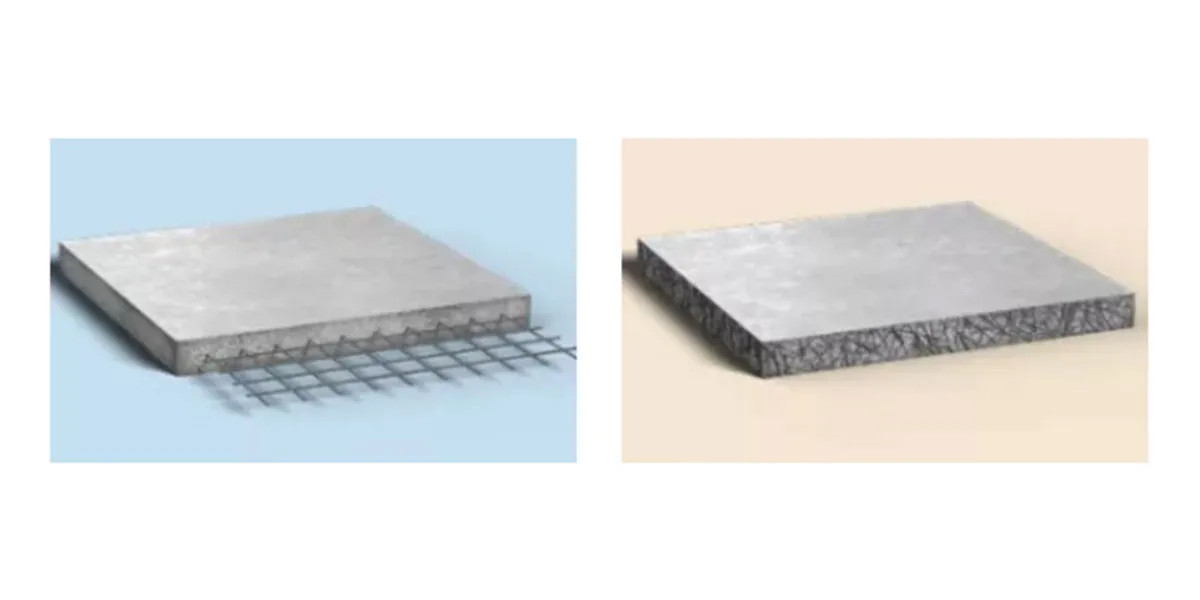
Preservation of the environment and conservation of the rapidly diminishing natural resources is the essence of sustainable development. Recycling of concrete from the Building Demolished Waste(BDW) to produce aggregates suitable for structural and non-structural applications is fast emerging as a commercially viable and technically feasible operation.Self-Compacting Concrete (SCC) is considered as a concrete which can be placed and compacted under its self-weight with little or no vibration effort, and which is at the same time, cohesive enough to be handled without segregation or bleeding. It is used to facilitate and ensure proper filling and good structural performance of restricted areas and heavily reinforced structural members.The use of Recycled Concrete Aggregate (RCA) in construction works is a subject of high priority in building industry throughout the world and it is a good solution to the problem of an excess of waste material, provided that the desired final product quality is reached. This reduces the consumption of the natural resources as well as the consumption of the landfills required for waste concrete. The technology today has advanced so far that it is forcing us to think in terms of ‘sustainability’. Ductility of concrete is provided with fiber reinforced cementitious composites, because fibers bridge crack surfaces and delay the onset of the extension of localised crack.Research significanceAn attempt has been made in the present investigation to develop a standard grade Self Compacting Concrete without and with polypropylene and glass fibers and without and with recycled aggregate. The present work provides very useful information for the practical use of fibrous self compacting concretes in the field, employing recycled aggregate form Building Demolished Waste (BDW).Properties of SCC in fresh stateA concrete mix is called Self Compacting Concrete if it fulfills the requirement of filling ability, passing ability and resistance to segregation. The filling ability is the ability of the SCC to flow into all spaces within the formwork under its own weight.Passing ability is required to guarantee a homogenous distribution of the components of SCC in the vicinity of obstacles. The resistance to segregation is the resistance of the com-ponents of SCC to migration or separation and remains uniform throughout the process of transport and placing. To satisfy these conditions EFNARC has formulated certain test procedures.IngredientsOrdinary Portland cement of 53 grade (compressive strength not less than 53 Mpa) was used in the study. The cement was selected as per IS-12269. Fine aggregate was standard river sand procured locally and was confirming to zone-II as per IS-2386. Crushed granite was used as coarse aggregate. The aggregate was passed through standard sieves of 16mm and retained on 4.75mm sieve. Recycled aggregate from building demolished waste was crushed and classified before use. For qualifying the utility of recycled aggregate in concrete, the important parameters like bulk density, voids ratio, specific gravity, water absorption, crushing and impact value, angularity and IAPST were determined based on IS Codal provisions. There properties were determined for different replacement of Recycled Concrete Aggregate (RCA) in Natural Aggregate (NA). The properties are shown in Table 1.Tests on FRSCRACThe slump flow equipment is currently used widely in concrete practice, and the method is very simple and straight forward. Thus the H-flow combined with T50 was selected as the first priority test method for estimating the filling ability of FRSCRAC. The V-funnel or Orimet tests are recommended as second priority alternatives to the T50 measurement. The passing ability of fresh SCC can be tested by U-box or J-ring. The basic properties of SCC without and with fiber and/or recycled aggregate are shown in Table 2. The fresh properties of SCC and FRSCC are suggestive of confirmation with the EFNARC Specifications.The source of fly ash used in the experiments was from a local coal fired thermal power station, where flyash is evolving out as a bye-product. The specific gravity was 2.05 with silicon dioxide content above 92 per cent. The fly ash was used as a partial replacement for cement. Conplast SP 337 superplasticizer and Viscosity Modifying Agent (VMA) were added in optimum dosages for improving the strength and workability properties of SCC. The Nansu mix design procedure is adopted to develop M40 Grade Concrete for different replacements of recycled aggregate in natural agg-regate and without or with fiber additions. The ingredients are shown in Table 3. The Glass Fiber (GF) is Cem-Fil Anti Crack and its specific gravity is 2.6 and the specific surface area is 105 m2 /kg. Poly Propylene Fiber (PF) with a diameter of 20-200 ?m, modulus of elasti-city 5-10 Gpa and tensile strength of over 500-750 mpa was used.Experimental programAn experimental program was designed to compare the strength properties of self- compacting concrete using recycled aggregate and without or with fiber addition. Cubes, cylinders and prisms of standard dimensions were cast and tested to determine the compressive strength, split tensile strength, flexural strength and modulus of elasticity of Fiber Reinforced Self- Compacting Concrete (FRSCC) using Recycled Aggregate (RA) from Building Demolished Waste (BDW).Casting and Testing of specimensThe influence of recycled aggregate and fiber on the behavior in compression, split tension and flexure is being investigated. 150×150 mm cubes for compressive strength, 150 mm diameter and 300 mm height cylinders for split tensile strength and 100x100x400 mm prism specimens for studying the modulus of rupture were employed. The program consisted of casting and testing a total number of 54 cubes, 54 cylinders and 54 prisms cast in 9 batches. Of these 54 cubes, 18 cubes corresponding to each Natural Aggregate (NA), 50 per cent Natural & Recycled (NARA) and 100per cent Recycled Aggregate (RA). Of these 18 cubes, six cubes correspond to each no fiber (WF), with PF and with GF additions. Similarly additional 54 cylinders (18 with NA, 18 with NARA, and 18 with RA) were cast for examining the stress-strain behavior of M40 grade for different fibers. The mix was designed as per modified Nansu method of mix design. All the specimens were demoulded after 24 hrs and kept in water for curing for 28days.The specimens were capped using plaster of paris to ensure plane-testing surface. Tinius Olsen Testing Machine (TOTM) of capacity 2000 KN was used for testing the specimens under standard load rate control. While testing, precautions were taken to ensure axial loading. For flexural strength standard three point loading was adopted. The modulus of elasticity of concrete was determined using compressometer setup and tested under TOTM.Discussion of test resultsThe results obtained from the detailed experimental program conducted on SCC without and with fiber are discussed. Table 4 shows the details of various mechanical properties viz., compressive strength, split strength and flexural strength for self-compacting concretes. The optimum fiber content was utilized through out the experimentation and this was based on initial strength and flow studies.Compressive strength of FRSCRAC
The mechanical properties of NA, NARA, and RA concrete cast without and with fiber additions are shown in Table 4.Addition of fibers has definitely increased the com-pressive strength, though marginally. The percentage increase in strength with fiber addition is plotted in Fig 5. It can be noted that the percentage increase is marginal. It is 1.90 per cent, 2.01 per cent in case of NA, 1.03 per cent, 1.62 per cent in 50 per cent Natural-Recycled Aggregate(NARA) and 0.94 per cent, 1.22 per cent in Recycled Aggregate(RA) with Polypropylene Fiber Reinforced Self-Compacting Concrete and Glass Fiber Reinforced Self-Compacting Concrete respectively. It can hence be concluded at this stage that fiber additions do not increase the compressive strength much.
Influence of fibers on split tensile strengthThe tensile strength of SCC is relatively much lower than its compressive strength because, it can be developed more quickly with crack propagation. Hence, it is important to improve the tensile strength of such a concrete. The variation of split tensile strength with fiber addi-tions is shown in Table 4. The increase is 14.19 per cent, 17.74 per cent in Natural Aggregate (NA), 9.97 per cent, 14.09 per cent in 50 per cent Natural-Recycled Aggregate (NARA) and 6.25 per cent, 11.72 per cent in Recycled Aggregate (RA) with GFRSCC and PFRSCC respectively (Fig 6). It can hence be inferred from the above that the fiber additions has a pronounced increase in the split tensile strength of self compacting concrete.Influence of fibers on flexural strength
Table 4 & Fig 7 show the details of the percentage increase in flexural strength for fiber additions. There is an increase in flexural strength of fibrous concretes as compared to no fiber concretes. The values are close to 0.7 as given by IS code for the relationship between flexural strength sqrt (fck) for normal concrete. The value of flexural strength to is more with polypropylene and glass fibrous concretes compared to no fiber concretes. From Fig 7, it is clear that there is an increase of 3.15 per cent, 13.32 per cent in Natural Aggregate(NA), 2.93 per cent, 9.57 per cent in 50 per cent Natural-Recycled (NARA) and 2.31 per cent, 8.96 per cent in Recycled Aggregate(RA) with GFRSCC and PFRSCC respectively. At this stage it may be concluded that the bending behaviour is greatly improved with glass fiber additions in self com-pacting concrete.Influence of fibers on modulus of elasticityThe brittle behavior of SCC is known. The fiber addition in such concretes modified the stress-strain behaviour of plain concrete. Using a compressometer setup and under compression the stress-strain values are evaluated and curves were drawn for the initial elastic portions. The Modulus of Elasticity (E) was calculated, following the specifications as laid by IS Code 516-1999. Table 4 shows the details of the values of modulus of elasticity for self-compacting concrete for Natural(NA), 50per cent Natural-Recycled (NARA) and Recycled Aggregate(RA) and without & with fiber respectively. It may be concluded that the addition of fiber in general increased the value of Modulus of Elasticity (E) of self-compacting recycled aggregate concrete. These values were close to 5000*vfck in case of no fiber concrete and higher in case of fibrous concretes.ConclusionsBased on experimental study on Fiber Reinforced Self Compacting Concrete (FRSCC) using recycled aggregate the following conclusions can be drawn.??From the properties of RCA it can be concluded that the coarse aggregate obtained from crushing BDW can be used for structural concrete works. This confirms the fact that RCA is in no way inferior to NA.??Self Compacting Concretes could be developed with recycled aggregate using high powder content, lesser quantity of coarse aggregate, high range super plasticizer and VMA to provide stability and fluidity to the concrete mixes.??There is a marginal increase in compressive strength, very good increase in the split tensile strength and a good increase in the flexural strength of FRSCRAC. The increase in split tensile and flexural strength is more in the case of glass fiber as compared to polypropylene fiber.??The relationship between compressive and split tensile strength and flexural and characteristic compressive strength for without and with fiber is suggested.??The fibrous specimens failed only by splitting of the fiber and there was no deboning of fibers noticed in any of the specimens.