Product development
Maximising performance: Steps for selecting refractory
Published
15 years agoon
By
admin
Refractory selection is the most important step for the maximisation of its performance. The major deciding factor is the working or operating environment where the refractory would be used. The working environment, in general, is defined by the following parameters Temperature, Chemical Condition, Thermal Shock, Mechanical Stress and Abrasion. All these parameters are not relevant for every application but identification of the critical parameters, for a given working environment, is vital for refractory life maximization at optimal cost.In cement industry, the operating condition for various parts of the kiln system constitutes the concentration of raw meal and the new phases formed there from, at different stage of the processing (see Figure 1). For a theoretical raw meal, ie, a mix of limestone, ouartz, clay and some lateritic material, the operating condition is not very severe, except for the burning zone where the temperature is as high as 1450?C and the liquid content of the feed material would be in the range of 25-27 per cent.By the time the raw mix attains 900?C, the lime stone of raw meal is decomposed into CaO, clay is dehydrated and quartz undergoes polymorphic transformation. Simultaneously formation of some of the cement constituents, eg, C2S and C3A, commences. None of these reactions has any adverse impact on the refractory. As temperature rises to 1450? C, the liquid phase forms and on cooling phases like C3S and C4AF precipitates out from the melt. As the clinker cools down, the reactivity of the mass reduces, ie, refractory is not chemically affected. The clinker, on cooling, however, becomes abrasive and has a tendency to erode the refractory. The situation worsens in the modern pre-heater, pre-calciner kilns, where the clinker is dustier. The cooler refractories, including the cooler take off duct, bull nose and tertiary air ducts are impinged upon by dust laden gas. Except for burning zone, thus, the operating condition of cement kiln, is apparently of moderate severity. The temperature in non burning zone part of the kiln system is not high enough for reaction between the aluminous refractory and lime bearing raw meal /clinker. Chemically non-compatible, ie, alumino-silicate, refractories, hence, should suffice for majority part of the kiln system.
Volatile Cycle
The reality is raw meal and fuel brings in potassium, sodium, sulphur, chloride in cement rotary kiln system. These constituents combine to form a varied range of alkali compounds. The nature of compounds formed, ie, the ones available in the kiln environment is determined the alkali sulphur ratio (ASR), which is expressed by the following relationship. ASR is calculated based on the constituents in the kiln gaseous environment,
{SO3/80} Q(ASR) = {(Na2O/62) + (K2O/94)-(CI/71)} When,
Q = 1 KCl and K2SO4 in the environment
Q > 1, KCl and K2SO4 as well as free SO3
Q < 1, KCl and K2SO4 as well as free K2O
The situation worsens when alternate fuel is used, since they have significantly higher level of alkali and chlorine in them. Table I below presents the melting point of the compounds which form in the kiln environment.
Volatile Components Melting Point, 0C KCl 770 NaCl 801 K2SO4 1069 Na2SO4 885 K2O 400 Na2O 1100 Since the melting points of newly formed alkali compounds are significantly lower than the maximum operating temperature of the kiln, part of these compounds partially vapourise in the kiln and travel along with the flue gas towards the kiln inlet areas, whereas the rest escape the kiln system by combining with the clinker. The alkali bearing compounds in the flue gas get deposited on the incoming raw meal at the corresponding freezing point of these alkali compounds. The alkali enriched raw materials travel back in the kiln and the aforementioned process gets repeated. Since the chloride compounds have lower melting point than the sulphates, they have the ability to travel further back in the kiln system, compared to the sulphur bearing compounds. Owing to the cycling process, the kiln environment becomes richer in alkali.
Build Up Formation
In addition to the deposition of these alkali compounds on the incoming raw meals, they also get deposited on the refractory surface. Incoming raw meal sticks to the alkali coated refractory surface, where the temperatures are in the range of the freezing points of the alkali compounds. This process continues and the build up occurs in the kiln system, where the temperature is in the vicinity of melting points of the compounds. The kiln inlet, smoke chamber and lower riser ducts are the most vulnerable areas for build up formation since temperature in these regions fall in the range of melting point of the alkali compounds. It is, hence, evident that the build-up problem of the kiln inlet region originates from the cement manufacturing process, not refractory. The build up hinders the flow of raw meal and many a time the production needs to be stopped for their dislodgement, which is either by thermal or mechanical shock. Both these methods of build up dislodgement put stress on the refractories and may cause premature failure.
Solution of Build Up through Refractory
There exists solution for the build – up problem through refractory. The build up can be minimized, if not eliminated, by using SiC based castable, e. g. Ace Calderys’ ACCMON CRC and its extension like ACCMON AF 1 and ACCMON AF 2, wherever such problem exists. The basic mechanism for build up resistance is by virtue of glassy phase formation on the refractory surface, via following reactions:
SiC (s) + 3/2O2 (g) = SiO2 (s) + CO (g) (I)
SiO2 (s) + Na2CO3 (l) = Na2SiO3 (Glass) + CO2 (g), and
SiO2 (s) + Na2SO4 (l) + 2C (s) + 3/2O2 (g) = Na2SiO3 (Glass) + SO2 (g) + 2CO2 (g)
Since glassy surface is ‘slimy’, the adherence of build up on the refractory surface is weak and hence, falls off under its own weight or by light mechanical shock. The elimination of build up in ACCMON CRC is by an unconventional process, i. e. by allowing the refractory to react with the environmental constituents. Since the build up adherence is a physical phenomenon, we recommend castable as it offers lesser foothold, compared to bricks, owing to lesser number of joints
Alkali Bursting
No refractory is impervious and hence, alkali compounds present in the kiln environment not only travel to the cooler part of the kiln but also travel to the cold face of the refractory. While travelling, the alkali compounds can interact with the refractories. The resultant of the alkali – refractory interaction are that the Chemical interaction with refractory, ie, formation of new compounds, and /or physical interaction, ie, alkali impregnation, which leads to densification of brick texture resulting in structural inflexibility. This leads to eventual refractory failure by thermal Spalling.
The alkali bursting occurs due to formation of following feldspathic compounds by reaction between alkali and alumino-silicate refractories. It is evident that formation of all these feldspathic compounds is expansive in nature, which induces stress in the refractory, leading to their ing.
Refractories for Kiln Down Stream
In the down stream, the clinker becomes more abrasive since it becomes cooler and volatile components may still be in the atmosphere. temperature fluctuation, ie, thermal shock, always remains an Issue in the tip casting area. In short, refractories in majority areas of down stream should be resistant to abrasion and thermal shock. For areas, with relatively higher temperature, ie, the locations where operating temperature is higher than the melting point of the alkali compounds, alkali resistance in refractories is desirable. For the areas, which require only abrasion resistance, eg, tertiary air duct, ACCMON CAR is recommend. The abrasion resistances for some of Ace Calderys Ltd products are illustrated in the Figure.
Prior to the development of ACCMON CAR, ACCMON 90 has been the most abrasion resistance refractory. The data from the Figure reveal that abrasion resistance of ACCMON CAR is over 3 times better than that of ACCMON 90. Field trial results indicate significant improvement in performance while using ACCMON CAR in high abrasion areas of cement kiln. ACCMON CAR has become synonymous with abrasion resistant refractory in the Indian market.
Exploitation of ACCMON CRC Versions for Other Applications
Since ACCMON CRC is based on SiC, its thermal conductivity is high and as a fall out of the same, it has excellent thermal spalling resistance. SiC also is known for its high abrasion resistance. Aforementioned SiC based castables, hence, is recommended for tip casting, cooler bull nose and cooler bench, since refractories in these locations are exposed to high abrasion, thermal shock and occasionally to alkali attack.
ConclusionGeneric alumino-silicate refractories suffice in majority of locations, except for upper as well as lower transition zones and burning zone. Such refractories are definite choice for upper cyclones since they are not exposed to high abrasion or alkali attack. Lower cyclones and kiln inlet areas, however, would require special refractories, eg, ACCMON CRC or its derivatives, when alkali concentration in the atmosphere is high. Down stream of burning zone mainly requires abrasion as well as thermal shock resistant refractories, and sometimes alkali resistance also is desirable. For areas with only abrasion, eg, in tertiary air duct, ACCMON CAR is recommended. For rest of the locations, eg, cooler bull nose, cooler bench and cooler take off duct, either ACCMON CAR or ACCMON CRC is recommended depending on the exact operating condition.
You may like
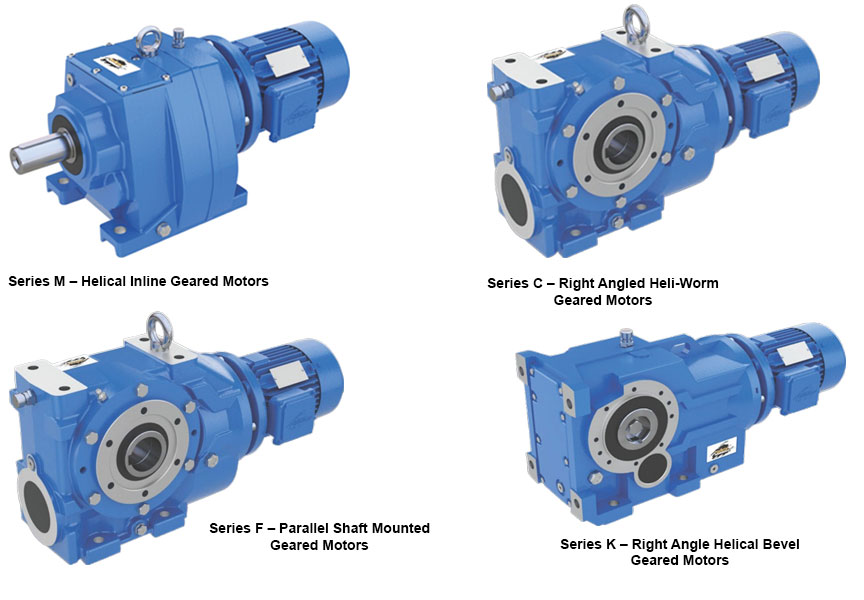
A deep dive into Core Gear Series of products M, C, F and K, by Power Build, and how they represent precision in motion.
At the heart of every high-performance industrial system lies the need for robust, reliable, and efficient power transmission. Power Build answers this need with its flagship geared motor series: M, C, F and K. Each series is meticulously engineered to serve specific operational demands while maintaining the universal promise of durability, efficiency, and performance.
Series M – Helical Inline Geared Motors
Compact and powerful, the Series M delivers exceptional drive solutions for a broad range of applications. With power handling up to 160kW and torque capacity reaching 20,000 Nm, it is the trusted solution for industries requiring quiet operation, high efficiency, and space-saving design. Series M is available with multiple mounting and motor options, making it a versatile choice for manufacturers and OEMs globally.
Series C – Right Angled Heli-Worm Geared Motors
Combining the benefits of helical and worm gearing, the Series C is designed for right-angled power transmission. With gear ratios of up to 16,000:1 and torque capacities of up to 10,000 Nm, this series is optimal for applications demanding precision in compact spaces. Industries looking for a smooth, low-noise operation with maximum torque efficiency rely on Series C for dependable performance.
Series F – Parallel Shaft Mounted Geared Motors
Built for endurance in the most demanding environments, Series F is widely adopted in steel plants, hoists, cranes and heavy-duty conveyors. Offering torque up to 10,000 Nm and high gear ratios up to 20,000:1, this product features an integral torque arm and diverse output configurations to meet industry-specific challenges head-on.
Series K – Right Angle Helical Bevel Geared Motors
For industries seeking high efficiency and torque-heavy performance, Series K is the answer. This right-angled geared motor series delivers torque up to 50,000 Nm, making it a preferred choice in core infrastructure sectors such as cement, power, mining and material handling. Its flexibility in mounting and broad motor options offer engineers the freedom in design and reliability in execution.
Together, these four series reflect Power Build’s commitment to excellence in mechanical power transmission. From compact inline designs to robust right-angle drives, each geared motor is a result of decades of engineering innovation, customer-focused design and field-tested reliability. Whether the requirement is speed control, torque multiplication or space efficiency, Radicon’s Series M, C, F and K stand as trusted powerhouses for global industries.
http://www.powerbuild.in
Call: +919727719344
Economy & Market
Conveyor belts are a vital link in the supply chain
Published
8 months agoon
June 16, 2025By
admin
Kamlesh Jain, Managing Director, Elastocon, discusses how the brand delivers high-performance, customised conveyor belt solutions for demanding industries like cement, mining, and logistics, while embracing innovation, automation, and sustainability.
In today’s rapidly evolving industrial landscape, efficient material handling isn’t just a necessity—it’s a competitive advantage. As industries such as mining, cement, steel and logistics push for higher productivity, automation, and sustainability, the humble conveyor belt has taken on a mission-critical role. In this exclusive interview, Kamlesh Jain, Managing Director, Elastocon, discusses how the company is innovating for tougher terrains, smarter systems and a greener tomorrow.
Brief us about your company – in terms of its offerings, manufacturing facilities, and the key end-user industries it serves.
Elastocon, a flagship brand of the Royal Group, is a trusted name in the conveyor belt manufacturing industry. Under the brand name ELASTOCON, the company produces both open-end and endless belts, offering tailor-made solutions to some of the most demanding sectors such as cement, steel, power, mining, fertiliser, and logistics. Every belt is meticulously engineered—from fabric selection to material composition—to ensure optimal performance in tough working conditions. With advanced manufacturing facilities and strict quality protocols, Elastocon continues to deliver high-performance conveyor solutions designed for durability, safety, and efficiency.
How is the group addressing the needs for efficient material handling?
Efficient material handling is the backbone of any industrial operation. At Elastocon, our engineering philosophy revolves around creating belts that deliver consistent performance, long operational life, and minimal maintenance. We focus on key performance parameters such as tensile strength, abrasion resistance, tear strength, and low elongation at working tension. Our belts are designed to offer superior bonding between plies and covers, which directly impacts their life and reliability. We also support clients
with maintenance manuals and technical advice, helping them improve their system’s productivity and reduce downtime.
How critical are conveyor belts in ensuring seamless material handling?
Conveyor belts are a vital link in the supply chain across industries. In sectors like mining, cement, steel, and logistics, they facilitate the efficient movement of materials and help maintain uninterrupted production flows. At Elastocon, we recognise the crucial role of belts in minimising breakdowns and increasing plant uptime. Our belts are built to endure abrasive, high-temperature, or high-load environments. We also advocate proper system maintenance, including correct belt storage, jointing, roller alignment, and idler checks, to ensure smooth and centered belt movement, reducing operational interruptions.
What are the key market and demand drivers for the conveyor belt industry?
The growth of the conveyor belt industry is closely tied to infrastructure development, increased automation, and the push for higher operational efficiency. As industries strive to reduce labor dependency and improve productivity, there is a growing demand for advanced material handling systems. Customers today seek not just reliability, but also cost-effectiveness and technical superiority in the belts they choose. Enhanced product aesthetics and innovation in design are also becoming significant differentiators. These trends are pushing manufacturers to evolve continuously, and Elastocon is leading the way with customer-centric product development.
How does Elastocon address the diverse and evolving requirements of these sectors?
Our strength lies in offering a broad and technically advanced product portfolio that serves various industries. For general-purpose applications, our M24 and DINX/W grade belts offer excellent abrasion resistance, especially for RMHS and cement plants. For high-temperature operations, we provide HR and SHR T2 grade belts, as well as our flagship PYROCON and PYROKING belts, which can withstand extreme heat—up to 250°C continuous and even 400°C peak—thanks to advanced EPM polymers.
We also cater to sectors with specialised needs. For fire-prone environments like underground mining, we offer fire-resistant belts certified to IS 1891 Part V, ISO 340, and MSHA standards. Our OR-grade belts are designed for oil and chemical resistance, making them ideal for fertiliser and chemical industries. In high-moisture applications like food and agriculture, our MR-grade belts ensure optimal performance. This diverse range enables us to meet customer-specific challenges with precision and efficiency.
What core advantages does Elastocon offer that differentiate it from competitors?
Elastocon stands out due to its deep commitment to quality, innovation, and customer satisfaction. Every belt is customised to the client’s requirements, supported by a strong R&D foundation that keeps us aligned with global standards and trends. Our customer support doesn’t end at product delivery—we provide ongoing technical assistance and after-sales service that help clients maximise the value of their investments. Moreover, our focus on compliance and certifications ensures our belts meet stringent national and international safety and performance standards, giving customers added confidence.
How is Elastocon gearing up to meet its customers’ evolving needs?
We are conscious of the shift towards greener and smarter manufacturing practices. Elastocon is embracing sustainability by incorporating eco-friendly materials and energy-efficient manufacturing techniques. In parallel, we are developing belts that seamlessly integrate with automated systems and smart industrial platforms. Our vision is to make our products not just high-performing but also future-ready—aligned with global sustainability goals and compatible with emerging technologies in industrial automation and predictive maintenance.
What trends do you foresee shaping the future of the conveyor belt industry?
The conveyor belt industry is undergoing a significant transformation. As Industry 4.0 principles gain traction, we expect to see widespread adoption of smart belts equipped with sensors for real-time monitoring, diagnostics, and predictive maintenance. The demand for recyclable materials and sustainable designs will continue to grow. Furthermore, industry-specific customisation will increasingly replace standardisation, and belts will be expected to do more than just transport material—they will be integrated into intelligent production systems. Elastocon is already investing in these future-focused areas to stay ahead of the curve.
Advertising or branding is never about driving sales. It’s about creating brand awareness and recall. It’s about conveying the core values of your brand to your consumers. In this context, why is branding important for cement companies? As far as the customers are concerned cement is simply cement. It is precisely for this reason that branding, marketing and advertising of cement becomes crucial. Since the customer is unable to differentiate between the shades of grey, the onus of creating this awareness is carried by the brands. That explains the heavy marketing budgets, celebrity-centric commercials, emotion-invoking taglines and campaigns enunciating the many benefits of their offerings.
Marketing strategies of cement companies have undergone gradual transformation owing to the change in consumer behaviour. While TV commercials are high on humour and emotions to establish a fast connect with the customer, social media campaigns are focussed more on capturing the consumer’s attention in an over-crowded virtual world. Branding for cement companies has become a holistic growth strategy with quantifiable results. This has made brands opt for a mix package of traditional and new-age tools, such as social media. However, the hero of every marketing communication is the message, which encapsulates the unique selling points of the product. That after all is crux of the matter here.
While cement companies are effectively using marketing tools to reach out to the consumers, they need to strengthen the four Cs of the branding process – Consumer, Cost, Communication and Convenience. Putting up the right message, at the right time and at the right place for the right kind of customer demographic is of utmost importance in the long run. It is precisely for this reason that regional players are likely to have an upper hand as they rely on local language and cultural references to drive home the point. But modern marketing and branding domain is exponentially growing and it would be an interesting exercise to tabulate and analyse its impact on branding for cement.
Our strategy is to establish reliable local partnerships
Power Build’s Core Gear Series
Compliance and growth go hand in h and
Turning Downtime into Actionable Intelligence
FORNNAX Appoints Dieter Jerschl as Sales Partner for Central Europe
Our strategy is to establish reliable local partnerships
Power Build’s Core Gear Series
Compliance and growth go hand in h and
Turning Downtime into Actionable Intelligence