

Technology
Technology for alternative fuel firing


Use of low-grade alternative fuels such as waste coal, tyres, sewage sludge, and biomass fuels (such as wood products, agricultural waste, etc.) in pre-calciners is a feasible option since combustion in pre-calciner takes place at a lower temperature.
India is the second largest cement producer in the world and accounted for over 8 per cent of the global installed capacity as of 2019 with an overall cement production capacity of around 545 MT in FY20. The Indian cement industry is swiftly developing due to the increasing demand of construction sectors, be it housing, commercial, industrial, etc.
Cement manufacturing being a high energy consuming and heavy polluting process accounts for at least 8 per cent of the total emission of greenhouse gases. At the same time, energy-related expenses in the cement sector, mostly on fossil fuels and electricity, account for 30 to 40 per cent of the industry?? cash costs.
Historically, the primary fuel used in cement industry is coal. Recent increases of coal prices in the Indian market again made the cement industry vulnerable to fuel cost. Since then, petroleum coke has been successfully used as fuel and the use alternative fuels in cement kilns is now common and increasing. Although fossil fuels such as coal, petroleum, natural gas, etc. can provide all the energy the world needs for the time being, their finite nature, high prices and most importantly, their damaging effect on the environment underscore the need to develop alternative fuels.
Today?? cement industry becomes more challenging for the following main factors: the lowest production cost and minimum environmental impact. Beyond the cost-reduction benefits of alternative fuels, use of these fuels can contribute greatly to the environmentally sound disposal of waste and to the mitigation of greenhouse-gas emissions (GHG). Therefore, key cement players have started to consider alternative fuels as a lever to improve their contribution to sustainable development and as a key component of corporate social responsibility.
This is certainly a win-win option for both cement industry and the society at large. There is, hence, an urgent need to implement appropriate policies and practices in favor of co-processing in the country so that it can contribute reasonably towards the waste management needs of the country and help industry in substituting alternative resources in the cement manufacturing process. This would require substantial capacity building in the relevant stakeholder community ??particularly the policy makers, authorities, waste generators, facility providers and the cement plants.
Alternative Fuel options available
The range of alternative fuels is extremely wide. Use of low-grade alternative fuels such as waste coal, tyres, sewage sludge, and biomass fuels (such as wood products, agricultural waste, etc.) in pre-calciners is a feasible option since combustion in pre-calciner takes place at a lower temperature. The major Alternative Fuel available to use in India would be MSW (Municipal Solid Waste).
Sewage sludge: In several countries, sewage sludge is used in cement production. The sludge is usually co-fired with coal in pre-dried form. Pre-dried sludge is easier to store, transport and feed. However, it has a high content of SiO2, Al2O3 and Fe2O3 which could affect the quality of cement if excess amounts are used.
Used Tyres: Combustion of whole tyres requires long residence times to obtain complete conversion. In some cement installations, tyres are fired whole, mostly in the rotary kiln. More commonly, they are shredded in a slashing process, producing tyre chunks or chips, and co-fired with coal in the precalciner. They cannot, however, be finely comminuted economically. FLSmidth offers HOTDISC? Combustion Device for high efficient firing of used tyres.
Agricultural Biomass- A largely untapped renewable energy source: The type of biomass utilized by cement plants is highly variable, and is based on the crops that are locally grown/available. For e.g., rice husk, hazelnut shells, coconut husks, corn stover, coffee pods, and palm nut shells are among the many varieties of biomass currently being burned in cement kilns. Biomass fuels are considered carbon neutral because the carbon released during combustion is taken out of the atmosphere by the species during the growth phase.
Major challenges of using agricultural biomass residues include the relatively low calorific value which can cause flame instability, and availability since most of the agricultural residues are seasonal (not available all year round). The flame instability problems could be overcome with lower substitution rates and ability to adjust air flow and flame shape.
Other major Alternative Fuels include waste oil, liquid waste, Plastic, Meat and bone meal, etc.
Benefits of using Alternative Fuels in Cement Production
Cement producers are striving to lower their production costs. One effective method of achieving this end is the use of alternative fuels.
The reduction in emissions to the atmosphere and the positive environmental impact it holds is a major benefit of Alternative Fuel firing. In pre-calciners where kiln exhaust gases pass through, the NOx emissions are much reduced due to reburn reactions. Also, there is an increased net global reduction in CO2 emissions when waste is combusted in the cement kiln systems as opposed to dedicated incinerators, resulting a reduction in penalties.
Key considerations and challenges for co-processing Alternative Fuels
The potential benefits of burning alternative fuels at cement plants are numerous. However, the contrary is possible where poor planning results in higher emissions or when they are not put to their best use with best practices.
Alternative fuels used in cement manufacturing have different characteristics compared to the conventional fuels. Switching fuels present several challenges that must be addressed in-order to achieve successful application. The type of fuel used can introduce some material components which can interfere with the chemistry of the cement materials as well as affect the operation of the system. The use of a type of fuel is hence subject to the constraints imposed by any effect on cement quality, refractory life, gas and material flow or potential emissions to the atmosphere.
Poor heat distribution, unstable pre-calciner operation, blockages in the preheater cyclones, build-ups in the kiln riser ducts, higher emissions and dusty kilns are some of the major challenges.
FLSmidth Alternative Fuel Firing Technology
Introducing alternative fuels has an impact across the plant. The materials can have totally different characteristics from fossil fuels. They can be sticky, fluffy, moist, and fluctuating in size and quality or you may need to switch between different types of fuel with very different characteristic due to governed by availability. They will burn differently, have a different reaction in the kiln and may require you to take other actions to ensure consistent clinker quality. There are a lot of variables at play ??which is why you need an experienced partner on your side.
With over 25 years of direct alternative fuels experience and more than 130 years in the cement industry, FLSmidth? offers a range of products to enable Cement Manufacturers to increase their substitution of Alternative Fuels.
JETFLEX? Burner
Cement kilns have several characteristics which make them ideal installations for disposal of waste through co-processing in an environmentally sound manner:
– High temperatures
– Long residence time
– Oxidizing atmosphere
– High thermal inertia
– Alkaline environment
– Ash retention in clinker
FLSmidth?? JETFLEX? Burner is a highly flexible kiln burner, designed to produce the best flame shape and lowest NOx emissions for various fuel types and operating conditions. It fires rotary kilns with pulverized coal or coke, oil, natural gas, or any mixture of these fuels. Alternative fuel firing of plastic chips, wood chips and sewage sludge can also occur through the same common fuel channel to improve heat and power consumption and minimize cold airflow entering from the fuel transport.

JETFLEX? PLUS Burner
For optimum combustion flexibility, our JETFLEX PLUS Burner offers superior combustion of cost-effective grade fuels, complete flame-forming control and increased fuel retention time. The two design features that characterize the JETFLEX PLUS Burner model are individually rotatable jet air nozzles and a retractable center pipe for alternative fuel firing.
The individual rotatable nozzles also enable fuel lift configuration. This is used with solid alternative fuels to increase fuel retention time in the flame. The result is less fuel drop-out, improved combustion, and improved clinker quality. The swirler is the main mechanism for shaping the flame during start-up and daily operation.


The JETFLEX PLUS burner offers retraction of the swirler and central duct. In combination with the axial air nozzles, this enables a significant drop in fuel velocity in front of the burner. This feature strongly increases the fuel retention time in the flame and enables early ignition of low grade fuels. In combination with the fuel lift configuration as noted above, spillage to the charge is minimised. This allows the burner to contribute to superior flame and clinker quality control as well as a high alternative fuel substitution.
HOTDISC? Combustion Device
The HOTDISC solution allows cement producers to substitute coal or other fossil fuels with a wide range of alternative fuels. The HOTDISC is a flagship solution for FLSmidth?? MissionZero that helps cement producers take an important step toward zero-emission cement plants by 2030. Launched in 2004 and over 35 installations worldwide, the HOTDISC Combustion Devices has already firmly established itself as an attractive technology to accelerate cement plants??transition toward alternative fuels.
From wet powders to solid waste up to 1.2 metres in diameter, our HOTDISC Combustion Device can burn them all. The waste to energy process eliminates the need for expensive shredding and gives you the flexibility to select the most economical choice from a wide range of alternative fuel options. The HOTDISC Combustion Device is designed to achieve a calciner fuel substitution rate of up to 80%, although results vary significantly depending on specific plant conditions.
As an integrated part of your kiln system, the HOTDISC Combustion Device is added onto the calciner and functions as a slow-moving disc furnace. When alternative fuel, preheated raw meal and tertiary air are fed into the HOTDISC, it produces combustion gases, partly calcined meal and combustion residues. These are then processed in the calciner alongside the other streams entering it. The result is calcined meal ready for the kiln and well-controlled emissions.
Alternative fuels are introduced onto the slowly rotating disc and they start to burn in fully-oxidising conditions when they meet the hot tertiary air. The burning fuel is transported approximately 270? on the disc until it reaches the scraper, where the remaining ash and partly calcined materials are discharged into the riser duct. Heavy combustion residues fall into the kiln inlet, while lighter fragments and combustion gases move up into the calciner.
HOTDISC-S? is a recently developed version of HOTDISC specifically to cater the needs of customers with SLC type calciners, hence enabling them to achieve Alternative Fuel firing. Two of these devices have been commissioned globally and running successfully.

Low NOx Calciner
With a goal to optimise production costs, FLSmidth?? Low NOx Calciner has been enhanced for operational stability, availability and combustion efficiency.
NOX regulations are continuously being tightened around the world. Meeting NOx emissions limits is therefore a key demand for cement producers, not only because NOx-related issues, such as smog pollution, have a direct impact on the local society, but also because your plant?? license to operate is directly linked to its NOx emissions.
Multiple fuel inlets are given to ensure optimal distribution between the kiln gases and the fuel. To achieve the best distribution between the kiln gases and the fuel, there are multiple inlets (four or six, depending on plant size). Better fuel distribution provides optimal mixing, which gives the highest average cross-sectional temperature without any build-up problems.
The Low NOX Calciner has the flexibility to burn almost any type of fuel. This includes traditional fuels, including coal and natural gas, more difficult-to-burn fuels, such as petcoke, and most solid and liquid waste fuels. These fuel types are burned while achieving low NOx and CO emissions.Primary Mitigation
Another simple solution FLSmidth? provides for reducing the NOx emissions in the existing plants is the Primary mitigation NOx reduction through calciner design changes. These are basically layout changes to create one firing location, one meal split, one air stream entering tangentially to the calciner and creating “hot zone??and ??eduction zone?? The plant system is studied and appropriate modifications are recommended. For even lower NOx emissions, FLSmidth? provides SNCR system as an add-on solution.

Kiln Gas By-pass System
Kiln gas bypass systems have traditionally only been used in regions where the local raw materials are naturally high in chloride, sulfur or alkalis. The growing use of alternative fuels and other materials is also increasing the input of chloride to kiln systems to the point that may require a bypass to maintain process stability or product quality. FLSmidth has extensive experience with the design and use of kiln bypass systems.
Main features:
– Quench chamber with dual layer dip tube
– Quench air inlet flap valve
– Control scheme for maximum stability
– Special lining design in transition pipe section
– Constant force support system
– Multiple layout possibilities
While the fundamental principles of a bypass system have not changed, state-of-the-art technology and design tools have been incorporated to improve bypass efficiency and maximise reliability. Most projects today will at least have the space for a future small chloride bypass (less than 10%) with respect to use of alternative fuels and materials.

Conclusion
The co-processing of waste as AFR disposes the waste completely and thereby eliminates the societal concerns associated with it. In Indian cement industry, if these initiatives could increase thermal substitution to the level of European countries, the cement industry can reduce its GHG emission by a significant amount, impacting the overall country?? GHG emission.
The type of fuel used in cement production is subject to the constraints imposed by its effects on cement quality, refractory life, emissions to the atmosphere, etc. and hence requires proper study and planning by specialists before implementation.
To reduce fuel cost in cement industry, globally, waste materials and low-grade fuels are co processed extensively as alternative fuels or energy sources. India still has a long way to go in ensuring greater substitution of AFRs, resulting in sizable conservation of natural materials and fossil fuels and to make the most out of the technology available for the same.
Author:
Gopika Krishnakumar
Product Line Manager
Cement Industry/Pyro Technology
FLSmidth

Jignesh Kundaria, Director and CEO, Fornnax Technology
India is simultaneously grappling with two crises: a mounting waste emergency and an urgent need to decarbonise its most carbon-intensive industries. The cement sector, the second-largest in the world and the backbone of the nation’s infrastructure ambitions, sits at the centre of both. It consumes enormous quantities of fossil fuel, and it has the technical capacity to consume something else entirely: the waste our cities cannot get rid of.
According to CPCB and NITI Aayog projections, India generates approximately 62.4 million tonnes of municipal solid waste annually, with that figure expected to reach 165 million tonnes by 2030. Much of this waste is energy-rich and non-recyclable. At the same time, cement kilns operate at material temperatures of approximately 1,450 degrees Celsius, with gas temperatures reaching 2,000 degrees. This high-temperature environment is ideal for co-processing, ensuring the complete thermal destruction of organic compounds without generating toxic residues. The physics are in our favour. The infrastructure is not.
Pre-processing is not the support act for co-processing. It is the main event. Get the particle size wrong, get the moisture wrong, get the calorific value wrong and your kiln thermal stability will suffer the consequences.
The Regulatory Push Is Real
The Solid Waste Management (SWM) Rules 2026 mandate that cement plants progressively replace solid fossil fuels with Refuse-Derived Fuel (RDF), starting at a 5 per cent baseline and scaling to 15 per cent within six years. NITI Aayog’s 2026 Roadmap for Cement Sector Decarbonisation targets 20 to 25 per cent Thermal Substitution Rate (TSR) by 2030. Beyond compliance, every tonne of coal replaced by RDF generates measurable carbon reductions which is monetisable under India’s emerging Carbon Credit Trading Scheme (CCTS). TSR is no longer a sustainability metric. It is a financial lever.
Yet our own field assessments across multiple Indian cement plants reveal a sobering reality: the primary barrier to scaling AFR adoption is not waste availability. It is the fragmented and under-engineered pre-processing ecosystem that sits between the waste and the kiln.
Why Indian Waste Is a Different Engineering Problem
Indian municipal solid waste is not the material that imported shredding equipment was designed for. Our waste streams frequently exceed 40 per cent to 50 per cent moisture content, particularly during monsoon cycles, saturated with abrasive inerts including sand, glass, and stone. Plants relying on imported OEM equipment face months of downtime awaiting proprietary spare parts. Machines built for segregated, low-moisture waste fail quickly and disrupt the entire pre-processing operation in Indian conditions.
The two most common failures we observe are what I call the biting teeth problem and the chewing teeth problem. Plants relying solely on a primary shredder reduce bulk waste to large fractions, but the output remains too coarse for stable kiln combustion. Others attempt to use a secondary shredder as a standalone unit without a primary stage to pre-size the feed, leading to catastrophic mechanical failure. When both stages are present but mismatched in throughput capacity, the system becomes a bottleneck. Achieving the 40 to 70 tonnes per hour required for meaningful coal displacement demands a precisely coordinated two-stage process.
Engineering a Made-in-India Answer
At Fornnax, our response to these challenges is grounded in one principle: Indian waste demands Indian engineering. Our systems are built around feedstock homogeneity, the holy grail of kiln stability. Consistent particle size and predictable calorific value are the foundation of stable kiln combustion. Without them, no TSR target is achievable at scale.
Our SR-MAX2500 Dual Shaft Primary Shredder (Hydraulic Drive) processes raw, baled, or loosely mixed MSW, C&I waste, bulky waste, and plastics, reducing them to approximately 150 mm fractions at throughputs of up to 40 tonnes per hour. The R-MAX 3300 Single Shaft Secondary Shredder (Hydraulic Drive), introduced in 2025, takes that primary output and produces RDF fractions in the 30 to 80 mm range at up to 30 tonnes per hour, specifically optimised for consistent kiln feeding. We have also introduced electric drive configurations under the SR-100 HD series, with capacities between 5 and 40 tonnes per hour, already operational at a leading Indian waste-processing facility.
Looking ahead, Fornnax is expanding its portfolio with the upcoming SR-MAX3600 Hydraulic Drive primary shredder at up to 70 tonnes per hour and the R-MAX2100 Hydraulic drive secondary shredder at up to 20 tonnes per hour, designed specifically for the large-scale throughput that higher TSR ambitions require.
The Investment Case Is Now
The 2070 Net-Zero target is not a distant goal for India’s cement sector. It starts today, with decisions being made on the plant floor.
The SWM Rules 2026 are already in effect, requiring cement plants to replace coal with RDF. Carbon credit markets are opening up, and coal prices are not going to get cheaper. Every tonne of coal a cement plant replaces with waste-derived fuel saves money on one side and generates carbon credit revenue on the other. Pre-processing infrastructure is no longer just a compliance requirement. It is a business investment with a measurable return.
The good news is that nothing is missing. The technology works. The waste is available in every Indian city. The government has provided the policy direction. The only thing standing between where the industry is today and where it needs to be is the commitment to build the right infrastructure.
The cement companies that move now will not just meet the regulations. They will be ahead of every competitor that waits.
About The Author
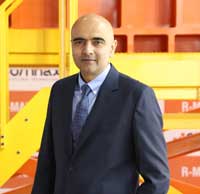
Jignesh Kundaria is the Director and CEO of Fornnax Technology. Over an experience spanning more than two decades in the recycling industry, he has established himself as one of India’s foremost voices on waste-to-fuel technology and alternative fuel infrastructure.



Meghalaya Cabinet Approves MCCL Closure, Writes Off Rs. 244.3 mn

Fornnax Wins AIRIA’s Special Export Award for Rubber Machinery in 2025-26

Cement Prices Likely to Rise Rs. 10-15 per Bag from Mid-October

Nuvoco Marks 10 Years, Targets 35 MMTPA Capacity by FY28

J&K Government Notifies City Gas Distribution Policy
Meghalaya Cabinet Approves MCCL Closure, Writes Off Rs. 244.3 mn
Fornnax Wins AIRIA’s Special Export Award for Rubber Machinery in 2025-26
Cement Prices Likely to Rise Rs. 10-15 per Bag from Mid-October
Nuvoco Marks 10 Years, Targets 35 MMTPA Capacity by FY28
J&K Government Notifies City Gas Distribution Policy
-

 Concrete3 weeks ago
JSW Cement Receives Rs. 2.3 bn GST Demand Notice
-

 Concrete3 weeks ago
Andhra Pradesh Clears Rs. 30 bn My Home Cement Plant
-
 Concrete4 weeks ago
Jammu Division Begins First Cement Rail Traffic to Anantnag
-
 Concrete3 weeks ago
Montra Electric, Wonder Cement Deploy 250-Vehicle EV Fleet