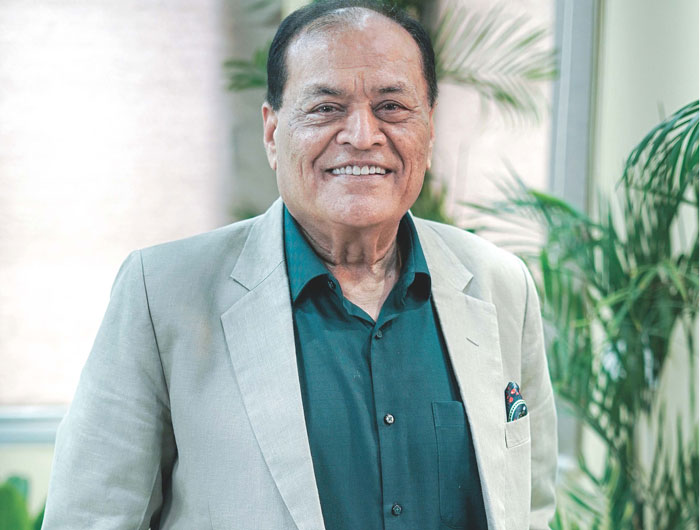
Mahendra Singhi, former Managing Director & Chief Executive Officer of Dalmia Cement (Bharat), demonstrates how decarbonisation and profitability can go hand in hand in the cement industry.
With nearly five decades of experience in the cement industry, Mahendra Singhi, the former Managing Director & Chief Executive Officer of Dalmia Cement (Bharat), has been instrumental in shaping the sector’s approach towards operational excellence, sustainability and low-carbon growth. From leading organisations such as Dalmia Cement and Shree Cement to advocating climate action on global platforms, his journey reflects the transformation of cement from a conventional manufacturing sector into a technology-driven and sustainability-focused industry. In this interview, Mahendra Singhi, who is also the Chairman of Cement Expo 2026 (to be organised by Indian Cement Review from December 15-17 at India Expo Centre & Mart, Greater Noida), shares his perspectives on decarbonisation, innovation, resource efficiency and the future of cement in India.
You have completed nearly five decades in the cement industry, working with leading organisations such as Shree Cement and Dalmia Cement. What factors have shaped your leadership philosophy and kept you motivated over the years?
My journey has always revolved around people, purpose, possibilities and happiness. It has never been only about a career; it has been about creating value for people and organisations.
My parents’ guidance, my teachers’ teachings and my family’s upbringing shaped my understanding of values and responsibility. With a background in science, law and chartered accountancy, I entered the manufacturing sector in 1978, and my association with cement became a journey of continuous learning and transformation.
Over time, I realised that leadership is ultimately about people. One must understand people, build trust and create an environment where individuals and organisations can grow together. During my association with Shree Cement, we focused on developing a family culture where employees, workers, suppliers, communities and other stakeholders could prosper together.
We introduced the philosophy of Total Prosperity Management (TPM), which focused on the well-being of all stakeholders. The idea was that when an organisation takes care of its people and ecosystem, it creates sustainable growth and long-term happiness.
Another important milestone in my journey
was understanding the importance of climate change and sustainability. In 1999, through an opportunity facilitated by the US Agency for International Development, the US Government and CII, I gained deeper insights into the Kyoto Protocol, clean development mechanisms and the global movement towards reducing carbon emissions.
That learning encouraged us to explore sustainability as a business opportunity. Shree Cement later developed one of the first Clean Development Mechanism projects in the global cement sector and generated value through carbon credits.
The key learning was that sustainability, people development and profitability can move together. This belief continued when I moved to Dalmia Cement, where we developed a vision to become a leader in building materials by creating pride among stakeholders through sustainability, innovation and customer centricity.
India is the world’s second-largest cement producer and consumer, while the industry faces challenges such as rising input costs, energy volatility and margin pressures. How do you see the sector navigating these challenges?
The Indian cement sector has been proactive in addressing decarbonisation challenges. The industry has created roadmaps for reducing emissions, improving resource efficiency and adopting sustainable practices.
Indian cement companies are conscious of the need to reduce energy consumption, lower carbon emissions and optimise resources. The sector has made significant progress in adopting renewable energy, waste heat recovery systems and alternative fuels.
Waste utilisation has also become an important area of focus. The use of fly ash from power plants, slag from steel industries and other industrial by-products helps conserve natural resources while reducing environmental impact.
The sector is also exploring alternative fuels and technologies that can reduce dependency on conventional energy sources. These initiatives demonstrate that Indian cement companies are prepared for the transition towards a low-carbon future.
A report by the Carbon Disclosure Project in 2018 recognised the efforts of Indian cement companies in preparing for low-carbon transition. Five of the ten globally recognised companies were from India, with Dalmia Cement among the leading performers.
Over the years, the conversation around cement has evolved from production capacity and availability to carbon, technology and materials. What are the major structural challenges the industry must address?
The future of cement will depend on three major areas: resource conservation, technology adoption and carbon management.
At Dalmia Cement, our philosophy was simple: use less and produce more. This means reducing consumption of power, coal and other resources while improving productivity through innovation. Technology has played a significant role in improving efficiency. Most Indian cement plants today have adopted modern technologies and are among the most efficient globally.
Carbon reduction will be the biggest challenge. Renewable energy, waste utilisation and alternative fuels will help reduce emissions, but carbon
capture, utilisation and storage (CCUS) will become increasingly important.
Around 50 per cent of emissions can potentially be addressed through carbon capture and conversion technologies. Pilot projects across Europe have demonstrated possibilities, and India is also moving towards exploring these solutions.
Government initiatives, including support for CCUS development, will help accelerate the adoption of these technologies and create pathways for converting captured carbon into useful products such as sustainable materials, fuels and chemicals.
With infrastructure development accelerating, where do you see the biggest opportunities emerging for the cement sector?
India’s infrastructure growth presents tremendous opportunities for the cement industry. One of the biggest opportunities is increasing the adoption of low-carbon cement. India is already among the global leaders in producing blended cement, with a significant share of cement production being low-carbon compared to conventional Ordinary Portland Cement (OPC).
The challenge ahead is to further reduce the use of high-carbon products and develop innovative solutions through research and collaboration. The cement
industry must work closely with construction companies, real estate developers, academic institutions and technology providers to create resilient and sustainable infrastructure solutions.
In the future, green building materials will not only support environmental goals but may also create additional value for developers and customers.
During your tenure as MD and CEO of Dalmia Cement, you took several pioneering decisions, including commitments towards carbon negativity and renewable energy. Have these decisions delivered long-term value?
I strongly believe that the philosophy of “clean and green is profitable and sustainable” has been
proven correct. The transition towards renewable energy, waste heat recovery, alternative fuels and low-carbon cement has demonstrated both environmental and economic benefits.
For example, renewable energy can be more economical than conventional thermal power, while waste heat recovery enables companies to generate power efficiently. Similarly, using alternative materials supports sustainability while reducing dependence on natural resources.
However, sustainability is not only about profitability. It is also about responsibility towards society, the planet and future generations. When businesses consider these wider responsibilities, they create long-term value and a stronger sense of purpose.
What support do you expect from policymakers to enable a more resilient and future-ready cement sector?
The government has already taken several positive steps, but faster implementation and stronger collaboration will be important. Support for renewable energy adoption, waste utilisation, carbon credit mechanisms and emerging technologies will help industries accelerate their sustainability journey.
Carbon credits can play an important role in supporting investments in technologies such as CCUS and energy storage systems. Creating effective mechanisms aligned with global climate frameworks can encourage further innovation.
The government can also support greater adoption of low-carbon cement by encouraging
research, standardisation and awareness across the construction ecosystem.
You have represented the Indian cement sector at global platforms such as the
UN Climate Action Summit and COP discussions. What impact has this sustainability journey created?
Whenever I represented global platforms, I represented Dalmia Cement as well as the broader Indian cement sector. International organisations recognised that successful examples from industries such as cement could inspire others to take meaningful climate action.
When Dalmia Cement announced its commitment towards becoming carbon negative by 2040, it created discussions across the global cement industry. Companies and industry associations began examining their own carbon footprints and sustainability strategies.
The learnings from our journey contributed to wider industry discussions through organisations such as the Global Cement and Concrete Association and the World Cement Association.
The global cement sector has now accepted that, while challenging, it can become a possible-to-abate sector through technology, collaboration and innovation.
You often describe yourself as a ‘climate and happiness worker’. What does this mean?
Over the years, I have understood that a clean
mind creates happiness, a clean environment creates happiness, and sustainable operations create happiness. I call myself a climate and happiness worker because climate action ultimately leads to a better quality
of life. If we keep the Earth healthy, the Earth will support humanity.
This responsibility is not limited to organisations or governments. Every individual has a role to play in protecting the planet.
What message would you like to share with young entrepreneurs entering the cement industry?
Young professionals should look at the cement industry as an opportunity to create meaningful change. Today, factories are becoming cleaner, smarter and more technology-driven. Artificial intelligence (AI), automation and digital technologies are opening new possibilities for efficiency and innovation.
The next generation should approach the sector with a larger purpose and understand that sustainability, technology and business growth can work together. Leadership comes from creating pride through sustainability, innovation, values and customer focus.
Is there anything else you would like to add about the future of sustainability and the cement sector?
Sustainability, climate action and happiness must become serious priorities for everyone. We should not only expect organisations or governments to act. Every individual can contribute towards creating a cleaner and healthier planet. The message is simple: clean and green is profitable and sustainable. When we understand this connection, we can create a better future for generations to come.
As Chairman of Cement Expo 2026, how do you see this platform contributing to the transformation of the Indian cement industry amid growing demand, sustainability goals and technological advancements?
My five-decade journey in the industry has strengthened my belief that clean and green is profitable and sustainable. As the Indian cement industry enters a new phase of growth, it must balance rising demand with resource efficiency, environmental responsibility and technology-driven transformation.
Cement Expo 2026 will provide a platform for manufacturers, policymakers, technology providers and allied industries to collaborate on key areas such as carbon reduction, circular economy and digitalisation. The event, along with the 12th Indian Cement Review Conference and 10th Indian Cement Review Awards, will encourage knowledge sharing, recognise excellence and accelerate innovation. As we move towards a low-carbon future, collaboration across the ecosystem will be crucial to building a resilient and sustainable cement industry.













 Concrete4 weeks ago
 Concrete4 weeks ago
 Concrete4 weeks ago
 Concrete3 weeks ago