Connect with us

Economy & Market

We are deeply focused on localisation

Published

on

Shares

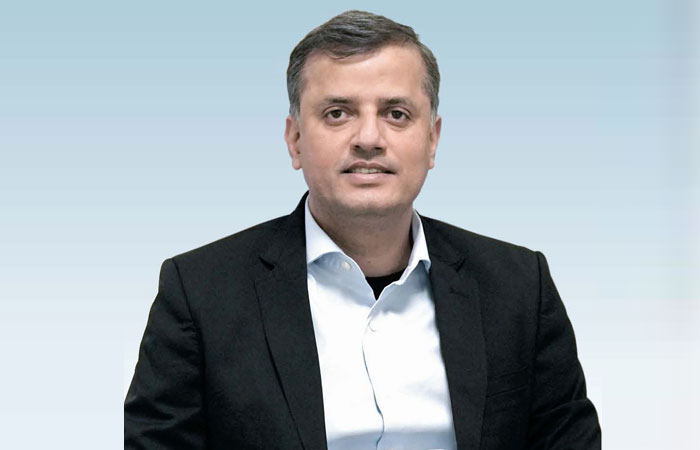
Vijay Mishra, Commercial Director, Knauf India, discusses building a blueprint for a low-carbon future in India’s construction ecosystem, by integrating recycled gypsum, energy-efficient production, and green-certified solutions.

As India’s built environment continues its rapid expansion, the conversation around sustainable construction has moved from concept to necessity. Knauf India is combining innovation, localisation and circularity to help reduce embodied carbon across the value chain. Their mission is clear: to make every product lighter, cleaner, and more future-ready. In this interaction, Vijay Mishra, Commercial Director, Knauf India talks about aligning the company’s growth with India’s green building goals.

How does Knauf India view its role in supporting emission reduction and sustainability across the broader construction and materials ecosystem?
At Knauf India, we see our role not just as a product manufacturer but as a partner in building a low-carbon future for India’s construction ecosystem. The built environment contributes significantly to global emissions, and the only way forward is to rethink how materials are designed, produced, and used. We’re working to embed sustainability right through the value chain — from using synthetic and recycled gypsum to reducing process waste and energy intensity in our plants. The idea is simple: if every component of a building is engineered to use fewer resources, last longer, and be recoverable at end-of-life, we can collectively make a big dent in construction-related emissions.

Circular innovation is central to your strategy. How are recycled gypsum and take-back programs reducing environmental impact?
Circular innovation sits at the core of how Knauf operates globally, and we’re bringing that same philosophy to India. We use synthetic gypsum, which is a by-product from industrial desulphurisation processes, in place of mined gypsum — this helps reduce extraction and keeps valuable material in circulation. Internationally, Knauf runs ‘Take-Back’ programmes that collect gypsum board waste from construction and demolition sites, recycle it, and feed it back into production. In India, we are exploring similar models, starting with pilot initiatives around waste segregation and recovery from large projects. Gypsum, unlike many materials, can be recycled endlessly without losing its properties — and that’s a huge opportunity for our industry to close the material loop and bring down overall environmental impact.

What contribution can material reuse and recovery models make toward lowering embodied carbon in building materials?
Material reuse and recovery models can transform the carbon equation for construction materials. Every tonne of gypsum we recycle means one less tonne to mine and process — and that translates to meaningful carbon savings. Beyond that, when materials are designed to be taken apart, reused, or reprocessed, we reduce demolition waste and the need for virgin inputs. The embodied carbon of a product doesn’t only come from manufacturing — it’s tied to the entire lifecycle. If we design materials that live longer and return safely into the cycle, we make our buildings far more efficient from an emissions standpoint.

Plasterboards are rapidly replacing traditional POP — what makes them a more sustainable and energy-efficient alternative?
That’s true — plasterboards have essentially become the default choice for ceilings across most Indian cities today. Twenty years ago, the ceiling market was largely unorganised — dominated by manually produced POP sheets. Back then, the entire market was barely `65 crore. Today, it’s over `5,000 crore, and growing rapidly. This shift has been driven by both economics and sustainability.
POP sheets required labour-intensive casting and drying under the sun — a process that was cheap but highly inefficient and inconsistent. Post-COVID, as labour costs rose and timelines became tighter, the industry naturally moved toward plasterboard systems that are factory-made, consistent, and far less wasteful. A plasterboard ceiling requires less material, produces minimal site waste, and delivers better thermal and fire performance. From an environmental standpoint, these boards are energy-efficient to manufacture, use recycled content, and are quicker to install — reducing on-site emissions and water use.

With India’s ceiling market expanding rapidly, how is Knauf ensuring growth remains aligned with green building standards?
India’s ceiling market still has tremendous headroom for growth. To put it in perspective, plasterboard consumption here is only 0.13 square metres per capita, compared to a global average of 1.4, and over 2.5–3 in countries like Thailand or Vietnam. That tells you how early we are in the journey. But we want that growth to happen responsibly. All our products are manufactured under BIS and ISI-certified processes and align with GRIHA and IGBC green building parameters. Our DewBloc Moisture-Resistant board, for example, is designed for India’s diverse climates — especially high-humidity regions — ensuring durability and lower replacement rates, which directly translates to lower lifecycle emissions. We are deeply focused on localisation — producing closer to our markets, sourcing locally, and designing products suited to India’s building typologies. That combination — localisation plus circular thinking — is what will make this growth both scalable and sustainable.

Can you share how localisation and zero-process waste practices are improving both efficiency and emission performance?
Localisation is key to sustainability. Manufacturing close to our markets reduces transportation emissions, supports local employment, and shortens supply chains. Our plants are designed with closed-loop water systems and near zero process waste, meaning almost everything that goes into production is either part of the product or recycled back. We also source a significant portion of raw materials locally, which not only helps emission control but also aligns with the government’s ‘Make in India’ vision. It’s a practical approach — efficient, sustainable, and economically sensible.

How do government programmes like PMAY influence the demand for eco-friendly and emission-conscious interior systems?
PMAY and similar housing initiatives are redefining the way we think about affordability and sustainability.
Earlier, the focus in mass housing was primarily on cost and speed. Today, there’s a growing awareness that energy-efficient, durable materials actually reduce lifecycle costs. Lightweight systems like gypsum boards make faster, cleaner, and more energy-efficient construction possible, which aligns perfectly with the government’s push for sustainable urban housing.
As public sector projects increasingly adopt green building frameworks, it naturally creates more demand for emission-conscious materials.

What innovations in gypsum technology or material science could further support low-carbon construction?
There is some really exciting work happening globally and within Knauf in material science.
Innovations like bio-based additives, lightweight core formulations, and moisture- and fire-resistant boards are making gypsum systems even more durable and efficient. Another area is design for disassembly — creating systems that can be easily taken apart and reused, which directly supports circular construction. The long-term goal is to create materials that perform better in buildings and are responsible at the end of their life — that’s where low-carbon construction truly begins.

– Kanika Mathur

Concrete

Wonder Cement appoints Mahesh Singh as VP Corporate Brand Communication 

Published

on

By

Shares

Singh brings 20+ years of brand and marketing experience, and will lead integrated corporate brand communication initiatives at Wonder Cement 

New Delhi

Wonder Cement, a leading cement manufacturer, has appointed Mahesh Singh as Vice President – Corporate Brand Communication. In his new role, he will oversee corporate brand strategy and communication, including digital and performance marketing, public relations, trade, events, exhibitions, sports and experiential marketing. 

Singh brings over two decades of experience across marketing and communications, with roles spanning the automotive industry, agencies and entrepreneurship. He spent more than a decade with Honda Motorcycle & Scooter India, working across integrated communication, media, digital, retail and consumer engagement. His stint also included helping build the company’s digital marketing capabilities. 

He moved to dentsu X India as Vice President – Strategy & Planning, working across categories such as automotive, auto components, electric vehicles, FMCG, consumer electronics, BFSI, apparel and brand consulting. His responsibilities included media and marketing strategy, product launches, content, performance marketing and consumer activations. 

Singh subsequently took an entrepreneurial route with Radiant Brands before joining Shriram Ltd (SPR Autotech) as Head – Marketing & Communications. There, his remit included brand and corporate strategy, communications, PR and ORM, retail identity, loyalty programmes and events. 

At Wonder Cement, Singh will be responsible for bringing together the company’s corporate brand communication initiatives across digital, performance marketing, PR, trade, sports and experiential platforms. The role will focus on creating an integrated approach to communication across consumers, trade partners and other key stakeholders. 

The appointment brings to Wonder Cement a marketer whose career has spanned the brand, agency and entrepreneurial sides of the communications ecosystem. 

Wonder Cement, part of the RK Group, is a cement manufacturer with roots in Rajasthan and a focus on quality, trust and transparency. The company has grown to six manufacturing plants, and a cement capacity of 21.5 MTPA. With more than 2,000 employees and a network of over 5,000 dealers, its operations span manufacturing, distribution and customer engagement, with a focus on consistent product quality and efficient execution. 

Continue Reading

Concrete

JSW Cement commissions additional 1 MTPA grinding unit at Nagaur

Published

on

By

Shares

With this commissioning, JSW Cement’s total cement grinding capacity has increased to 25.10 MTPA, 
Mumbai

JSW Cement, one of India’s leading green cement producers and part of the diversified JSW Group, today announced the successful commissioning of an additional 1.00 MTPA cement grinding unit at Nagaur, Rajasthan. The commissioning marks another significant milestone in the Company’s growth strategy.

With this commissioning, JSW Cement’s total cement grinding capacity has increased to 25.10 MTPA, while its total clinker manufacturing capacity, including clinker capacity at its joint venture, JSW Cement FZC, stands at 9.74 MTPA.

JSW Cement had commenced operations in North India in March 2026 with the Nagaur Integrated Plant, comprising a 3.30 MTPA clinkerisation unit and 2.50 MTPA cement grinding unit. With the commissioning of the additional 1.00 MTPA cement grinding unit, the plant’s total cement grinding capacity has increased to 3.50 MTPA, enhancing the company’s ability to cater to the growing cement demand across Rajasthan, Haryana, Punjab and the National Capital Region (NCR). The expansion has been funded through a strategic mix of equity and long-term debt.

During the quarter ended 30th September 2026, JSW Cement has also commissioned the Alternate Fuel Handling System and the Waste Heat Recovery system (WHRS) at the Nagaur Integrated Plant.

Nilesh Narwekar, CEO, JSW Cement, said: “The commissioning of additional 1.00 MTPA grinding capacity at Nagaur is a key strategic priority for us and will accelerate JSW Cement’s expansion into North India. We look forward to servicing the growing needs of the region and contributing to the economic growth of Rajasthan, Haryana, Punjab and the NCR area. I am delighted to share that the company has commissioned this grinding unit within the expected timeline, showcasing our project execution capabilities. Further, the Alternate Fuel Handling System and the Waste Heat Recovery system (WHRS) are expected to substantially reduce our production costs going forward.”

Continue Reading

Concrete

UltraTech becomes first Indian cement firm to cross 2 GW green energy

Published

on

By

Shares

UltraTech Cement has crossed 2 GW of captive green energy capacity, with renewables and waste heat recovery meeting 48 per cent of its power needs.

Mumbai

UltraTech Cement Limited has surpassed 2 GW of installed green energy capacity for captive use, becoming the first cement company in India to achieve the milestone. The Aditya Birla Group company commissioned 116.55 MW of wind capacity at its Inter-State Transmission System-connected wind-solar hybrid project in Barmer, Rajasthan, along with 10 MW of Waste Heat Recovery System capacity at Sarlanagar Cement Works in Karnataka.

With these additions, UltraTech’s cumulative installed green energy capacity has reached 2,024 MW. This includes 1,580 MW of renewable energy capacity and 444 MW of waste heat recovery capacity, together meeting around 48 per cent of the company’s current power requirements.

The company said the milestone reflects the progress of its long-term energy transition strategy. In FY27 so far, nearly one-third of UltraTech’s 76 manufacturing units in India have maintained green energy utilisation above 50 per cent of their electricity requirements, while five units have crossed 95 per cent.

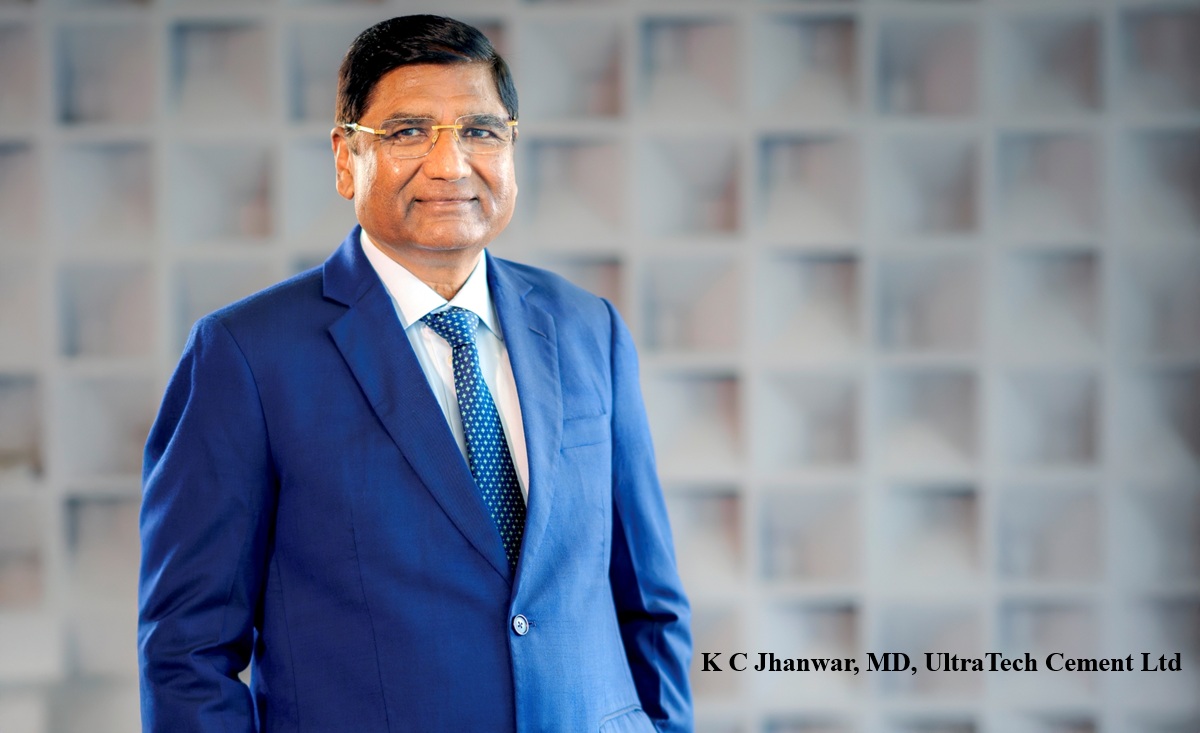
K C Jhanwar, Managing Director, UltraTech Cement Limited, said, “Crossing the 2 GW green energy milestone is the result of a strategy we have pursued consistently over the past decade. Cement is an energy-intensive, hard-to-abate sector, and showing that reliability and growth can go hand in hand with a rapid shift to green energy sets a benchmark for the industry. With nearly half of our power needs now met through green energy, we are significantly less exposed to fossil fuel supply constraints and power price volatility. As we scale up renewables, waste heat recovery and battery storage across our operations, we are building an energy foundation for stable, long-term growth.”

UltraTech commissioned 430 MW of green energy capacity in FY26 and continues to expand its renewable energy and waste heat recovery portfolio.

The company is also progressively integrating Battery Energy Storage Systems across its operations to improve renewable energy utilisation and supply reliability.

In 2025, UltraTech operationalised what it described as India’s first on-site hybrid round-the-clock renewable energy project at Sewagram Cement Works in Gujarat. The project combines solar, wind and battery storage.

As part of its decarbonisation strategy, UltraTech said it has not invested in new captive thermal power capacity for either greenfield projects or brownfield expansions at its integrated units for more than a decade.

The company said its expanding green energy portfolio is helping reduce dependence on conventional grid electricity and fossil fuel-based power, while lowering exposure to fluctuations in coal and electricity prices.

UltraTech aims to increase green energy’s share in its total power mix to 85 per cent by 2030. As a member of RE100, it has also committed to meeting 100 per cent of its electricity requirement through renewable sources by 2050.

UltraTech Cement, the cement flagship of the Aditya Birla Group, has a total grey cement capacity of 210.1 MTPA and white cement and putty capacity of 3.5 MTPA. The company is also a signatory to the GCCA Climate Ambition 2050 and has committed to the GCCA Net Zero Concrete roadmap.

Continue Reading

Video Thumbnail
▶

    SIGN-UP FOR OUR GENERAL NEWSLETTER

    Trending News