Connect with us

Concrete

Our backward integration strategy is a key differentiator

Published

on

Shares

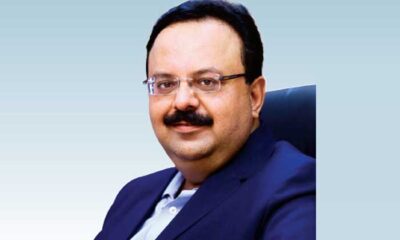
Mayank Gugalia, Director, Mahakoshal Refractories, talks about their specialisation in alumina refractories with a strong focus on sustainability with their commitment to quality, innovation in AFR solutions, and backward integration set them apart in the industry.

Could you share the sustainability initiatives undertaken by your company and how they contribute to environmental preservation?
Our company specialises in manufacturing alumina refractories and has grown to become one of the largest producers in India. Our product range includes alumina bricks, castables, high alumina cements, and synthetic aggregates.
Regarding sustainability, we recently installed a 1.5-megawatt solar power plant, which meets a significant portion of our energy requirements. Over the past three years, we have planted approximately 1,500 trees, reflecting our commitment to afforestation. Additionally, we have obtained the EcoWater certification, a notable recognition in sustainability and ESG. These efforts align with the government’s emphasis on green initiatives and underscore our dedication to environmental stewardship.

How does your brand distinguish itself from competitors, and what key attributes of your company would you like to highlight?
Our company focuses exclusively on alumina refractories, setting us apart from competitors. While others may diversify into basic refractories or flow controls, we prioritise becoming the best in the alumina segment. In terms of volume, we are among India’s largest manufacturers, and our quality standards have earned us a leading position domestically and in export markets, including the Middle East and Europe. Our commitment to sustainability further strengthens our reputation as a trusted and environmentally responsible manufacturer.

Cement is a significant consumer of refractories. Could you explain your association with the cement industry and provide an overview of the products you supply?
Our marketing portfolio is highly diversified, serving industries such as steel, aluminum, cement, and exports. For cement plants, we supply alumina bricks for rotary kilns, preheaters, and coolers, as well as a variety of castables. Our range includes gunning castables, tip casting products, and specialised solutions for critical applications like burner pipes. This extensive product portfolio positions us as a reliable partner for the cement industry.

How does your product portfolio align with the evolving needs of the cement industry, especially in terms of alternative fuels and raw materials (AFR)?
The specifications of AFR vary between cement companies due to its nature as a waste product. To meet these diverse needs, we conduct thorough R&D. We collect AFR samples, analyse their chemical properties in our laboratory, and design castables tailored to specific applications. Recently, we developed and implemented products in cement plants that have shown excellent performance and durability. By focusing on factors such as alkali content and chemical reactions, we ensure our products are optimised for AFR use.

Could you elaborate on the backward integration practices you’ve adopted and how they benefit cement plants?
Our backward integration strategy is a key differentiator. We own bauxite mines, ensuring a consistent supply of high-quality raw materials. We also process raw materials in-house using rotary kilns to produce high alumina cements and synthetic aggregates. These intermediate products are used in our refractory castables and are also sold to other refractory companies in India. This approach allows us to maintain strict quality control, improve product consistency, and enhance self-sustainability.

What is your perspective on the net-zero emissions mission and decarbonisation? How does your company align with these goals?
The net-zero mission is crucial for all industries, including medium-scale enterprises. While some perceive decarbonisation as costly, advancements such as affordable solar power installation have made renewable energy more accessible. Small and medium enterprises can also contribute by adopting eco-friendly fuels, planting trees, and implementing robust pollution control measures to manage dust and emissions. By reducing carbon footprints through these practices, industries can collectively move closer to achieving net-zero goals.

– Kanika Mathur

Concrete

Steel: Shielded or Strengthened?

CW explores the impact of pro-steel policies on construction and infrastructure and identifies gaps that need to be addressed.

Published

on

By

Shares

Going forward, domestic steel mills are targeting capacity expansion
of nearly 40 per cent through till FY31, adding 80-85 mt, translating
into an investment pipeline of $ 45-50 billion. So, Jhunjhunwala points
out that continuing the safeguard duty will be vital to prevent a surge
in imports and protect domestic prices from external shocks. While in
FY26, the industry operating profit per tonne is expected to hold at
around $ 108, similar to last year, the industry’s earnings must
meaningfully improve from hereon to sustain large-scale investments.
Else, domestic mills could experience a significant spike in industry
leverage levels over the medium term, increasing their vulnerability to
external macroeconomic shocks.(~$ 60/tonne) over the past one month,
compressing the import parity discount to ~$ 23-25/tonne from previous
highs of ~$ 70-90/tonne, adds Jhunjhunwala. With this, he says, “the
industry can expect high resistance to further steel price increases.”

Domestic HRC prices have increased by ~Rs 5,000/tonne
“Aggressive
capacity additions (~15 mt commissioned in FY25, with 5 mt more by
FY26) have created a supply overhang, temporarily outpacing demand
growth of ~11-12 mt,” he says…

To read the full article Click Here

Continue Reading

Concrete

JK Cement Commissions 3 MTPA Buxar Plant, Crosses 31 MTPA

Company becomes India’s fifth-largest grey cement producer

Published

on

By

Shares

JK Cement  has commissioned its new 3 MTPA grey cement plant in Buxar, Bihar, taking the company’s total installed capacity to 31.26 million tonnes per annum (MTPA) and moving it past the 30 MTPA milestone. With this addition, JK Cement now ranks among the top five grey cement manufacturers in India, strengthening its national presence.

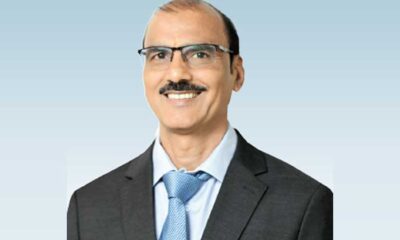
Commenting on the development, Dr Raghavpat Singhania, Managing Director, JK Cement, said, “Crossing 31 MTPA is a significant turning point in JK Cement’s expansion and demonstrates the scale, resilience, and aspirations of our company. In addition to making a significant contribution to Bihar’s development vision, the commissioning of our Buxar plant represents a strategic step towards expanding our national footprint. We are committed to developing top-notch manufacturing capabilities that boost India’s infrastructure development and generate long-term benefits for local communities.”

Spread across 100 acres, the Buxar plant is located on the Patna–Buxar highway, enabling efficient distribution across Bihar and neighbouring regions. While JK Cement entered the Bihar market last year through supplies from its Prayagraj plant, the new facility will allow local manufacturing and deliveries within 24 hours across the state.

Mr Madhavkrishna Singhania, Joint Managing Director & CEO, JK Cement, said, “JK Cement is now among India’s top five producers of grey cement after the Buxar plant commissioning. Our capacity to serve Bihar locally, more effectively, and on a larger scale is strengthened by this facility. Although we had already entered the Bihar market last year using Prayagraj supplies, local manufacturing now enables us to be nearer to our clients and significantly raise service standards throughout the state. Buxar places us at the center of this chance to promote sustainable growth for both the company and the region in Bihar, a high-growth market with strong infrastructure momentum.”

The project has involved an investment of Rs 5 billion. Commercial production began on 29 January 2026, following construction commencement in March 2025. The company said the plant is expected to generate significant direct and indirect employment and support ancillary industrial development in the region.

Continue Reading

Concrete

JK Cement Crosses 31 MTPA Capacity with Commissioning of Buxar Plant in Bihar

Published

on

By

Shares

JK Cement has commissioned a 3 MTPA Grey Cement plant in Buxar, Bihar, taking its total capacity to 31.26 MTPA and placing it among India’s top five grey cement producers. The ₹500 crore investment strengthens the company’s national footprint while supporting Bihar’s infrastructure growth and local economic development.

JK Cement Ltd., one of India’s leading cement manufacturers, has announced the commissioning of its new state-of-the-art Grey Cement plant in Buxar, Bihar, marking a significant milestone in the company’s growth trajectory. With the commissioning of this facility, JK Cement’s total production capacity has increased to 31.26 million tonnes per annum (MTPA), enabling the company to cross the 30 MTPA threshold.

This expansion positions JK Cement among the top five Grey Cement manufacturers in India, strengthening its national footprint and reinforcing its long-term growth strategy.

Commenting on the strategic achievement, Dr Raghavpat Singhania, Managing Director, JK Cement, said, “Crossing 31 MTPA is a significant turning point in JK Cement’s expansion and demonstrates the scale, resilience, and aspirations of our company. In addition to making a significant contribution to Bihar’s development vision, the commissioning of our Buxar plant represents a strategic step towards expanding our national footprint. We are committed to developing top-notch manufacturing capabilities that boost India’s infrastructure development and generate long-term benefits for local communities.”

The Buxar plant has a capacity of 3 MTPA and is spread across 100 acres. Strategically located on the Patna–Buxar highway, the facility enables faster and more efficient distribution across Bihar and adjoining regions. While JK Cement entered the Bihar market last year through supplies from its Prayagraj plant, the Buxar facility will now allow the company to serve the state locally, with deliveries possible within 24 hours across Bihar.

Sharing his views on the expansion, Madhavkrishna Singhania, Joint Managing Director & CEO, JK Cement, said, “JK Cement is now among India’s top five producers of grey cement after the Buxar plant commissioning. Our capacity to serve Bihar locally, more effectively, and on a larger scale is strengthened by this facility. Although we had already entered the Bihar market last year using Prayagraj supplies, local manufacturing now enables us to be nearer to our clients and significantly raise service standards throughout the state. Buxar places us at the center of this chance to promote sustainable growth for both the company and the region in Bihar, a high-growth market with strong infrastructure momentum.”

The new facility represents a strategic step in supporting Bihar’s development vision by ensuring faster access to superior quality cement for infrastructure, housing, and commercial projects. JK Cement has invested approximately ₹500 crore in the project. Construction began in March 2025, and commercial production commenced on January 29, 2026.

In addition to strengthening JK Cement’s regional presence, the Buxar plant is expected to generate significant direct and indirect employment opportunities and attract ancillary industries, thereby contributing to the local economy and the broader industrial ecosystem.

Continue Reading

Trending News

SUBSCRIBE TO THE NEWSLETTER


Don't miss out on valuable insights and opportunities to connect with like minded professionals.


    This will close in 0 seconds