ICR shines a spotlight on the concerted efforts within the cement industry to reduce its water footprint and actively contribute to water positivity. From innovative processes to strategic partnerships, we navigate the currents of change, discovering how the cement industry is redefining its role in a water-scarce world.
One of the most precious resources on our planet is water. Considered one amongst the elements that make the Earth, water is critical for the survival of all living things. Although the planet has enormous water both on the surface and in the ground, accessible freshwater is minuscule. For India in particular, water is a crucial resource.
Planet Earth is the only known planet today that has water and life. Even though 70 per cent of the planet is covered with water, only one per cent is easily accessible. Given that all life forms are dependent on water; its importance cannot be understated for domestic and agricultural use. In addition, water is used to produce power and in multiple processes in multiple industries.
RAINFALL IN INDIA
The CWC monitors 42 reservoirs located in the southern states: Andhra Pradesh, Telangana, Karnataka, Kerala and Tamil Nadu. Their collective storage capacity is 53.334 Billion Cubic Metre (BCM). According to a recent report from the Central Water Commission (CWC), water levels in these states’ reservoirs are low compared to last year and compared to other regions of the country in 2023. In September 2023, the water stocks stood at 25.609 BCM (48 per cent of the total storage capacity), which then dropped to 24.575 BCM (46 per cent of the total storage capacity).
During normal monsoon years over the country, the available water reserves in southern India touch 91 per cent of the total storage capacity. Even though the country as a whole recorded normal rainfall in 2023 (820mm, 94 per cent of the Long Period
Average), the monsoon over the south peninsular was not appreciable.
According to data released by the India Meteorological Department, the South-West monsoon during June- August 2023 has been below normal in 42 per cent of the districts. In August, rainfall in the country was 32 per cent below normal and in the southern States it was 62 per cent. In the last 122 years — that is, since 1901 — India received the lowest rainfall in August this year. With only about a month left for the end of the South-West monsoon, the reduced rainfall will not only affect agriculture severely but it could also lead to massive water shortages in different regions of the country.
ROLE OF WATER IN MANUFACTURING
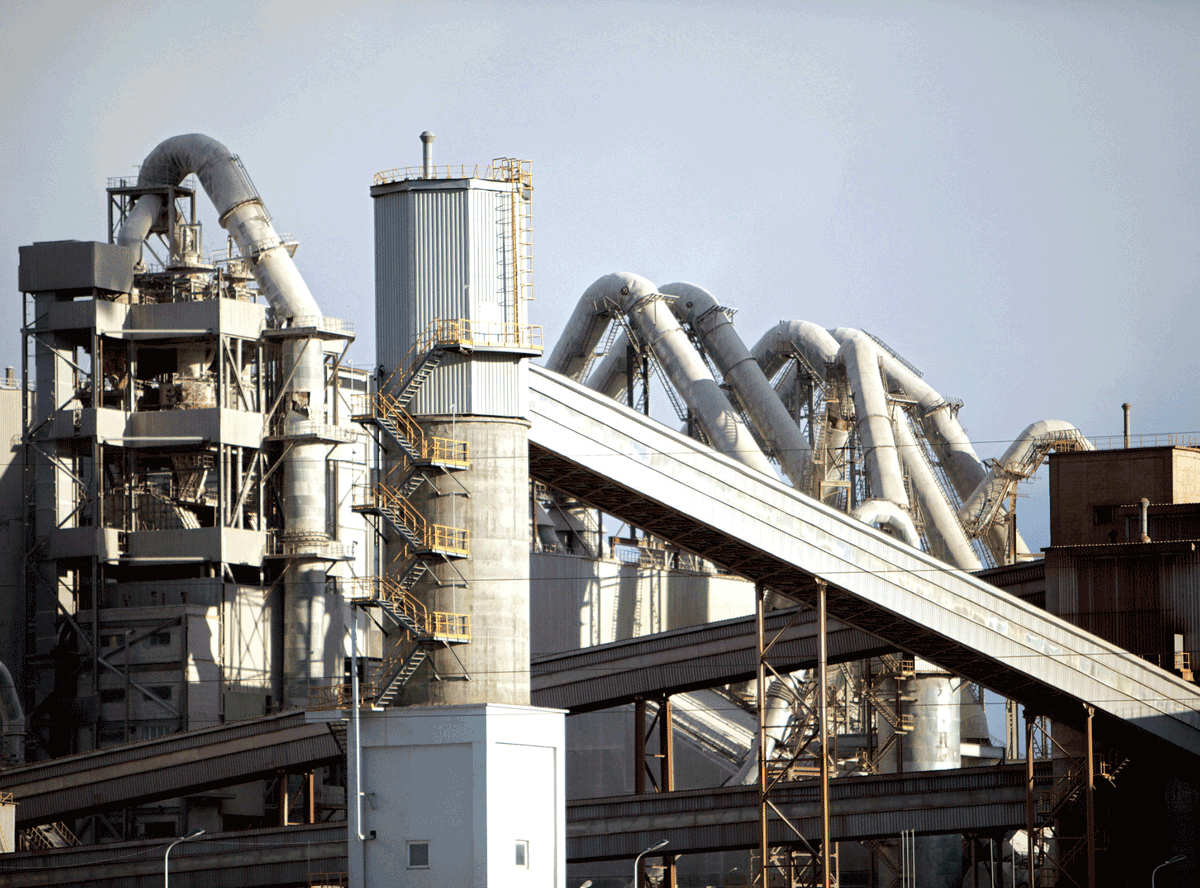
Water plays a crucial role in cement plants, and it is used for various purposes throughout the cement manufacturing process. In cement manufacturing, the term ‘dry process’ refers to the method of producing cement that does not require the addition of water during the grinding of the raw materials. This is in contrast to the ‘wet process,’ where water is added to the raw materials before or during the grinding process. The dry process is more energy-efficient and less labour-intensive than the wet process.
In the initial stages, water is utilised for dust suppression during the extraction of raw materials from quarries. As the raw materials undergo grinding, water is sprayed into mills to prevent overheating and aid in the grinding process. During material transportation, water helps control dust emissions from conveyors and chutes.
In the pyroprocessing stage, water is crucial for cooling both the rotary kiln and clinker, a nodular material produced in the kiln. Additionally, water is used in the grinding of cement clinker into powder, where it aids in temperature control and grinding efficiency. Dust collection systems, such as bag filters and electrostatic precipitators, may also incorporate water to control emissions.
Throughout the cement manufacturing process, water is employed in cleaning equipment and suppressing dust during the loading and unloading of cement. As the industry increasingly emphasises sustainable practices, efforts are made to manage water responsibly, reduce consumption, and implement technologies that enhance efficiency and conservation in cement plants.
The dry process is more energy-efficient because it avoids the need for the large amounts of energy required to evaporate water in the wet process. However, the choice between dry and wet processes can also depend on the specific characteristics of the raw materials available and other factors, including environmental considerations. Many modern cement plants use a combination of both dry and wet processes, known as a ‘semi-dry’ or ‘semi-wet’ process, to optimise efficiency and environmental performance.
WATER POSITIVE CEMENT PLANTS
Water positivity implies a commitment or approach that goes beyond merely avoiding harm or negative impacts on water resources. It may involve actively contributing to the well-being and sustainability of water systems. This could include efforts to conserve water, promote efficient water use, invest in water infrastructure, and engage in practices that enhance overall water quality and availability.
Dr Hitesh Sukhwal, Deputy General Manager (Environment), Udaipur Cement Works, says, “Water positivity means creating more freshwater than what is being used in the manufacturing process and other business activities. However, new water cannot be created, so the focus of water positivity is on the efficient use of water, and to recharge and harvest more rainwater from the ground and/or from the Earth’s surface. A water positive cement plant draws minimal freshwater from ground/surface source, consumes 100 per cent self-generated wastewater for its processes and puts more freshwater back into nature (ground/harvest). Reducing dependency on freshwater is also one of the best ways to become water positive.”
The concept of water positivity involves a proactive stance towards water resources, encompassing measures to curtail water consumption, optimise efficiency, and integrate conservation and recycling strategies throughout the cement manufacturing process.
Initiatives may include the implementation of advanced technologies to minimise water usage, the establishment of systems for treating and reusing water within the plant, and the optimisation of cooling processes to strike a balance between effectiveness and reduced water demand. Beyond internal measures, a water-positive approach might entail considering the broader environmental and community impact, engaging in responsible water management practices, and collaborating with local communities to address shared water challenges.
As sustainability practices continually evolve, staying abreast of the latest industry guidelines, company reports, and publications will provide a clearer understanding of how ‘water positivity’ is specifically manifested in the context of a given cement plant or industry.
“When a company is ‘net water positive’ it means they are creating more water than they are actually using in their business. Whilst it is not a legal compliance, businesses need water to operate and cannot function without it – it makes good business sense to invest in a variety of ways to become water positive. Ambuja Cements Limited is proud to be already ahead of the curve. It is the only cement producer that has been recognised for its leadership in water security by the United Nations Global Compact Network India and recognised ‘A list’ in Global Water Stewardship by the global environment non-profit CDP,” says Pearl Tiwari, CEO, Ambuja Foundation.
Indian cement plants have adopted many measures to have a positive approach towards water and water usage.
Almost 99 per cent of the installed cement manufacturing capacity in India uses dry process manufacturing. A dry process kiln when fitted with a pre calciner; a multistage cyclone preheater; and a multichannel burner – leads to the best available energy performance level at 3.0-3.4 GJ/t clinker as opposed to 5.9 GJ/t to 6.7GJ/t clinker in the wet process.
Adopting water efficient technologies like Air Cooled Condensers (ACC), Waste Heat Recovery systems (WHRS), Zero Liquid Discharge (ZLD) systems etc.
Adaptation of clean energy as the operational water withdrawal intensity of solar Photovoltaic (PV) in India is around 0.08 m3/MWh (primarily related to panel cleaning), which is only 0.5 per cent of the thermal average, while for wind, the water withdrawal is zero. Many Cement plants have been gradually increasing the share of renewable/clean energy in their portfolio.
Optimisation of processes and use of water by installing Automatic water sprinklers and drip irrigation systems to conserve water in the suppression of dust along mining roads and in horticulture. All the cement plants (excluding grinding units and bulk terminals) have implemented sewage treatment plants (STPs) to treat wastewater, which is then used towards horticulture, dual flushes, and cooling towers.
Harvested water from the rain at quarries and cement plants are used for operational purposes for the cement manufacturing process.
Over time, the Indian cement industry has recognised the challenges of limited water resources and has almost fully transitioned to the dry manufacturing processes supplemented by multiple dust control technologies. This makes the Indian cement industry both water and energy efficient while keeping intact the quality of the product.
URBANISATION AND rising demand
The Indian cement market was valued at US$ 26023.83 million in 2022 and is anticipated to project robust growth in the forecast period with a CAGR of 8.98 per cent, owing to a rapidly increasing mega infrastructure projects, rise in renovation and construction activities says the India Cement Market Report 2022, published by Research and Markets, November 2022.
The report further adds that an estimated 270 million people will be added to India’s urban population between now and 2040. Even with such rapid urbanisation on a massive scale, the proportion of India’s population living in cities is anticipated to be less than 50 per cent by 2040. Most of the structures that will exist in India in 2040 have yet to be constructed.
Water Footprint Assessment Study of Cement Plants, a study by NCCBM, has suggested that the installed capacity of cement production is expected to reach 693 million tonnes by 2025 and 1565 tonnes by 2050. The average water consumption in the cement industry, including mining activity, process, dust suppression, green belt development, captive power plant, domestic and colony comes out to be 0.5 kl/tonne. The water requirement for the Indian cement industry is expected to reach 346.64 million m3 by the year 2025 and 782.77 million m3 by the year 2050.
CONCLUSION
The water crisis in India has underscored the urgency for industries to adopt responsible water management practices, and the cement sector is emerging as a proactive player in this critical arena. Faced with the imperative to balance industrial growth with environmental stewardship, cement plants in India are increasingly transitioning from water-intensive to water-positive entities. By embracing a spectrum of innovative practices, these plants are making significant strides in water conservation.
The integration of water recycling and reuse systems, alongside the establishment of rainwater harvesting initiatives, reflects a holistic commitment to sustainable water management. Through public awareness campaigns and community engagement, cement plants are fostering a culture of responsibility and collaboration, ensuring that their operations align with both regulatory standards and the pressing need for water preservation.
In navigating the complex landscape of water scarcity, the evolving practices within the cement industry in India serve as a beacon of hope, demonstrating that industrial progress can coexist harmoniously with environmental preservation.














 Concrete1 month ago
 Concrete4 weeks ago
 Concrete3 weeks ago
 Concrete1 month ago