

Concrete
“Getting it Done” – Integrating Innovation with Technology

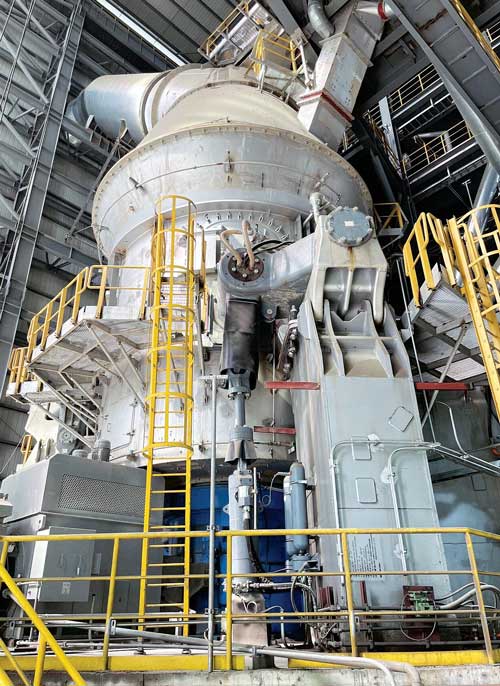
D D Wanjale, Managing Director, Gebr. Pfeiffer India, lists out innovations in Vertical Roller Mills (VRMs) and its resultant impact on producing more sustainable cement.
Gebr. Pfeiffer looks back on 158 years of company history and is well established as a pioneer in grinding solutions via vertical roller mills used in the cement and minerals industry. Till date, more than 175 VRMs have been sold in the Indian market, including Ultratech Cement (45 VRMs) and Shree Cement (35 VRMs). The cement mill type MVR 6000 C-6 alone was ordered more than 20 times, which is the highest number of mills in this category.
During the ’80s, vertical roller mills from Gebr. Pfeiffer were sold directly to the Indian cement industry by our German headquarters. With a further increase in end user demand in the ’90s, Gebr. Pfeiffer Germany decided in the year 2000 to incorporate its largest subsidiary. Gebr. Pfeiffer was founded in India to serve its esteemed customers to be available locally following the principle of ‘Think Global Act Local’. The rest is history. The company’s success in India in the new millennium is mainly due to the commitment of the experienced Pfeiffer specialists in India, who focus even more on the individual challenges and demands of our valued Indian customers. Our colleagues in India know the market and the conditions and offer innovative solutions with global support from our in-house experts and support the customers from the early project phase, leading to smooth commissioning and extending comprehensive services.
In the area of raw material grinding, the opinion was sometimes held, especially in the Indian market, that roller presses would be more economical. Gebr. Pfeiffer has addressed this issue by redesigning of gas flows and other innovations to optimise the fan power and mill Δp Comparisons with MVR mill of the latest design to demonstrate that this is not the case anymore. Joint effort with the Shree Cement team and the operating data received on the new MVR vertical roller mill of the latest design at Shree Cement’s Chhattisgarh plant has established that the power consumption of the MVR mills is reduced even further, resulting in energy savings for the cement industry. Now that it has been established that the specific energy consumption for a Pfeiffer raw mill can be considered equal to roller presses. The many advantages of MVR mills kicks in – single mill solution for higher capacity, such as lower CAPEX for civil and layout requirement, lower OPEX and downtimes due to the higher availability with the advantage of compact design of the grinding plant. As per customer feedback, Pfeiffer MVR mills are operator friendly, commissioned very fast, and put to commercial operations in the fastest way possible vis-a-vis all technologies in grinding. All this together naturally has a very positive effect on the cement manufacturer’s CAPEX and OPEX.
Gebr Pfeiffer VRMs have minimum vibration during operations due to their special profile of grinding elements. Low vibration means stable operation, low water consumption, lower heat, low fatigue and that leads to continuous production at optimum cost. Gebr. Pfeiffer also sets the benchmark in this field, especially in the challenging field of cement grinding, because the unique roller suspension and other design features make MVR cement mills extremely smooth-running, with vibrations in the range of 0.5 mm/s, often even below. Pfeiffer’s MVR mills are also characterised by the highest power density on the market, which means they perform better; others must provide larger grinding track diameters to achieve the same grinding result. This is a huge advantage over competing mills, because a high power density reduces the footprint of the grinding plant, but also the operating costs, because compact mills offer lower pressure drops (Δp) and require less energy for the main plant fan. The MVR mill is currently the most modern vertical mill in the market, and it is constantly being further developed to ensure that Pfeiffer continues to make its contribution on the way to greener cement.
EVOLVING NEEDS
We have limited resources on our Earth. There is only one planet. We are all required to act responsibly without endangering the environment for future generations. Cement is the core industry for catering to customer demand of housing and infrastructure, which means clinker has to be produced continuously to cater to the per capita consumption of large economies like India. The best thing cement manufacturers can do is to reduce the clinker factor and produce greener cement, because producing less clinker offers the greatest potential for CO2 savings in cement production.
Producers are therefore striving to increase the use of supplementary cementitious materials (SCMs) while still maintaining high cement quality. Depending on the source of supply and the market needs, the addition of SCMs such as fly ash, slag or calcined clay for example results in different blended cements, some of which must be ground finer to achieve the desired cement properties. Here, too, the MVR mill plays out its advantages, because its enormous running smoothness allows products down to the ultra-fine range to be produced without any problems. MVR mills already produce blended cements with only 30 per cent clinker content or, elsewhere, CEM I with finenesses of more than 6000 cm²/g (Blaine). Another plus is the fact that VRMs can generally change from one product to the next within a few minutes, this is due to the short material dwell time within the mill, this looks quite different with other grinding systems, such as the roller presses and ball mills.
Pfeiffer has taken up the cause of sustainability through technology, which is the reason for the innovative strength of the company, resulting in numerous improvements again and again, thus saving resources and energy even more. In the case of grinding plants, however, greener cement does not only have to do with design and process improvements, since the degree of digitisation of the plant also has an influence that should not be underestimated.
DIGITISATION AND AUTOMATION
New processes are coming along every day to integrate innovations. When people talk about Industry 4.0 digitisation, Internet of Things (IoT) or artificial intelligence (AI), this is not a future scenario, because due to the many possibilities, this has long found its way also into the cement industry. Gebr. Pfeiffer recognised the potential and importance of digitisation early on and formed a powerful team consisting of process and programming specialists who have jointly developed their own software and continue to expand it, because who understands the grinding process better than the vertical roller mill manufacturer itself.
The company’s portfolio of digital products includes practical and future-proof automation solutions as well as a Conditions Monitoring Systems (CMS) that go far beyond pure monitoring of the gearbox or data acquisition as well as data storage and artificial intelligence.
The digital product GPlink, for example, collects and saves sensor data. If the customer grants Pfeiffer access to this data, then this leads to optimised operation because it enables most effective remote support. The service engineer can quickly get an overview via the operation data and provide targeted assistance. The digital product GPpro builds on GPlink and offers several modules, including a CMS system, data analysis tools and reports. Another GPpro module is dynamic water injection to save water. To stabilise the grinding bed in VRMs, a little water is often sprayed in before the grinding rollers. The mentioned module helps to keep the amount of water needed as low as possible, because the system reads data and automatically adds only as much water as is necessary.
Of course, the exciting topic of AI must not be missing when it comes to digital modules. Even the most experienced plant operator, with an eye for optimised plant operation, is not capable of doing what AI makes possible. By using AI, any number of mutually influencing parameters can be calculated through to find the ideal operating setting. And this know-how is retained even if the person in the control room changes. When the feed material is changed, the optimum parameter settings can be loaded or recalculated. Initial extensive tests with AI on operating plants have been very promising, and there is enormous potential for improvement here.
In response to changing requirements, all digital products from Gebr. Pfeiffer are constantly being further developed. The modular design offers, for example, functions in the areas of preventive maintenance, protection of the mill, reduction of water consumption, increased performance, reduction of energy consumption and more. GPlink and GPpro are not only available for new machines, because they can of course also be retrofitted to existing MPS or MVR mills.
CEMENT COLLABORATIONS
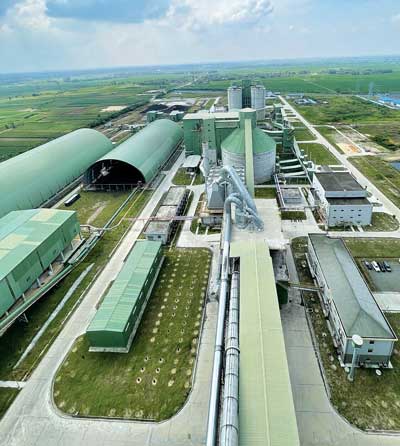
Vertical roller mills with the highest power density are of course the mills with the highest level of development. Gebr. Pfeiffer’s pioneering leadership is also reflected here, as its mills are more compact and perform better compared to the past and even today compared to the competition. Capacities that were once achieved in a specific mill size can be realised in a smaller mill now, which improve the carbon footprint and are accompanied by
improved efficiency and cost reduction, benefiting cement producers.
Consumption of clinker will decrease, and consumption of SCMs will increase in the coming years to meet growing demand without further impacting the environment. As a reliable partner to its customers, Pfeiffer subscribes to this philosophy and does not rest on the fact that its MVR mill currently performs best compared to the competition.
The topics of efficiency, sustainability and digitisation are closely linked. These topics will continue to be the driving force in the further development of Pfeiffer products and processes. Economy and sustainability are not mutually exclusive; both must be in focus to continue to accompany the Indian cement industry on its journey.
ABOUT THE AUTHOR:
D D Wanjale, Managing Director, Gebr. Pfeiffer India, has been with the company for the past nine years and comes with vast experience in the cement industry.








JSW Cement Commissions 1 MTPA Unit in Rajasthan

Wonder Cement appoints Mahesh Singh as VP Corporate Brand Communication

JSW Cement commissions additional 1 MTPA grinding unit in Rajasthan

JSW Cement Boards Approve Proposed Shiva Cement Merger

JSW Cement commissions additional 1 MTPA grinding unit at Nagaur
JSW Cement Commissions 1 MTPA Unit in Rajasthan
Wonder Cement appoints Mahesh Singh as VP Corporate Brand Communication
JSW Cement commissions additional 1 MTPA grinding unit in Rajasthan
JSW Cement Boards Approve Proposed Shiva Cement Merger







