Connect with us

Concrete

Technology prevents wastage of product

Published

on

Shares

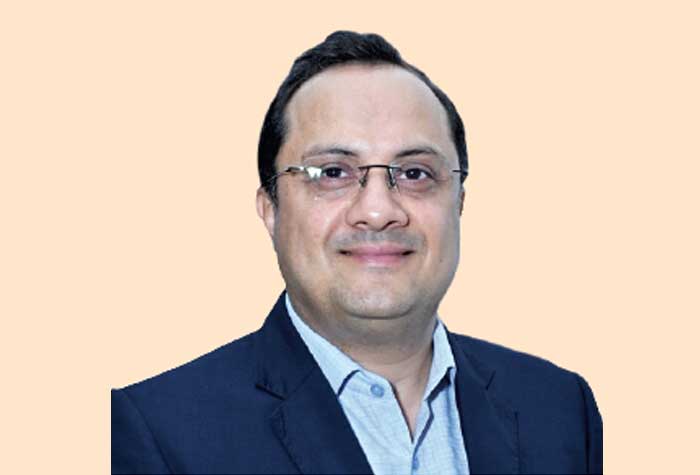
Nitin Vyas, Managing Director and CEO, Beumer India, talks about how technology is the driving force behind the innovations in packaging, which will ultimately lead to more sustainable solutions and better efficiency.

Tell us about the loading systems and their impact on the energy efficiency of the cement manufacturing process.
If you break down the cement manufacturing processes into the raw and final product stages, about 25 per cent cost is sitting in the loading and packaging areas, which is part of the overall logistics. This is one of the most inefficient systems in the cement industry in the world, while the most efficient manufacturing systems are sitting in India. Unfortunately, a lot of focus has not come on the packing, loading and distribution of cement. Our machines not only function with respect to electro-mechanical loading efficiency or energy efficiency, they also are fully automatic. So, without any human intervention, a full truck can be loaded within 60 minutes. About 60 such machines are operational in India.
Looking at the larger picture and speaking about sustainability, our cement bags are a problem. They have a high porosity. The only two countries using these bags are India and China, where China will stop using these bags going forward as they are huge pollutants. When the bag is thrown, a lot of dust is generated. The cement industry needs to become responsible and not look at saving a miniscule amount of money per bag and rather look at the bigger picture and save the environment. Approximately Rs 2 per 50 kg bag needs to be spent to improve the quality, which will result in a better environment and better health conditions for the loader as well.
If I look at the macro numbers, India’s overall logistics cost is around 14 per cent of the GDP, whereas a developed nation’s overall logistic cost is up to 10 per cent. We are aspiring to achieve these numbers. However, the cement industry holds a logistic cost of 25 per cent, which is very high. Therefore, going forward, packing, distribution etc need to be considered to bring down this logistics cost. Sustainability needs to be created end-to-end.
The United Nations has given sustainability goals and the cement industry needs to benchmark against the same as a measure for their sustainability goals. We need to look at sustainability not only from the view of energy efficiency but as the upliftment of a society and environment. For me, in a packaging plant the word society refers to the workers. The economic benefit lies in the reduced logistic cost and a lot more. Sustainability needs to be looked at in a total framework, only then it can be achieved.

Do you think the industry experiences a gap in policies and regulations in the packaging arena?
There are no hard policies for packaging. There are no strict regulations on what kind of bags need to be used for packaging, what is the pollution limit in a packing plant etc. Sustainability is treated as fashion in today’s time, but it needs to be looked at more seriously, especially in the packaging and logistics domain.
We are hoping to implement more policies in the near future and there will be more transparency in policy and process in the days to come. Sustainability needs some push from the government, but eventually the onus is on the cement manufacturers to
follow through.

What is the role of technology in preventing wastage in packaging?
Anything that needs to be improved, needs to be measured. If you do not measure, you don’t know where you are standing. For example, your machine is supposed to produce 100 tonnes of cement in an hour, but in reality, it despatches only 80 tonnes in an hour, which should not be a satisfactory measure.
When the machines are technologically and digitally enabled, and the processes around them are made intelligent, too, then the measures are correct and precise. For a machine, system or line, manufacturers must measure Overall Equipment Effectiveness (OEE), to make it more efficient. This measurement will have an economic benefit, preventing wastage, by maximising the usage of the asset.
This enabling can work wonders in a cement packaging plant. For example, when a truck comes into the yard, enable it digitally by having a RF card, which the driver can scan and get to know his parking location and loading time. This saves time of filling out forms, reduces manual errors and saves cost. The truck can further get attached to machines, where packed bags can be loaded in a set weight and amount to have the most optimised loading of cement bags that can be despatched. Thus, technology prevents wastage of product, and it brings efficiency in terms of time and cost.

How important is data in building the kind of technology described by you?
Humans were originally hunters and gatherers. Our tools were bows and spears that were used for hunting. Then came the agricultural and industrial age when land was fuel and steel and coal were fuels, respectively. In today’s era, the digital age, data is the new fuel. Some of the data driven industries are richer than countries all together, because the new fuel for the economy is data. The first step to using data efficiently is to harvest it. Data is all over the place and data points need to be identified that should be harvested. People who use machines should understand the data points. Once the data is harvested it needs to be structured and put into categories and then start using it.
We do big data analytics for our machines. The objective is to improve the quality and efficiency of the machine. Data gives an opportunity to serve the existing market and improve existing machines while showcasing an opportunity to give economies of outcome. Thus, data is a powerful tool and one needs to identify and use it judiciously for their business and machines. It helps us better our technology by providing insights into the gaps as well as opportunities in the cement packaging sector.

What kind of innovations can be expected from your organisation in the near future?
We are working on a packaging machine that has a digital service attached to it. It comes with a smart glass, which will be given to the customer. So, whenever there is a breakdown or need for repair, there will not be a need for some person to come in. The personnel at the plant can wear these glasses. They have a camera and a screen that displays manuals and instructions. They can be heard and there is a facility to speak for help as well. All our machines are equipped with remote connectivity, which allows experts at the back office to take control of the machine and the person at the plant can show what is happening and get real time repair solutions, thus, saving on time and preventing longer downtimes.
This is one of many digital technologies that we plan to implement with our projects. For example, whenever we had a brown field on our existing plants, typically surveys were done manually, which used to take days. Now we are implementing 3D laser scanners, which will speed up the process at the plant. It beams the lasers around and with that we get the entire topography of the area, surface details and all required details to make modifications to our systems. All our machines now come digitally enabled. We also have apps to measure overall equipment effectiveness for plants and units to be more effective.

-Kanika Mathur

Concrete

NBCC Wins Rs 550m IOB Office Project In Raipur

PMC Contract Covers Design, Execution And Handover

Published

on

By

Shares


State-owned construction major NBCC India Ltd has secured a new domestic work order worth around Rs 550.2 million from Indian Overseas Bank (IOB) in the normal course of business, according to a regulatory filing.

The project involves planning, designing, execution and handover of IOB’s new Regional Office building at Raipur. The contract has been awarded under NBCC’s project management consultancy (PMC) operations and excludes GST.

NBCC said the order further strengthens its construction and infrastructure portfolio. The company clarified that the contract is not a related party transaction and that neither its promoter nor promoter group has any interest in the awarding entity.

The development has been duly disclosed to the stock exchanges as part of NBCC’s standard compliance requirements.

Continue Reading

Concrete

Nuvoco Q3 EBITDA Jumps As Cement Sales Hit Record

Premium products and cost control lift profitability

Published

on

By

Shares


Nuvoco Vistas Corp. Ltd reported a strong financial performance for the quarter ended 31 December 2025 (Q3 FY26), driven by record cement sales, higher premium product volumes and improved operational efficiencies.

The company achieved its highest-ever third-quarter consolidated cement sales volume of 5 million tonnes, registering growth of 7 per cent year-on-year. Consolidated revenue from operations rose 12 per cent to Rs 27.01 billion during the quarter. EBITDA increased sharply by 50 per cent YoY to Rs 3.86 billion, supported by improved pricing and cost management.

Premium products continued to be a key growth driver, sustaining a historic high contribution of 44 per cent for the second consecutive quarter. The strong momentum reflects rising brand traction for the Nuvoco Concreto and Nuvoco Duraguard ranges, which are increasingly recognised as trusted choices in building materials.

In the ready-mix concrete segment, Nuvoco witnessed healthy demand traction across its Concreto product portfolio. The company launched Concreto Tri Shield, a specialised offering delivering three-layer durability and a 50 per cent increase in structural lifespan. In the modern building materials category, the firm introduced Nuvoco Zero M Unnati App, a digital loyalty platform aimed at improving influencer engagement, transparency and channel growth.

Despite heavy rainfall affecting parts of the quarter, the company maintained improved performance supported by strong premiumisation and operational discipline. Capacity expansion projects in the East, along with ongoing execution at the Vadraj Cement facilities, remain on track. The operationalisation of the clinker unit and grinding capacity, planned in phases starting Q3 FY27, is expected to lift total cement capacity to around 35 million tonnes per annum, reinforcing Nuvoco’s position as India’s fifth-largest cement group.

Commenting on the results, Managing Director Mr Jayakumar Krishnaswamy said Q3 marked strong recovery and momentum despite economic challenges. He highlighted double-digit volume growth, premium-led expansion and a 50 per cent rise in EBITDA. The company also recorded its lowest blended fuel cost in 17 quarters at Rs 1.41 per Mcal. Refurbishment and project execution at the Vadraj Cement Plant are progressing steadily, which, along with strategic capacity additions and cost efficiencies, is expected to strengthen Nuvoco’s long-term competitive advantage.

Continue Reading

Concrete

Cement Industry Backs Co-Processing to Tackle Global Waste

Industry bodies recently urged policy support for cement co-processing as waste solution

Published

on

By

Shares


Leading industry bodies, including the Global Cement and Concrete Association (GCCA), European Composites Industry Association, International Solid Waste Association – Africa, Mission Possible Partnership and the Global Waste-to-Energy Research and Technology Council, have issued a joint statement highlighting the cement industry’s potential role in addressing the growing global challenge of non-recyclable and non-reusable waste. The organisations have called for stronger policy support to unlock the full potential of cement industry co-processing as a safe, effective and sustainable waste management solution.
Co-processing enables both energy recovery and material recycling by using suitable waste to replace fossil fuels in cement kilns, while simultaneously recycling residual ash into the cement itself. This integrated approach delivers a zero-waste solution, reduces landfill dependence and complements conventional recycling by addressing waste streams that cannot be recycled or are contaminated.
Already recognised across regions including Europe, India, Latin America and North America, co-processing operates under strict regulatory and technical frameworks to ensure high standards of safety, emissions control and transparency.
Commenting on the initiative, Thomas Guillot, Chief Executive of the GCCA, said co-processing offers a circular, community-friendly waste solution but requires effective regulatory frameworks and supportive public policy to scale further. He noted that while some cement kilns already substitute over 90 per cent of their fuel with waste, many regions still lack established practices.
The joint statement urges governments and institutions to formally recognise co-processing within waste policy frameworks, support waste collection and pre-treatment, streamline permitting, count recycled material towards national recycling targets, and provide fiscal incentives that reflect environmental benefits. It also calls for stronger public–private partnerships and international knowledge sharing.
With global waste generation estimated at over 11 billion tonnes annually and uncontrolled municipal waste projected to rise sharply by 2050, the signatories believe co-processing represents a practical and scalable response. With appropriate policy backing, it can help divert waste from landfills, reduce fossil fuel use in cement manufacturing and transform waste into a valuable societal resource.    

Continue Reading

Trending News

SUBSCRIBE TO THE NEWSLETTER


Don't miss out on valuable insights and opportunities to connect with like minded professionals.


    This will close in 0 seconds