Connect with us

Concrete

Gypsum is used in cement to avoid flash-set

Published

on

Shares

Pradeep Kumar ChouhanGeneral Manager (QC and Environment), Udaipur Cement Works, sheds light on the role of gypsum and its manufacturing process.

Explain the role of gypsum in the cement manufacturing process.
Gypsum plays an important role in controlling the rate of hardening of the cement. Since it delays the settling of cement, it allows a longer working time, transporting, and placing. If gypsum is not added with a clinker during the cement manufacturing process, then the cement produced will immediately be set in addition to water and masons will not find time to work with it.
Gypsum is colourless, transparent, and naturally occurring in crystalline form as a mineral. It is widely used in our day-to-day life. It is a primary ingredient of toothpaste, used as a colour additive for drugs and cosmetics, as a food additive, plaster for orthopaedic use etc.
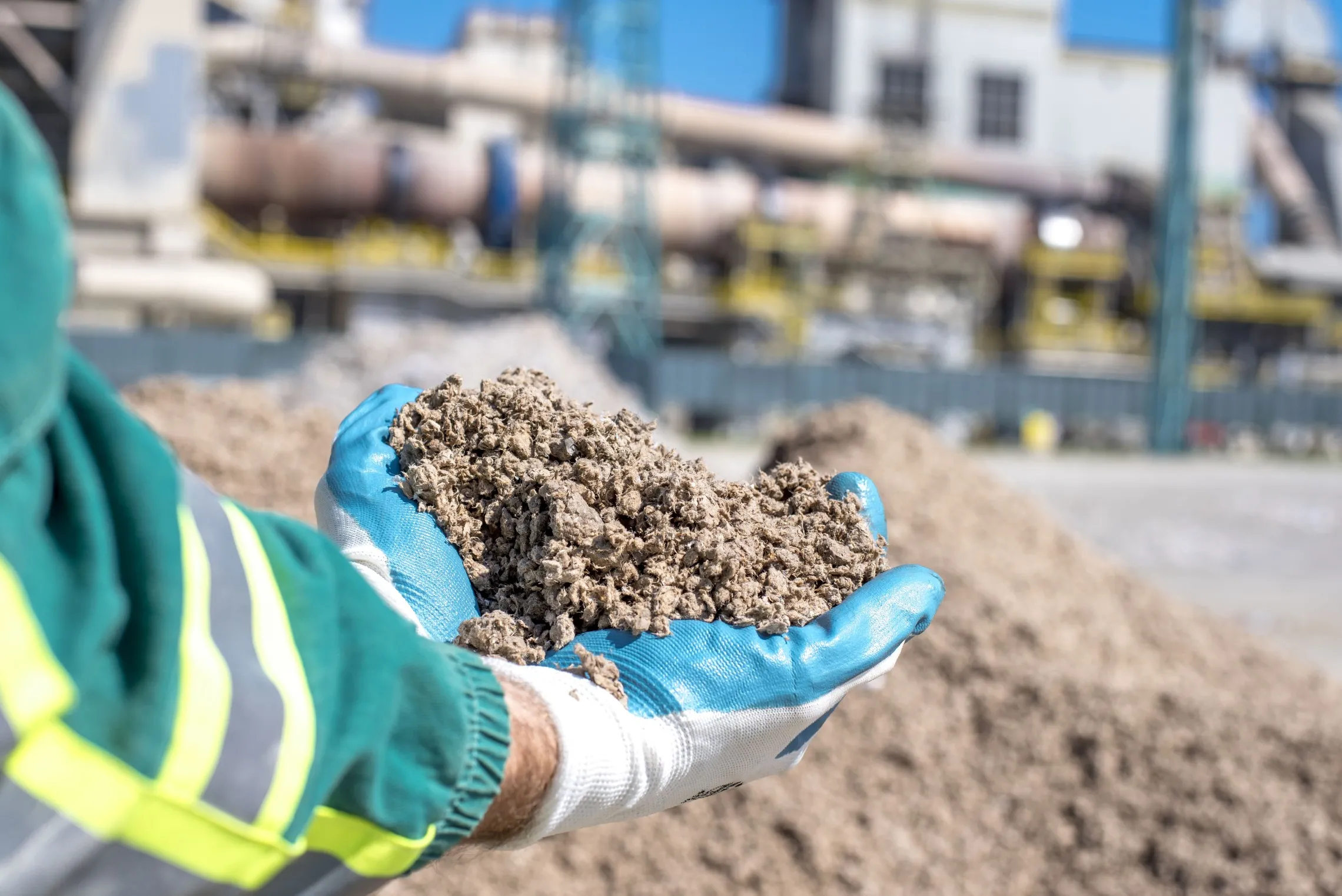
Generally, gypsum occurs in nature called mineral gypsum. Another variety of gypsum produced during production of common salt in coastal regions, particularly in Gujarat and Tamil Nadu, is called marine gypsum. Phosphoric Acid plants are important sources of by-product Phosphogypsum. Nowadays, chemical gypsum or synthetic gypsum (SynGyp) are also widely utilised as an alternative source of mineral gypsum for manufacturing of cement. The chemical gypsum or synthetic gypsum are produced from dyes and chemical industries and during flue gas desulphurisation (FGD) for abatement of SO2 pollution from sources like power plant for sulphur dioxide controlling system as an additional pollution control device.
Gypsum (CaSO4.2H2O) added with clinker while grinding in the cement mill to produce finished product i.e., cement.

C3A is the phase with the highest hydration speed
3CaO.Al2 O3 + n H2O fast reactions CAH + profuse exothermic heat
C3A + 6H2O▼ C3AH6
This is controlled by gypsum,
C3A + H2O + CaSO4- C4AS3H12 – C4AS3H32
Chemical reaction in the presence of gypsum is given below
3CaO. Al2O3 + 3CaSO4 . 2H2O + nH2O → 3CaO. Al2 O3 . 3CaSO4 . 32H2O
(Ettringite: calcium tri sulpho aluminate hydrate) + moderate exothermic heat
What proportions of gypsums are added in various types of cements produced? Tell us in detail about the composition and percentage.
Gypsum is normally used in various types of cement to maintain the SO3 in cement as per specification of BIS, based on Purity of Gypsum as CaSO4.2H2O its proportion in cement varies in the tune of 4 to 10 per cent. Limit for SO3 per cent in cement is 3.5 per cent, accordingly based on purity of gypsum as CaSO4.2H2O, proportion of gypsum is as follows:

Tell us about the process of obtaining gypsum by your organisation. What are the key resources utilised?
Udaipur Cement Works Limited (UCWL) is uses two types of gypsum i.e., Mineral and Chemical Gypsum for its cement products (i.e. OPC and PPC).
UCWL procures mineral gypsum from Rajasthan State Mines and Minerals Ltd. (RSMML) through road transportation.
Chemical gypsum generated primarily by dyes manufacturing industries using sulphuric acid in the manufacture of dye intermediates. The waste/effluent containing sulphuric acid is neutralised with limestone to produce large quantities of chemical gypsum in these industries. At present, UCWL procures chemical gypsum from Chemical Industries of Gujarat through road transportation.

Tell us about the key technical feasibility factors that make gypsum viable for mixing with cement?
As I mentioned earlier, gypsum is used in cement to avoid flash-set. In other words, gypsum delays the setting of cement. The main purpose of adding gypsum in the cement is to slow down the hydration process of cement once it is mixed with water. The hydration process starts when water is added into cement. Water reacts with C3A and hardens. This happens in a very short time, which doesn’t allow cement for transporting, mixing, and placing with construction building material and other useful materials. In presence of gypsum in the cement and water is added to it, reaction with C3A particles takes place to form ettringite (calcium tri sulpho aluminate hydrate). This ettringite is initially formed as very fine-grained crystals, which form a coating on the surface of the C3A particles. These crystals are too small to bridge the gaps between the particles of cement. Therefore, the cement mix remains plastic and workable. This is an important role of gypsum for strength, composition and workability of concrete. The gypsum retards the process of hydration, so it is termed as retarding agent of cement.
Clinker, which has all cementitious properties, after mixing of water it gets set quickly without gypsum. To avoid the quick set and give a workability time gypsum is mixed with clinker in the tune of 4 to 9 per cent (based on the purity of gypsum as CaSO4.2H2O). Limit of BIS for initial setting time is above 30 minutes and final setting is less than 600 minutes. Normally, cement is produced having a setting time between 60 to 150 minutes. We can say gypsum is not only a retarding agent of cement but also provides strength and hardness to cement.

What is the preparation or processing required to make gypsum ready to mix with the clinker?
Gypsum is added to the clinker just before the final grinding to make it into the finished product i.e., cement. Gypsum is a hygroscopic material and is sticky in nature. Its composition and physical characteristics vary from region to region in case of mineral gypsum and purity or quality matters for chemical or synthetic gypsum.
Since, gypsum is used as one of the prime materials in cement and due to its hygroscopic nature, it requires proper cover shed to avoid direct sunlight and moisture. Moisture control is one of the complex handling issues for storage of gypsum and to retain its quality. Therefore, gypsum stockpiles should be stored in a building or a storage in a cover shed which is preferably dry, rain proof and moisture proof.
Due to sticky nature, further procedures of handling, loading, conveying and feeding into cement mills require precautions and robust systems to ease this material flow and feed into cement mills for mixing with clinker. There are, however, alternative sources of gypsum available which may be able to partly substitute natural gypsum. Synthetic gypsum can be produced by using limestone powder with sulphuric acid. For making gypsum limestone to be ground at the fineness of 100 – 200 mm.
Dilute sulphuric acid to be added to the limestone powder as per molar ratio of calcium and sulphate to produce CaSO4.2HO. Gases generated during treatment to be handled by suitable pollution control equipment. Produced gypsum is required to be sun dried till moisture is reduced to the level of 10 to 15 per cent. Solar drying method for removal of moisture is one of the best available, less complex, and economical technologies for drying gypsum where solar radiation is high.

How does automation help in obtaining this mineral and increasing productivity
of the unit?

Any kind of possible automation in the manufacturing process will help increase productivity and sustain business. Right now, UCWL does not have any processing unit for manufacturing gypsum.
To bring down moisture in mineral/chemical/synthetic gypsum at desired level, solar drying method can be adopted. If the solar drying system is controlled with a Programmable Logic Controller (PLC) to check and control the indoor temperature and humidity, lower energy cost and higher material drying performance can be obtained through automation.
However, automation of gypsum manufacturing processes helps to increase productivity and availability. During the synthetic gypsum manufacturing, dosing of sulphuric acid with automation will help to maintain the pH of the mix. Mixing and treatment time regulation is required and can be controlled through automation. Fineness of limestone powder can also be controlled for treatment with sulphuric acid.

What are the sustainability measures taken by your organisation in obtaining and processing the desired quality of gypsum?
UCWL started trials of various industrial waste to use as a set retarder for replacement of gypsum. Our organisation is a pioneer in the utilisation of Jarosite in its cement manufacturing process as a partial substitute of gypsum. JK Lakshmi Cement (JKLC) Group’s research and development department is also working on making gypsum from Limestone rejected through screen during the crushing
of limestone.

Does your organisation recycle gypsum? Tell us more about the process.
Since, once gypsum is added to cement it cannot be recycled, however at UCWL, we are using various materials as a set retarder to replace mineral gypsum.
Other industrial wastes like chemical gypsum are used to the tune of 40 to 60 per cent of the total gypsum in place of mineral or marine gypsum. As I said, for the first time in India, UCWL started use of Jarosite (an industrial waste from the zinc industry’s smelting process) as a part replacement of mineral gypsum. Presently 10 per cent of mineral gypsum is replaced by use of Jarosite.

What are the major challenges faced in handling and obtaining gypsum for the manufacturing process?
The cement industry is a major user of gypsum. India’s domestic resources of gypsum are large enough to meet increased demand. Rajasthan has one of the richest sources of mineral gypsum however, it is a limited natural resource in view of increasing demand of the cement industry as a whole. It is also used for the manufacturing of value-added products like POP. Cement industry is also looking for other alternatives i.e., chemical gypsum, POP waste and industrial waste. Consumption and demand of gypsum will also increase by rapid growth of the cement industry, which leads to increased dependence upon alternatives of mineral gypsum viz. synthetic and chemical gypsum to meet cement demand.
There are two ways to obtain gypsum either from natural resources i.e., mineral gypsum and to some extent marine gypsum or chemical or synthetic gypsum generated from dyes and chemical industries and through flue gas desulphurisation (FGD) process.
To obtain mineral gypsum state-of-the-art technology needs to be adopted for the exploitation of deep-seated gypsum. Synthetic gypsum can be manufactured as per specific requirement and quality depends upon purity of lime.
Major challenges during the manufacturing process of Synthetic Gypsum (SynGyp) are as follows.
a) Availability of sulphuric acid, price variation of sulphuric acid as its availability depends on other industries production and consumption. Sulphuric acid is majorly used by fertiliser manufacturing units, hence, during crop seasons availability of sulfuric acid affects badly.
b) Quality of lime w.r.t. purity
c) Maintenance of Process is comparatively higher.
d) Drying of produced gypsum to get desired level of moisture.
e) Safety measures are required due to the use of sulphuric acid.
Nowadays, FGD generated gypsum is getting more attention among industries. High market demand for FGD gypsum is expected to encourage companies to install FGD systems in their power plants. Research shows that more than 85 per cent of FGD systems installed across the globe are wet systems. Rise of the construction industry and agricultural sector is expected to create opportunities for FGD manufacturers over the coming years, which will aid the expansion of synthetic gypsum market size as well.
Through manufacturing of synthetic gypsum, industry can reduce overall environmental impacts and their carbon footprint. This is a win-win situation for both generators as well as users of the synthetic gypsum (SynGyp). SynGyp is the best sustainable alternative for the environment through conservation of mineral gypsum natural deposits.

-Kanika Mathur

Concrete

Our strategy is to establish reliable local partnerships

Published

on

By

Shares

Jean-Jacques Bois, President, Nanolike, discusses how real-time data is reshaping cement delivery planning and fleet performance.

As cement producers look to extract efficiency gains beyond the plant gate, real-time visibility and data-driven logistics are becoming critical levers of competitiveness. In this interview with Jean-Jacques Bois, President, Nanolike, we discover how the company is helping cement brands optimise delivery planning by digitally connecting RMC silos, improving fleet utilisation and reducing overall logistics costs.

How does SiloConnect enable cement plants to optimise delivery planning and logistics in real time?
In simple terms, SiloConnect is a solution developed to help cement suppliers optimise their logistics by connecting RMC silos in real time, ensuring that the right cement is delivered at the right time and to the right location. The core objective is to provide real-time visibility of silo levels at RMC plants, allowing cement producers to better plan deliveries.
SiloConnect connects all the silos of RMC plants in real time and transmits this data remotely to the logistics teams of cement suppliers. With this information, they can decide when to dispatch trucks, how to prioritise customers, and how to optimise fleet utilisation. The biggest savings we see today are in logistics efficiency. Our customers are able to sell and ship more cement using the same fleet. This is achieved by increasing truck rotation, optimising delivery routes, and ultimately delivering the same volumes at a lower overall logistics cost.
Additionally, SiloConnect is designed as an open platform. It offers multiple connectors that allow data to be transmitted directly to third-party ERP systems. For example, it can integrate seamlessly with SAP or other major ERP platforms, enabling automatic order creation whenever replenishment is required.

How does your non-exclusive sensor design perform in the dusty, high-temperature, and harsh operating conditions typical of cement plants?
Harsh operating conditions such as high temperatures, heavy dust, extreme cold in some regions, and even heavy rainfall are all factored into the product design. These environmental challenges are considered from the very beginning of the development process.
Today, we have thousands of sensors operating reliably across a wide range of geographies, from northern Canada to Latin America, as well as in regions with heavy rainfall and extremely high temperatures, such as southern Europe. This extensive field experience demonstrates that, by design, the SiloConnect solution is highly robust and well-suited for demanding cement plant environments.

Have you initiated any pilot projects in India, and what outcomes do you expect from them?
We are at the very early stages of introducing SiloConnect in India. Recently, we installed our
first sensor at an RMC plant in collaboration with FDC Concrete, marking our initial entry into the Indian market.
In parallel, we are in discussions with a leading cement producer in India to potentially launch a pilot project within the next three months. The goal of these pilots is to demonstrate real-time visibility, logistics optimisation and measurable efficiency gains, paving the way for broader adoption across the industry.

What are your long-term plans and strategic approach for working with Indian cement manufacturers?
For India, our strategy is to establish strong and reliable local partnerships, which will allow us to scale the technology effectively. We believe that on-site service, local presence, and customer support are critical to delivering long-term value to cement producers.
Ideally, our plan is to establish an Indian entity within the next 24 months. This will enable us to serve customers more closely, provide faster support and contribute meaningfully to the digital transformation of logistics and supply chain management in the Indian cement industry.

Continue Reading

Concrete

Compliance and growth go hand in h and

Published

on

By

Shares

Pankaj Kejriwal, Whole Time Director and COO, Star Cement, on driving efficiency today and designing sustainability for tomorrow.

In an era where the cement industry is under growing pressure to decarbonise while scaling capacity, Star Cement is charting a pragmatic yet forward-looking path. In this conversation, Pankaj Kejriwal, Whole Time Director and COO, Star Cement, shares how the company is leveraging waste heat recovery, alternative fuels, low-carbon products and clean energy innovations to balance operational efficiency with long-term sustainability.

How has your Lumshnong plant implemented the 24.8 MW Waste Heat Recovery System (WHRS), and what impact has it had on thermal substitution and energy costs?
Earlier, the cost of coal in the Northeast was quite reasonable, but over the past few years, global price increases have also impacted the region. We implemented the WHRS project about five years ago, and it has resulted in significant savings by reducing our overall power costs.
That is why we first installed WHRS in our older kilns, and now it has also been incorporated into our new projects. Going forward, WHRS will be essential for any cement plant. We are also working on utilising the waste gases exiting the WHRS, which are still at around 100 degrees Celsius. To harness this residual heat, we are exploring systems based on the Organic Rankine Cycle, which will allow us to extract additional power from the same process.

With the launch of Star Smart Building Solutions and AAC blocks, how are you positioning yourself in the low-carbon construction materials segment?
We are actively working on low-carbon cement products and are currently evaluating LC3 cement. The introduction of autoclaved aerated concrete (AAC) blocks provided us with an effective entry into the consumer-facing segment of the industry. Since we already share a strong dealer network across products, this segment fits well into our overall strategy.
This move is clearly supporting our transition towards products with lower carbon intensity and aligns with our broader sustainability roadmap.

With a diverse product portfolio, what are the key USPs that enable you to support India’s ongoing infrastructure projects across sectors?
Cement requirements vary depending on application. There is OPC, PPC and PSC cement, and each serves different infrastructure needs. We manufacture blended cements as well, which allows us to supply products according to specific project requirements.
For instance, hydroelectric projects, including those with NHPC, have their own technical norms, which we are able to meet. From individual home builders to road infrastructure, dam projects, and regions with heavy monsoon exposure, where weather-shield cement is required, we are equipped to serve all segments. Our ability to tailor cement solutions across diverse climatic and infrastructure conditions is a key strength.

How are you managing biomass usage, circularity, and waste reduction across
your operations?

The Northeast has been fortunate in terms of biomass availability, particularly bamboo. Earlier, much of this bamboo was supplied to paper plants, but many of those facilities have since shut down. As a result, large quantities of bamboo biomass are now available, which we utilise in our thermal power plants, achieving a Thermal Substitution Rate (TSR) of nearly 60 per cent.
We have also started using bamboo as a fuel in our cement kilns, where the TSR is currently around 10 per cent to 12 per cent and is expected to increase further. From a circularity perspective, we extensively use fly ash, which allows us to reuse a major industrial waste product. Additionally, waste generated from HDPE bags is now being processed through our alternative fuel and raw material (AFR) systems. These initiatives collectively support our circular economy objectives.

As Star Cement expands, what are the key logistical and raw material challenges you face in scaling operations?
Fly ash availability in the Northeast is a constraint, as there are no major thermal power plants in the region. We currently source fly ash from Bihar and West Bengal, which adds significant logistics costs. However, supportive railway policies have helped us manage this challenge effectively.
Beyond the Northeast, we are also expanding into other regions, including the western region, to cater to northern markets. We have secured limestone mines through auctions and are now in the process of identifying and securing other critical raw material resources to support this expansion.

With increasing carbon regulations alongside capacity expansion, how do you balance compliance while sustaining growth?
Compliance and growth go hand in hand for us. On the product side, we are working on LC3 cement and other low-carbon formulations. Within our existing product portfolio, we are optimising operations by increasing the use of green fuels and improving energy efficiency to reduce our carbon footprint.
We are also optimising thermal energy consumption and reducing electrical power usage. Notably, we are the first cement company in the Northeast to deploy EV tippers at scale for limestone transportation from mines to plants. Additionally, we have installed belt conveyors for limestone transfer, which further reduces emissions. All these initiatives together help us achieve regulatory compliance while supporting expansion.

Looking ahead to 2030 and 2050, what are the key innovation and sustainability priorities for Star Cement?
Across the cement industry, carbon capture is emerging as a major focus area, and we are also planning to work actively in this space. In parallel, we see strong potential in green hydrogen and are investing in solar power plants to support this transition.
With the rapid adoption of solar energy, power costs have reduced dramatically – from 10–12 per unit to around2.5 per unit. This reduction will enable the production of green hydrogen at scale. Once available, green hydrogen can be used for electricity generation, to power EV fleets, and even as a fuel in cement kilns.
Burning green hydrogen produces only water and oxygen, eliminating carbon emissions from that part of the process. While process-related CO2 emissions from limestone calcination remain a challenge, carbon capture technologies will help address this. Ultimately, while becoming a carbon-negative industry is challenging, it is a goal we must continue to work towards.

Continue Reading

Concrete

Turning Downtime into Actionable Intelligence

Published

on

By

Shares

Stoppage Insights instantly identifies root causes and maps their full operational impact.

In cement, mining and minerals processing operations, every unplanned stoppage equals lost production and reduced profitability. Yet identifying what caused a stoppage remains frustratingly complex. A single motor failure can trigger cascading interlocks and alarm floods, burying the root cause under layers of secondary events. Operators and maintenance teams waste valuable time tracing event chains when they should be solving problems. Until now.
Our latest innovation to our ECS Process Control Solution(1) eliminates this complexity. Stoppage Insights, available with the combined updates to our ECS/ControlCenter™ (ECS) software and ACESYS programming library, transforms stoppage events into clear, actionable intelligence. The system automatically identifies the root cause of every stoppage – whether triggered by alarms, interlocks, or operator actions – and maps all affected equipment. Operators can click any stopped motor’s faceplate to view what caused the shutdown instantly. The Stoppage UI provides a complete record of all stoppages with drill-down capabilities, replacing manual investigation with immediate answers.

Understanding root cause in Stoppage Insights
In Stoppage Insights, ‘root cause’ refers to the first alarm, interlock, or operator action detected by the control system. While this may not reveal the underlying mechanical, electrical or process failure that a maintenance team may later discover, it provides an actionable starting point for rapid troubleshooting and response. And this is where Stoppage Insights steps ahead of traditional first-out alarm systems (ISA 18.2). In this older type of system, the first alarm is identified in a group. This is useful, but limited, as it doesn’t show the complete cascade of events, distinguish between operator-initiated and alarm-triggered stoppages, or map downstream impacts. In contrast, Stoppage Insights provides complete transparency:

  • Comprehensive capture: Records both regular operator stops and alarm-triggered shutdowns.
  • Complete impact visibility: Maps all affected equipment automatically.
  • Contextual clarity: Eliminates manual tracing through alarm floods, saving critical response time.


David Campain, Global Product Manager for Process Control Systems, says, “Stoppage Insights takes fault analysis to the next level. Operators and maintenance engineers no longer need to trace complex event chains. They see the root cause clearly and can respond quickly.”

Driving results
1.Driving results for operations teams
Stoppage Insights maximises clarity to minimise downtime, enabling operators to:
• Rapidly identify root causes to shorten recovery time.
• View initiating events and all affected units in one intuitive interface.
• Access complete records of both planned and unplanned stoppages

  1. Driving results for maintenance and reliability teams
    Stoppage Insights helps prioritise work based on evidence, not guesswork:
    • Access structured stoppage data for reliability programmes.
    • Replace manual logging with automated, exportable records for CMMS, ERP or MES.(2)
    • Identify recurring issues and target preventive maintenance effectively.

  2. A future-proof and cybersecure foundation
    Our Stoppage Insights feature is built on the latest (version 9) update to our ACESYS advanced programming library. This industry-leading solution lies at the heart of the ECS process control system. Its structured approach enables fast engineering and consistent control logic across hardware platforms from Siemens, Schneider, Rockwell, and others.
    In addition to powering Stoppage Insights, ACESYS v9 positions the ECS system for open, interoperable architectures and future-proof automation. The same structured data used by Stoppage Insights supports AI-driven process control, providing the foundation for machine learning models and advanced analytics.
    The latest releases also respond to the growing risk of cyberattacks on industrial operational technology (OT) infrastructure, delivering robust cybersecurity. The latest ECS software update (version 9.2) is certified to IEC 62443-4-1 international cybersecurity standards, protecting your process operations and reducing system vulnerability.

What’s available now and what’s coming next?
The ECS/ControlCenter 9.2 and ACESYS 9 updates, featuring Stoppage Insights, are available now for:

  • Greenfield projects.
  • ECS system upgrades.
  • Brownfield replacement of competitor systems.
    Stoppage Insights will also soon integrate with our ECS/UptimeGo downtime analysis software. Stoppage records, including root cause identification and affected equipment, will flow seamlessly into UptimeGo for advanced analytics, trending and long-term reliability reporting. This integration creates a complete ecosystem for managing and improving plant uptime.

(1) The ECS Process Control Solution for cement, mining and minerals processing combines proven control strategies with modern automation architecture to optimise plant performance, reduce downtime and support operational excellence.
(2) CMMS refers to computerised maintenance management systems; ERP, to enterprise resource planning; and MES to manufacturing execution systems.

Continue Reading

Trending News