Connect with us

Concrete

Being Proactive about Sustainability

Published

on

Shares

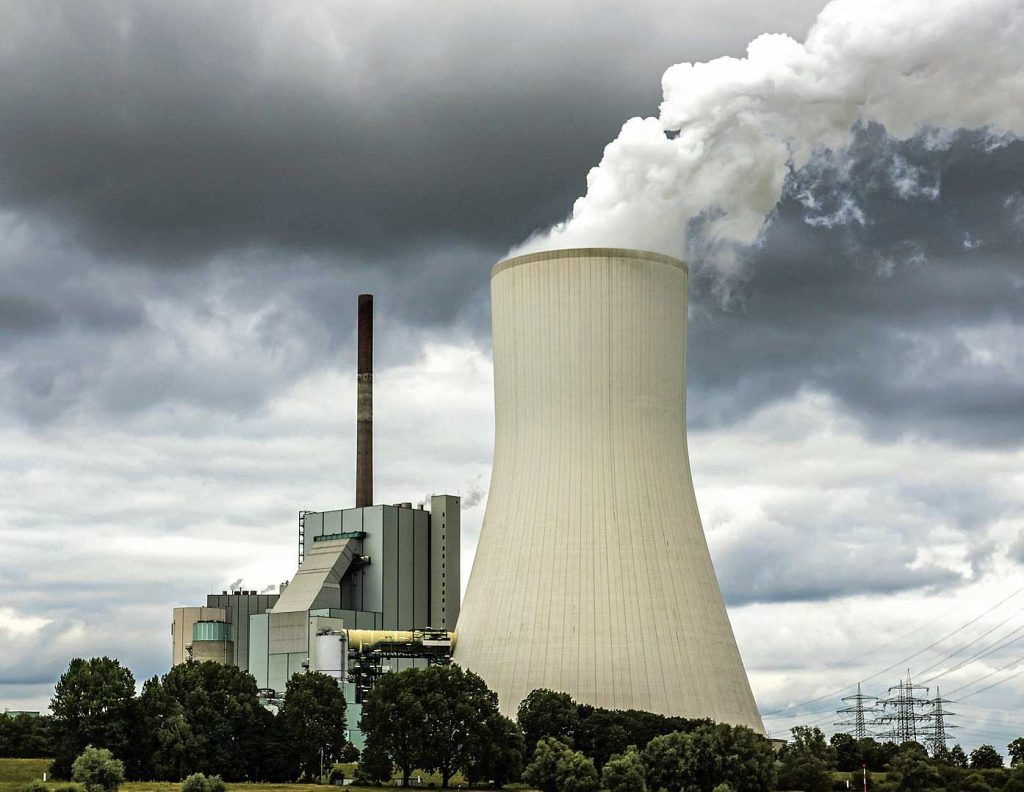
Hard-hitting facts such as scarcity and price hike of fossil fuels and challenges of waste management warn of difficult times ahead, unless players strive to increase the capacity of Waste Heat Recovery Systems to meet energy requirements.

Waste heat recovery has long been the base standard for setting up cement manufacturing units. In China, a cement kiln will not get an official sign-off unless it has waste heat recovery systems. In Europe, any industry requiring large quantities of heat input for manufacturing must have waste heat recovery as a natural corollary, and sometimes its use could be extended to providing heat input to the neighbourhood and community for simple needs such as room and water heating systems.
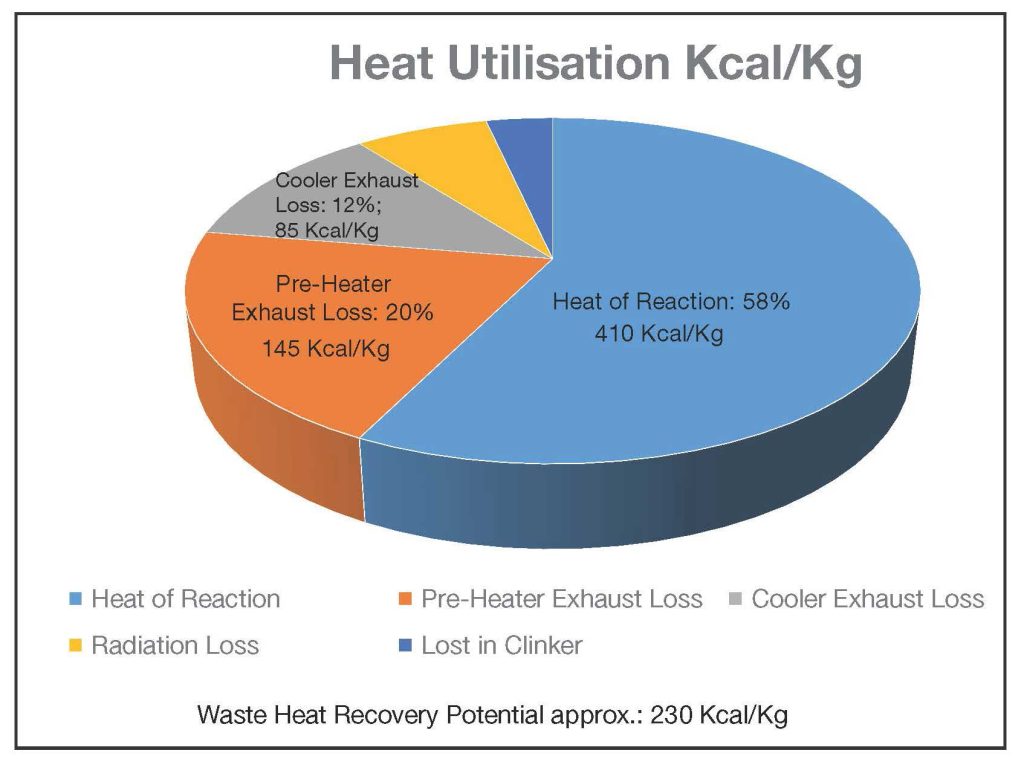
The economics of Waste Heat Recovery Systems (WHRS) is preceded by sustainability concerns, as cement manufacturing in kilns continues to produce 8 per cent of the global greenhouse gas (GHG) emissions. The conversion of limestone to clinker is where the bulk of the heat energy is expended. However, this bulk of heat energy that is generated in six-stage preheater kilns by burning of any fossil fuel input actually gets wasted as shown in the pie-chart Fig 1, and only 58 per cent is used in the conversion process yielding clinker.
Theoretically 710 Kcal needs to be generated to convert 1 kg of clinker, out of which actual conversion process would need 410 Kcal, the rest ending up as losses, which can be recovered. In reality, the Indian cement industry average is 744 Kcal of heat input for producing 1 kg of clinker, which means the actual losses are even more than the theoretical possibility.
Out of the total generated heat there are some unavoidable losses, that include radiation loss, loss for evaporation of residual moisture in fine coal and raw meal and some part of heat going with clinker from cooler. The balance loss in pre-heater exhaust gases and the cooler exhaust gases are completely recoverable through WHRS.
The capacity of WHRS need to be above 25 per cent of the
electricity consumption to make a significant dent in the
energy intake the industry


Let us look at some statistics from the Indian cement industry. On an average, Indian cement plants require electrical power of 20 billion kWh per year. The coal needed for generating this much power accounts to 32 million tonnes per year. A significant portion of this power could be replaced by the WHRS that will use waste heat from the kilns to generate electricity.
In sustainability terms, this is equivalent to replacing a large component of the 32 million tonnes of coal to be otherwise burnt for producing electricity. WHRS are also very stable systems that operate on the Rankine cycle and it provides an avenue for utilising waste water from the process as well.

Balancing the investments
Let us now see the economics of putting up a captive power generating unit versus putting up a WHRS. The capital investment for WHRS is high at Rs 8 cr per MW going by the current costs, whereas the CPP units can come at Rs 4.5 cr per MW. However, the project Internal Rate of Return (IRR) would be very different as the cost of generation would be as low as Rs 0.40 per unit for the former while Rs 4.5 per unit for the latter, which given the current trajectory of fossil fuel prices is already under severe stress of upward correction. It is only the initial cost that continues to act as a deterrent for putting up a waste heat recovery unit.

The Indian cement industry must act responsibly and move quickly to put in investments that could raise the waste heat recovery installed capacity to cross the minimum threshold of 25 per cent of electricity consumption. That will still be far from the 20 billion KWhr of total electricity consumption by the industry.
The other area of concern is the price trajectory of fossil fuels, which would continue to move northwards. WHRS is one of the simpler ways of insulating the industry from the vagaries of future price increases.
Thus WHRS could be the natural hedge to fossil fuel price increases for a substantial portion of the electrical consumption. As matters stand today most WHRS would be the highest IRR projects that the industry as an ensemble can think of

-Procyon Mukherjee

Concrete

Steel: Shielded or Strengthened?

CW explores the impact of pro-steel policies on construction and infrastructure and identifies gaps that need to be addressed.

Published

on

By

Shares


Going forward, domestic steel mills are targeting capacity expansion
of nearly 40 per cent through till FY31, adding 80-85 mt, translating
into an investment pipeline of $ 45-50 billion. So, Jhunjhunwala points
out that continuing the safeguard duty will be vital to prevent a surge
in imports and protect domestic prices from external shocks. While in
FY26, the industry operating profit per tonne is expected to hold at
around $ 108, similar to last year, the industry’s earnings must
meaningfully improve from hereon to sustain large-scale investments.
Else, domestic mills could experience a significant spike in industry
leverage levels over the medium term, increasing their vulnerability to
external macroeconomic shocks.(~$ 60/tonne) over the past one month,
compressing the import parity discount to ~$ 23-25/tonne from previous
highs of ~$ 70-90/tonne, adds Jhunjhunwala. With this, he says, “the
industry can expect high resistance to further steel price increases.”

Domestic HRC prices have increased by ~Rs 5,000/tonne
“Aggressive
capacity additions (~15 mt commissioned in FY25, with 5 mt more by
FY26) have created a supply overhang, temporarily outpacing demand
growth of ~11-12 mt,” he says…

To read the full article Click Here

Continue Reading

Concrete

JK Cement Commissions 3 MTPA Buxar Plant, Crosses 31 MTPA

Company becomes India’s fifth-largest grey cement producer

Published

on

By

Shares


JK Cement  has commissioned its new 3 MTPA grey cement plant in Buxar, Bihar, taking the company’s total installed capacity to 31.26 million tonnes per annum (MTPA) and moving it past the 30 MTPA milestone. With this addition, JK Cement now ranks among the top five grey cement manufacturers in India, strengthening its national presence.

Commenting on the development, Dr Raghavpat Singhania, Managing Director, JK Cement, said, “Crossing 31 MTPA is a significant turning point in JK Cement’s expansion and demonstrates the scale, resilience, and aspirations of our company. In addition to making a significant contribution to Bihar’s development vision, the commissioning of our Buxar plant represents a strategic step towards expanding our national footprint. We are committed to developing top-notch manufacturing capabilities that boost India’s infrastructure development and generate long-term benefits for local communities.”

Spread across 100 acres, the Buxar plant is located on the Patna–Buxar highway, enabling efficient distribution across Bihar and neighbouring regions. While JK Cement entered the Bihar market last year through supplies from its Prayagraj plant, the new facility will allow local manufacturing and deliveries within 24 hours across the state.

Mr Madhavkrishna Singhania, Joint Managing Director & CEO, JK Cement, said, “JK Cement is now among India’s top five producers of grey cement after the Buxar plant commissioning. Our capacity to serve Bihar locally, more effectively, and on a larger scale is strengthened by this facility. Although we had already entered the Bihar market last year using Prayagraj supplies, local manufacturing now enables us to be nearer to our clients and significantly raise service standards throughout the state. Buxar places us at the center of this chance to promote sustainable growth for both the company and the region in Bihar, a high-growth market with strong infrastructure momentum.”

The project has involved an investment of Rs 5 billion. Commercial production began on 29 January 2026, following construction commencement in March 2025. The company said the plant is expected to generate significant direct and indirect employment and support ancillary industrial development in the region.

Continue Reading

Concrete

JK Cement Crosses 31 MTPA Capacity with Commissioning of Buxar Plant in Bihar

Published

on

By

Shares


JK Cement has commissioned a 3 MTPA Grey Cement plant in Buxar, Bihar, taking its total capacity to 31.26 MTPA and placing it among India’s top five grey cement producers. The ₹500 crore investment strengthens the company’s national footprint while supporting Bihar’s infrastructure growth and local economic development.

JK Cement Ltd., one of India’s leading cement manufacturers, has announced the commissioning of its new state-of-the-art Grey Cement plant in Buxar, Bihar, marking a significant milestone in the company’s growth trajectory. With the commissioning of this facility, JK Cement’s total production capacity has increased to 31.26 million tonnes per annum (MTPA), enabling the company to cross the 30 MTPA threshold.

This expansion positions JK Cement among the top five Grey Cement manufacturers in India, strengthening its national footprint and reinforcing its long-term growth strategy.

Commenting on the strategic achievement, Dr Raghavpat Singhania, Managing Director, JK Cement, said, “Crossing 31 MTPA is a significant turning point in JK Cement’s expansion and demonstrates the scale, resilience, and aspirations of our company. In addition to making a significant contribution to Bihar’s development vision, the commissioning of our Buxar plant represents a strategic step towards expanding our national footprint. We are committed to developing top-notch manufacturing capabilities that boost India’s infrastructure development and generate long-term benefits for local communities.”

The Buxar plant has a capacity of 3 MTPA and is spread across 100 acres. Strategically located on the Patna–Buxar highway, the facility enables faster and more efficient distribution across Bihar and adjoining regions. While JK Cement entered the Bihar market last year through supplies from its Prayagraj plant, the Buxar facility will now allow the company to serve the state locally, with deliveries possible within 24 hours across Bihar.

Sharing his views on the expansion, Madhavkrishna Singhania, Joint Managing Director & CEO, JK Cement, said, “JK Cement is now among India’s top five producers of grey cement after the Buxar plant commissioning. Our capacity to serve Bihar locally, more effectively, and on a larger scale is strengthened by this facility. Although we had already entered the Bihar market last year using Prayagraj supplies, local manufacturing now enables us to be nearer to our clients and significantly raise service standards throughout the state. Buxar places us at the center of this chance to promote sustainable growth for both the company and the region in Bihar, a high-growth market with strong infrastructure momentum.”

The new facility represents a strategic step in supporting Bihar’s development vision by ensuring faster access to superior quality cement for infrastructure, housing, and commercial projects. JK Cement has invested approximately ₹500 crore in the project. Construction began in March 2025, and commercial production commenced on January 29, 2026.

In addition to strengthening JK Cement’s regional presence, the Buxar plant is expected to generate significant direct and indirect employment opportunities and attract ancillary industries, thereby contributing to the local economy and the broader industrial ecosystem.

Continue Reading

Trending News