Connect with us

Economy & Market

There is a high growth potential for cement

Published

on

Shares

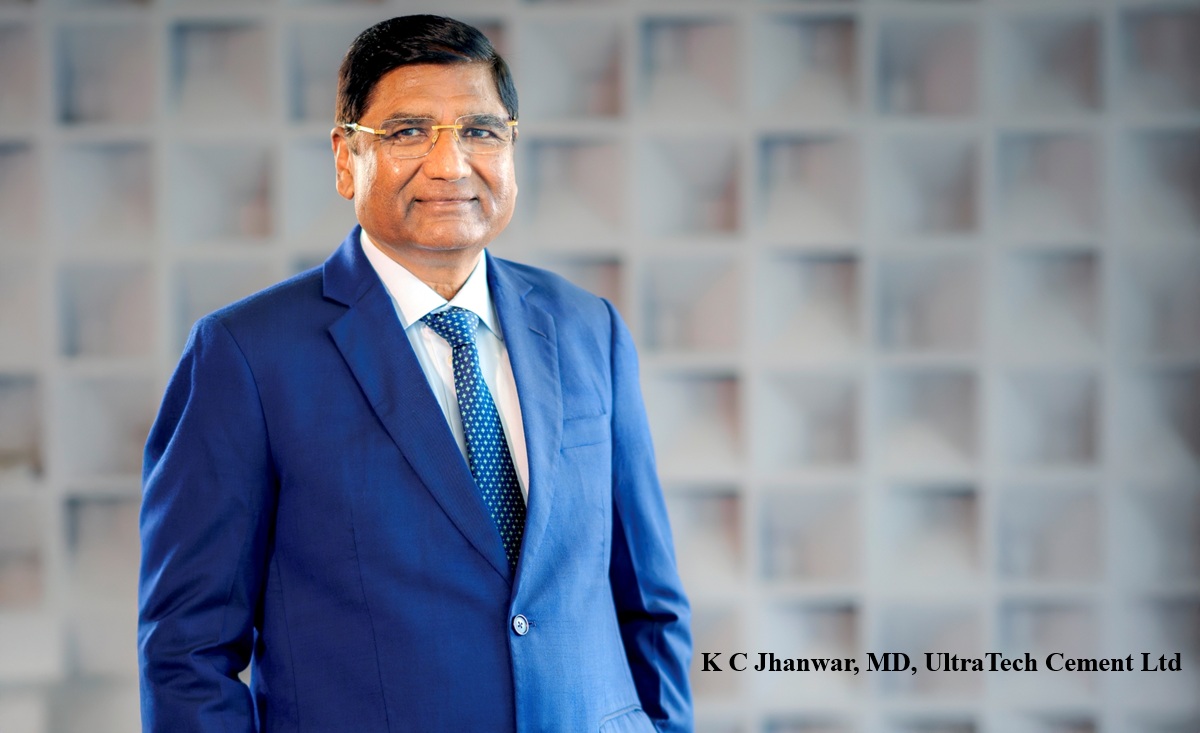
– Vivek Patni, Director, Wonder Cement.

What is the current status of the Indian cement industry?
The size of Indian cement industry is about 315 million tonne per year while capacity utilisation is about 70-80 per cent. Per capita consumption of cement in India is below 200 kg per person, which is almost half when compared with that of the developed nations. So growth potential for cement in India is double compared to developed countries. If the consumption is growing at a rate of 10 per cent per year, in the next eight years, we need to double the capacity. So there is a high growth potential for cement.

What is the current demand-supply scenario of cement?
Demand-supply scenario in India is cyclical. Every 6-8 years, there are ups and downs. When there are very good prospects, everybody enters the business and then the capacity addition is very high which ultimately results in a situation of oversupply and in 3-4 years again equilibrium is reached. So demand is expected to grow in 2016. The new government at the Centre is trying to overcome the procedural delays in project implementation. Now the issue is investment as how much investment is going in infrastructure projects and how soon, which will decide the consumption of cement. Infrastructure development is basically depends on government schemes/policies. Housing development is independent of government schemes, but dependent on interest rates of housing loans. It is also dependent on the GDP growth and the income of people. Housing sector constitutes about 60 per cent of cement consumption and the remaining 40 per cent infrastructure which depends on the government schemes. So, if the government?s priority is infrastructure, then the cement consumption will increase, which supports cement industry.

What are the technologies to bring down the pollution level?
Cement industry is not at all polluting, because when environment clearance is given by the environment ministry, they put stringent conditions on emissions. Fortunately in cement manufacturing, no toxic gases or wastes are coming out. It is only the dust particles which can come out and for that the present norms are 50 mg/Nm3 and we have already installed equipment having a filtration capacity to bring down emissions to below 30 mg/Nm3. So, we have installed technology which is much superior which can meet future norms also.

What are your expectations from the new government?
Cement is the heavily taxed commodity with very high excise and other taxes. No other commodity is taxed as much as cement. So taxes should be reduced.

Continue Reading
Click to comment

Leave a Reply

Your email address will not be published. Required fields are marked *

Concrete

WCA Welcomes SiloConnect as associate corporate member

Published

on

By

Shares

The World Cement Association (WCA) has announced SiloConnect as its newest associate corporate member, expanding its network of technology providers supporting digitalisation in the cement industry. SiloConnect offers smart sensor technology that provides real-time visibility of cement inventory levels at customer silos, enabling producers to monitor stock remotely and plan deliveries more efficiently. The solution helps companies move from reactive to proactive logistics, improving delivery planning, operational efficiency and safety by reducing manual inspections. The technology is already used by major cement producers such as Holcim, Cemex and Heidelberg Materials and is deployed across more than 30 countries worldwide.

Continue Reading

Concrete

TotalEnergies and Holcim Launch Floating Solar Plant in Belgium

Published

on

By

Shares

TotalEnergies and Holcim have commissioned a floating solar power plant in Obourg, Belgium, built on a rehabilitated former chalk quarry that has been converted into a lake. The project has a generation capacity of 31 MW and produces around 30 GWh of renewable electricity annually, which will be used to power Holcim’s nearby industrial operations. The project is currently the largest floating solar installation in Europe dedicated entirely to industrial self-consumption. To ensure minimal impact on the surrounding landscape, more than 700 metres of horizontal directional drilling were used to connect the solar installation to the electrical substation. The project reflects ongoing collaboration between the two companies to support industrial decarbonisation through renewable energy solutions and innovative infrastructure development.

Continue Reading

Concrete

Cortec® Corporation applauded for its strong safety performance

Published

on

By

Shares

Cortec® Corporation has been recognised for its strong safety performance, receiving its sixth Governor’s Workplace Safety Award for its outstanding performance in 2025. As a Silver Achievement recipient, the company continues to maintain safety metrics well above national industry averages, an impressive accomplishment for a chemical manufacturing organisation. This achievement reflects Cortec’s proactive approach to workplace safety, focused on early hazard detection and employee involvement. The company will be formally recognised at the Minnesota Safety and Health Conference in May, highlighting how industrial companies are effectively strengthening workplace safety standards.

Continue Reading

Video Thumbnail

    SIGN-UP FOR OUR GENERAL NEWSLETTER


    Trending News