Technology
We are setting up a WHR plant to further bring down our CO2 footprint
Published
11 years agoon
By
admin
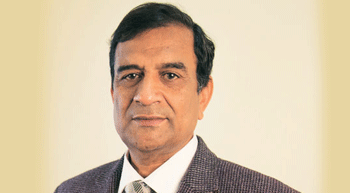
JC Toshniwal, Executive Director, Wonder Cement.
Currently we are about 750 kg CO2 per tonne of cement which we aim to bring down to 600 in the next 3-4 years and by 2020, we may be in 550 kg of CO2 per tonne of cement, says JC Toshniwal, Executive Director, Wonder Cement. Excerpts from the interview…What is your stated goal of reducing carbon footprint by 2020?
Ours is a new plant started a couple of year back. We have done well on fuel and power consumption, maybe, one of the lowest in fuel consumption in the country, 695 kcal of energy/kg of clinker. In power consumption, we are looking into optimizing our plant operation to bring down the power consumption and we wish to bring down it to the level of 75 kcal/tonne of cement from the current level of 82 kcal/tonne of cement. We are working on various schemes like raw mill optimization, modifications in cement grinding circuit, etc. By next one year we wish to bring it to the range of 75-76 kcal/tonne of cement.
We are also setting up a waste heat recovery (WHR) plant, which will further bring down our CO2 footprint. We have already placed the order, construction work has already started and the plant will commission in next year. We will also be starting on alternate fuels like biomass and other industry wastes which will ultimately help in reducing carbon footprint. Currently we are about 750 kg CO2 per tonne of cement which we aim to bring down to 600 in the next 3-4 years and by 2020, we may be in 550 kg of CO2 per tonne of cement.
How do you look at the sustainability issues in the cement industry?
Almost all cement plants are today working on improving their fuel efficiency, power efficiency, renewable energy, WHR, etc. So all these are now focus points towards sustainability in cement industry. Cement industry in India is one of the most efficient globally, may be better than global level, in terms of power and fuel consumption. Now the focus has gradually shifted towards renewable energy, WHR, and blended cement which also help in reducing CO2 generation. The industry is also working on reduction of SOx and NOx, which are also adverse to the environment. For this purpose, cement manufacturers are setting up different types of calciners like two-stage calciners where NOx generation is reduced. In the next 3-4 years, you can see some drastic changes in the industry on these parameters.
Could you brief us on the road map with milestones to achieve the CO2 emissions reductions?
We will bring in these in three steps, first is commissioning our WHR plant, and simultaneously we are working on alternate fuels which will be completed next year (2016) and we wish to bring down the CO2 level to 650-675 kg. In the second step we will be producing more blended cement which will help in bringing down the CO2 level.
What are the steps initiated to optimize energy efficiency?
Ours is a new plant and we have installed latest technology in place like vertical roller mills for raw material grinding which is more power efficient. We have gone with six-stage pre-heater where you can reclaim the waste heat from the waste gases. We have gone for the latest generation of grid cooler which cools down the clinker. This cooler recuperates heat and give back to the system. We have bigger size of pre-heater where power consumption drops, we have gone with combination of roller press and ball mill for cement grinding which is highly energy-efficient. Also we have Robotech lab for efficient and accurate quality control. To conserve the fossil fuel through AFR we are in the process of formulating the strategy in this direction and by middle of this year we will initiate the project and will take one year to complete the task.
What about making your plant water positive?
We should regenerate more water we have been using. We are new in this but we have already started water conservation discharging pits in the plant, but we have to do a lot in this direction. In the next 2-3 years we will have a clear roadmap on water conservation and will be water positive.
How green is your logistics?
In logistics, we are aiming to bring down to lead distance so that fossil fuel burning will come down. Second is more and more railway for movement of cement.
What are the major challenges in ?greening? the cement industry?
Major challenges will be reduction of CO2, NOx and SOx. Because many cement plants are old and their NOx and SOx levels are higher. So there will be a challenge to reduce this. But plants like us are new and have already planned for low NOx and SOx. Water will be another challenge and water positivity will be the need of the hour in future. To reduce pollution in cement plants, today most of the plants have put pollution control equipment like bag filters, bag houses, water spray systems etc.
How green is your operation, from mining to production and dispatch of cement?
We are green as such, we have pollution control equipment in place, we are going for WHR systems, and we have initiated for alternate fuels. Though we are not fully green today, we are in the process of making most of our activities green. We are not very old in mining area, but we may go for massive plantation after mining limestone, or make them water pits which will help us in recharging the groundwater level and this will lead us to be water-positive. So mainly we are taking two major measures in this direction, greening most of the mined out areas and making water catchment area of the remaining mined fields. In the plant, we have online measuring set ups to monitor the SOx and NOx levels. We have low-NOx generating calciners, bag filters and other pollution control equipment in the plant.
How do you view the advantages of the PAT scheme?
This is a forcible measure on the industry, which will help in reducing power and fuel consumption.
Where does the company see itself five years down the line?
We will be of 10 million tonne capacity by next five years. And we will be spreading our market to the entire north, Gujarat and Madhya Pradesh. We will reduce our carbon footprint in the next five years to 550 kg per tonne of cement. We wish to be water-positive in next five years. We intent to substitute at least 10 per cent of our fossil fuel with alternate fuels in the next five years. And of course, WHR plant will be set up for our whole cement plant.
You may like
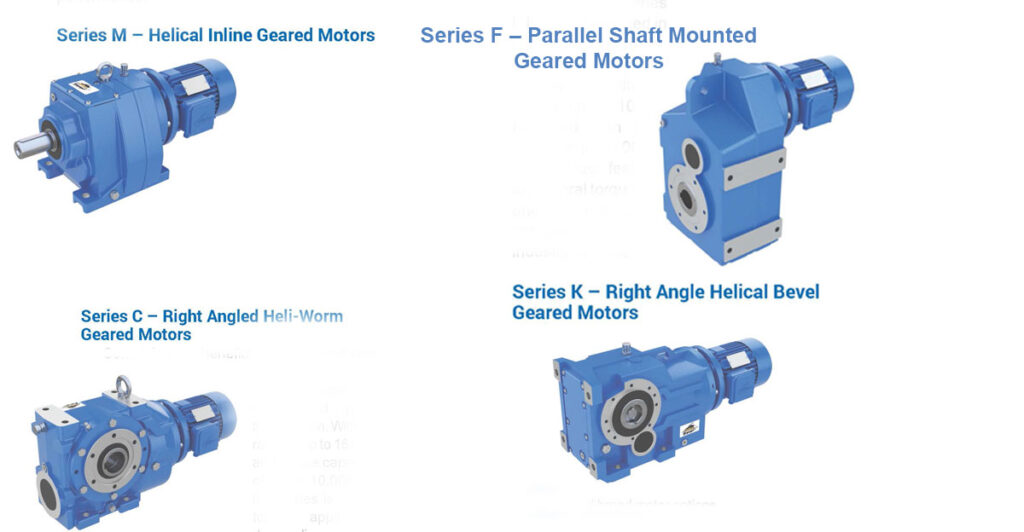
A deep dive into Power Build’s core gear series products – M, C, F, K
At the heart of every high-performance industrial system lies the need for robust, reliable and efficient power transmission. Power Build answers this need with its flagship geared motor series: M, C, F and K. Each series is meticulously engineered to serve specific operational demands while maintaining the universal promise of durability, efficiency
and performance.
Series M – Helical Inline Geared Motors
Compact and powerful, the Series M delivers exceptional drive solutions for a broad range of applications. With power handling up to 160kW and torque capacity reaching 20,000 Nm, it is the trusted solution for industries requiring quiet operation, high efficiency, and space-saving design. Series M is available with multiple mounting and motor options, making it a versatile choice for manufacturers and OEMs globally.
Series C – Right Angled Heli-Worm Geared Motors
Combining the benefits of helical and worm gearing, the Series C is designed for right-angled power transmission. With gear ratios of up to 16,000:1 and torque capacities of up to 10,000 Nm, this series is optimal for applications demanding precision in compact spaces. Industries looking for a smooth, low-noise operation with maximum torque efficiency rely on Series C for dependable performance.
Series F – Parallel Shaft Mounted Geared Motors
Built for endurance in the most demanding environments, Series F is widely adopted in steel plants, hoists, cranes and heavy-duty conveyors. Offering torque up to 10,000 Nm and high gear ratios up to 20,000:1, this product features an integral torque arm and diverse output configurations to meet industry-specific challenges head-on.
Series K – Right Angle Helical Bevel Geared Motors
For industries seeking high efficiency and torque-heavy performance, Series K is the answer. This right-angled geared motor series delivers torque up to 50,000 Nm, making it a preferred choice in core infrastructure sectors such as cement, power, mining, and material handling. Its flexibility in mounting and broad motor options offer engineers freedom in design and reliability in execution.
Together, these four series reflect Power Build’s commitment to excellence in mechanical power transmission. From compact inline designs to robust right-angle drives, each geared motor is a result of decades of engineering innovation, customer-focused design and field-tested reliability. Whether the requirement is speed control, torque multiplication, or space efficiency, Radicon’s Series M, C, F and K stand as trusted powerhouses for global industries.
https://www.powerbuild.in
Call: +919727719344
Economy & Market
TSR Will Define Which Cement Companies Win India’s Net-Zero Race
Published
2 months agoon
April 27, 2026By
admin
Jignesh Kundaria, Director and CEO, Fornnax Technology
India is simultaneously grappling with two crises: a mounting waste emergency and an urgent need to decarbonise its most carbon-intensive industries. The cement sector, the second-largest in the world and the backbone of the nation’s infrastructure ambitions, sits at the centre of both. It consumes enormous quantities of fossil fuel, and it has the technical capacity to consume something else entirely: the waste our cities cannot get rid of.
According to CPCB and NITI Aayog projections, India generates approximately 62.4 million tonnes of municipal solid waste annually, with that figure expected to reach 165 million tonnes by 2030. Much of this waste is energy-rich and non-recyclable. At the same time, cement kilns operate at material temperatures of approximately 1,450 degrees Celsius, with gas temperatures reaching 2,000 degrees. This high-temperature environment is ideal for co-processing, ensuring the complete thermal destruction of organic compounds without generating toxic residues. The physics are in our favour. The infrastructure is not.
Pre-processing is not the support act for co-processing. It is the main event. Get the particle size wrong, get the moisture wrong, get the calorific value wrong and your kiln thermal stability will suffer the consequences.
The Regulatory Push Is Real
The Solid Waste Management (SWM) Rules 2026 mandate that cement plants progressively replace solid fossil fuels with Refuse-Derived Fuel (RDF), starting at a 5 per cent baseline and scaling to 15 per cent within six years. NITI Aayog’s 2026 Roadmap for Cement Sector Decarbonisation targets 20 to 25 per cent Thermal Substitution Rate (TSR) by 2030. Beyond compliance, every tonne of coal replaced by RDF generates measurable carbon reductions which is monetisable under India’s emerging Carbon Credit Trading Scheme (CCTS). TSR is no longer a sustainability metric. It is a financial lever.
Yet our own field assessments across multiple Indian cement plants reveal a sobering reality: the primary barrier to scaling AFR adoption is not waste availability. It is the fragmented and under-engineered pre-processing ecosystem that sits between the waste and the kiln.
Why Indian Waste Is a Different Engineering Problem
Indian municipal solid waste is not the material that imported shredding equipment was designed for. Our waste streams frequently exceed 40 per cent to 50 per cent moisture content, particularly during monsoon cycles, saturated with abrasive inerts including sand, glass, and stone. Plants relying on imported OEM equipment face months of downtime awaiting proprietary spare parts. Machines built for segregated, low-moisture waste fail quickly and disrupt the entire pre-processing operation in Indian conditions.
The two most common failures we observe are what I call the biting teeth problem and the chewing teeth problem. Plants relying solely on a primary shredder reduce bulk waste to large fractions, but the output remains too coarse for stable kiln combustion. Others attempt to use a secondary shredder as a standalone unit without a primary stage to pre-size the feed, leading to catastrophic mechanical failure. When both stages are present but mismatched in throughput capacity, the system becomes a bottleneck. Achieving the 40 to 70 tonnes per hour required for meaningful coal displacement demands a precisely coordinated two-stage process.
Engineering a Made-in-India Answer
At Fornnax, our response to these challenges is grounded in one principle: Indian waste demands Indian engineering. Our systems are built around feedstock homogeneity, the holy grail of kiln stability. Consistent particle size and predictable calorific value are the foundation of stable kiln combustion. Without them, no TSR target is achievable at scale.
Our SR-MAX2500 Dual Shaft Primary Shredder (Hydraulic Drive) processes raw, baled, or loosely mixed MSW, C&I waste, bulky waste, and plastics, reducing them to approximately 150 mm fractions at throughputs of up to 40 tonnes per hour. The R-MAX 3300 Single Shaft Secondary Shredder (Hydraulic Drive), introduced in 2025, takes that primary output and produces RDF fractions in the 30 to 80 mm range at up to 30 tonnes per hour, specifically optimised for consistent kiln feeding. We have also introduced electric drive configurations under the SR-100 HD series, with capacities between 5 and 40 tonnes per hour, already operational at a leading Indian waste-processing facility.
Looking ahead, Fornnax is expanding its portfolio with the upcoming SR-MAX3600 Hydraulic Drive primary shredder at up to 70 tonnes per hour and the R-MAX2100 Hydraulic drive secondary shredder at up to 20 tonnes per hour, designed specifically for the large-scale throughput that higher TSR ambitions require.
The Investment Case Is Now
The 2070 Net-Zero target is not a distant goal for India’s cement sector. It starts today, with decisions being made on the plant floor.
The SWM Rules 2026 are already in effect, requiring cement plants to replace coal with RDF. Carbon credit markets are opening up, and coal prices are not going to get cheaper. Every tonne of coal a cement plant replaces with waste-derived fuel saves money on one side and generates carbon credit revenue on the other. Pre-processing infrastructure is no longer just a compliance requirement. It is a business investment with a measurable return.
The good news is that nothing is missing. The technology works. The waste is available in every Indian city. The government has provided the policy direction. The only thing standing between where the industry is today and where it needs to be is the commitment to build the right infrastructure.
The cement companies that move now will not just meet the regulations. They will be ahead of every competitor that waits.
About The Author
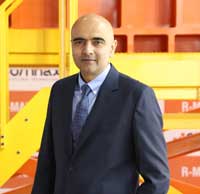
Jignesh Kundaria is the Director and CEO of Fornnax Technology. Over an experience spanning more than two decades in the recycling industry, he has established himself as one of India’s foremost voices on waste-to-fuel technology and alternative fuel infrastructure.
Concrete
Reimagining Logistics: Spatial AI and Digital Twins
Published
3 months agoon
April 13, 2026By
admin
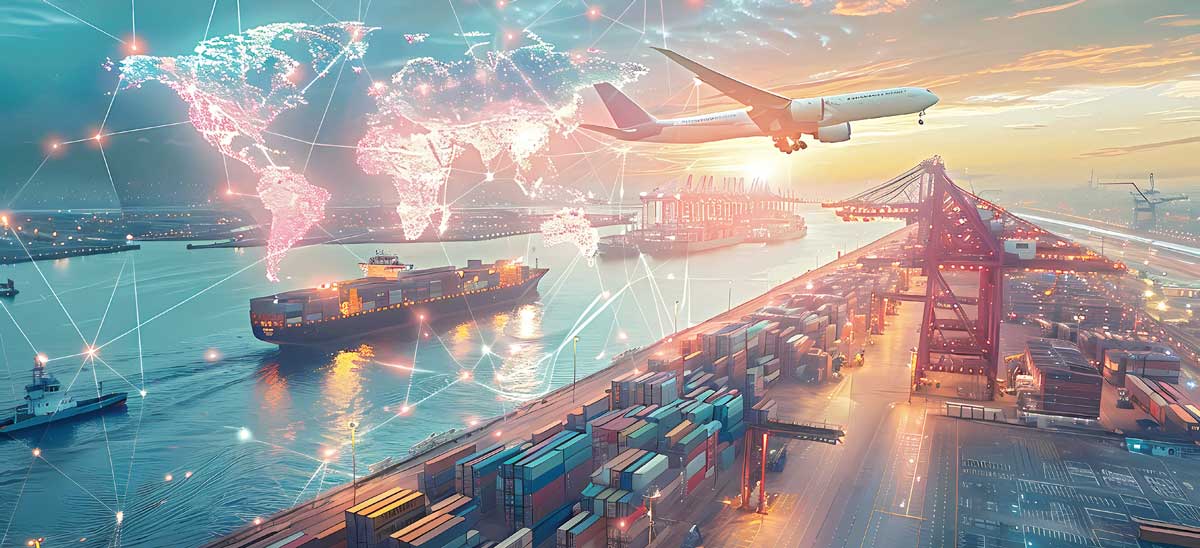
Digital twins and spatial AI are transforming cement logistics by enabling real-time visibility, predictive decision-making, and smarter multi-modal operations across the supply chain. Dijam Panigrahi highlights how immersive AR/VR training is bridging workforce skill gaps, helping companies build faster, more efficient, and future-ready logistics systems.
As India accelerates infrastructure investment under flagship programs such as PM GatiShakti and the National Infrastructure Pipeline, the pressure on cement manufacturers to deliver reliably, efficiently, and cost-effectively has never been greater. Yet for all the modernisation that has taken place on the production side, the end-to-end logistics chain, from clinker dispatch to the last-mile delivery of bagged cement to construction sites, remains a domain riddled with inefficiencies, opacity and manual decision-making.
The good news is that a new generation of spatial computing technologies is now mature enough to transform this reality. Digital twins, spatial artificial intelligence (AI) and immersive augmented and virtual reality (AR/VR) training platforms are converging to offer cement producers something they have long sought: real-time visibility, autonomous decision-making at the operational edge, and a scalable solution to the persistent skills gap that hampers workforce performance.
Advancing logistics with digital twins
The cement supply chain is uniquely complex. A single integrated plant may manage limestone quarrying, kiln operations, grinding, packing and despatch simultaneously, with finished product flowing through rail, road, and waterway networks to reach hundreds of regional depots and distribution points. Coordinating this network using spreadsheets, siloed ERP data, and phone calls is not merely inefficient; it is a structural liability in a competitive market where delivery reliability is a key differentiator.
Digital twin technology offers a way out. A cement logistics digital twin is a continuously updated, three-dimensional virtual replica of the entire supply chain, from the truck loading bays at the plant to the inventory levels at district depots. By ingesting data from IoT sensors on conveyor belts and packing machines, GPS trackers on road and rail fleets, weighbridge records, and weather feeds, the digital twin provides planners with a single, authoritative picture of where every ton of cement is, in real time.
The value, however, goes well beyond visibility. Because the digital twin mirrors the physical system in dynamic detail, it can run scenario simulations before decisions are executed. If a primary rail corridor is disrupted, logistics managers can model alternative routing options, shifting volumes to road or coastal shipping, and assess the cost and time implications within minutes rather than days. If a packing line at the plant is running below capacity, the twin can automatically recalculate dispatch schedules downstream and alert depot managers to adjust receiving resources accordingly.
For cement companies operating multi-plant networks across geographies as varied as Rajasthan and the North-East, this kind of end-to-end situational awareness is transformative. It collapses information latency from hours to seconds, enables proactive rather than reactive logistics management, and creates the data foundation upon which AI-driven decision-making can be built. Companies that have deployed logistics digital twins in comparable heavy-industry contexts have reported reductions in transit time variability of up to 20 per cent and meaningful decreases in demurrage and detention costs, savings that flow directly to the bottom line.
Smart logistics operations
A digital twin is only as powerful as the intelligence layer that sits on top of it. This is where Spatial AI becomes the critical differentiator for cement logistics.
Traditional logistics management systems are reactive. They record what has happened and flag exceptions after the fact. Spatial AI systems, by contrast, are proactive. They continuously analyse the state of the logistics network as represented in the digital twin, identify emerging bottlenecks before they crystallise into delays, and recommend corrective actions.
At the plant gate, AI-powered visual inspection systems using spatial depth-sensing cameras can assess truck conditions, verify load integrity and confirm seal tamper status in seconds, replacing the manual checks that currently slow throughput. At the depot level, Spatial AI can monitor stock drawdown rates in real time, cross-reference them against pending customer orders and inbound shipment ETAs, and automatically trigger replenishment orders when safety thresholds are approached. In transit, AI systems processing GPS and telematics data can detect anomalous vehicle behaviour, including extended stops, route deviations, speed irregularities and alert fleet managers instantly.
Perhaps most significantly for Indian cement logistics, Spatial AI can optimise the complex multi-modal routing decisions that are central to competitive cost management. Given the variability in road quality, seasonal accessibility, rail rake availability, and regional demand patterns across India’s vast geography, the combinatorial complexity of routing optimisation is beyond human planners working with conventional tools. AI systems can process this complexity continuously and adapt routing recommendations as conditions change, reducing empty running, improving vehicle utilisation and cutting fuel costs.
The agentic dimension of modern AI is particularly relevant here. Agentic AI systems do not merely analyse and recommend; they act. In a cement logistics context, this means an AI system that can, within pre-authorised boundaries, directly communicate revised dispatch instructions to plant teams, update booking confirmations with freight forwarders and reallocate available rail rakes across plant locations, all without waiting for a human to process a recommendation and make a call. For logistics executives, this represents a genuine shift from managing a workforce to setting the rules of engagement and reviewing outcomes. The operational tempo achievable with agentic AI simply cannot be matched by human-in-the-loop systems working at the pace of emails and phone calls.
Bridging the skills gap
Technology investments in digital twins and spatial AI will deliver diminishing returns if the human workforce cannot operate effectively within the new systems they create. This is a challenge that India’s cement industry cannot afford to underestimate. The sector relies on a large, geographically dispersed workforce, including truck drivers, depot managers, despatch supervisors, fleet maintenance technicians, many of whom have been trained on paper-based processes and manual workflows. Retraining this workforce for a digitised, AI-augmented environment is a substantial undertaking, and conventional classroom or on-the-job training methods are poorly suited to the scale and pace required.
Immersive AR and VR training platforms offer a fundamentally different approach. By creating photorealistic, interactive simulations of logistics environments, such as a plant dispatch bay, a depot yard, the interior of a cement truck cab, allow workers to practice complex procedures and decision-making scenarios in a safe, consequence-free virtual environment. A depot manager can work through a simulated rail rake delay scenario, making decisions about customer allocation and communication
without the pressure of real orders being affected. A truck driver can practice the correct procedure for securing a load of bagged cement without the risk of a road incident.
The learning science case for immersive training is compelling. Studies consistently show that experiential, simulation-based learning produces faster skill acquisition and higher retention rates than didactic instruction, with some research indicating retention rates three to four times higher for VR-based training compared to classroom methods. For complex operational procedures where muscle memory and situational awareness matter as much as conceptual knowledge, the advantage of immersive simulation is even more pronounced.
Today’s leading cloud-based spatial computing platforms enable high-fidelity AR and VR training experiences to be delivered on standard mobile devices, removing the hardware barrier that has historically made immersive training impractical for large, distributed workforces. This is particularly relevant for cement companies with depots and logistics operations in tier-two and tier-three locations, where access to specialised training hardware cannot be assumed.
The integration of AR into live operations also creates ongoing learning opportunities beyond formal training programs. As an example, maintenance technicians equipped with AR overlays can receive step-by-step guidance for equipment procedures directly in their field of view, reducing error rates and service times for critical plant and fleet assets.
New strategy, new horizons
India’s cement industry is entering a period of intensifying competition, rising logistics costs, and demanding customers with shrinking tolerance for delivery variability. The companies that will lead over the next decade will be those that treat logistics not as a cost centre to be minimised, but as a strategic capability to be built.
Digital twins, spatial AI and immersive AR/VR training are not distant future technologies, they are deployable today on infrastructure that Indian cement companies already operate. The question is not whether to adopt them, but how quickly to do so and where to begin.
About the author:
Dijam Panigrahi is Co-Founder and COO of GridRaster Inc., a provider of cloud-based spatial computing platforms that power high-quality digital twin and immersive AR/VR experiences on mobile devices for enterprises. GridRaster’s technology is deployed across manufacturing, logistics and infrastructure sectors globally.
Cement Prices To Hold Steady Amid Monsoon Slump
Cement Prices Set To Stay Under Pressure In July
TARIL Secures Ultra Mega Transformer Order From PGCIL
JK Cement Plans To Boost Capacity Utilisation And Premiumisation
India Hands Over 500 t Rice And 8500 t Cement To Seychelles
Cement Prices To Hold Steady Amid Monsoon Slump
Cement Prices Set To Stay Under Pressure In July
TARIL Secures Ultra Mega Transformer Order From PGCIL
JK Cement Plans To Boost Capacity Utilisation And Premiumisation