Connect with us

Economy & Market

Where there is sand, there is a way!

Published

on

Shares

Vivek Maheshwari and Bhavesh Pravin Shah of CLSA reviews the problems of sand mining in India and provides a way forward for natural sand.
Sand is a non-negotiable resource for the construction sector and, interestingly, is classified as the fourth most important ‘minor’ mineral by the mines ministry. Sand availability was a problem at different points of time in the past few years but 2017 was perhaps the worst year with a series of sand mining restrictions across several states due to non-compliance with environment norms. This had an obvious impact on the construction industry in several states and this in turn impacted cement demand too. Sand availability, however, has been improving with states revising their mining rules. M-sand too has been gaining acceptance albeit at a slower pace. Based on our industry interactions, it appears that sand-related problems should be resolved during the course of 2018 although recent media reports still point to some uncertainties.Sand-related problems are not new…

  • Sand mining has a negative impact on the environment as it causes degradation of rivers and lowers the stream bottom, leading to bank erosion and thereby floods.
  • Enlargement of river mouths, loss of water and destruction of the aquatic habitat also get triggered by excessive sand mining.
  • There has been a widespread problem of sand mining in India, flouting environmental rules and damaging the environment.
  • The Supreme Court, in 2012, notified that sand mining operations should be licensed and monitored; in effect, this made ongoing sand mining operations illegal.

… but 2017 perhaps was the worst
Following the Supreme Court directive, states had put restrictions on sand mining in the past five years but the problem had brief impact over a relatively short timeframe. In 2017, though, following National Green Tribunal (NGT) concerns about illegal mining, several states formalised sand mining and even banned it in the interim. As a result, sand availability became a severe issue in several states and, even now, it is a problem in several of the states, although the worst phase seems to be over.The way forward for natural sand…
Sand availability has improved in Madhya Pradesh, Bihar, Tamil Nadu, Uttar Pradesh. However, there continue to be problems in Rajasthan, where the Supreme Court intends to study and examine a report on replenishment of 19 mines. Madhya Pradesh now sells sand through an online portal. Bihar, Telangana and Tamil Nadu too have increased transparency in the sand trade by leveraging technology. Uttar Pradesh has e-auctioned mining leases in all districts except one, resulting in a revenue windfall of Rs26.5bn for the exchequer. Media reports indicate regulatory issues persist and may not go away for some time.… as well as M-sand
Sand mining problems have opened up another avenue for the industry which is ‘manufactured sand’ or simply, M-sand. M-sand has existed for a long time but recent events have accelerated its growth. M-sand is formed by crushing hard granite stone – it is cubical in shape with grounded edges, washed and graded with its size being less than 4.75mm. We also understand that M-sand’s gradation, shape, smoothness and consistency make it better than even natural sand for use in construction. However, buyer concerns persist and, hence, acceptability is still somewhat sluggish.Environmental effects of sand mining
Sand and boulders both are necessary to a river’s existence. Excessive instream sand/gravel mining causes its degradation as it lowers the stream bottom and eventually leads to erosion of the river banks. Depletion of sand in the stream bed and along coastal areas causes deepening of rivers/estuaries and enlarges river mouths and coastal inlets. This leads to disturbances in the ecological balance in these areas. Additionally, this results in destruction of aquatic and riparian habitat, through changes to the shape of the river, and pollution of water bodies.Triggers of the sand mining ban
Sand mining was declared illegal in February 2012 after the Supreme Court of India ruled that approval under the 2006 Environment Impact Assessment (EIA) notification is needed for all sand mining and gravel collection activities
According to the Geological Survey of India, riverbed mining causes several alterations to the physical characteristics of both rivers and riverbeds which severely affect ecological systems of river plants and animals. Excessive sand mining was reportedly one of the key reasons for major floods in the state of Bihar in 2017.
Additionally, there was ambiguity about best practices in mining methods that were used to assess how much sand can be sustainably mined. Over the years, lack of clear guidelines to deal with sand mining operations along with inability of the authorities to regulate mining operations resulted in unscrupulous and illegal sand mining activities. For instance, in the state of Tamil Nadu, reportedly, three-fifths of overall sand mined in the past 17 years was illegal.
Illegal sand mining not only has huge implications for the environment but also leads to a colossal loss to the state exchequer. Following a Supreme Court directive, states put restrictions on sand mining in the past five years but the issue had a brief impact over a relatively short timeframe.
In 2017, though, following NGT concerns about illegal mining, several states decided to formalise sand mining and even banned it in the interim. Bihar, Madhya Pradesh (MP), Uttar Pradesh (UP), Tamil Nadu (TN), Rajasthan and Maharashtra the key states that clamped down heavily on sand mining ops in 2017.Efforts to regulate and streamline mining
Madhya Pradesh was among the first to act and restructure the sand mining and sale process. It has allowed sand mining at key sites and now sells sand through its own simplified online portal.
Supply has improved across the state leading to a boost to construction. In Nov ’17, the chief minister opened up the mining sector under a detailed process that involved obtaining an e-pass for mining, which would be verified by the ‘sarpanch’ (village head) to ensure royalty of Rs125/cubic metres is paid to the state government.
Similarly, Bihar, Tamil Nadu and Telangana too have launched online portals, mobile applications and GPS systems to track truck movements, etc to increase overall transparency in the sand trade.Availability of M-Sand pan-India is still an issue
Currently, more than seven organised companies based in the South Indian states of Karnataka, Kerala and Tamil Nadu produce M-sand. Thriveni Sands, Poabs, Tavara and Robo Silicon are the key players with large-scale production on a daily basis. However, in west and north India, availability of M-sand is relatively limited.
The types of M-sand available include:

  • M-sand for brick and block work: Laying bricks and block/masonry work
  • Concrete M-sand: For all concreting purposes
  • Plastering M-sand: External and internal plastering

Continue Reading
Click to comment

Leave a Reply

Your email address will not be published. Required fields are marked *

Concrete

JSW Cement commissions additional 1 MTPA grinding unit at Nagaur

Published

on

By

Shares

With this commissioning, JSW Cement’s total cement grinding capacity has increased to 25.10 MTPA, 
Mumbai

JSW Cement, one of India’s leading green cement producers and part of the diversified JSW Group, today announced the successful commissioning of an additional 1.00 MTPA cement grinding unit at Nagaur, Rajasthan. The commissioning marks another significant milestone in the Company’s growth strategy.

With this commissioning, JSW Cement’s total cement grinding capacity has increased to 25.10 MTPA, while its total clinker manufacturing capacity, including clinker capacity at its joint venture, JSW Cement FZC, stands at 9.74 MTPA.

JSW Cement had commenced operations in North India in March 2026 with the Nagaur Integrated Plant, comprising a 3.30 MTPA clinkerisation unit and 2.50 MTPA cement grinding unit. With the commissioning of the additional 1.00 MTPA cement grinding unit, the plant’s total cement grinding capacity has increased to 3.50 MTPA, enhancing the company’s ability to cater to the growing cement demand across Rajasthan, Haryana, Punjab and the National Capital Region (NCR). The expansion has been funded through a strategic mix of equity and long-term debt.

During the quarter ended 30th September 2026, JSW Cement has also commissioned the Alternate Fuel Handling System and the Waste Heat Recovery system (WHRS) at the Nagaur Integrated Plant.

Nilesh Narwekar, CEO, JSW Cement, said: “The commissioning of additional 1.00 MTPA grinding capacity at Nagaur is a key strategic priority for us and will accelerate JSW Cement’s expansion into North India. We look forward to servicing the growing needs of the region and contributing to the economic growth of Rajasthan, Haryana, Punjab and the NCR area. I am delighted to share that the company has commissioned this grinding unit within the expected timeline, showcasing our project execution capabilities. Further, the Alternate Fuel Handling System and the Waste Heat Recovery system (WHRS) are expected to substantially reduce our production costs going forward.”

Continue Reading

Concrete

UltraTech becomes first Indian cement firm to cross 2 GW green energy

Published

on

By

Shares

UltraTech Cement has crossed 2 GW of captive green energy capacity, with renewables and waste heat recovery meeting 48 per cent of its power needs.

Mumbai

UltraTech Cement Limited has surpassed 2 GW of installed green energy capacity for captive use, becoming the first cement company in India to achieve the milestone. The Aditya Birla Group company commissioned 116.55 MW of wind capacity at its Inter-State Transmission System-connected wind-solar hybrid project in Barmer, Rajasthan, along with 10 MW of Waste Heat Recovery System capacity at Sarlanagar Cement Works in Karnataka.

With these additions, UltraTech’s cumulative installed green energy capacity has reached 2,024 MW. This includes 1,580 MW of renewable energy capacity and 444 MW of waste heat recovery capacity, together meeting around 48 per cent of the company’s current power requirements.

The company said the milestone reflects the progress of its long-term energy transition strategy. In FY27 so far, nearly one-third of UltraTech’s 76 manufacturing units in India have maintained green energy utilisation above 50 per cent of their electricity requirements, while five units have crossed 95 per cent.

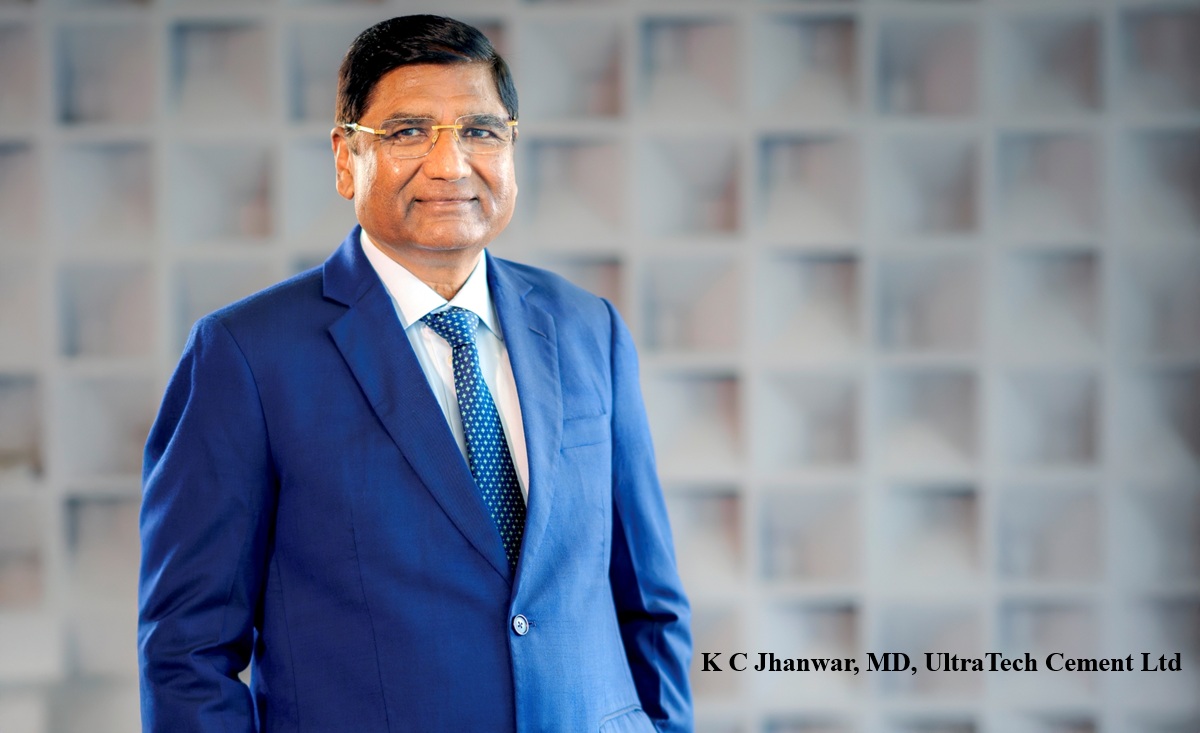
K C Jhanwar, Managing Director, UltraTech Cement Limited, said, “Crossing the 2 GW green energy milestone is the result of a strategy we have pursued consistently over the past decade. Cement is an energy-intensive, hard-to-abate sector, and showing that reliability and growth can go hand in hand with a rapid shift to green energy sets a benchmark for the industry. With nearly half of our power needs now met through green energy, we are significantly less exposed to fossil fuel supply constraints and power price volatility. As we scale up renewables, waste heat recovery and battery storage across our operations, we are building an energy foundation for stable, long-term growth.”

UltraTech commissioned 430 MW of green energy capacity in FY26 and continues to expand its renewable energy and waste heat recovery portfolio.

The company is also progressively integrating Battery Energy Storage Systems across its operations to improve renewable energy utilisation and supply reliability.

In 2025, UltraTech operationalised what it described as India’s first on-site hybrid round-the-clock renewable energy project at Sewagram Cement Works in Gujarat. The project combines solar, wind and battery storage.

As part of its decarbonisation strategy, UltraTech said it has not invested in new captive thermal power capacity for either greenfield projects or brownfield expansions at its integrated units for more than a decade.

The company said its expanding green energy portfolio is helping reduce dependence on conventional grid electricity and fossil fuel-based power, while lowering exposure to fluctuations in coal and electricity prices.

UltraTech aims to increase green energy’s share in its total power mix to 85 per cent by 2030. As a member of RE100, it has also committed to meeting 100 per cent of its electricity requirement through renewable sources by 2050.

UltraTech Cement, the cement flagship of the Aditya Birla Group, has a total grey cement capacity of 210.1 MTPA and white cement and putty capacity of 3.5 MTPA. The company is also a signatory to the GCCA Climate Ambition 2050 and has committed to the GCCA Net Zero Concrete roadmap.

Continue Reading

Concrete

Shiva Cement Merges with JSW Cement

Published

on

By

Shares

JSW Cement has announced a scheme of arrangement to merge its listed subsidiary Shiva Cement with itself, creating a single unified cement platform. The boards of both companies have approved the proposal, which will require clearances from stock exchanges, the Securities and Exchange Board of India, the National Company Law Tribunal, Odisha Industrial Infrastructure Development Corporation and other applicable authorities.

The transaction is expected to be completed within 12 to 14 months, subject to the necessary approvals from regulators, shareholders and creditors. Under the scheme, JSW Cement will issue 5 equity shares with a face value of Rs. 10 each for every 41 equity shares with a face value of Rs. 2 each held by Shiva Cement shareholders other than JSW Cement.

The company said the merger would consolidate financial, managerial, technical, distribution and marketing resources while reducing administrative duplication and compliance requirements. It would also provide greater funding flexibility, potentially lower financing costs and eliminate inter-company guarantees.

The consolidation is expected to strengthen backward integration by enabling JSW Cement to use Shiva Cement’s clinker manufacturing facility. This would reduce dependence on external clinker procurement and improve supply-chain efficiency. Public shareholders of Shiva Cement would receive direct ownership in JSW Cement, which has a broader institutional investor base and a more liquid listed presence.

JSW Cement acquired a controlling stake in Shiva Cement through transactions that began in January 2017. Shiva Cement operates a clinker facility in Odisha, near the borders of Odisha, Chhattisgarh and Jharkhand, and commissioned a 1 mtpa cement grinding unit at Sambalpur in FY26 through a commercial arrangement with Bhushan Power and Steel.

JSW Cement has 24.10 mtpa of cement grinding capacity and 9.74 mtpa of clinkerisation capacity. Its Indian operations comprise nine plants, including two integrated units, one clinker unit and six grinding units. The proposed merger is intended to simplify the corporate structure and align the financial statements of the two companies.

Continue Reading

Video Thumbnail
▶

    SIGN-UP FOR OUR GENERAL NEWSLETTER

    Trending News

    SUBSCRIBE TO THE NEWSLETTER


    Don't miss out on valuable insights and opportunities to connect with like minded professionals.


      This will close in 0 seconds