Connect with us

Concrete

The Green Revolution

Published

on

Shares

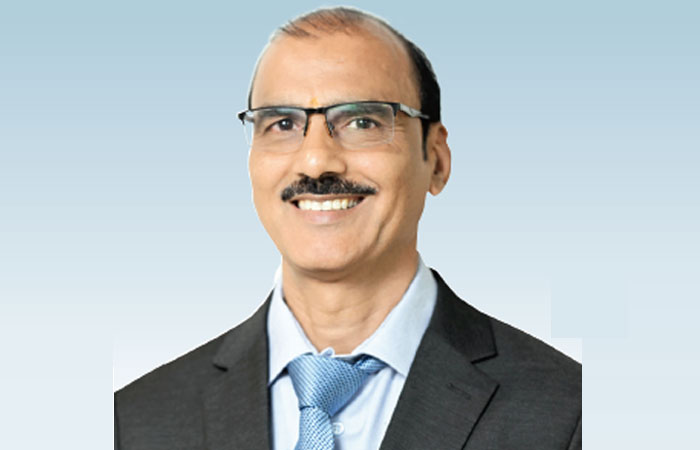
MM Rathi, Joint President – Power Management, Shree Cement, discusses the 3Cs – cut emissions, capture carbon and cement innovation – that are currently crucial for India’s cement sector to achieve Net Zero goals.

India’s cement industry is a backbone of growth which stand strong to lead the way towards net zero. From highways and housing to metros and mega cities, cement has powered India’s rise as the world’s second-largest producer with nearly 600 million tonnes annual capacity. Yet this progress comes with challenges: the sector contributes around 5 per cent of national greenhouse gas emissions, while also facing volatile fuel prices, raw material constraints, and rising demand from rapid urbanisation.
This dual role—driving development while battling emissions—makes cement central to India’s Net Zero journey. The industry cannot pause growth, nor can it ignore climate imperatives. As India pursues its net-zero 2070 pledge, cement must lead the way. The answer lies in the 3Cs Revolution—Cut Emissions, Cement Innovation, Capture Carbon. This framework turns challenges into opportunities, ensuring cement continues to build India’s future while aligning with global sustainability goals.

Cut: Reducing emissions, furnace by furnace
Cement production is both energy- and carbon-intensive, but India has steadily emerged as one of the most efficient producers worldwide. A big part of this progress comes from the widespread use of blended cements, which now account for more than 73 per cent of production. By lowering the clinker factor to around 0.65, the industry is able to avoid nearly seven million tonnes of CO2 emissions every year. Alongside this, producers are turning to alternative fuels and raw materials—ranging from biomass and municipal waste to refuse-derived fuels—to replace conventional fossil fuels in kilns.
Efficiency gains also extend to heat and power. With over 500 MW of waste heat recovery systems already installed, individual plants are now able to generate 15–18 MW of electricity directly from hot exhaust gases that would otherwise go to waste. On the renewable front, the sector is targeting about 10 per cent of its power needs from solar and wind by FY26, with a further 4–5 GW of capacity expected by 2030. To ensure that this renewable power is reliable, companies are signing round-the-clock supply contracts that integrate solar and wind with battery energy storage systems (BESS). Grid-scale batteries are also being explored to balance the variability of renewables and keep kiln operations running without interruption.
Even logistics is being reimagined, with a gradual shift away from diesel trucks toward railways, waterways, and CNG-powered fleets, reducing both emissions and supply chain congestion. Taken together, these measures are not only cutting emissions today but also laying the foundation for future breakthroughs such as green hydrogen-fueled kiln operations.

Cement: Innovations that bind
Innovation is transforming the way cement is produced and used, bringing efficiency, strength, and sustainability together. Modern high-efficiency plants now run kilns capable of producing up to 13,500 tonnes of clinker per day. With advanced coolers and pyro systems, they achieve energy use as low as 680 kilocalories per kilogram of heat and just 42 kilowatt-hours of power per tonne of clinker. By capturing waste heat, these plants are also able to generate 30–35 kilowatt-hours of electricity per tonne, bringing the net power requirement down to only 7–12 kilowatt-hours—a major step forward in energy efficiency.
Grinding technology has also taken a leap. Next-generation mills consume about 20 per cent less power while offering more flexible operations, allowing producers to fine-tune processes quickly and reduce energy costs. At the same time, the use of supplementary cementitious materials (SCMs) such as fly ash, slag and calcined clays is cutting clinker demand without compromising strength. New formulations like Limestone Calcined Clay Cement (LC3) go even further, reducing emissions by nearly 30 per cent while delivering stronger, more durable concrete.
Digitalisation is playing its part as well. Smart instrumentation, predictive maintenance, and automated monitoring systems are helping plants operate more smoothly, avoid costly breakdowns, and maintain consistent quality while saving energy. Together, these innovations not only reduce emissions but also enhance durability, efficiency, and cost-effectiveness, proving that sustainability and performance can go hand in hand.

Carbon: Building a better tomorrow
Even with major efficiency gains, most emissions from cement come from the chemical process of turning limestone into clinker—emissions that cannot be avoided without carbon capture. To address this, the industry is moving forward on several fronts. Carbon Capture, Utilisation and Storage (CCUS) pilots are underway, aiming to trap CO2 at the source and convert it into useful products such as construction materials and industrial chemicals.
At the same time, companies are embracing circular practices. Rainwater harvesting, wastewater recycling, and the use of alternative raw materials are becoming more common, especially as traditional sources like fly ash become scarcer. Policy and market signals are reinforcing this transition: efficiency mandates, green product labels and emerging carbon markets are pushing producers to accelerate the shift toward low-carbon cements.
Ultimately, large-scale carbon capture will be essential if the sector is to reach true net-zero
cement, turning today’s unavoidable emissions into tomorrow’s opportunities.

The Horizon: What’s next
By 2045, India’s cities are expected to welcome another 250 million residents, a wave of urbanisation that will push cement demand nearly 420 million tonnes by FY27 and keep rising in the decades ahead. The industry is already preparing for this future with a host of forward-looking measures. Trials of electrified kilns are underway to replace fossil fuel-based heating, while electric trucks are being deployed both in mining operations and logistics to reduce transport emissions. Inside the plants, AI-driven systems are optimising energy use and operations, and circular economy models are turning industrial by-products from other sectors into valuable raw materials for cement production. On the energy front, companies are moving toward 100 per cent renewable power, supported by advanced battery storage to ensure reliability around the clock.
This vision goes beyond incremental improvements. The 3Cs Revolution—Cut, Cement, Carbon is about building stronger, smarter, and more sustainable foundations for India’s growth. Once seen as a hard-to-abate emitter, the cement sector is now positioning itself as a cornerstone of India’s climate strategy. By cutting emissions, driving innovations and capturing carbon, it is laying the groundwork for a net-zero future.
India’s cement sector is already among the most energy-efficient in the world, proving that growth and responsibility can go hand in hand. By cutting emissions, embracing innovation, and advancing carbon capture, we are not just securing our net-zero future—we are positioning India as a global leader in sustainable cement.

ABOUT THE AUTHOR:
MM Rathi, Joint President – Power Management, Shree Cement, comes with extensive expertise in commissioning and managing over 1000 MW of thermal, solar, wind, and waste heat power plants.

Concrete

Niraj Cement JV Wins Railway and Metro Contracts

Two orders worth over Rs 1.64 billion boost infrastructure portfolio

Published

on

By

Shares

Niraj Cement Structurals (JV) has secured two major contracts from the Northeast Frontier Railway (NF Railway) and the Mumbai Metropolitan Region Development Authority (MMRDA), strengthening its position in large-scale infrastructure development.

The first contract, valued at Rs 815.2 million, has been awarded by NF Railway. It involves the construction of multiple-span 12.20-metre PSC slab underpasses, a major bridge (No. 727), retaining and guide walls, embankments and one minor bridge along the proposed UP and Down line near Deepor Beel. The project covers Km 163/00 to 164/200 between Azara and Kamakhya stations and forms part of the New Bongaigaon–Goalpara Town–Kamakhya (NBQ–GLPT–KYQ) railway doubling programme.

The second contract, worth Rs 826.6 million, has been awarded by MMRDA for constructing a foot overbridge (FOB) equipped with a travellator to improve connectivity between the SGMC monorail station and the Mahalaxmi metro and suburban railway stations.

The two projects underscore the company’s technical capabilities in both transportation infrastructure and environmentally sensitive construction, further strengthening its portfolio in key railway and urban mobility developments.

Continue Reading

Concrete

Peddapalli MP Seeks Clear Timelines for Rs 42.10 Bn Projects

Peddapalli MP Gaddam Vamshi Krishna has urged the Union Government to specify execution timelines for major infrastructure projects worth Rs 42.10 billion in his constituency.

Published

on

By

Shares

Peddapalli MP Gaddam Vamshi Krishna has called on the Centre to provide definitive timelines for a series of sanctioned infrastructure works that he said are essential for the region’s economic progress. Speaking in the Lok Sabha, he stressed that many approved projects remain stalled without clear implementation schedules, limiting their potential impact on connectivity and employment.

A key pending work is the Peddapalli–Manuguru Railway Line, a 137 km stretch linking Peddapalli with Manuguru in Bhadradri Kothagudem district. Although the line has received required approvals and special project status, the execution schedule has not yet been announced. The project is expected to support freight efficiency, improve coal logistics, and strengthen local job creation.

Extending his appeal beyond physical infrastructure, the MP urged the Centre to consider including Peddapalli in the India Semiconductor Mission, citing the district’s industrial ecosystem, skilled workforce, and readiness to support advanced manufacturing.

By pressing for structured timelines, Krishna emphasised the need for coordinated planning and timely execution to advance the constituency’s long-term development goals.

Continue Reading

Concrete

IndiaAI, Gujarat Govt Host Regional Conclave Ahead of 2026 AI Summit

A regional pre-summit event in Gandhinagar recently gathered leaders to advance AI for good governance.

Published

on

By

Shares

The IndiaAI Mission under the Ministry of Electronics and Information Technology, along with the Government of Gujarat and IIT Gandhinagar, convened a Regional Pre-Summit Event at Mahatma Mandir, Gandhinagar. The initiative is part of the build-up to the India–AI Impact Summit 2026, scheduled for 15–20 February 2026 at Bharat Mandapam, New Delhi.

The conclave brought together senior policymakers, technology leaders, researchers and industry practitioners to examine how AI can accelerate economic, digital and social transformation across sectors. The programme focused on the overarching theme of ‘AI for Good Governance: Empowering India’s Digital Future’.

The inaugural session featured key dignitaries including Bhupendrabhai Rajnikant Patel, Chief Minister of Gujarat; Harsh Rameshbhai Sanghavi, Deputy Chief Minister of Gujarat; Arjunbhai Devabhai Modhwadia, Minister for Science & Technology, Government of Gujarat; Manoj Kumar Das, Chief Secretary, Government of Gujarat; Abhishek Singh, Additional Secretary, MeitY and Director General, NIC; and Ponugumatla Bharathi, Secretary, Department of Science & Technology, Government of Gujarat.

High-impact keynote sessions led by national and global experts from MeitY, Bhashini, Google Cloud, Microsoft, IBM Research, NVIDIA, Oracle and AWS examined themes including AI in governance, public service delivery, urban development, rural transformation, healthcare, agriculture, fintech and multilingual accessibility enabled through Bhashini.
Delegates also visited an Experience Zone curated by IndiaAI and DST Gujarat, which showcased AI solutions across governance, agriculture, health and industry.

By convening government, industry and academic stakeholders, the conclave aimed to strengthen India’s AI ecosystem through frameworks that prioritise trust, scalability and public interest. Insights generated from the event will contribute directly to the agenda and outcomes of the India–AI Impact Summit 2026. 

Continue Reading

Trending News

SUBSCRIBE TO THE NEWSLETTER


Don't miss out on valuable insights and opportunities to connect with like minded professionals.


    This will close in 0 seconds