

Economy & Market
RAHSTA to submit policy recommendations to NHAI

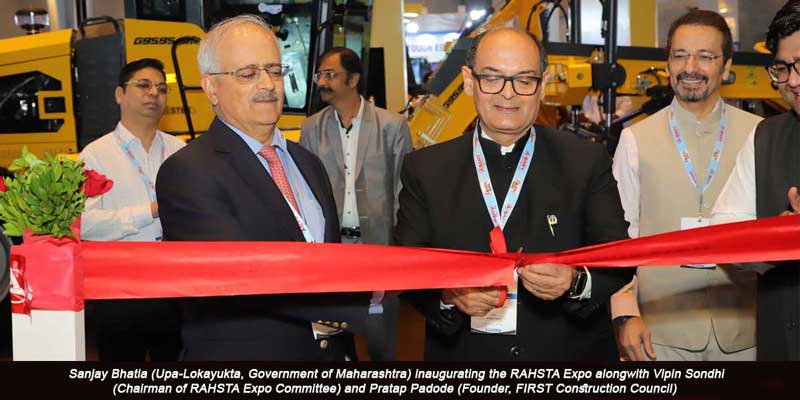
- RASHTA Expo 2024 and 10th India Construction Festival (ICF) receive grand reception from infrastructure industry
- 10th India Construction Festival 2024 awards over 75 companies from infrastructure industry
- At the 14th RAHSTA Expo – India’s first indoor trade fair for the construction equipment technology – more than 100 companies showcase their latest technologies, products and solutions for building a strong infrastructure
- A M Naik, Chairman Emeritus of L&T, and Mofatraj Munot, Group Founder, Promoter and Chairman of Kalpataru Group, were bestowed with Construction World (CW) Lifetime Achievement Awards
- Dineshchandra Agrawal, CMD, Dineshchandra R Agrawal Infracon Pvt Ltd (DRAIPL) was honoured with the CW Person of the Year (Private Sector) award
- Jaideep Shekhar, MD, Terex India, was recognised as the “Equipment India Person of the Year 2024”
- More than 50 speakers discussed innovative technologies, sustainable practices, and funding opportunities for the roads sector at 14th India RAHSTA (Roads) Conference
Mumbai, 10 October 2024
The 10th Edition of India Construction Festival (2024) – comprising 14th RAHSTA Expo, 14th India RAHSTA (Roads) Conference, 12th Equipment India Awards and 22nd Construction World Global Awards – received a big thumps up from industry leaders of the construction and infrastructure industry for recognising the industry’s contribution to the nation building by awarding & celebrating its success.
Held on October 9-10, 2024, at Jio World Convention Centre, BKC, Mumbai and hosted by infrastructure think-tank FIRST Construction Council in partnership with Construction World (CW) and Equipment India (EI) magazines, India Construction Festival 2024 honoured over 75 companies in the infrastructure and construction equipment sectors with awards under various categories.
The 14th RAHSTA Expo – India’s first indoor trade fair for the construction equipment technology – provided a platform to more than 100 companies for showcasing their latest technologies, products and solutions that are crucial for the development of a strong infrastructure. The RASHTA Expo and conference united all stakeholders in the infrastructure sector, including policymakers, industry professionals, and supporting industries such as financial institutions and technology providers. This gathering aimed to showcase integrated solutions for challenges within the construction industry and establish best practices for efficiency.
Sanjay Bhatia, Upa-Lokayukta, Government of Maharashtra along with Vipin Sondhi, Chairman, RAHSTA Expo Committee, inaugurated the RAHSTA Expo. Speaking at the inaugural session, Sanjay Bhatia, who has been instrumental in projects like Atal Setu, NAINA region, Mumbai East Coast Marina, Sagarmala during his stints leading CIDCO, Mumbai Port Trust etc., expressed his delight at the huge display of construction technology at the expo, “The RAHSTA expo has put the construction industry on an international standard. India is experiencing nation building at a robust pace and I am truly impressed with the work being now done by our youth with their start-ups many of which are showcasing their innovation here at this expo.”
Launching his to-be-released book ‘Tarmac to Towers – India’s infrastructure story’, Pratap Padode, Founder, FIRST Construction Council stated, “RAHSTA Expo is a paradigm shift in exhibition presentation for the construction industry. It has drawn 4000 quality business visitors who have had fruitful discussions with material manufacturers and OEMs of equipment and technology. The RAHSTA Expo has brought together road contractors, developers, financiers, material manufacturers, equipment OEMs, government authorities and engineering firms on the same platform to share from each other.”
Speaking at the inauguration, Pam Mcfarland, Senior Editor, Engineering News – Record (ENR), said, “India and the USA deals with a lot of similar issues such as flooding, hurricane, etc. Billions of dollars are being poured into construction, roads, and variety of transportation which has climate and environmental resilience focus. In India, pace of road construction has increased manifold. I am looking forward to learn more about what’s going on in India and particularly resilient materials in roads and bridge construction.”
Vipin Sondhi, Chairman, RAHSTA Committee, and former MD & CEO, Ashok Leyland & JCB, said, “This occasion is not just a gathering but reflects our collective strides in shaping the future of India’s highway sector. This sector is not only critical for economic growth but is the backbone of physical connectivity that binds our nation together. The union budget reflected the priority of the sector and allocated Rs 2.7 trillion for Ministry of road transport and highways (MoRTH). India’s road network is the second largest and it moves not only goods, people but drives opportunities of inclusivity and development. National highway construction has seen a remarkable upward trajectory, growing at 9 per cent CAGR from FY2016 to FY2024.”
The 14th India RAHSTA Conference (IRC) convened policymakers, industry leaders, and experts to explore innovative technologies, sustainable practices, and funding opportunities aimed at transforming the road construction landscape in India.
Padode stated, “India has the distinction of the second largest road network in the world. In the last 10 years, the speed of road development has increased manifold, and today we are building roads at the rate of 30-37 km per day. But, we need to build roads and bridges of the best quality that can last for 100 plus years. With rising environment and climate change concerns, India need to promote climate and disaster resilience in the infrastructure development process. RASHTA conference provides an ideal forum to discuss, debate and form strategies for building more sustainable, resilient infrastructure projects.”
During the conference Ashish Kumar Singh, Chief General Manager – Finance, National Highway Authority of India (NHAI) has asked FIRST Construction Council to submit policy recommendations based on deliberations and discussions at the RAHSTA conference and expo.
The two days of RAHSTA Conference paved the way for fruitful engagement and informed participants about novel technologies, strategies and processes required to build a resilient infrastructure.
With over 50 speakers, participants gained valuable insights through engaging panel discussions, thought-provoking keynotes, and displays of cutting-edge innovations at IRC 2024. The event enhanced understanding of industry trends and facilitated important partnerships, contributing significantly to the development of safer, greener, and more efficient road networks.
On the occasion, seven RASHTA Awards were presented in various categories such as Award for best in Road Engineering & Construction, Bridge Engineering, Road Financier, technology in road building, project management, project execution, etc.
CW Global Awards presented to 50 construction industry leaders
The awards were presented at a dazzling ceremony attended by leading figures from the construction industry, including V Chandrashekar, MD & CEO, GMMCO; Sarat Chandak, CEO, H&R Johnson; Srikrishna Subramanian, Director & Sr. VP – HR, GA & ICT, Komatsu India; R K Bansal, Executive VP & Head – Roads, Larsen & Toubro; Anil Kumar Singh, MD, APCO Infratech; Ashish Kataria, Ashoka Buildcon, Director; Rajeev Mishra, CFO, H G Infra Engineering; Sudhir Hoshing, CEO Execution, IRB Infrastructure Developers; Nalin Gupta, MD, J Kumar Infraprojects; Suhas Eklahare, Director, NCC; Kavita Shirvaikar, MD, Patel Engineering; Yancharla Rathnakara Nagaraja, MD, Ramky infrastructure; Sandeep Garg, CEO & MD, Welspun Enterprises; B R Parthasarathy, Sr VP & Head-Infrastructure Cluster, Tata Consulting Engineers; Shammi Khurana, VP – Execution, Civil, KEC International; and Puneet Singh Narula, CEO & Director, Ceigall, among others.

The 22nd Construction World Global Awards brought together top construction industry leaders, experts and policymakers. CW Global Awards were presented to 50 companies such as Berger Paints, Century Plyboards India, GMMCO, H&R Johnson, Komatsu India, Larsen & Toubro, Afcons Infrastructure, APCO Infratech, Ashoka Buildcon, DRAIPL, H G Infra Engineering, IRB Infrastructure Developers, ITD Cementation India, J Kumar Infraprojects, NCC, Patel Engineering, PNC Infratech, Ramky Infrastructure; Welspun Enterprises; Shapoorji and Pallonji, Tata Consulting Engineers, KEC International, and Kalpataru Projects International, among others in different categories. The CW Global Awards and ENR Awards offered a platform to acknowledge and celebrate the innovation, dedication, and outstanding accomplishments of individuals and companies in the construction industry, raising the standard for future endeavors.
A M Naik, Chairman Emeritus of Larsen & Toubro (L&T), and Mofatraj Munot, Group Founder, Promoter and Chairman of Kalpataru Group, were bestowed with CW Lifetime Achievement Awards, for their incredible contribution to the growth of not just their companies, but also of the industry.
A M Naik commented, “I would like to extend my gratitude to the jury of the 22nd Construction World Global Awards and to the entire team at First Construction Council and Construction World magazine for this honour. To be recognised in this way, for contributing to a sector that has been a passion of mine for decades is a moment of great pride. Not just for me but for all those who have been a part of this journey. I have been fortunate to work with some of the brightest minds and most committed professionals, and I share this award with them. It is through their dedication and innovation that we have been able to achieve so much and propel both our company and the industry forward. Over the years, we have seen immense transformation in technology processes and practices, and it is heartening to witness how this industry continues adapting to new challenges while always looking to build better and smarter. This recognition from Construction World serves as a powerful reminder that our efforts to drive progress, innovation, and sustainability have been noticed.”
While accepting the award, Mofatraj Munot said, “A project can progress successfully only with the support of right equipment. Timely and quality completion depends on having reliable machinery at the site. I vividly remember, back in 1980s, I used to visit Bauma in Germany to see the latest machines because, at that time, India lacked a platform to showcase innovative equipment. Today, thanks to efforts like those of Construction World, we have access to all these machines right here in India. I want to express my gratitude to Construction World for the award.”
Dineshchandra Agrawal, CMD, Dineshchandra R Agrawal Infracon Pvt Ltd (DRAIPL) honoured with the prestigious Construction World Person of the Year (Private Sector) award.

Expressing deep gratitude to the Jury and Construction World for selecting him for the award, Dineshchandra Agrawal said, “This field is my passion, and I believe we are contributing to nation-building by generating employment and fostering growth. Also, it is important to mention that the construction equipment industry has been playing a key role as an enabler to build a strong, sustainable India. With the ‘Viksit Bharat’ vision, I hope we become a developed country where businesses thrive, and government policies support fair and transparent contracts. I dedicate this award to all the individuals and organisations that have been part of my journey and supported me throughout. It is because of their encouragement that I am receiving this recognition today.”
Equipment India awards 22 industry leaders
The eagerly awaited 12th Equipment India Awards 2024, presented by BKT, brought together industry leaders, top construction equipment manufacturers, and components & accessory suppliers to recognise and celebrate excellence and innovation in the construction equipment sector. Some of winning companies included Schwing Stetter India, Sany Heavy Industry India, Ammann India, Schwing Stetter India, Caterpillar India, JCB India, Tata Hitachi Construction Machinery, Action Construction Equipment (ACE); BEML Limited, Doosan Bobcat India, LiuGong India, AJAX Engineering, Case Construction India, etc.

A key highlight of the evening was the announcement of the Equipment India Person of the Year 2024, awarded to Jaideep Shekhar, MD of Terex India. The jury recognized Terex India’s impressive growth under Shekhar’s strong leadership.
Jaideep Shekhar said, “I’m deeply grateful to the Jury and Equipment India for this remarkable honour. This award reflects not only my contributions but also the dedication and hard work of my team. I have been associated with the industry for more than 25 years, and this award motivates me to keep pushing boundaries and to lead the growth with integrity.”

Equipment India and Smart Manufacturing & Enterprises (SME) also hosted a CE Panel Discussion – titled RAHSTA (Road) Ahead for CE Industry – to deliberate on opportunities and future trends in the construction equipment (CE) industry. Panelists of the panel discussion – moderated by Ranjan Sharma, Senior Director – Large Corporate Ratings, CareEdge Ratings – included Dimitrov Krishnan, MD, Volvo CE India Pvt Ltd; Sandeep Singh, MD, Tata Hitachi Construction Machinery Company Pvt Ltd; Shalabh Chaturvedi, MD for India & SAARC region, CASE Construction Equipment; SP Rajan, VP and Head Plant & Machinery, L&T Construction; Sanjay Koul, President – India and SE Asia and MD – India, The Timken Company; and Sitaram Ganeshan, President, Wipro Hydraulics.
Partnership galore
The industry’s overwhelming support was evident from the numerous partnerships it was able to garner as below:
- 22nd Construction World Global Awards: Powered by BKT, Varindera Construction as the Platinum Partner, ITD Cementation, Gmmco, and Dinesh Chandra R. Agrawal Infracon Pvt. Ltd. as Gold Partners, Liugong as the Silver Partner, TATA Hitachi as the Equipment Partner, LivSYT as the Technology Partner, and Shyam Steel and Action Construction Equipment as Association Partners.
- 12th Annual Equipment India Awards: Presented by BKT, Timken as the Platinum Partner, TATA Hitachi as the Equipment Partner, and Schwing Stetter and Action Construction Equipment as Association Partners.
- India RAHSTA Conference: Presented by BKT, Timken as the Gold Partner, Liugong and Nemetschek India as Silver Partners, TATA Hitachi as the Equipment Partner, LivSYT as the Technology Partner, and Action Construction Equipment as the Association Partner.
- RAHSTA Expo: Hosted by MSRDC as the Host State Partner, Birla Pivot as the Powered By Partner, AF Star as the Platinum Partner, ArcelorMittal Nippon Steel India as the Gold Partner, NPL Bluesky Automotive as the Silver Partner, Mahindra Construction Equipment, Terex, Shyam Steel, and PNC Infratech as Associate Partners, TATA Hitachi as the Equipment Partner, Volvo as the Badge Partner, SANY as the Lanyard Partner, Steel Authority of India as the VIP Lounge Partner, and Automark Industries as the Bag Partner.
- 10th India Construction Festival: Larsen & Toubro as the Gold Partner, TATA Hitachi as the Equipment Partner, and Action Construction Equipment as the Associate Partner.
————————————————————————————————————————————-
Contact:
For exhibitor enquiries (for RAHSTA Expo 2025), contact Sujoy Gomes on Mob: +91 86577 95881, or Email:sujoy.g@asappinfoglobal.com Office: 022-3103 3000








SEEPEX introduces BN pumps with Smart Joint Access (SJA) to improve efficiency, reliability, and inspection speed in demanding rock blasting operations.
Designed for abrasive and chemical media, the solution supports precise dosing, reduced downtime, and enhanced operational safety.
SEEPEX has introduced BN pumps with Smart Joint Access (SJA), engineered for the reliable and precise transfer of abrasive, corrosive, and chemical media in mining and construction. Designed for rock blasting, the pump features a large inspection opening for quick joint checks, a compact footprint for mobile or skid-mounted installations, and flexible drive and material options for consistent performance and uptime.
“Operators can inspect joints quickly and rely on precise pumping of shear-sensitive and abrasive emulsions,” said Magalie Levray, Global Business Development Manager Mining at SEEPEX. “This is particularly critical in rock blasting, where every borehole counts for productivity.” Industry Context
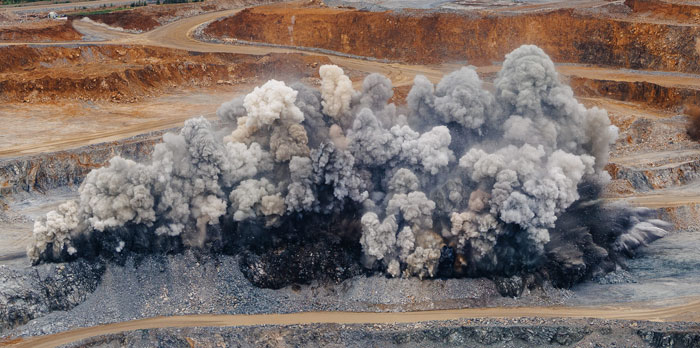
Rock blasting is essential for extracting hard rock and shaping safe excavation profiles in mining and construction. Accurate and consistent loading of explosive emulsions ensures controlled fragmentation, protects personnel, and maximizes productivity. Even minor deviations in pumping can cause delays or reduce product quality. BN pumps with SJA support routine maintenance and pre-operation checks by allowing fast verification of joint integrity, enabling more efficient operations.
Always Inspection Ready
Smart Joint Access is designed for inspection-friendly operations. The large inspection opening in the suction housing provides direct access to both joints, enabling rapid pre-operation checks while maintaining high operational reliability. Technicians can assess joint condition quickly, supporting continuous, reliable operation.
Key Features
- Compact Footprint: Fits truck-mounted mobile units, skid-mounted systems, and factory installations.
- Flexible Drive Options: Compact hydraulic drive or electric drive configurations.
- Hydraulic Efficiency: Low-displacement design reduces oil requirements and supports low total cost of ownership.
- Equal Wall Stator Design: Ensures high-pressure performance in a compact footprint.
- Material Flexibility: Stainless steel or steel housings, chrome-plated rotors, and stators in NBR, EPDM, or FKM.
Operators benefit from shorter inspection cycles, reliable dosing, seamless integration, and fast delivery through framework agreements, helping to maintain uptime in critical rock blasting processes.
Applications – Optimized for Rock Blasting
BN pumps with SJA are designed for mining, tunneling, quarrying, civil works, dam construction, and other sectors requiring precise handling of abrasive or chemical media. They provide robust performance while enabling fast, reliable inspection and maintenance.With SJA, operators can quickly access both joints without disassembly, ensuring emulsions are transferred accurately and consistently. This reduces downtime, preserves product integrity, and supports uniform dosing across multiple bore holes.
With the Smart Joint Access inspection opening, operators can quickly access and assess the condition of both joints without disassembly, enabling immediate verification of pump readiness prior to blast hole loading. This allows operators to confirm that emulsions are transferred accurately and consistently, protecting personnel, minimizing product degradation, and maintaining uniform dosing across multiple bore holes.
The combination of equal wall stator design, compact integration, flexible drives, and progressive cavity pump technology ensures continuous, reliable operation even in space-limited, high-pressure environments.
From Inspection to Operation
A leading explosives provider implemented BN pumps with SJA in open pit and underground operations. By replacing legacy pumps, inspection cycles were significantly shortened, allowing crews to complete pre-operation checks and return mobile units to productive work faster. Direct joint access through SJA enabled immediate verification, consistent emulsion dosing, and reduced downtime caused by joint-related deviations.
“The inspection opening gives immediate confidence that each joint is secure before proceeding to bore holes,” said a site technician. “It allows us to act quickly, keeping blasting schedules on track.”
Framework agreements ensured rapid pump supply and minimal downtime, supporting multi-site operations across continents


Merlin Prime Spaces Acquires 13,185 Sq M Land Parcel In Pune

Adani Cement and Naredco Partner to Promote Sustainable Construction

Operational Excellence Redefined!

World Cement Association Annual Conference 2026 in Bangkok

Assam Chief Minister Opens Star Cement Plant In Cachar
Merlin Prime Spaces Acquires 13,185 Sq M Land Parcel In Pune
Adani Cement and Naredco Partner to Promote Sustainable Construction
Operational Excellence Redefined!
World Cement Association Annual Conference 2026 in Bangkok
Assam Chief Minister Opens Star Cement Plant In Cachar
-
 Economy & Market4 weeks ago
FORNNAX Appoints Dieter Jerschl as Sales Partner for Central Europe
-

 Concrete2 weeks ago
Refractory demands in our kiln have changed
-
 Concrete2 weeks ago
Digital supply chain visibility is critical
-

 Concrete2 weeks ago
Our strategy is to establish reliable local partnerships