Connect with us

Concrete

Automation systems minimise material and energy use

Published

on

Shares

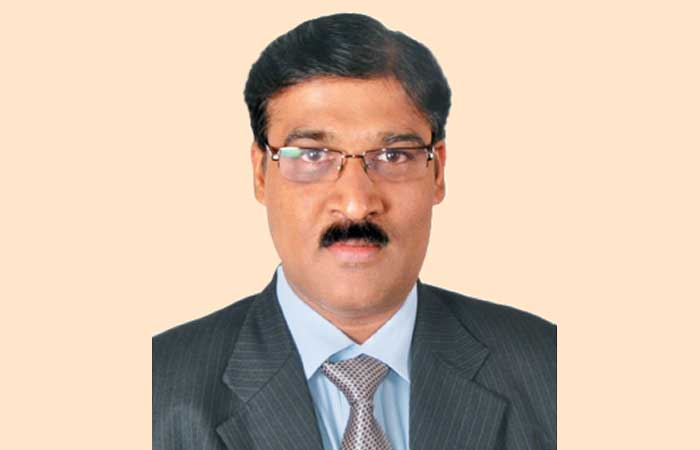
Manish Chordia, Regional Sales Manager-Cement (South Asia and Africa), ABB India Limited, discusses the importance of automation in cement plants to achieve efficient production with minimal environmental impact.

How do your solutions help cement plants to adjust to changing fuels and raw materials?
Delivering high quality products, while keeping production costs low and plant efficiency high, is an ongoing challenge for all process industries. Cement manufacturers face these challenges daily and the drive for improved efficiency cannot undercut the stability of production processes. ABB AbilityTM Expert Optimiser (EO) helps in alternative fuel management and raw material handling. EO can control, mix and monitor rates of alternative fuels to ensure consistent burning, while also ensuring that the kiln does not become unstable due to changes in fuel calorific value.
Stable and correctly proportioned raw material is essential for energy-efficient clinker production. Cement blended at the right proportions is essential to ensure that specifications are met and a quality product is delivered to end-customers. Implementing EO can positively impact both raw material and the cement blending processes. Incorporating optimisation and analytics technologies, the software enables a plant to automatically make the best operational decisions accurately and consistently. ABB AbilityTM EO standardises the optimisation strategy to minimise both shift-to-shift variations and human workload. This frees up operators to focus on more pressing tasks. EO for cement combines Advanced Process Control (APC) technologies with ABB’s extensive industry expertise, stabilising the process and maximising profitability to manage critical plant components, including kiln, alternative fuels, mills, and blending. It constantly pushes the boundaries of what is possible in a plant to maximise yield and throughput whilst minimising operating costs such as fuel and electricity.

Tell us more about your Advanced Process Control (APC) solution and its functionality.
ABB’s APC technology helps to improve fuel management, mill optimisation and material blending in cement manufacturing. The suite comprises a set of tools, both online and offline, that allow the deployment of advanced controllers and analytic models. This provides monitoring, predictive analytics, and closed loop control capabilities at the device, edge, and cloud to ensure real-time operational efficiencies. It also helps process and energy industries to optimise operations by using emergent technologies – such as the cloud, data analytics, visualisation, and advanced modelling algorithms, as part of the disruptive change offered by the Internet of Things (IoT). It extracts knowledge from existing data in the plant and uses that for detailed analysis to arrive at the best course of action to improve
specific processes.

How does automation help cement plants achieve accuracy and efficiency in production?
Efforts to reduce energy demands, by using higher efficiency equipment and substituting fuels and raw materials, are important to lower production costs. These changes introduce constraints that must be managed to secure the required quality and productivity of the plant. The ABB plant-wide automation strategy searches for the optimal operation point while maximising product quality and productivity, at the lowest energy consumption and least environmental impact. This is achieved through a combination of variable speed drives (VSD), advanced process control, energy monitoring and reporting.
Electrical energy savings of up to 70 per cent can be achieved by using VSD over a fixed-speed motor and damper. The multi-drive solution provides the optimised drive solution for the grate cooler. The control and optimisation of the kiln will reduce thermal fuel consumption by up to 8 per cent. When this is combined with the automated collection, organisation and distribution of production, quality and energy reports, fast decisions and interaction to reach the goals of energy management are achieved.
There can be no flaws or failures in cement composition or entire structures could disintegrate. Advanced measuring, information and optimisation systems are needed as never before to monitor and correct any deviations in quality standards – from quarry to dispatch. ABB’s tailored products, digital applications and services improve processes and help you achieve optimum production standards. Automation systems minimise material and energy use in complex processes.
Instead of controlling independent equipment and systems supplied by different suppliers over separate control systems, it is a great advantage to integrate and control automation islands centrally. ABB integrates these processes and adds value to the companies they work with. The processes covered in the scope of the ABB AbilityTM platform are considered to be a fully compatible integration with energy efficiency, production increase and optimisation, reduced downtime, business and asset management, ERP systems in factories by utilisation of Level 3 software. ABB produces its software unique for the sector by utilising the Minerals Library, which ABB has developed specifically for the cement sector. This library is composed of object-based software control and energy management applications productively and in an entirely parameterised manner at the same time. Thus, customers have the opportunity to operate and continue their production process and asset management in the most efficient way.

What is the data support provided by your solutions to the cement manufacturers?
In recent years, rapid advancements in big data and digital technologies have begun a revolution in industrial processes, commonly known as Industry 4.0. This revolution is defined by the application of disruptive technologies such as the IoT, augmented reality (AR) and artificial intelligence (AI) to industrial settings to optimise process performance, reduce operating costs, and enable safer and more secure production. One of the key elements for cement customers is to have an information management system that allows transparency across operations. ABB Ability™ Knowledge Manager information management system provides analytical insight to identify best practice and improve overall operations at plant and corporate level. Enhancing transparency across a plant or fleet of plants, Knowledge Manager is also available via a mobile app for smartphones or tablets, enabling plant and company managers to view operational performance at any time and from anywhere. Knowledge Manager software ensures executives can access instantly to the key performance indicators (KPI) of many cement factories. By utilisation of this software, they may see how much energy their factory transiently consumes, how much transient production they accomplish, which alternative fuels or minerals they use, and their profitability at any instant.

What are the major challenges in executing your solutions?
As ABB, we can provide solutions from quarry to dispatch to the cement industry which means automation, instrumentation, electrification, digitalisation, project management and engineering, infrastructure, and service. Additionally, ABB can also support cement manufacturers in the journey of decarbonisation with the help of co-operations with the likes of Coolbrook and Captimise. ABB’s experienced engineering team can react to changes in projects, offering expertise and take action quickly to produce solutions. In addition, despite the fact that electrification and automation systems are the final point during commissioning works, ABB can provide added value to the customers by trying to go one step ahead of the construction and mechanical works.
Other main challenges are the readiness of the companies for the decarbonisation journey considering both technical and financial ways. As ABB, we are ready to support them beginning with pre-feasibility studies.

Tell us about the innovations by your organisation that the cement industry can look forward to?
The most important feature differentiating ABB is customer satisfaction for its products and systems, ABB’s steadfast devotion in adherence to quality and global ethical principles, engineering strength and know-how, and powerful supply chain. By providing service and support for the projects and systems designed by ABB even after many years, we differentiate ourselves from other companies. We are investing in new technologies that reduce the use of fossil fuel consumption and reduce unscheduled stoppages as well as collaborative partnerships to reduce emissions in the cement industry. Collaboration with Coolbrook’s RotoDynamic technology, which replaces fossil fuels with renewable electricity, with Captimise to join forces to support the cement industry in planning CCS projects by providing technology agnostic FEED studies and a small sized trail facility to allow testing of the selected Carbon Capture technology will help the cement customers during their journey to achieve Net Zero target.


  • Kanika Mathur

Concrete

AFCM Unveils 2035 Regional Decarbonisation Roadmap for Cement Sector

AFCM launches world’s first regional decarbonisation plan for cement at Brunei meet.

Published

on

By

Shares


The ASEAN Federation of Cement Manufacturers (AFCM) has formally launched the 2035 AFCM Decarbonisation Roadmap, becoming the first regional bloc in the world to introduce a unified decarbonisation strategy for the cement sector. The announcement was made at the 46th AFCM Council Meeting in Brunei Darussalam, chaired by Dr Chana Poomee, and attended by leaders and representatives of cement associations from all eight AFCM member countries. The launch comes as global attention intensifies ahead of COP30 in Brazil, where climate action is expected to be a central priority.
Cement production remains integral to infrastructure and economic development across the ASEAN region, yet it is also a major contributor to CO? emissions. The 2035 AFCM Decarbonisation Roadmap signals a collective regional commitment to accelerating emissions reduction in alignment with national climate policies and global sustainability goals, reinforcing AFCM’s leadership in the transition to low carbon cement production.
Dr Chana Poomee, AFCM President and Chairman of the Thai Cement Manufacturers Association (TCMA), described the roadmap as a landmark achievement for the region’s cement industry. He noted that the shared framework would support systematic CO? reduction, strengthen regional competitiveness and enhance ASEAN’s contribution to global climate objectives.
Developed with strong support from the Global Cement and Concrete Association (GCCA), the 2035 Roadmap sets out a comprehensive transition pathway anchored around four strategic pillars:
• Expansion of low carbon cement enabled by performance-based standards;
• Transition to clean and renewable energy across production processes, alongside improved thermal and electrical efficiency;
• Deployment of advanced decarbonisation technologies, including Carbon Capture, Utilisation and Storage (CCUS); and
• Development of new supplementary cementitious materials to support next-generation low carbon cement products.
Dr Chana urged all AFCM members to treat the roadmap as a coordinated regional strategy for sustainable growth. At the ASEAN level, the measures outlined have the potential to reduce up to 38 million tonnes of CO2 by 2035. While the roadmap sets a collective vision, it acknowledges the diversity of national conditions, recognising that each member country will set its own targets based on regulatory frameworks, industrial maturity and technological capacity. One key early-action priority is the reduction and phasedown of Ordinary Portland Cement (OPC), providing an immediate opportunity for substantial emissions cuts.
Cement associations from Brunei Darussalam, Cambodia, Indonesia, Malaysia, the Philippines, Singapore, Thailand and Vietnam expressed strong support for the roadmap and reaffirmed their commitment to advancing decarbonisation within their national contexts. Members emphasised the need for supportive policies, expanded use of alternative fuels, improved energy efficiency, accelerated adoption of advanced technologies and greater promotion of low carbon cement and concrete solutions. They also recognised that specific decarbonisation pathways will vary based on each country’s energy mix, material availability, policy environment and market readiness.
“The 2035 AFCM Decarbonisation Roadmap presents a significant opportunity to enhance regional competitiveness, drive sustainable development and unlock substantial economic benefits. Government support, including policy adaptation, will be essential for effective implementation. Through collaboration, innovation and collective action, AFCM can accelerate the adoption of low carbon technologies, attract green investment, create new economic opportunities and build a resilient, future-ready cement industry that contributes meaningfully to global decarbonisation,” Dr Chana concluded.
The issuer is solely responsible for the content of this announcement.

Continue Reading

Concrete

Cement Makers Positive on H2 Demand Outlook

Major producers expect stronger sales in the second half of FY26.

Published

on

By

Shares


The leading cement producers have posted high single-digit volume growth and better sales realisation in the July–September quarter, setting a positive tone for the second half of FY26. Companies are upbeat on demand prospects, supported by a strong housing sector and continued government spending on major infrastructure projects.

UltraTech, Ambuja Cement, Shree Cement, Dalmia Bharat and Nuvoco Vistas recorded revenue growth of up to 18 per cent in the September quarter. The rise was driven by firm realisations, softer input costs and an increased share of premium products.

With coal prices easing and diesel rates remaining stable year-on-year, companies expect margins to improve further in the coming months despite a rise in petcoke costs. In recent earnings calls, cement makers highlighted that the individual home builders segment across rural and urban markets is likely to drive demand, aided by favourable monsoon conditions, recent tax benefits and GST reforms.

Continue Reading

Concrete

Fornnax Unveils the World’s Largest NPD and Demo Centre to Accelerate Global Recycling Innovation

Published

on

By

Shares


A 12-acre innovation campus enables Fornnax to design, test and validate high-performance recycling solutions at global standards in record time.

Fornnax has launched one of the world’s largest New Product Development (NPD) centres and demo plants, spanning more than 12 acres, marking a major step toward its vision of becoming a global recycling technology leader by 2030. Designed to accelerate real-world innovation, the facility will enable faster product design cycles, large-scale performance validation, and more reliable equipment for high-demand recycling applications.

At the core of the new campus is a live demo plant engineered to support application-specific testing. Fornnax will use this facility to upgrade its entire line of shredders and granulators—enhancing capacity, improving energy efficiency, and reducing downtime. With controlled test environments, machines can be validated for 3,000 to 15,000 hours of operation, ensuring real-world durability and high availability of 18–20 hours per day. This approach gives customers proven performance data before deployment.

“Innovation in product development is the key to becoming a global leader,” said Jignesh Kundariya, Director and CEO of Fornnax. “With this facility, we can design, test and validate new technologies in 6–8 months, compared to 4–5 years in a customer’s plant. Every machine will undergo rigorous Engineering Build (EB) and Manufacturing Build (MB) testing in line with international standards.”

Engineering Excellence Powered by Gate Review Methodology

Fornnax’s NPD framework follows a structured Gate Review Process, ensuring precision and discipline at every step. Projects begin with market research and ideation led by Sales and Marketing, followed by strategic review from the Leadership Team. Detailed engineering is then developed by the Design Team and evaluated by Manufacturing, Service and Safety before approval. A functional prototype is built and tested for 6–8 months, after which the design is optimised for mass production and commercial rollout.

Open-Door Customer Demonstration and Material Testing

The facility features an open-door demonstration model, allowing customers to bring their actual materials and test multiple machines under varied operating conditions. Clients can evaluate performance parameters, compare configurations and make informed purchasing decisions without operational risk.

The centre will also advance research into emerging sectors including E-waste, cables, lithium-ion batteries and niche heterogeneous waste streams. Highly qualified engineering and R&D teams will conduct feasibility studies and performance analysis to develop customised solutions for unfamiliar or challenging materials. This capability reinforces Fornnax’s reputation as a solution-oriented technology provider capable of solving real recycling problems.

Developing Global Recycling Talent

Beyond technology, the facility also houses a comprehensive OEM training centre. It will prepare operators and maintenance technicians for real-world plant conditions. Trainees will gain hands-on experience in assembly, disassembly and grinding operations before deployment at customer sites. Post-training, they will serve as skilled support professionals for Fornnax installations. The company will also deliver corporate training programs for international and domestic clients to enable optimal operation, swift troubleshooting and high-availability performance.

A Roadmap to Capture Global Demand

Fornnax plans to scale its offerings in response to high-growth verticals including Tyre recycling, Municipal Solid Waste (MSW), E-waste, Cable and Aluminium recycling. The company is also preparing solutions for new opportunities such as Auto Shredder Residue (ASR) and Lithium-Ion Battery recovery. With research, training, validation and customer engagement housed under one roof, Fornnax is laying the foundation for the next generation of recycling technologies.

“Our goal is to empower customers with clarity and confidence before they invest,” added Kundariya. “This facility allows them to test their own materials, compare equipment and see real performance. It’s not just about selling machines—it’s about building trust through transparency and delivering solutions that work.”

With this milestone, Fornnax reinforces its long-term commitment to enabling industries worldwide with proven, future-ready recycling solutions rooted in innovation, engineering discipline and customer collaboration.

Continue Reading

Trending News

SUBSCRIBE TO THE NEWSLETTER


Don't miss out on valuable insights and opportunities to connect with like minded professionals.


    This will close in 0 seconds