Concrete
Practising Sustainability at Every Step
Published
3 years agoon
By
admin
Pearl Tiwari, Director and CEO, Ambuja Cement Foundation (ACF), takes us through the efforts taken and progress made by the community development initiatives undertaken by ACF, which is making a difference in the areas of healthcare, water conservation, livelihoods, education and women empowerment.
Ambuja Foundation is an independent, pan-India development organisation, committed to generating prosperous rural communities. They believe in the vast, untapped potential of rural communities and the unstoppable power of the people that live there. With investments in water, agriculture, skills, women, health and education, they enable ‘livelihoods’ as a pathway to unleashing that potential.
Partnering with like-minded corporations, governments and others, they work collaboratively with communities to solve pressing community problems – empowering local people to be the catalysts and drivers of change. With over almost three decades of work, they have seen a complete transformation in the remote geographies in which they work.
Today, with the full support and encouragement of Ambuja Cements, ACF is committed to expanding their footprint and impact of their work even further, through partnerships – building many more sustainable, prosperous rural communities and revitalising rural India as the backbone of this country.
Community Development Initiatives
Ambuja Cements has been working with grassroots communities for over 30 years – its founders had the vision that, as the company prospered, so should the communities around them. Community development initiatives were, therefore, carried out extensively long before the CSR law came into play.
As the company, and therefore its CSR, grew, there became a need to create a separate organisation of development professionals to execute projects. For the last 29 years, Ambuja’s CSR initiatives have been implemented through Ambuja Cement Foundation. ACF has played a pivotal role in improving the lives of the communities, in and around ACL plant operations, with an objective to energise, involve and enable them to realise their potential. This has enabled the company to fulfil its commitment to be a socially responsible corporate citizen.
Over the years, Ambuja Cement Foundation as a stand-alone development organisation, has grown exponentially, due to Ambuja Cements support and also its expansion into various other geographies. It has progressed so well by facilitating the convergence with government schemes to support projects, and via the active participation of the community members – encouraging community members to actively contribute and take ownership of the projects. With successful community participation, this impactful, on the ground model has led to ACF being recognised as a leading CSR implementing agency. As a result, several other corporates have invited ACF to be an implementing partner in executing their own CSR, so with full encouragement from Ambuja Cements Ltd, ACF has grown its footprint significantly in terms of size and reach – beyond ACL territories, working in needy districts and communities where ACF’s expertise in remote rural community development is most needed.
In terms of governance, Ambuja Cements has a very active and involved CSR Board Committee. They see great benefit in the work of the Foundation as there are many direct benefits to the business also – which reinforces the statement ‘you can do well by also doing good.’ The CEO of the Foundation reports to the MD of Ambuja Cements and the board is frequently updated on the impacts, achievements, and interventions of the Foundation.

Rural Communities
Livelihoods are the key to solving the riddle of rural poverty. With a good livelihood, most people can solve many of their own problems.
Whilst there have been great gains in the reduction of poverty across the country over the last 25 years, many of those that have ‘come out of poverty’ still live in dire and difficult circumstances – they simply do not have a level of income to enable them to live a decent quality of life, rather than just bare subsistence.
Income levels, therefore, need to be sufficient enough to enable them to meet some fundamental household needs – food, energy, housing, drinking water, sanitation, healthcare, education and social security. Whilst it may sound simple, it’s not. Livelihood is a multifaceted issue, and is so much more than just the impact of skills and education.
Following the livelihoods pentagon approach, ACF believes that for any person to earn a livelihood, they require five sets of capital to support them:
- They need skills, but if they have health problems, the skills do not matter.
- They need a basic education, but if they cannot access affordable loans they get into a vicious cycle of debt.
- They need technical know-how, but if there is no water for the family or farming, it is of
- little help.
- They need bargaining power, but if they do not work together their voice cannot be heard.
To prosper, rural villagers need all these things and more, to support them in earning a livelihood. Therefore, ACF takes a holistic approach to helping rural families generate livelihoods – working across 6 thrust areas of water, agriculture, skills, women, health, and education. ACF works with 2.2 lakh farmers, 35,000 women and 88,000 youth – directly helping them enhance livelihoods, build businesses, diversify income streams and skills for a
strong livelihood.
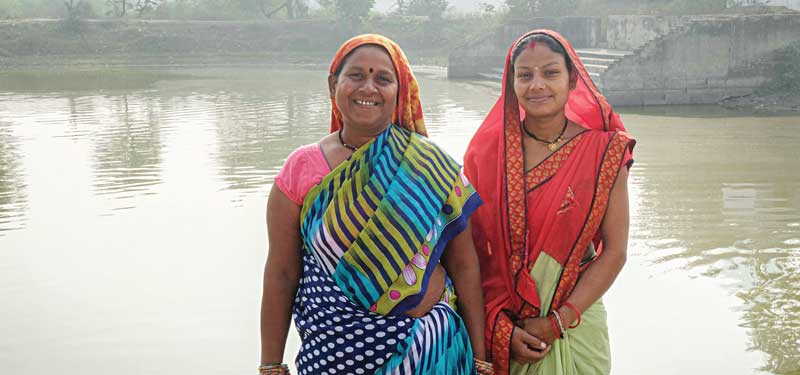
ACF Sakhis are a key vehicle of health care delivery, driving various health promotion initiatives at a community level.
Key Programmes
ACF works with a vision to create a sustainable and self-dependent society, by generating livelihood opportunities for the rural population. For this, ACF has chosen to work in the selected thrust areas:
- Water Management
- Livelihoods (SEDI and Agro-based)
- Women empowerment
- Health
- Education
All programmes at ACF are undertaken with community participation with the help of tools like Participatory Rural Appraisals (PRAs), which ensure better understanding of local nuances and hence efficient implementation in varied geographies.
ACF has also worked in water resource management for almost 30 years across 11 states – from the deserts of Rajasthan, to the mountains of Himachal Pradesh, and from the interiors of Maharashtra to the coastline of Gujarat. Over this period, they have learnt first-hand how water issues in India vary greatly from region to region.
The semi-arid Rajasthan, for instance, has always had to adapt to limited water supplies. In mountainous states such as Himachal Pradesh and Uttaranchal the water holding capacity of the soil is low and susceptible to excessive soil erosion. Moreover, the undulating topography and steep slopes lead to high water runoffs and landslides. The coastal regions grapple with salinity creeping inland rendering ground water unfit for agriculture and domestic use. In other regions such as Maharashtra, the water crisis is mostly a man made calamity. India’s water challenges, therefore, require deep knowledge of local conditions and the development of hyper local solutions.
Working hand in hand with local communities and Government ACF has built drought resilient villages – empowering the community to secure their water future.

ACF’s work in women led microenterprises has helped over 10,000 women to kickstart their businesses.
Water needs both technical and social solutions and hence their work focuses on both the demand and supply side interventions in three core areas:
Drinking Water Security: ACF works with families and communities to ensure clean drinking water availability for daily household consumption. This includes solutions such as Rooftop Rainwater Harvesting Systems to ensure fresh water availability and the revival of drinking water sources such as pumps, tube wells and village ponds. ACF distributes water throughout villages via solar pumps, overhead tanks, and pipelines to bring water to within 200m of each household, and ensures schools have water also. Access to safe water is paramount, and so ACF trains communities to test and monitor the quality of their water and where necessary, install filtration plants as a solution. Source sustainability is also addressed.
Water for Livelihoods: ACF works hand in hand with local communities to plan, implement and manage projects to harvest rainwater and ensure all-year-round water for farmers, families, and communities. They do this by building and renovating water harvesting systems like ponds and check dams – supporting groundwater recharge along the way. ACF also works with communities to revive the ancient traditional systems of water. Soil moisture is critical and farm bunds, trenches and loose stone check dams are built to conserve it for livelihoods. Additionally, ACF works with communities to rejuvenate watersheds and restore the natural ecosystems that support water.
Water Use Efficiency: Once water has been made available, the communities need to be educated on its management and efficient usage. Agriculture consumes almost 80 per cent of available water due to the widely prevalent flood irrigation techniques. Their interventions focus on promotion of micro irrigation techniques, reduction of conveyance losses, small lift irrigation schemes and both participatory groundwater management and irrigation management.
ACF’s health programmes integrate preventive, promotive, and curative care, using our Sakhi’s as grassroot healthcare providers trained to manage a range of conditions.
Maternal Child and Adolescent Health: Their trained Sakhis’ provide home based new-born care services, antenatal and postnatal care, promote immunisation, tackle malnutrition and address anaemia and other issues around adolescent health.
Communicable and Non-Communicable Disease: ACF educates the community and builds their capacity to bring about lifestyle changes, develop a proactive approach to health, and to present for early diagnosis and treatment of communicable and non-communicable diseases. This includes health promotion on NCDs, TB and HIV; screening and diagnosis of high-risk patients, facilitating access to affordable treatment, promotion tobacco free and providing counselling for mental health.
WASH: ACF promotes safe drinking water, sanitation, and hygiene to ensure the health and wellbeing of communities they work in. Promoting personal and environmental health, creating open defecation free villages, ensuring WASH services in institutions like schools and panchayats and tackling menstrual hygiene, they actively work to prevent the spread of disease. Additionally, a cadre of Swachhata Doots (adolescent volunteers) works to keep villages and schools clean.
Curative Health: ACF provides curative healthcare services in collaboration with primary healthcare providers, to address gaps in rural healthcare provision. This includes mobile medical vans, diagnostic centres, and community health clinics. Speciality health camps are organised and ACF also provides health care centres for the migratory trucker population.
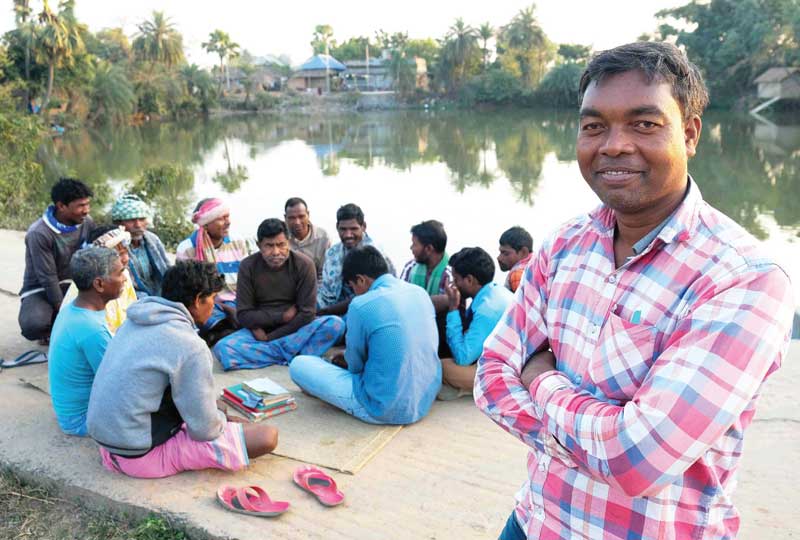
Strategy meeting of the water user committee near their community pond.
Women Empowerment
Gender is a cross-cutting theme at ACF and they ensure that women play an integral role, and are engaged, across all their programme verticals.
Firstly, they focus on the social participation and inclusion of women – drawing them out of their homes and mobilising them into SHGs to initiate saving and forming social networks. They harness the power of women as key drivers for improving the health and sanitation of communities and ensure their participation in village forums such as village development committees, water user associations and other key decision-making bodies.
ACF also provides pathways for women to achieve economic empowerment – generating incomes, starting new businesses, skilling and accessing government schemes and credit. Their work in women-led microenterprises is noteworthy with over 10,000 women kickstarting businesses and thriving. Additionally, they promote inclusive agriculture. Earlier the role of women in agricultural activities were limited to labour, however they have been actively mainstreaming women into agriculture and crop development and engaging them in Farmer Producer Companies as decision makers.
ACF also places a big focus on building local institutions, like Women’s Federations. By collectivising women, they help them unite on common problems and work together to find solutions – creating market linkages, kickstarting their own cooperatives, and actively taking up local social issues like alcoholism, domestic violence, and the ill-treatment of widows. They have 11 Women’s Federations till date, with 14,120 women members.
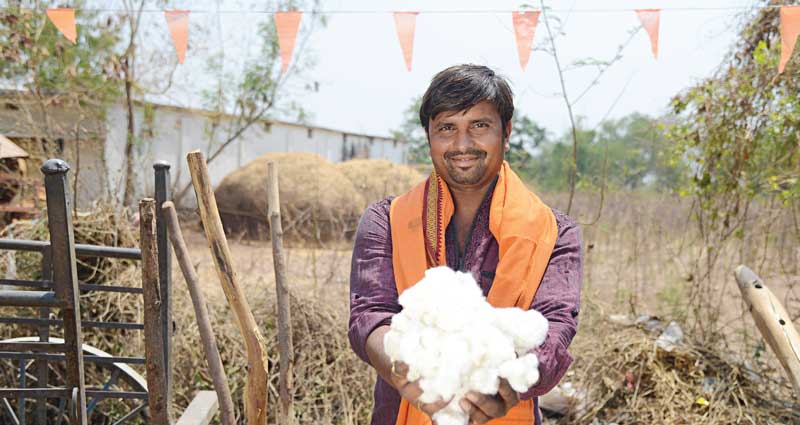
Through its agriculture thrust area, ACF is set to promote micro-irrigation and create additional livelihoods to supplement farmer incomes.
Education and Skill Development
Rural youth, not only lack opportunity, they also lack awareness and the motivation to seek employment; aspirations are often unrealistic and solely focused on white collar jobs. At the same time several skill-based positions are lying vacant for want of appropriately skilled manpower.
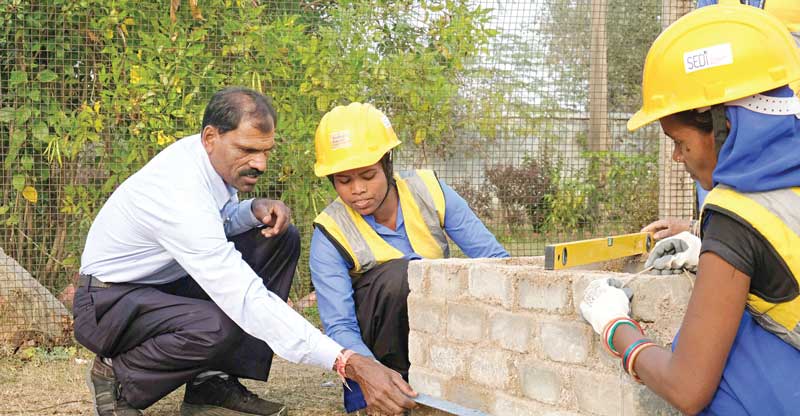
At ACF, they follow a unique model of skill training, that motivates and counsel’s youth, offers them a tailored programme designed to meet the employment needs of businesses within their areas, and find good jobs in and around their districts. After placement, rural youth face many challenges in their first job placement. In order to increase retention, they provide ongoing mentoring and support to transition into formal employment.
ACF’s 35 Skill and Entrepreneurship Training Institutes (SEDI), across 10 states, currently offer 33 NSDC certified courses in 12 sectors. Their intervention follows a three phased approach:
Training: They closely engage with industry in regional areas to understand their skilling and recruitment needs, and develop tailored skilling courses to impart those skills to unemployed youth in the area. Training is imparted in a classroom setup that stimulates the actual work environment for the respective trades. The training calendar is a balanced schedule of classroom, practical and on-the-job training, soft skills, basic IT and English as well as industry visits to expose the trainees to the realities of the workplace and prepare them for employment. Guest lectures by prospective employers, help their trainees understand workplace realities and prepare themselves to deal with them. Counselling of both the trainees, and their parents to develop their willingness to relocate for employment is an essential element of their training. They actively foster entrepreneurship at SEDI to help students start their own business and equip them with the necessary skills for it to flourish.
Placement: Once skill training is complete, SEDI helps facilitate the placement of graduates into their first jobs, via a network of partnerships with industries and businesses. But it doesn’t end there, as rural youth need a lot of counselling and hand holding in their initial job placements. Group placements, group housing, and other transition facilities such as transport facilities from the remote villages to the cities (as per the felt needs of the trainee cohorts) ensure that peer support and guidance is readily available to the newly placed trainees thus enabling a smooth transition of the trainees into a formal workspace. Refresher Training is a key component of their model.
Entrepreneurship: ACF also promotes and supports entrepreneurship – encouraging graduates to start micro and small enterprises, and training existing entrepreneurs to take their businesses to an all-new level. A new Enterprise Development Curriculum has been launched, which provides training and mentoring on every aspect of starting and growing a small business. Over 23,112 young people have established their own enterprise.
Taking Challenges Head-on
Initially, ACL and ACF faced huge challenges in convincing the local community that ACF was there to help them, not exploit them. There was a need to demonstrate their sincerity via initial projects and slowly build up a reciprocal relationship of trust. That trust has stood the test of time, and today ACF the community relationships are their greatest assets.
Similarly, being a corporate company, community people thought that work would simply ‘be done for them.’ There was a mentality of that nature. However, at ACF, nothing is given for free. They work towards getting community participation, contribution, and involvement – encouraging them to take ownership of projects. Only then, does the sustainability and success of a project develop.
Working in the remote interiors of the country, they have faced challenges in hiring high level professionals. To tackle this, their strategy has been to take ordinary people with basic training in development, but who have the right attitude, values, and ethics, and to train them overtime. Whilst it takes time, this strategy has worked wonders for them and today they have built a loyal and highly skilled staff base who are the best at what they do on the ground in communities. Similarly, finding good quality staff and retaining them in the remote interiors is a challenge. However, today, ACF is a Best Place to Work and a highly sought-after workplace.
Convergence with government schemes has enabled significant growth and funds to support various projects, however the release of those funds for reimbursement are often delayed and so they face an accumulation of cash flow difficulties.
Helping Hands
ACL commenced doing CSR long before it was mandated by the government and over almost 30 years, ACF has developed a core set of expertise and experience which can help other cement organisations and corporates to meet their social responsibilities, impactfully. They are ready to partner with others on joint projects.
ACF’s experience has helped many corporates tackle key challenges they face in executing their CSR. Located in the deep interiors where the problem of rural poverty lies, ACF also has a proven process in place to enable last mile reach. Their core expertise in building community capacity and ownership has been instrumental in making projects sustainable in the long run. By marrying modern technology with the traditional wisdom of the community, ACF has been able to provide lasting solutions to complex local problems. ACF build’s people’s institutions so that the long-term sustainability of each project is managed by the local people. An ability to lead and manage a consortium of partners – helping them find common ground. i.e. Government, NABARD, NGOs, Corporates and Community. Lastly, ACF has a very professional approach, capturing detailed data on impact and sharing it with their partners
via proper reporting – helping them meet their regulatory requirements.
Bringing Sustainability to the Table
While ACF started as a CSR arm of the company, as a foundation their role has expanded exponentially. They now operate in extended territories and are committed to harnessing their interventions to transform rural India joining hands with other corporate, government and nonprofits to support their work.
Looking at the future plans, ACF will focus on ensuring 100 per cent households of the operating communities receive safe drinking water and will continue to promote water stewardship. Through its agriculture thrust area, ACF will promote micro-irrigation and create additional livelihoods to supplement farmer incomes.
ACF will also focus on improving the socio-economic conditions of the communities by increasing outreach and providing access to skill training for needy/marginalised youth and continue supporting the establishment and growth of small business enterprises in rural communities. This will not be possible without ensuring that people receive good quality health and productive services, and improved education systems are in place for the future generation.
ACF has come a long way in bringing transformation in rural India and is committed to playing a small role in helping India progress. While it continues with its vision to building prosperous communities, it will continue its extensive work and operate in alignment to achieve the Sustainable Development Goals. ACF invites like-minded organisations to partner with them and extend their work to more geographies.
ABOUT THE AUTHOR:
Pearl Tiwari, President (CSR and Sustainability), Ambuja Cement Foundation, is a development professional with over 36 years of experience, currently focussed on CSR. She is involved in strategic corporate social responsibility and inclusive development.

Concrete
Refractory demands in our kiln have changed
Published
3 days agoon
February 20, 2026By
admin
Radha Singh, Senior Manager (P&Q), Shree Digvijay Cement, points out why performance, predictability and life-cycle value now matter more than routine replacement in cement kilns.
As Indian cement plants push for higher throughput, increased alternative fuel usage and tighter shutdown cycles, refractory performance in kilns and pyro-processing systems is under growing pressure. In this interview, Radha Singh, Senior Manager (P&Q), Shree Digvijay Cement, shares how refractory demands have evolved on the ground and how smarter digital monitoring is improving kiln stability, uptime and clinker quality.
How have refractory demands changed in your kiln and pyro-processing line over the last five years?
Over the last five years, refractory demands in our kiln and pyro line have changed. Earlier, the focus was mostly on standard grades and routine shutdown-based replacement. But now, because of higher production loads, more alternative fuels and raw materials (AFR) usage and greater temperature variation, the expectation from refractory has increased.
In our own case, the current kiln refractory has already completed around 1.5 years, which itself shows how much more we now rely on materials that can handle thermal shock, alkali attack and coating fluctuations. We have moved towards more stable, high-performance linings so that we don’t have to enter the kiln frequently for repairs.
Overall, the shift has been from just ‘installation and run’ to selecting refractories that give longer life, better coating behaviour and more predictable performance under tougher operating conditions.
What are the biggest refractory challenges in the preheater, calciner and cooler zones?
• Preheater: Coating instability, chloride/sulphur cycles and brick erosion.
• Calciner: AFR firing, thermal shock and alkali infiltration.
• Cooler: Severe abrasion, red-river formation and mechanical stress on linings.
Overall, the biggest challenge is maintaining lining stability under highly variable operating conditions.
How do you evaluate and select refractory partners for long-term performance?
In real plant conditions, we don’t select a refractory partner just by looking at price. First, we see their past performance in similar kilns and whether their material has actually survived our operating conditions. We also check how strong their technical support is during shutdowns, because installation quality matters as much as the material itself.
Another key point is how quickly they respond during breakdowns or hot spots. A good partner should be available on short notice. We also look at their failure analysis capability, whether they can explain why a lining failed and suggest improvements.
On top of this, we review the life they delivered in the last few campaigns, their supply reliability and their willingness to offer plant-specific custom solutions instead of generic grades. Only a partner who supports us throughout the life cycle, which includes selection, installation, monitoring and post-failure analysis, fits our long-term requirement.
Can you share a recent example where better refractory selection improved uptime or clinker quality?
Recently, we upgraded to a high-abrasion basic brick at the kiln outlet. Earlier we had frequent chipping and coating loss. With the new lining, thermal stability improved and the coating became much more stable. As a result, our shutdown interval increased and clinker quality remained more consistent. It had a direct impact on our uptime.
How is increased AFR use affecting refractory behaviour?
Increased AFR use is definitely putting more stress on the refractory. The biggest issue we see daily is the rise in chlorine, alkalis and volatiles, which directly attack the lining, especially in the calciner and kiln inlet. AFR firing is also not as stable as conventional fuel, so we face frequent temperature fluctuations, which cause more thermal shock and small cracks in the lining.
Another real problem is coating instability. Some days the coating builds too fast, other days it suddenly drops, and both conditions impact refractory life. We also notice more dust circulation and buildup inside the calciner whenever the AFR mix changes, which again increases erosion.
Because of these practical issues, we have started relying more on alkali-resistant, low-porosity and better thermal shock–resistant materials to handle the additional stress coming from AFR.
What role does digital monitoring or thermal profiling play in your refractory strategy?
Digital tools like kiln shell scanners, IR imaging and thermal profiling help us detect weakening areas much earlier. This reduces unplanned shutdowns, helps identify hotspots accurately and allows us to replace only the critical sections. Overall, our maintenance has shifted from reactive to predictive, improving lining life significantly.
How do you balance cost, durability and installation speed during refractory shutdowns?
We focus on three points:
• Material quality that suits our thermal profile and chemistry.
• Installation speed, in fast turnarounds, we prefer monolithic.
• Life-cycle cost—the cheapest material is not the most economical. We look at durability, future downtime and total cost of ownership.
This balance ensures reliable performance without unnecessary expenditure.
What refractory or pyro-processing innovations could transform Indian cement operations?
Some promising developments include:
• High-performance, low-porosity and nano-bonded refractories
• Precast modular linings to drastically reduce shutdown time
• AI-driven kiln thermal analytics
• Advanced coating management solutions
• More AFR-compatible refractory mixes
These innovations can significantly improve kiln stability, efficiency and maintenance planning across the industry.
Concrete
Digital supply chain visibility is critical
Published
3 days agoon
February 20, 2026By
admin
MSR Kali Prasad, Chief Digital and Information Officer, Shree Cement, discusses how data, discipline and scale are turning Industry 4.0 into everyday business reality.
Over the past five years, digitalisation in Indian cement manufacturing has moved decisively beyond experimentation. Today, it is a strategic lever for cost control, operational resilience and sustainability. In this interview, MSR Kali Prasad, Chief Digital and Information Officer, Shree Cement, explains how integrated digital foundations, advanced analytics and real-time visibility are helping deliver measurable business outcomes.
How has digitalisation moved from pilot projects to core strategy in Indian cement manufacturing over the past five years?
Digitalisation in Indian cement has evolved from isolated pilot initiatives into a core business strategy because outcomes are now measurable, repeatable and scalable. The key shift has been the move away from standalone solutions toward an integrated digital foundation built on standardised processes, governed data and enterprise platforms that can be deployed consistently across plants and functions.
At Shree Cement, this transition has been very pragmatic. The early phase focused on visibility through dashboards, reporting, and digitisation of critical workflows. Over time, this has progressed into enterprise-level analytics and decision support across manufacturing and the supply chain,
with clear outcomes in cost optimisation, margin protection and revenue improvement through enhanced customer experience.
Equally important, digital is no longer the responsibility of a single function. It is embedded into day-to-day operations across planning, production, maintenance, despatch and customer servicing, supported by enterprise systems, Industrial Internet of Things (IIoT) data platforms, and a structured approach to change management.
Which digital interventions are delivering the highest ROI across mining, production and logistics today?
In a capital- and cost-intensive sector like cement, the highest returns come from digital interventions that directly reduce unit costs or unlock latent capacity without significant capex.
Supply chain and planning (advanced analytics): Tools for demand forecasting, S&OP, network optimisation and scheduling deliver strong returns by lowering logistics costs, improving service levels, and aligning production with demand in a fragmented and regionally diverse market.
Mining (fleet and productivity analytics): Data-led mine planning, fleet analytics, despatch discipline, and idle-time reduction improve fuel efficiency and equipment utilisation, generating meaningful savings in a cost-heavy operation.
Manufacturing (APC and process analytics): Advanced Process Control, mill optimisation, and variability reduction improve thermal and electrical efficiency, stabilise quality and reduce rework and unplanned stoppages.
Customer experience and revenue enablement (digital platforms): Dealer and retailer apps, order visibility and digitally enabled technical services improve ease of doing business and responsiveness. We are also empowering channel partners with transparent, real-time information on schemes, including eligibility, utilisation status and actionable recommendations, which improves channel satisfaction and market execution while supporting revenue growth.
Overall, while Artificial Intelligence (AI) and IIoT are powerful enablers, it is advanced analytics anchored in strong processes that typically delivers the fastest and most reliable ROI.
How is real-time data helping plants shift from reactive maintenance to predictive and prescriptive operations?
Real-time and near real-time data is driving a more proactive and disciplined maintenance culture, beginning with visibility and progressively moving toward prediction and prescription.
At Shree Cement, we have implemented a robust SAP Plant Maintenance framework to standardise maintenance workflows. This is complemented by IIoT-driven condition monitoring, ensuring consistent capture of equipment health indicators such as vibration, temperature, load, operating patterns and alarms.
Real-time visibility enables early detection of abnormal conditions, allowing teams to intervene before failures occur. As data quality improves and failure histories become structured, predictive models can anticipate likely failure modes and recommend timely interventions, improving MTBF and reducing downtime. Over time, these insights will evolve into prescriptive actions, including spares readiness, maintenance scheduling, and operating parameter adjustments, enabling reliability optimisation with minimal disruption.
A critical success factor is adoption. Predictive insights deliver value only when they are embedded into daily workflows, roles and accountability structures. Without this, they remain insights without action.
In a cost-sensitive market like India, how do cement companies balance digital investment with price competitiveness?
In India’s intensely competitive cement market, digital investments must be tightly linked to tangible business outcomes, particularly cost reduction, service improvement, and faster decision-making.
This balance is achieved by prioritising high-impact use cases such as planning efficiency, logistics optimisation, asset reliability, and process stability, all of which typically deliver quick payback. Equally important is building scalable and governed digital foundations that reduce the marginal cost of rolling out new use cases across plants.
Digitally enabled order management, live despatch visibility, and channel partner platforms also improve customer centricity while controlling cost-to-serve, allowing service levels to improve without proportionate increases in headcount or overheads.
In essence, the most effective digital investments do not add cost. They protect margins by reducing variability, improving planning accuracy, and strengthening execution discipline.
How is digitalisation enabling measurable reductions in energy consumption, emissions, and overall carbon footprint?
Digitalisation plays a pivotal role in improving energy efficiency, reducing emissions and lowering overall carbon intensity.
Real-time monitoring and analytics enable near real-time tracking of energy consumption and critical operating parameters, allowing inefficiencies to be identified quickly and corrective actions to be implemented. Centralised data consolidation across plants enables benchmarking, accelerates best-practice adoption, and drives consistent improvements in energy performance.
Improved asset reliability through predictive maintenance reduces unplanned downtime and process instability, directly lowering energy losses. Digital platforms also support more effective planning and control of renewable energy sources and waste heat recovery systems, reducing dependence on fossil fuels.
Most importantly, digitalisation enables sustainability progress to be tracked with greater accuracy and consistency, supporting long-term ESG commitments.
What role does digital supply chain visibility play in managing demand volatility and regional market dynamics in India?
Digital supply chain visibility is critical in India, where demand is highly regional, seasonality is pronounced, and logistics constraints can shift rapidly.
At Shree Cement, planning operates across multiple horizons. Annual planning focuses on capacity, network footprint and medium-term demand. Monthly S&OP aligns demand, production and logistics, while daily scheduling drives execution-level decisions on despatch, sourcing and prioritisation.
As digital maturity increases, this structure is being augmented by central command-and-control capabilities that manage exceptions such as plant constraints, demand spikes, route disruptions and order prioritisation. Planning is also shifting from aggregated averages to granular, cost-to-serve and exception-based decision-making, improving responsiveness, lowering logistics costs and strengthening service reliability.
How prepared is the current workforce for Industry 4.0, and what reskilling strategies are proving most effective?
Workforce preparedness for Industry 4.0 is improving, though the primary challenge lies in scaling capabilities consistently across diverse roles.
The most effective approach is to define capability requirements by role and tailor enablement accordingly. Senior leadership focuses on digital literacy for governance, investment prioritisation, and value tracking. Middle management is enabled to use analytics for execution discipline and adoption. Frontline sales and service teams benefit from
mobile-first tools and KPI-driven workflows, while shop-floor and plant teams focus on data-driven operations, APC usage, maintenance discipline, safety and quality routines.
Personalised, role-based learning paths, supported by on-ground champions and a clear articulation of practical benefits, drive adoption far more effectively than generic training programmes.
Which emerging digital technologies will fundamentally reshape cement manufacturing in the next decade?
AI and GenAI are expected to have the most significant impact, particularly when combined with connected operations and disciplined processes.
Key technologies likely to reshape the sector include GenAI and agentic AI for faster root-cause analysis, knowledge access, and standardisation of best practices; industrial foundation models that learn patterns across large sensor datasets; digital twins that allow simulation of process changes before implementation; and increasingly autonomous control systems that integrate sensors, AI, and APC to maintain stability with minimal manual intervention.
Over time, this will enable more centralised monitoring and management of plant operations, supported by strong processes, training and capability-building.
Concrete
Redefining Efficiency with Digitalisation
Published
3 days agoon
February 20, 2026By
admin
Professor Procyon Mukherjee discusses how as the cement industry accelerates its shift towards digitalisation, data-driven technologies are becoming the mainstay of sustainability and control across the value chain.
The cement industry, long perceived as traditional and resistant to change, is undergoing a profound transformation driven by digital technologies. As global infrastructure demand grows alongside increasing pressure to decarbonise and improve productivity, cement manufacturers are adopting data-centric tools to enhance performance across the value chain. Nowhere is this shift more impactful than in grinding, which is the energy-intensive final stage of cement production, and in the materials that make grinding more efficient: grinding media and grinding aids.
The imperative for digitalisation
Cement production accounts for roughly 7 per cent to 8 per cent of global CO2 emissions, largely due to the energy intensity of clinker production and grinding processes. Digital solutions, such as AI-driven process controls and digital twins, are helping plants improve stability, cut fuel use and reduce emissions while maintaining consistent product quality. In one deployment alongside ABB’s process controls at a Heidelberg plant in Czechia, AI tools cut fuel use by 4 per cent and emissions by 2 per cent, while also improving operational stability.
Digitalisation in cement manufacturing encompasses a suite of technologies, broadly termed as Industrial Internet of Things (IIoT), AI and machine learning, predictive analytics, cloud-based platforms, advanced process control and digital twins, each playing a role in optimising various stages of production from quarrying to despatch.
Grinding: The crucible of efficiency and cost
Of all the stages in cement production, grinding is among the most energy-intensive, historically consuming large amounts of electricity and representing a significant portion of plant operating costs. As a result, optimising grinding operations has become central to digital transformation strategies.
Modern digital systems are transforming grinding mills from mechanical workhorses into intelligent, interconnected assets. Sensors throughout the mill measure parameters such as mill load, vibration, mill speed, particle size distribution, and power consumption. This real-time data, fed into machine learning and advanced process control (APC) systems, can dynamically adjust operating conditions to maintain optimal throughput and energy usage.
For example, advanced grinding systems now predict inefficient conditions, such as impending mill overload, by continuously analysing acoustic and vibration signatures. The system can then proactively adjust clinker feed rates and grinding media distribution to sustain optimal conditions, reducing energy consumption and improving consistency.
Digital twins: Seeing grinding in the virtual world
One of the most transformative digital tools applied in cement grinding is the digital twin, which a real-time virtual replica of physical equipment and processes. By integrating sensor data and
process models, digital twins enable engineers to simulate process variations and run ‘what-if’
scenarios without disrupting actual production. These simulations support decisions on variables such as grinding media charge, mill speed and classifier settings, allowing optimisation of energy use and product fineness.
Digital twins have been used to optimise kilns and grinding circuits in plants worldwide, reducing unplanned downtime and allowing predictive maintenance to extend the life of expensive grinding assets.
Grinding media and grinding aids in a digital era
While digital technologies improve control and prediction, materials science innovations in grinding media and grinding aids have become equally crucial for achieving performance gains.
Grinding media, which comprise the balls or cylinders inside mills, directly influence the efficiency of clinker comminution. Traditionally composed of high-chrome cast iron or forged steel, grinding media account for nearly a quarter of global grinding media consumption by application, with efficiency improvements translating directly to lower energy intensity.
Recent advancements include ceramic and hybrid media that combine hardness and toughness to reduce wear and energy losses. For example, manufacturers such as Sanxin New Materials in China and Tosoh Corporation in Japan have developed sub-nano and zirconia media with exceptional wear resistance. Other innovations include smart media embedded with sensors to monitor wear, temperature, and impact forces in real time, enabling predictive maintenance and optimal media replacement scheduling. These digitally-enabled media solutions can increase grinding efficiency by as much as 15 per cent.
Complementing grinding media are grinding aids, which are chemical additives that improve mill throughput and reduce energy consumption by altering the surface properties of particles, trapping air, and preventing re-agglomeration. Technology leaders like SIKA AG and GCP Applied Technologies have invested in tailored grinding aids compatible with AI-driven dosing platforms that automatically adjust additive concentrations based on real-time mill conditions. Trials in South America reported throughput improvements nearing 19 per cent when integrating such digital assistive dosing with process control systems.
The integration of grinding media data and digital dosing of grinding aids moves the mill closer to a self-optimising system, where AI not only predicts media wear or energy losses but prescribes optimal interventions through automated dosing and operational adjustments.
Global case studies in digital adoption
Several cement companies around the world exemplify digital transformation in practice.
Heidelberg Materials has deployed digital twin technologies across global plants, achieving up to 15 per cent increases in production efficiency and 20 per cent reductions in energy consumption by leveraging real-time analytics and predictive algorithms.
Holcim’s Siggenthal plant in Switzerland piloted AI controllers that autonomously adjusted kiln operations, boosting throughput while reducing specific energy consumption and emissions.
Cemex, through its AI and predictive maintenance initiatives, improved kiln availability and reduced maintenance costs by predicting failures before they occurred. Global efforts also include AI process optimisation initiatives to reduce energy consumption and environmental impact.
Challenges and the road ahead
Despite these advances, digitalisation in cement grinding faces challenges. Legacy equipment may lack sensor readiness, requiring retrofits and edge-cloud connectivity upgrades. Data governance and integration across plants and systems remains a barrier for many mid-tier producers. Yet, digital transformation statistics show momentum: more than half of cement companies have implemented IoT sensors for equipment monitoring, and digital twin adoption is growing rapidly as part of broader Industry 4.0 strategies.
Furthermore, as digital systems mature, they increasingly support sustainability goals: reduced energy use, optimised media consumption and lower greenhouse gas emissions. By embedding intelligence into grinding circuits and material inputs like grinding aids, cement manufacturers can strike a balance between efficiency and environmental stewardship.
Conclusion
Digitalisation is not merely an add-on to cement manufacturing. It is reshaping the competitive and sustainability landscape of an industry often perceived as inertia-bound. With grinding representing a nexus of energy intensity and cost, digital technologies from sensor networks and predictive analytics to digital twins offer new levers of control. When paired with innovations in grinding media and grinding aids, particularly those with embedded digital capabilities, plants can achieve unprecedented gains in efficiency, predictability and performance.
For global cement producers aiming to reduce costs and carbon footprints simultaneously, the future belongs to those who harness digital intelligence not just to monitor operations, but to optimise and evolve them continuously.
About the author:
Professor Procyon Mukherjee, ex-CPO Lafarge-Holcim India, ex-President Hindalco, ex-VP Supply Chain Novelis Europe, has been an industry leader in logistics, procurement, operations and supply chain management. His career spans 38 years starting from Philips, Alcan Inc (Indian Aluminum Company), Hindalco, Novelis and Holcim. He authored the book, ‘The Search for Value in Supply Chains’. He serves now as Visiting Professor in SP Jain Global, SIOM and as the Adjunct Professor at SBUP. He advises leading Global Firms including Consulting firms on SCM and Industrial Leadership and is a subject matter expert in aluminum and cement. An Alumnus of IIM Calcutta and Jadavpur University, he has completed the LH Senior Leadership Programme at IVEY Academy at Western University, Canada.
Refractory demands in our kiln have changed
Digital supply chain visibility is critical
Redefining Efficiency with Digitalisation
Cement Additives for Improved Grinding Efficiency
Digital Pathways for Sustainable Manufacturing
Refractory demands in our kiln have changed
Digital supply chain visibility is critical
Redefining Efficiency with Digitalisation
Cement Additives for Improved Grinding Efficiency
Digital Pathways for Sustainable Manufacturing
Trending News
-
Concrete4 weeks agoAris Secures Rs 630 Million Concrete Supply Order
-
Concrete4 weeks agoNITI Aayog Unveils Decarbonisation Roadmaps
-
Concrete3 weeks agoJK Cement Commissions 3 MTPA Buxar Plant, Crosses 31 MTPA
-
Economy & Market3 weeks agoBudget 2026–27 infra thrust and CCUS outlay to lift cement sector outlook