Connect with us

Concrete

Ramco Cements to utilise green energy for clinker production

Published

on

Shares

The company’s 71% power for clinker production is via green energy

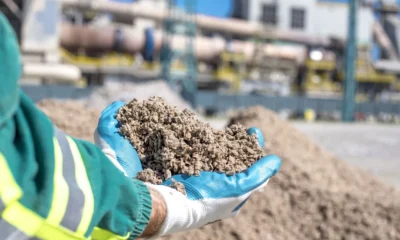
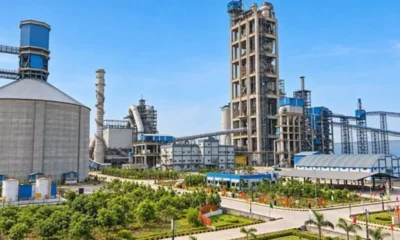
Ramco Cements has been demonstrating a robust pursuit of environmental sustainability, with 71% of the power for its clinker production consumed through green energy.According to a statement, the company is ahead of the industry by using green energy in clinker production.A Waste Heat Recovery System (WHRS) captures the waste heat available from the preheater exhaust gas and the clinker cooler, exhaust gas of cement kilns and the heat is used to generate electrical energy. Waste heat recovery plants (WHRP) are an environment-friendly source of power.The company has invested in the WHRS for power generation in all three lines of its Jayanthipuram Plant. The Phase-I of the WHRP of 9 MW capacity was commissioned in September 2020 and is producing at its maximum capacity. Phase-II was commissioned last year in February. The last leg of the preheater was commissioned this year in April. The WHRS has been fully commissioned in Jayanthipuram with a 27 MW capacity.The company is also set to commission its 5th integrated cement plant at Kolomigundla, Kurnool District, Andhra Pradesh, with 12.15 MW of WHRS. The total capacity of the WHRS will increase to 39.15 MW.According to a statement, along with wind energy, Ramco Cements will fulfil 71% of the power required for the total clinker production through green energy.It added that the company would utilise green energy for clinker production.Apart from reducing the power cost, the investment in waste heat recovery plants shows its commitment to environmental, social and governance initiatives.

Image Source


Also read: Ramco commissions ph 2 of waste heat recovery plant

Concrete

Cement Production Up Eight Point Six Per Cent To 491.4 mn t In FY26

Icra Sees Seven To Eight Per Cent Growth In FY27

Published

on

By

Shares


Icra reported that cement production volumes rose by eight point six per cent in the financial year 2026 to 491.4 million (mn) metric tonne (t). March output was 48.4 mn t, up four per cent year on year on a high base.

The agency projected that volumes are expected to grow by seven to eight per cent in the current financial year, supported by sustained demand from the housing and infrastructure sectors. Average cement prices were reported to have remained flat in March at Rs 340 per bag on a month on month basis, while prices for FY26 increased by two per cent to Rs 345 per bag year on year.

Among inputs, coal prices declined by 17 per cent year on year to USD 102 per t in April 2026 while petcoke prices rose sharply by 19 per cent month on month and 22 per cent year on year to around Rs 15,800 per t in April. Petcoke was higher by about five per cent year on year in FY26 and diesel prices were reported to have remained steady. Icra noted that coal, petcoke and diesel are expected to trend higher in FY27 and remain exposed to risks from the ongoing West Asia conflict.

The report emphasised that operating margins for Icra’s sample set of companies are estimated to moderate by 200 to 400 basis points (bps) in FY27 on account of a likely increase in input costs, with further downside risks should crude prices rise owing to geopolitical tensions. However, debt protection metrics are projected to remain comfortable and Icra maintained a stable outlook on the Indian cement sector.

Continue Reading

Concrete

UltraTech Cement FY26 PAT Crosses Rs 80 bn

Company reports record sales, profit and 200 MTPA capacity milestone

Published

on

By

Shares


UltraTech Cement reported record financial performance for Q4 and FY26, supported by strong volumes, higher profitability and improved cost efficiency. Consolidated net sales for Q4 FY26 rose 12 per cent year-on-year to Rs 254.67 billion, while PBIDT increased 20 per cent to Rs 56.88 billion. PAT, excluding exceptional items, grew 21 per cent to Rs 30.11 billion.

For FY26, consolidated net sales stood at Rs 873.84 billion, up 17 per cent from Rs 749.36 billion in FY25. PBIDT rose 32 per cent to Rs 175.98 billion, while PAT increased 36 per cent to Rs 83.05 billion, crossing the Rs 80 billion mark for the first time.

India grey cement volumes reached 42.41 million tonnes in Q4 FY26, up 9.3 per cent year-on-year, with capacity utilisation at 89 per cent. Full-year India grey cement volumes stood at 145 million tonnes. Energy costs declined 3 per cent, aided by a higher green power mix of 43 per cent in Q4.

The company’s domestic grey cement capacity has crossed 200 MTPA, reaching 200.1 MTPA, while global capacity stands at 205.5 MTPA. UltraTech also recommended a special dividend of Rs 2.40 billion per share value basis equivalent to Rs 240.

Continue Reading

Concrete

Towards Mega Batching

Optimised batching can drive overall efficiencies in large projects.

Published

on

By

Shares


India’s pace of infrastructure development is pushing the construction sector to work at a significantly higher scale than previously. Tight deadlines necessitate eliminating concreting delays, especially in large and mega projects, which, in turn, imply installing the right batching plant and ensuring batching is efficient. CW explores these steps as well as the gaps in India’s batching plant market.

Choose well

Large-scale infrastructure and building projects typically involve concrete consumption exceeding 30,000-50,000 cum per annum or demand continuous, high-volume pours within compressed timelines, according to Rahul R Wadhai, DGM – Quality, Tata Projects.

Considering the daily need for concrete, “large-scale concreting involves pouring more than 1,000–2,000 cum per day while mega projects involve more than 3,000 cum per day,” says Satish R Vachhani, Advanced Concrete & Construction Consultant…

To read the full article Click Here

Continue Reading

Video Thumbnail

    SIGN-UP FOR OUR GENERAL NEWSLETTER


    Trending News