Connect with us

Concrete

Canada’s net-zero aim

Published

on

Shares

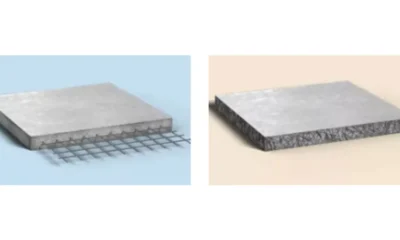
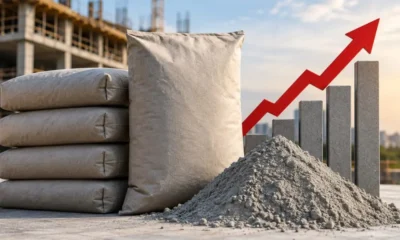
To be released in 2022, Canada’s cement and industry roadmap to net-zero concrete will be unique to Canada’s economy and policy environment, while aligning with its global peers, aiming for carbon emissions reduction by up to 40 per cent by 2030 and deliver net-zero concrete by 2050. Reduction of 25Mt of GHG emissions between 2019-30 is tagetted.

Concrete

JK Lakshmi Cement to Expand EV Fleet to 120 Vehicles by March 2027

JK Lakshmi Cement has deployed more than 70 EVs across its logistics network.

Published

on

By

Shares


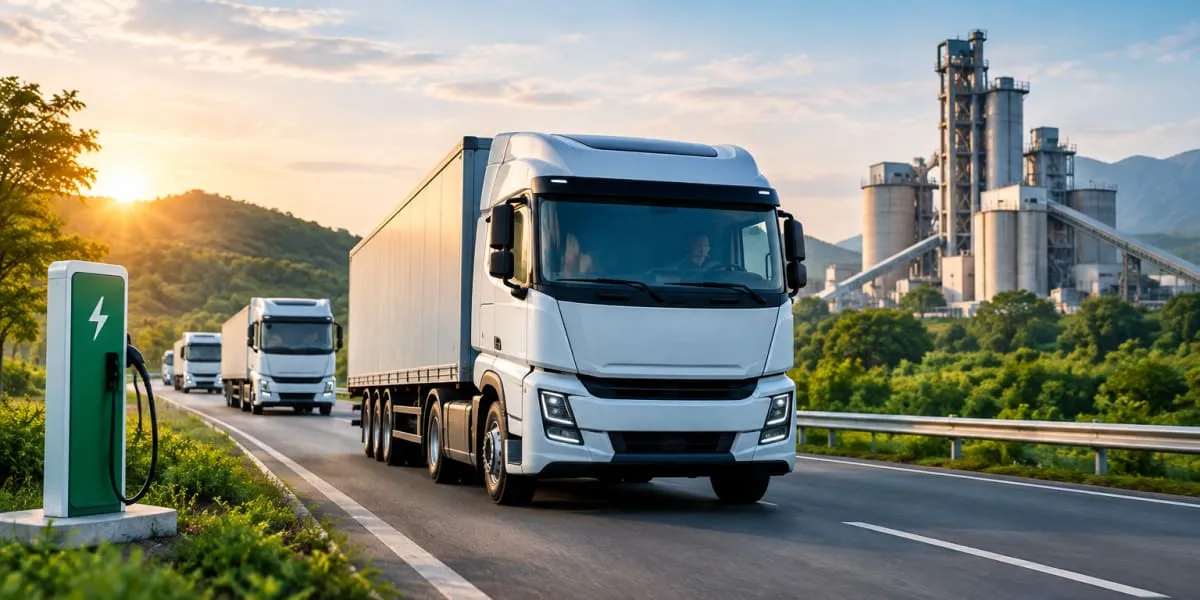
JK Lakshmi Cement has deployed more than 70 electric vehicles (EVs) across its logistics network and plans to increase the fleet to 120 vehicles by March 2027. The expansion is part of its decarbonisation strategy, which aims to reduce transport-related emissions and improve operational efficiency.

The company has achieved nearly 100 per cent EV-based clinker dispatches from its Sirohi plant in Rajasthan to the Kalol Grinding Unit in Gujarat. The transition marks an increased use of electric mobility for long-haul cement transportation and is intended to lower the environmental impact of logistics operations.

The existing fleet operates on routes connecting the Sirohi plant with the Kalol Grinding Unit, Palanpur Unit and Surat Grinding Unit. JK Lakshmi Cement is working with electric vehicle logistics providers SwitchLabs and Billion E to support fleet deployment and manage transportation requirements across these routes.

The company expects the planned expansion to increase the use of electric mobility throughout its logistics network for moving cement and clinker. Chairperson and Managing Director Vinita Singhania said the programme reflected the integration of sustainable practices with the company’s focus on long-term business efficiency, while describing the Sirohi–Kalol transition as an important step in its wider decarbonisation strategy.

The EV programme forms part of JK Lakshmi Cement’s green logistics and sustainability roadmap, alongside initiatives to improve efficiency and reduce emissions across its value chain. The company has set a long-term target of achieving net-zero emissions by 2047. It is part of the JK Organisation and operates integrated cement plants in Rajasthan and Chhattisgarh, along with grinding units in Gujarat, Haryana and Odisha. The company has an annual turnover of more than Rs. 60 bn, combined cement capacity of approximately 18 mn t per annum and a target to raise capacity to 30 mn t by 2030. Its portfolio includes ready-mix concrete, gypsum plaster, wall putty, primer, adhesives and fly ash blocks.

Continue Reading

Concrete

Martin Engineering Appoints Ashwini Khunte as India General Manager

Published

on

By

Shares

Martin Engineering names Ashwini Khunte India General Manager to strengthen operations and drive growth across key bulk material handling sectors.

Pune

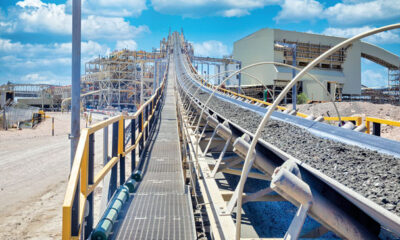
Martin Engineering, a global provider of bulk material handling solutions, has appointed Ashwini Khunte as General Manager of its India business, strengthening its leadership as the company expands its presence across the country’s cement, mining, steel, power and infrastructure sectors.

Khunte brings more than a decade of experience with Martin Engineering, having joined its Indian operations in 2013 as a Design Engineer, shortly after the company established its presence in the country in 2012.

A mechanical engineer by qualification, she spent her initial five years developing bulk material handling solutions in collaboration with the company’s operations team. During this period, she gained extensive experience addressing operational challenges in the steel, cement and coal industries. She subsequently moved into project engineering, managing major engineering, procurement and construction (EPC) and original equipment manufacturer (OEM) projects from initial enquiry to commissioning. Her responsibilities later expanded to overseeing Martin Engineering’s conveyor product portfolio in India, involving customer engagement, technical presentations and site visits across heavy industries.

In 2024, Khunte was promoted to Head of Sales & Marketing for the company’s Europe, Middle East, Africa and India (EMEAI) region. The position broadened her international market exposure and strengthened her strategic and commercial leadership capabilities.

Commenting on her appointment, Ashwini Khunte, General Manager, Martin Engineering India, said: “India represents a tremendous opportunity for Martin Engineering. The country’s continued investment in cement, mining, steel, power and infrastructure is creating increasing demand for safer, cleaner and more productive bulk material handling, and that’s exactly what we do. My priority will be to build on the strong foundations already established in India, while continuing to develop our people, strengthen customer relationships and bring practical solutions to the challenges faced by our industry.”

Robert Whetstone, Area Vice President – EMEAI, Martin Engineering, highlighted Khunte’s technical expertise, market understanding and leadership experience.

“Ashwini brings an exceptional combination of technical understanding, customer knowledge and commercial leadership. She has grown as Martin Engineering has grown, and has consistently demonstrated outstanding capability to transform her expertise into practical solutions. Her knowledge of the Indian market, together with her international experience, makes her ideally suited to lead our India business through its next stage of growth for years to come.”

Since establishing its Indian business in 2012, Martin Engineering has expanded its local workforce, manufacturing capabilities and dealership network. The company supplies conveyor products, transfer point solutions, material flow aids, training and technical support to bulk material handling industries. Khunte’s appointment positions the company to further strengthen customer relationships and expand its solutions portfolio in India’s growing industrial and infrastructure markets.

Continue Reading

Concrete

CII Calls for Greater Alternative Fuel Use in Cement Industry

Published

on

By

Shares

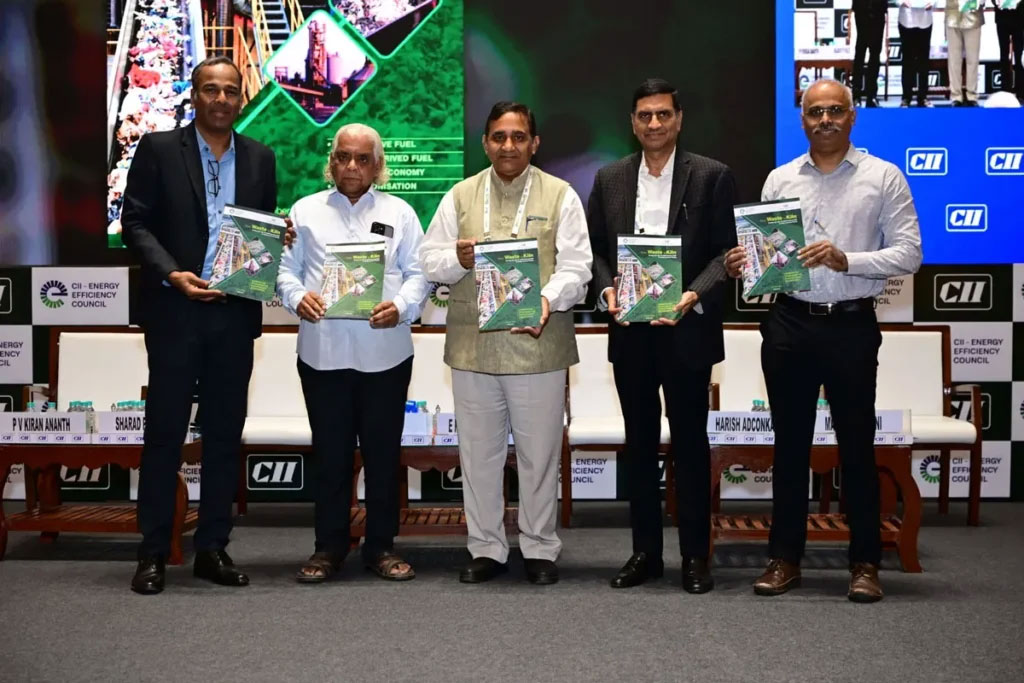
The Confederation of Indian Industry (CII), through its Green Business Centre and Energy Efficiency Council, inaugurated the 16th Conference on Alternative Fuel and Raw Material Usage (AFR) in Goa on 27 October 2026. The two-day conference brought together more than 350 industry leaders, policymakers, waste management experts and technology providers to explore strategies for accelerating alternative fuel adoption in India’s cement industry.

Held under the theme ‘Preparation for Net-Zero: Alternative Fuels & Raw Material in Cement Manufacturing’, the conference focused on reducing dependence on conventional fuels, improving waste utilisation and strengthening circular economy practices across cement manufacturing operations.

E R Raj Narayanan, Chairman, AFR Conference 2026, and Business Head and Chief Manufacturing Officer, UltraTech Cement, highlighted the industry’s progress in alternative fuel adoption. He emphasised the need to scale implementation, strengthen supply chains and extend circularity beyond fuel substitution to alternative raw materials through technological innovation and industry collaboration.

Harish Adconkar, Managing Director, Goa Waste Management Corporation, highlighted Goa’s progress in scientific waste management and refuse-derived fuel (RDF) production. He stated that approximately 765,000 tonnes of RDF had been supplied to cement plants, contributing to an estimated displacement of 320,000–560,000 tonnes of coal. He emphasised the importance of consistent RDF offtake and stronger coordination between urban local bodies, waste management agencies and cement manufacturers.

Dr L P Singh, Director General, National Council for Cement and Building Materials, identified AFR as an important opportunity for decarbonisation and resource efficiency. Drawing parallels with the industry’s successful utilisation of fly ash, he stressed the need to address quality, technological and economic challenges to expand alternative fuel adoption.

Dr Sharad P Kale, Special Advisor to the Chief Minister of Goa and former Head of Technology Transfer and Collaboration at BARC, emphasised treating waste as a resource. He highlighted decentralised biodegradable waste processing, reduced food waste and improved resource recovery as essential measures for minimising landfill dependence.

Kiran Ananth, Executive Director, Energy Efficiency, Renewable Energy and Green Entrepreneurship, CII-Green Business Centre, noted that India’s cement production reached approximately 491 million tonnes in FY2025-26, while the industry’s thermal substitution rate (TSR) stood at 7.5 per cent, with around 7 million tonnes of alternative fuels utilised annually.

He added that the industry had invested over Rs 12 billion in co-processing infrastructure during the past six years. Improving RDF supply reliability and quality assurance would be crucial to maximising the utilisation of existing infrastructure and accelerating industrial decarbonisation.

The conference also featured discussions on advanced AFR co-processing technologies, waste pre-processing solutions and industrial best practices for improving fuel substitution and resource recovery.

A publication titled ‘From Waste to Kiln: Scaling the Use of MSW-Derived RDF in Indian Cement Plants’ was launched during the inaugural session. The report identified inconsistent RDF supply and quality as major barriers to achieving higher thermal substitution rates.

According to the publication, many cement kilns already possess the technical capability to achieve higher alternative fuel substitution. However, variations in RDF availability, moisture content, particle size and calorific value continue to limit utilisation. The report emphasised the need to strengthen waste segregation, pre-processing and aggregation systems to establish reliable RDF supply chains.

The conference’s second-day agenda includes discussions on innovative domestic and industrial waste management solutions, alternative raw materials for low-carbon cement and strategies to increase alternative fuel utilisation across India’s cement manufacturing sector.


Continue Reading

Video Thumbnail
▶

    SIGN-UP FOR OUR GENERAL NEWSLETTER

    Trending News

    SUBSCRIBE TO THE NEWSLETTER


    Don't miss out on valuable insights and opportunities to connect with like minded professionals.


      This will close in 0 seconds