Connect with us

Economy & Market

Upcycling waste into eco-friendly sand

Published

on

Shares

The enormous consumption of sand poses major environmental problems for many countries around the world. ZaaK has developed a technology that can upcycle wastes (fly ash, pond ash, and stabilised ash from hard and brown coal, WTE ash, and bauxite residue) into value-added eco-friendly lightweight sand called Lypors®.

The enormous consumption of sand poses major environmental problems for many countries around the world. ZaaK has developed a technology that can upcycle wastes (fly ash, pond ash, and stabilised ash from hard and brown coal, WTE ash, and bauxite residue) into value-added eco-friendly lightweight sand called Lypors®.

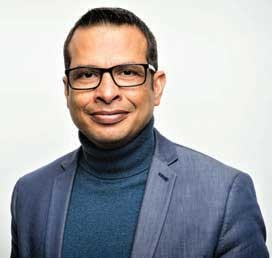
Lypors™ is more than just the answer to the scarcity of construction sand and the persistent demand of the construction industry, says Dr Abbas Khan, Founder and Managing Director of ZaaK Technologies GmbH.

Sand mining or dredging is a big problem. How do you look at this problem?

After water, sand is the most demanded resource in the world. Around 50 billion tons of sand is mined globally every year, causing huge environmental issues. Sand is not essential only in concrete and mortar production, but also in glass, cell phones, computers, wine, and even toothpaste. The consequences of the high consumption have not yet been felt in Europe, but in countries like India, sand is scarce. As a result, natural sand is often illegally skimmed off and sold on the black market.

On the other hand, excessive removal of natural sand results in lowering of groundwater, coastal erosions and even the disappearance of islands. The short term solution such as m-sand or crushed stone has a greater negative environmental impact as it is a non-reproducible natural resource.

Unfortunately, these problems are only going to increase in the future as the rate of consumption of sand is twice the rate at which nature produces it.

Therefore, to solve this problem, ZaaK has developed a technology that can upcycle different types of mineral wastes and by-products such as fly ash, pond ash, bauxite residue and ash from waste incineration plants into a lightweight sand called Lypors™. Thereby, through upcycling, ZaaK takes care of the problem of mineral waste disposal while simultaneously mitigating the pressure on the dwindling natural sand resources.

Lypors™, as a secondary raw material is more than just the answer to the issues outlined above.. We at ZaaK enhance the trend of supporting a sustainable industrial society using the earth’s finite resources efficiently and carefully. As a Greentech company and a pioneer in upcycling, we oppose the throw-away mentality and contribute to a circular economy.

Lypors™ is an alternative to natural sand. What technology goes into the making of Lypors™ and how is it better than natural sand?

Lypors™ is a product which is made by upcycling mineral wastes and by-products which normally would have been disposed off, endangering the local environment and habitat. ZaaK’s vision is not only to establish a new standard for a secondary raw material but also a sustainable solution for society and industry.

The technology that goes in the making of Lypors™ involves a combination of mechanical, chemical, and sintering processes. Due to the simplicity and high scalability of our production process, Lypors™ plant can easily be integrated into an existing infrastructure enabling efficient collection of material streams at the waste producer’s site. Lypors’™ properties such as size, shape, porosity and density can be tailored to cater to different market segments.

Lypors™ comes with superior and consistent quality with zero organic impurities, as opposed to natural sand. The latter often contains impurities such as bones, shells, mica, clay and silt, which make it inferior for use in mortar and concrete.

Lypors™ is ready to use, which means no further screening, washing and drying are required. Furthermore, being up to 55 percent lighter than natural sand it is easier to transport, load/unload and has a lower risk of injury. A mason can place up to 20 percent more wall area and lift approximately 25 percent less weight per year using Lypors™ mortar compared to normal sand mortar. To cut a long story short, Lypors™ is a premium construction material for ecological and sustainable construction.

Please tell us about the advantages of Lypors™ based concrete over sand concrete.

Lypors™ optimises structural efficiency by improving strength to weight ratio allowing architects to design expressive roofs and taller buildings, add additional floors to existing structures and build on sites with poor soil condition and design wider bridge decks with minimum modifications to existing structural supports. Our study has found that the concrete made from Lypors™ can reduce size of load bearing elements, including columns and footings resulting in savings of up to 32 percent in reinforcement and up to 31 percent in concrete in a building.

Once Lypors™ has been used in a building the building owners will benefit from higher efficiency. Lypors™ concrete has two times better thermal resistance than normal concrete. Countries like India, where the temperature most of the year around is beyond 30 Deg C, can benefit from the energy efficiency of the building, saving electricity cost of cooling the building.

How has been the demand for Lypors™? Could you name some of your clients or projects where it was used extensively?

With the establishment of our Technology Innovation Centre in Germany, we have formed strong partnerships with various construction material manufacturers to design and develop our products for different construction material applications. ZaaK is currently in the process to set up manufacturing plants in cooperation with waste and by product producers in Europe, North America and Asia. Lypors™ has been already tested by various leading construction material companies and they are ready to buy Lypors™ when commercial production begins.

We see that the need and awareness for alternative ecological construction materials, such as Lypors™, is steadily rising and in future the demand for sustainable construction materials will increase: This is pushed, on the one hand, by the ever increasing scarcity of natural construction materials and on the other hand by a heightened ecological consciousness.

Logistics is a huge problem in India, especially in the cement business. How do you look at this problem?

Yes, logistics is a huge problem in India due to various factors like vast distances, underdeveloped infrastructure and transport systems, inadequate material handling systems, manual loading / unloading etc. The burden is felt acutely in industries where heavy materials are transported, e.g., in the cement and construction industries. This issue can be partially alleviated by moving away from traditional materials to new-age ones, e.g., by substituting natural sand with Lypors™ resulting in reducing weight, and hence handling cost, including that of downstream products like ready-mix concrete, dry-mix-mortars, plasters etc. ZaaK’s technology enables manufacture of such products, making their transport more efficient.

You claim saving up to 25 percent fuel in transporting for the same volume of material compared to natural sand. How?

Construction requires transportation! And there is a direct correlation between fuel consumption, weight and environmental impact. According to a study, due to being up to 55 percent lighter in weight, transporting Lypors™ in 14 tyre trucks will save up to 25 percent fuel compared to transporting the same volume (40 m3) of natural sand.

The infrastructure sector in India is receiving huge attention from our government. Do you think it’s a good opportunity to scale up your operations? What are your future plans?

Our process and products address three important and burning issues of the day: conversion of millions of tons of waste product into inert material, prevention of sand dredging & erosion, and provision of high-quality building material with low life cycle costs. These reasons are compelling enough to lead to accelerated adoption of our technology. Government attention to the building industry will certainly add to these tailwinds. We believe that the industry is increasingly ready to adopt environment-friendly technologies. We are in discussion with multiple entities across the globe, including India, for the early adoption of our product and technology. We will establish our presence in India this year across the value chain.


Continue Reading
Click to comment

Leave a Reply

Your email address will not be published. Required fields are marked *

Concrete

Compliance and growth go hand in h and

Published

on

By

Shares

Pankaj Kejriwal, Whole Time Director and COO, Star Cement, on driving efficiency today and designing sustainability for tomorrow.

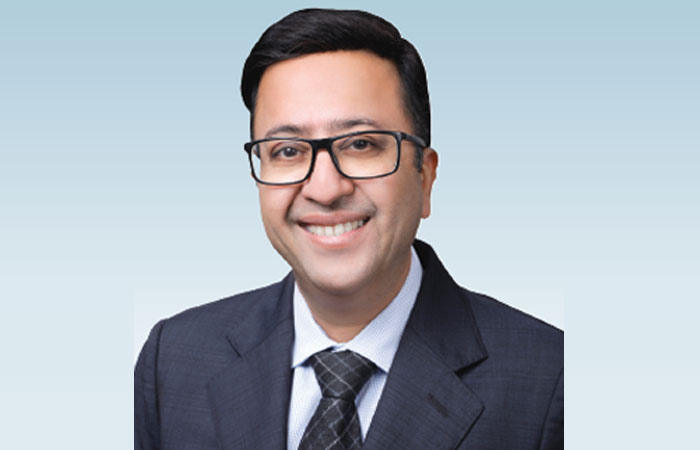
In an era where the cement industry is under growing pressure to decarbonise while scaling capacity, Star Cement is charting a pragmatic yet forward-looking path. In this conversation, Pankaj Kejriwal, Whole Time Director and COO, Star Cement, shares how the company is leveraging waste heat recovery, alternative fuels, low-carbon products and clean energy innovations to balance operational efficiency with long-term sustainability.

How has your Lumshnong plant implemented the 24.8 MW Waste Heat Recovery System (WHRS), and what impact has it had on thermal substitution and energy costs?
Earlier, the cost of coal in the Northeast was quite reasonable, but over the past few years, global price increases have also impacted the region. We implemented the WHRS project about five years ago, and it has resulted in significant savings by reducing our overall power costs.
That is why we first installed WHRS in our older kilns, and now it has also been incorporated into our new projects. Going forward, WHRS will be essential for any cement plant. We are also working on utilising the waste gases exiting the WHRS, which are still at around 100 degrees Celsius. To harness this residual heat, we are exploring systems based on the Organic Rankine Cycle, which will allow us to extract additional power from the same process.

With the launch of Star Smart Building Solutions and AAC blocks, how are you positioning yourself in the low-carbon construction materials segment?
We are actively working on low-carbon cement products and are currently evaluating LC3 cement. The introduction of autoclaved aerated concrete (AAC) blocks provided us with an effective entry into the consumer-facing segment of the industry. Since we already share a strong dealer network across products, this segment fits well into our overall strategy.
This move is clearly supporting our transition towards products with lower carbon intensity and aligns with our broader sustainability roadmap.

With a diverse product portfolio, what are the key USPs that enable you to support India’s ongoing infrastructure projects across sectors?
Cement requirements vary depending on application. There is OPC, PPC and PSC cement, and each serves different infrastructure needs. We manufacture blended cements as well, which allows us to supply products according to specific project requirements.
For instance, hydroelectric projects, including those with NHPC, have their own technical norms, which we are able to meet. From individual home builders to road infrastructure, dam projects, and regions with heavy monsoon exposure, where weather-shield cement is required, we are equipped to serve all segments. Our ability to tailor cement solutions across diverse climatic and infrastructure conditions is a key strength.

How are you managing biomass usage, circularity, and waste reduction across
your operations?

The Northeast has been fortunate in terms of biomass availability, particularly bamboo. Earlier, much of this bamboo was supplied to paper plants, but many of those facilities have since shut down. As a result, large quantities of bamboo biomass are now available, which we utilise in our thermal power plants, achieving a Thermal Substitution Rate (TSR) of nearly 60 per cent.
We have also started using bamboo as a fuel in our cement kilns, where the TSR is currently around 10 per cent to 12 per cent and is expected to increase further. From a circularity perspective, we extensively use fly ash, which allows us to reuse a major industrial waste product. Additionally, waste generated from HDPE bags is now being processed through our alternative fuel and raw material (AFR) systems. These initiatives collectively support our circular economy objectives.

As Star Cement expands, what are the key logistical and raw material challenges you face in scaling operations?
Fly ash availability in the Northeast is a constraint, as there are no major thermal power plants in the region. We currently source fly ash from Bihar and West Bengal, which adds significant logistics costs. However, supportive railway policies have helped us manage this challenge effectively.
Beyond the Northeast, we are also expanding into other regions, including the western region, to cater to northern markets. We have secured limestone mines through auctions and are now in the process of identifying and securing other critical raw material resources to support this expansion.

With increasing carbon regulations alongside capacity expansion, how do you balance compliance while sustaining growth?
Compliance and growth go hand in hand for us. On the product side, we are working on LC3 cement and other low-carbon formulations. Within our existing product portfolio, we are optimising operations by increasing the use of green fuels and improving energy efficiency to reduce our carbon footprint.
We are also optimising thermal energy consumption and reducing electrical power usage. Notably, we are the first cement company in the Northeast to deploy EV tippers at scale for limestone transportation from mines to plants. Additionally, we have installed belt conveyors for limestone transfer, which further reduces emissions. All these initiatives together help us achieve regulatory compliance while supporting expansion.

Looking ahead to 2030 and 2050, what are the key innovation and sustainability priorities for Star Cement?
Across the cement industry, carbon capture is emerging as a major focus area, and we are also planning to work actively in this space. In parallel, we see strong potential in green hydrogen and are investing in solar power plants to support this transition.
With the rapid adoption of solar energy, power costs have reduced dramatically – from 10–12 per unit to around2.5 per unit. This reduction will enable the production of green hydrogen at scale. Once available, green hydrogen can be used for electricity generation, to power EV fleets, and even as a fuel in cement kilns.
Burning green hydrogen produces only water and oxygen, eliminating carbon emissions from that part of the process. While process-related CO2 emissions from limestone calcination remain a challenge, carbon capture technologies will help address this. Ultimately, while becoming a carbon-negative industry is challenging, it is a goal we must continue to work towards.

Continue Reading

Economy & Market

FORNNAX Appoints Dieter Jerschl as Sales Partner for Central Europe

Published

on

By

Shares


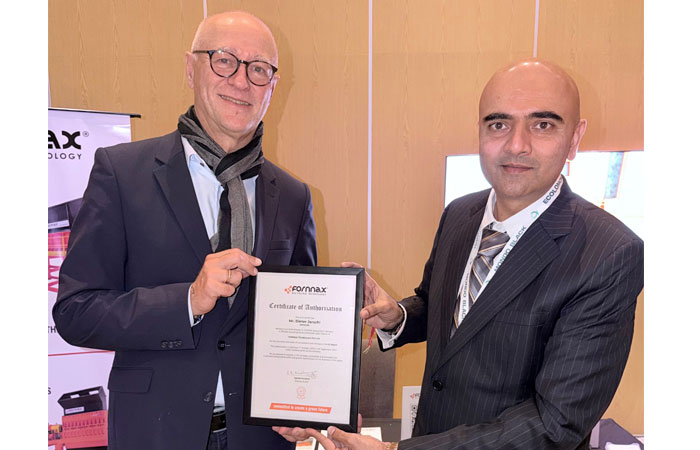
FORNNAX TECHNOLOGY has appointed industry veteran Dieter Jerschl as its new sales partner in Germany to strengthen its presence across Central Europe. The partnership aims to accelerate the adoption of FORNNAX’s high-capacity, sustainable recycling solutions while building long-term regional capabilities.

FORNNAX TECHNOLOGY, one of the leading advanced recycling equipment manufacturers, has announced the appointment of a new sales partner in Germany as part of its strategic expansion into Central Europe. The company has entered into a collaborative agreement with Mr. Dieter Jerschl, a seasoned industry professional with over 20 years of experience in the shredding and recycling sector, to represent and promote FORNNAX’s solutions across key European markets.

Mr. Jerschl brings extensive expertise from his work with renowned companies such as BHS, Eldan, Vecoplan, and others. Over the course of his career, he has successfully led the deployment of both single machines and complete turnkey installations for a wide range of applications, including tyre recycling, cable recycling, municipal solid waste, e-waste, and industrial waste processing.

Speaking about the partnership, Mr. Jerschl said,
“I’ve known FORNNAX for over a decade and have followed their growth closely. What attracted me to this collaboration is their state-of-the-art & high-capacity technology, it is powerful, sustainable, and economically viable. There is great potential to introduce FORNNAX’s innovative systems to more markets across Europe, and I am excited to be part of that journey.”

The partnership will primarily focus on Central Europe, including Germany, Austria, and neighbouring countries, with the flexibility to extend the geographical scope based on project requirements and mutual agreement. The collaboration is structured to evolve over time, with performance-driven expansion and ongoing strategic discussions with FORNNAX’s management. The immediate priority is to build a strong project pipeline and enhance FORNNAX’s brand presence across the region.

FORNNAX’s portfolio of high-performance shredding and pre-processing solutions is well aligned with Europe’s growing demand for sustainable and efficient waste treatment technologies. By partnering with Mr. Jerschl—who brings deep market insight and established industry relationships—FORNNAX aims to accelerate adoption of its solutions and participate in upcoming recycling projects across the region.

As part of the partnership, Mr. Jerschl will also deliver value-added services, including equipment installation, maintenance, and spare parts support through a dedicated technical team. This local service capability is expected to ensure faster project execution, minimise downtime, and enhance overall customer experience.

Commenting on the long-term vision, Mr. Jerschl added,
“We are committed to increasing market awareness and establishing new reference projects across the region. My goal is not only to generate business but to lay the foundation for long-term growth. Ideally, we aim to establish a dedicated FORNNAX legal entity or operational site in Germany over the next five to ten years.”

For FORNNAX, this partnership aligns closely with its global strategy of expanding into key markets through strong regional representation. The company believes that local partnerships are critical for navigating complex market dynamics and delivering solutions tailored to region-specific waste management challenges.

“We see tremendous potential in the Central European market,” said Mr. Jignesh Kundaria, Director and CEO of FORNNAX.
“Partnering with someone as experienced and well-established as Mr. Jerschl gives us a strong foothold and allows us to better serve our customers. This marks a major milestone in our efforts to promote reliable, efficient and future-ready recycling solutions globally,” he added.

This collaboration further strengthens FORNNAX’s commitment to environmental stewardship, innovation, and sustainable waste management, supporting the transition toward a greener and more circular future.


Continue Reading

Economy & Market

Budget 2026–27 infra thrust and CCUS outlay to lift cement sector outlook

Published

on

By

Shares


Higher capex, city-led growth and CCUS funding improve demand visibility and decarbonisation prospects for cement

Mumbai

Cement manufacturers have welcomed the Union Budget 2026–27’s strong infrastructure thrust, with public capital expenditure increased to Rs 12.2 trillion, saying it reinforces infrastructure as the central engine of economic growth and strengthens medium-term prospects for the cement sector. In a statement, the Cement Manufacturers’ Association (CMA) has welcomed the Union budget 2026-27 for reinforcing the ambitions for the nation’s growth balancing the aspirations of the people through inclusivity inspired by the vision of Narendra Modi, Prime Minister of India, for a Viksit Bharat by 2047 and Atmanirbharta.

The budget underscores India’s steady economic trajectory over the past 12 years, marked by fiscal discipline, sustained growth and moderate inflation, and offers strong demand visibility for infrastructure linked sectors such as cement.

The Budget’s strong infrastructure push, with public capital expenditure rising from Rs 11.2 trillion in fiscal year 2025–26 to Rs 12.2 trillion in fiscal year 2026–27, recognises infrastructure as the primary anchor for economic growth creating positive prospects for the Indian cement industry and improving long term visibility for the cement sector. The emphasis on Tier 2 and Tier 3 cities with populations above 5 lakh and the creation of City Economic Regions (CERs) with an allocation of Rs 50 billion per CER over five years, should accelerate construction activity across housing, transport and urban services, supporting broad based cement consumption.

Logistics and connectivity measures announced in the budget are particularly significant for the cement industry. The announcement of new dedicated freight corridors, the operationalisation of 20 additional National Waterways over the next five years, the launch of the Coastal Cargo Promotion Scheme to raise the modal share of waterways and coastal shipping from 6 per cent to 12 per cent by 2047, and the development of ship repair ecosystems should enhance multimodal freight efficiency, reduce logistics costs and improve the sector’s carbon footprint. The announcement of seven high speed rail corridors as growth corridors can be expected to further stimulate regional development and construction demand.

Commenting on the budget, Parth Jindal, President, Cement Manufacturers’ Association (CMA), said, “As India advances towards a Viksit Bharat, the three kartavya articulated in the Union Budget provide a clear context for the Nation’s growth and aspirations, combining economic momentum with capacity building and inclusive progress. The Cement Manufacturers’ Association (CMA) appreciates the Union Budget 2026-27 for the continued emphasis on manufacturing competitiveness, urban development and infrastructure modernisation, supported by over 350 reforms spanning GST simplification, labour codes, quality control rationalisation and coordinated deregulation with States. These reforms, alongside the Budget’s focus on Youth Power and domestic manufacturing capacity under Atmanirbharta, stand to strengthen the investment environment for capital intensive sectors such as Cement. The Union Budget 2026-27 reflects the Government’s focus on infrastructure led development emerging as a structural pillar of India’s growth strategy.”

He added, “The Rs 200 billion CCUS outlay for various sectors, including Cement, fundamentally alters the decarbonisation landscape for India’s emissions intensive industries. CCUS is a significant enabler for large scale decarbonisation of industries such as Cement and this intervention directly addresses the technology and cost requirements of the Cement sector in context. The Cement Industry, fully aligned with the Government of India’s Net Zero commitment by 2070, views this support as critical to enabling the adoption and scale up of CCUS technologies while continuing to meet the Country’s long term infrastructure needs.”

Dr Raghavpat Singhania, Vice President, CMA, said, “The government’s sustained infrastructure push supports employment, regional development and stronger local supply chains. Cement manufacturing clusters act as economic anchors across regions, generating livelihoods in construction, logistics and allied sectors. The budget’s focus on inclusive growth, execution and system level enablers creates a supportive environment for responsible and efficient expansion offering opportunities for economic growth and lending momentum to the cement sector. The increase in public capex to Rs 12.2 trillion, the focus on Tier 2 and Tier 3 cities, and the creation of City Economic Regions stand to strengthen the growth of the cement sector. We welcome the budget’s emphasis on tourism, cultural and social infrastructure, which should broaden construction activity across regions. Investments in tourism facilities, heritage and Buddhist circuits, regional connectivity in Purvodaya and North Eastern States, and the strengthening of emergency and trauma care infrastructure in district hospitals reinforce the cement sector’s role in enabling inclusive growth.”

CMA also noted the Government’s continued commitment to fiscal discipline, with the fiscal deficit estimated at 4.3 per cent of GDP in FY27, reinforcing macroeconomic stability and investor confidence.

Continue Reading

Trending News