Connect with us

Economy & Market

The realtors experience will be limited to their markets.

Published

on

Shares

Location, location, location. Is it all that matters in realty? Ram Raheja, Director & Head-Architecture at S Raheja Realty, knows that every area and every project is different and calls for a customised strategy. In the so-called sluggish realty market, S Raheja Realty delivers projects on time, with a range that has something for everyone. Ram Raheja shares his enthusiasm about his projects and his positive outlook with ICR. Excerpts from the interview.

Tell us a bit about S Raheja Realty.
S Raheja Realty is a part of the same Raheja group. My grandfather and his three brothers launched Raheja Brothers in the 1950s. Eventually in the 1970s, the company first split; now there are about seven to eight Raheja companies in the market. Raheja Realty started with my grandfather Girdharidas Raheja, then it was handled by his son Shyam Raheja and now, I run it. We are a third generation real estate group.

We have four very distinct sectors in our group, one being redevelopment in different parts of Mumbai. We have recently launched two sites, while another one was launched at the beginning of the year.

Then we have the other sector, which is corporate development. In corporate development, one example is the Hinduja Health Care in Khar; that was done completely by us, including land procurement, liasoning for approvals, construction, f architecture, interiors, finishing, up to giving the clients the complete finished product in the stipulated time period. Another example is in Mahim, where we have a 22-storey tower under construction.

Our third sector is mid-income housing. We call it luxury mid- income housing as we are building it in the most prime locations of cities, for example Palghar, Varanasi, etc.

In Palghar, we have just finished the Raheja Pride, Phase-I, which we launched last year. We finished it in about one ûand- a- half years, again a completely luxurious standard compared to anything you can get in the city. For this project, we have from imported tiles, modular kitchens, landscaped gardens and more.

The fourth sector of our group is building second homes, luxury second homes outside Mumbai. For example, we have finished a project in the Pune region. We also have a project under construction right now, Raheja Cascades in Lonavala.

We hear realtors speaking about the slow down in the market. Do you feel that the demand for real estate is subsiding?
It totally differs from area to area, project to project. There are areas which have a good demand and good supply. For example in Mumbai itself, you cannot take Mumbai as an entire one single real estate market. Mumbai has different areas which actually run their own market and where it has its own real estate sector, its demands, its own supply dynamics, its own economics. Lower Parel is a market on its own and so is Lokhandwala or Kalina. So, every area is unique in its own context because of the segregation of our city and the experience of realtors will be limited to their markets. The price ranges vary widely from one area to the other,sometimes within a ten-minute drive between each area. I would say the market is slow in areas where the supply is in excess and the demand is limited.

So choosing a location becomes all the more important today.
Yes, we are very careful in choosing the location, making sure that there is a need for housing with limited supply.

Tell us about the new projects that you will be launching soon.
We have another other 400 units in Palghar, which we will be launching soon. We have a large- scale project coming up in Lonavala next to our Raheja Cascades. Raheja Cascades was launched about a month ago and now we are launching Natraj and Gurukripa both in Kalina. We have a few more redevelopment projects that we will be launching next year. Then again, we do not launch until all our approvals and everything else is in place.

In general, what are the challenges faced by the realty sector in India?
The input costs for everything has gone up. Also, the markets have become very uncertain now. There is uncertainty in the stock market, uncertainty about the political scenario. This increases the cost of our products. It is difficult for buyers to make a decision in such a volatile environment.

What are your expectations from the government?
Speed and clarity in the approval and regulatory process.

A lot of realtors are trying to attract buyers by launching green buildings. What are green buildings?
It can mean a lot of things, that is why today you have certifications. It can mean that the materials used in the construction are green. One has to choose and decide on what aspect of the building could be made sustainable. Internationally you get cycle parking locations in a green building. Now in projects like these in India, rarely do people ride a cycle. So you know it just depends on what is actually viable in terms of making it a green building. You can have modern sustainable bricks, to traditional methods of cross-ventilation which is the most traditional form of saving energy, or you can create an architecture with better natural lighting. I would go back to the original form of architecture like that seen in the Hawa Mahal which creates cross-ventilation.

In a city like Mumbai, you can go into things like sustainable material, rainwater harvesting, solar panel, etc.

Growth of sustainable architecture/ Green buildings

  • The current penetration of green building in the country is 5% (1,909 buildings). However, it is gaining momentum and could account for 20% of all constructions by 2030. Today, Maharashtra tops the national figure with the highest number of green buildings, followed by the National Capital Region. Tamil Nadu holds third position.
  • The cost implications involved in developing green building properties are higher by 10-15 per cent than regular construction costs. However, they involve major long- term benefits
    The demand-supply scenario
  • 16,053 houses have been put on draw to 11.25 lakh applicants. This only shows that the city is facing an acute shortage of affordable housing and it has become imperative for builders to explore ways to stock mid-cap houses. Builders are now looking at developing the Charkop, Kandivli, Malvani, Palghar areas.

Ram Raheja is responsible for architecture and design departments within the organisation. He has over eight years of comprehensive experience in all phases of architectural services and design in India and abroad.

S Raheja Realty is an integral part of Indias real estate landscape. The promoters are three generations into real estate with a focus on luxury residential and commercial development in Mumbai. In the recent decade, they have ventured into affordable housing in mini metros and second tier cities, delivering quality lifestyles at affordable prices. Today, S Raheja continues to revolutionise the real estate industry with an intuitive vision to incorporate evolved architectural practices and develop projects that are sustainable and secure.

Project highlights: Cascade- luxury villa project;
Palghar Prime- affordable housing project, S2 Mahim & Hinduja Healthcare; Khar- corporate development; several re-development projects in Khar, Kalina & Bandra, Tier- II projects in Pune and Varanasi.


Continue Reading
Click to comment

Leave a Reply

Your email address will not be published. Required fields are marked *

Concrete

Cement Makers Reaffirm Commitment to Sustainable Growth

Published

on

By

Shares

World Environment Day spotlight on innovation and circularity

On World Environment Day, the Indian cement industry reiterated its commitment to supporting India’s climate ambitions through sustainable manufacturing, resource efficiency and the adoption of cleaner technologies.

The Cement Manufacturers’ Association (CMA) said the sector remains aligned with the Government of India’s Net Zero commitments and is accelerating efforts to reduce its environmental footprint while supporting the country’s infrastructure and development agenda.

Parth Jindal, President, CMA and Managing Director, JSW Cement, said the industry is increasingly adopting cleaner technologies, improving energy efficiency and expanding the use of alternative fuels and raw materials. He also highlighted the growing importance of circular economy practices, where industrial by-products and waste streams from one sector are utilised as resources in another.

“The Indian Cement Industry is aligned to the Government’s commitments on carbon mitigation and is accelerating the adoption of cleaner technologies, resource efficiency and circular economy practices while actively exploring the potential of Carbon Capture, Utilisation and Storage (CCUS) as a critical pathway for deep decarbonisation,” said Jindal.

He added that coprocessing industrial waste and by-products helps conserve natural resources, reduce disposal requirements and lower the environmental footprint across multiple sectors.

According to Jindal, sustainability is no longer limited to manufacturing processes but is increasingly influencing investment decisions, innovation strategies and long-term growth plans within the industry.

Echoing similar views, Dr Raghavpat Singhania, Vice President, CMA and Managing Director, JK Cement, said sustainable development extends beyond emissions reduction and must also focus on responsible resource utilisation and waste minimisation.

“Sustainability in the built environment cannot be measured by emissions alone. It is equally about how efficiently we use resources, how effectively we minimise waste and how responsibly we create the infrastructure that will serve future generations,” said Singhania.

He noted that the cement industry is advancing its sustainability agenda through greater resource efficiency, increased circularity, technological innovation and continuous improvements in manufacturing practices. As a key contributor to India’s infrastructure development, the sector has a critical role to play in balancing economic growth with environmental responsibility.

On the occasion of World Environment Day, industry leaders reaffirmed their commitment to supporting India’s climate goals while delivering the materials required for resilient, durable and sustainable infrastructure.


Continue Reading

Concrete

Building a Greener Future Together

Published

on

By

Shares

Environmental sustainability requires immediate action, not just long-term commitments and discussions. Recycling, circular economy practices, and technology-driven waste management can help industries reduce environmental impact while supporting sustainable growth.

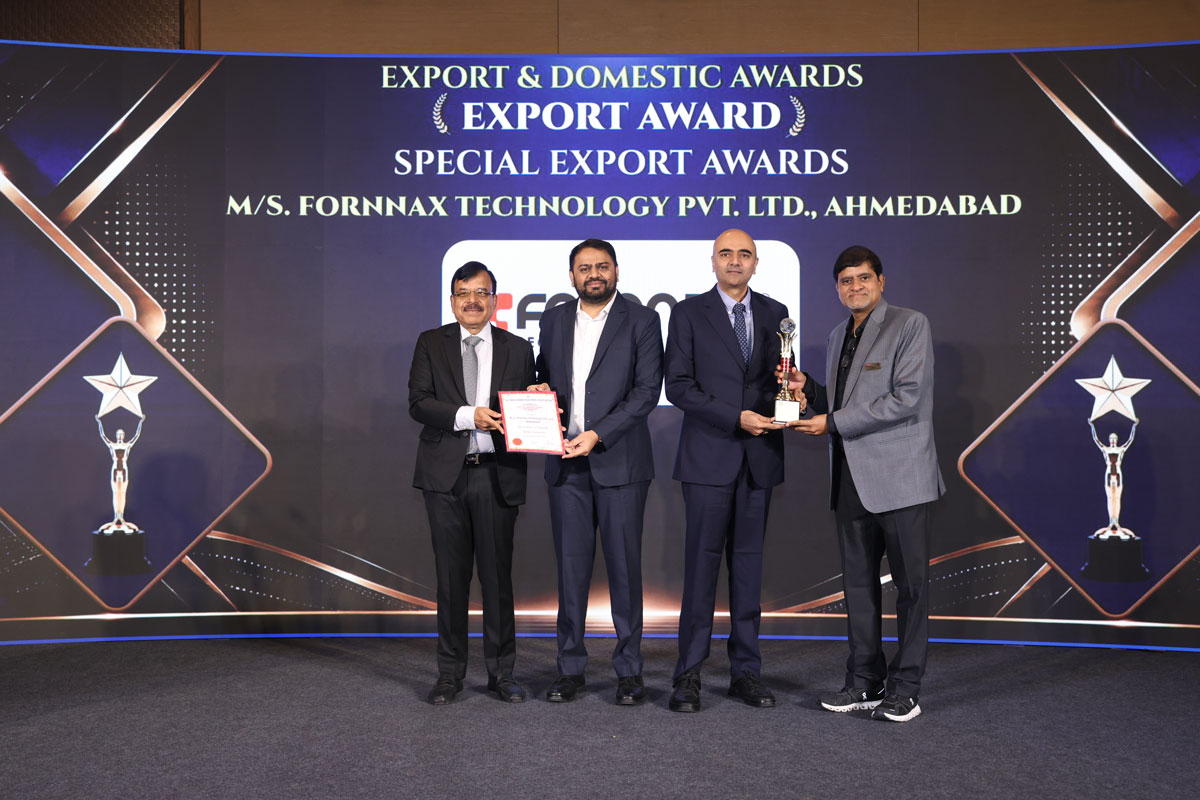
Author: Jignesh Kundaria, Director and CEO, Fornnax Technology

World Environment Day serves as an important reminder that environmental sustainability can no longer remain confined to discussions, reports, or long-term commitments. The environmental challenges facing the world today demand immediate, measurable, and collective action. Across industries and communities, waste generation continues to outpace our ability to process it responsibly, placing increasing pressure on ecosystems, natural resources, public health, and the well-being of future generations.

One of the most significant shifts required today is a change in how society perceives waste. Rather than being viewed as a material to be discarded, waste must be recognised as a valuable resource that can contribute to both economic growth and environmental protection when managed through the right technologies and systems. This mindset forms the foundation of the circular economy model that countries across the world are increasingly adopting to reduce landfill dependence, recover valuable materials, and create more sustainable industrial ecosystems.

India has made meaningful progress in strengthening awareness around sustainability, recycling, and environmental responsibility over the past decade. Significant efforts are being made to formalise the recycling sector through improved infrastructure, technology adoption, policy implementation, and broader stakeholder participation. These developments are creating a stronger foundation for responsible waste management and resource recovery across the country.

However, achieving long-term environmental impact requires collaboration from all stakeholders. Industries, policymakers, technology providers, and communities must work together with greater accountability to strengthen recycling ecosystems, encourage responsible waste management practices, and create sustainable outcomes through consistent execution rather than temporary interventions.

As someone closely associated with the recycling industry, I firmly believe that technology will play a decisive role in addressing future environmental challenges. Advanced recycling systems have the potential to recover valuable resources, reduce pollution, minimise landfill burdens, and conserve energy, creating a more sustainable future for generations to come. This belief is deeply reflected in Fornnax’s motto, “Committed to Create a Green Future,” which embodies our commitment to building long-term environmental value through innovation and responsible action.

At the same time, technology alone cannot deliver meaningful change. Real progress requires intent, awareness, participation, and a shared sense of responsibility. Sustainable development can only be achieved when innovation is supported by collective action and a genuine commitment to environmental stewardship.

On this World Environment Day, let us move beyond conversations and take meaningful steps towards creating a cleaner, greener, and more sustainable planet. By embracing innovation, strengthening recycling ecosystems, and acting responsibly today, we can create lasting environmental impact and secure a better future for generations to come.

Continue Reading

Concrete

Dalmia Bharat Acquires Jaiprakash Associates Cement Assets for ₹2,850 Crore

Published

on

By

Shares

Dalmia Cement executed a Business Transfer Agreement with Jaiprakash Associates and Adani Infra, to acquire 5.2 MnTPA of cement capacity across Madhya Pradesh and Uttar Pradesh.

Dalmia Cement (Bharat) announced on May 22, 2026 that it had signed a Business Transfer Agreement with Jaiprakash Associates Limited and Adani Infra (India) Limited for the acquisition of cement plants located at Rewa in Madhya Pradesh and Churk, Chunar and Sadwa in Uttar Pradesh. The deal was struck at an enterprise value of ₹2,850 crore and is expected to close within two weeks of execution.

The acquired assets from Jaiprakash Associates include 5.2 MnTPA of cement capacity and 3.3 MnTPA of clinker capacity. The package also covers 99 MW of thermal power capacity and railway sidings at Rewa, Chunar, and a common siding at Churk. This infrastructure gives the acquisition immediate operational utility beyond just production tonnage.

The transaction has a long backstory. Dalmia Cement had originally entered into a framework agreement with Jaiprakash Associates in December 2022, covering the sale of these business assets along with a long-term clinker supply arrangement. However, before the deal could be completed, Jaiprakash Associates was admitted to insolvency proceedings under the Insolvency and Bankruptcy Code. The earlier agreements could not be consummated as a result.

In an official statement, Puneet Dalmia, Managing Director & CEO, Dalmia Bharat, said, “I am very excited about addition of these assets in our portfolio. This serves as a great strategic fit for Dalmia. It helps us move forward in our journey to be a pan India player and provide a strong head start to serve the high potential markets in Central region. I am optimistic that the expansion potential of these assets along with close proximity with Dalmia’s captive mines will help us create a capacity hub for the future”.

Following the approval of Adani Group’s resolution plan for Jaiprakash Associates under the IBC framework, Dalmia approached the new management to revive discussions. The fresh Business Transfer Agreement was executed to settle all pending disputes, legal proceedings, and arbitration matters arising from the original framework agreement with Jaiprakash Associates.

Expanding market reach

Dalmia added, “Our familiarity with these assets under the earlier tolling arrangement gives us a deep understanding of the facilities and helps us establish strong connect with channel partners and vendors. We believe that this will help us in faster ramp up of capacities and quicker inroads into the market. As we look forward, I am very confident that we will be able to leverage the strengths of Dalmia to operate these assets in a manner where we can maximise value creation for all our stakeholders.”

With the addition of these plants, Dalmia Bharat’s total installed cement capacity will rise to 54.7 MnTPA upon consummation. The company has further expansion projects underway at Belgaum, Pune, and Kadapa, which are expected to take overall capacity to 66.7 MnTPA by Q2 to Q3 FY28.

The Central India location of the Jaiprakash Associates plants gives Dalmia Bharat faster access to markets in Madhya Pradesh and Uttar Pradesh than a greenfield build would have allowed. The company also cited debottlenecking and brownfield expansion as near-term opportunities at the acquired sites. Dalmia Bharat said the assets were expected to contribute positively to EBITDA and overall returns, given the pricing environment in the region and the company’s cost structure.

Continue Reading

Video Thumbnail

    SIGN-UP FOR OUR GENERAL NEWSLETTER


    Trending News

    SUBSCRIBE TO THE NEWSLETTER


    Don't miss out on valuable insights and opportunities to connect with like minded professionals.


      This will close in 0 seconds