Economy & Market
The rating system has helped us become more sustainable and green
Published
5 years agoon
By
admin
CK Jain, Unit Head, Vasavadatta Cement, Sedam
THE Green Company Rating System has helped us in effectively communicating to our stake holders about our commitment to sustainable growth, to reduce consumption of natural resources without jeopardising growth of the company, says CK Jain, Unit Head, Vasavadatta Cement, Sedam. In an exclusive chat with Agith G Antony, Jain elaborates on various aspects of sustainability initiatives taken by the plant which is the first one to be awarded Greenco Gold, by the CII for the year 2012-15 under the GreenCo, Green Company Rating System. Excerpts from the interview.
What were the major objectives of going through with the GreenCo Rating System by CII?
One of the most important reasons behind applying for the rating system was to understand our environmental performance on various aspects of environmental sustainability. This includes areas such as energy efficiency, water conservation, greenhouse gas emission, waste management, material conservation, recycling and recyclability, green supply chain, product stewardship, life cycle analysis, other areas like ventilation, biodiversity preservation, innovation, etc. Another major objective was to frame a long term roadmap on going green.
What were the major challenges involved?
VC has always been a believer of sustainable growth and has taken several initiatives on the ecological front. These initiatives helped in achieving GreenCo certification. However, the missing component was the meticulous system of documentation required for GreenCo certification. The certification system helped us in documenting the initiatives taken.
The system presented a challenge that turned into an opportunity for us to record our savings in terms of energy savings, water savings, and GHG emissions mitigation and track the results on a regular basis. GreenCo system has been designed with 30 per cent weightage for systems and 70 per cent weightage for performance and results achieved. This emphasises the fact that just having systems in place is not sufficient and requires actual implementation of initiatives and consequent savings in terms of natural resource conservation.
What are the tangible advantages of the rating system?
GreenCo gives energy efficiency 20 per cent weightage (200 out of total 1000 points). Energy costs also account for approximately 45 per cent of our expenditure.
The system emphasises on the need to have an energy policy, formation of cross- functional energy management cell, energy metering and monitoring systems, setting internal, national and international benchmarks and equipment wise efficiency monitoring. All these initiatives have a direct impact on the energy consumption of the plant as well as energy costs.
The second parameter under GreenCo was, water conservation encourages companies to avoid competition and conflict with the neighbouring communities for shared resources like water. The rating emphasises on the need to have a water policy, water management team, targets for reduction and benchmarks for reduction in consumption. This has helped the plant in understanding and preparing itself for the future to ensure availability of water for both the community and the plant operations.
The plant also has to pay huge amounts of money for disposing hazardous waste. GreenCo encourages companies to reduce, reuse and recycle and practice sustainable waste management practices. For all the other parameters like GHG mitigation, material conservation, greening the supply chain, the rating has given us several tangible benefits.
The rating system has helped us in achieving our objectives of understanding our environmental performance on various aspects of environmental sustainability and in framing a long term roadmap on how to be greener.
Do you think it is a value addition in terms of your marketing strategies?
Yes, most certainly. GreenCo, the Green Company Rating System, has helped us in effectively communicating to our stake holders about our commitment to sustainable growth, to reduce consumption of natural resources without jeopardising growth of the company.
We have been in the cement industry since the year 1983-84, with a rich experience of more than 30 years. In these years, we have encountered all sorts of challenges. These challenges have made the organisation even bolder and determined in its journey to be the best in the country.
We have built faith and trust with our clients and builders by taking various initiatives on the ecological front. GreenCo has helped us in reiterating these initiatives to the near-by communities, our customers, stakeholders and employees.
To what extent has this rating system helped the company to become more sustainable and green?
It’s the proud proclamation but not egoistic exaggeration that this rating system has helped the company to become more sustainable and green. Vasavadatta Cement keeps its eyes and ears always open and vigilant to international standards, conventions and treaties to grasp the spirit with mind and heart.
What is VC’s stated goal of reducing your carbon footprint?
The plant has a target to reduce GHG emissions by 2-3 per cent every year for the next ten years. The following initiatives have been identified and implemented or are in process of implementation –
- Installation of new lime-crusher (capacity 1400 tph) in mines to reduce transportation of vehicles and fuel consumption;
- Increase of fly ash injection in PPC;
- Increase of PPC production;
- Installation of hot disc to consume WDF, AFR.
The plant has also adopted the following policies and guidelines-
- Energy policy.
- TPM policy.
- Mission on sustainable growth.
- Green procurement policy.
- Green transport policy.
- ISO 50001 and SA 8000 are under implementation
Could you brief us about the use of AFR in the plant?
We recently installed hot disc to consume all types of AFR like municipal solid waste, tyre, plastic waste, carbon black powder, etc. This will help the plant in reducing emissions from usage of conventional fuels.
Tell us about the thrust on renewable energy sources.
The plant has implemented solar heating system for industrial canteen (steam cooking) and uses wood/agro-waste in cement kiln/CPP. In addition, the plant also has plans to install solar lighting for 100 kw at new ADM building, and install waste heat recovery system for cooler and PH exit gases. There is possibility of 17 mw power generation with WHRS.
Vasavadatta Cement is very determined to implement WHR as soon as completing up gradation of all the four clinker coolers. We have finalised the site and layout for installation of WHR Squeesed techno commercial matters with different vendors.
What can you tell us about high efficiency pollution control equipment used for cement kilns, raw mills?
The plant has taken initiatives on fugitive emissions management using mist spray and effective mines management to ensure minimum impact in the surrounding areas. For kilm and raw mills U-III and IV RABH, Unit-I, ESP to bag house is under commissioning. For Unit-II, ESP to bag house conversion is under progress. All coal mills have bag filters. All power plants have ESPs.
What are the steps initiated to reduce water consumption in your plants?
Water mist sprays are used for dust suppression, where specially designed stainless steel nozzles are used with potential water savings of 85 cubic meter per day. 65 per cent of the water used in the plant is sourced from rainwater harvested in four storage ponds of 44,00,000 m3 capacity.
The company has a target to meet 99.9 per cent of its water needs from rainwater harvesting in the next five years.
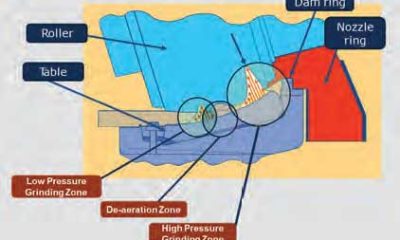
- Unit-III & IV raw mills considered for roller press with finish grinding which needs no water.
- Effluent water is used for cooling bed ash (U-2) in CPP.
- Recycling of DM water to CT sump IN CPP.
- Recycling of back wash water.
- Reutilisation of waste water for process and gardening.
- Air cooled condenser for U-IV and V captive power plant.
- We also received the National Award for Excellence in Water Management in 2012.
Green Initiatives
The plant has one of the best specific energy consumption figures in the country. VC also adopts cradle to cradle approach to environmental sustainability as recommended by GreenCo. The plant has taken the following initiatives –
- Installation of limestone crusher at mines about one KM from plant which has resulted in fuel savings.
- Installation of roller press for raw mill finish grinding which saves power does not require water.
- Installation of bag filters for all production centres.
- Friction drive kiln without girth gear.
- Deo flex burner for U-III&IV.
- SF cross bar cooler for u-III &IV.
- Combi flex drive for cement mill-III&IV no girth gear.
- Open wagon loading facility for cement.
- Bulk loading facility for trucks as well as wagons.
- All major equipments installed with VVFD (Plant-300 & CPP-125) & SPRS.
- Water harvesting at mines and CPP total capacity of 44 lack M3.
- We are in the process of implementing projects for further improvement identified during GreenCo assessment. This will enable us to achieve our ambition of GreenCo Platinum, thus making Vasavadatta a world class cement plant.
Resource Management Initiatives
Water conservation –
Celebration of Leak Detection week.
Usage of water mist spray used for dust suppression.
Rainwater harvesting in 4 storage ponds of 44,00,000 m3 capacity.
Energy conservation –
Formulation of energy policy and cross -functional energy management cell.
Performance evaluation of all energy intensive equipment
Suggestion schemes by employees.
Various energy efficiency projects.
Material conservation-
Substitution of high grade limestone with low grade limestone.
Usage of fly ash up to 32 per cent.
Usage of waste as alternative fuel.
You may like
-
Double Tap to Go Green
-
15th Cement EXPO to be held in March 2025 in Hyderabad
-
14th Cement EXPO
-
Vinita Singhania receives Lifetime Achievement Award at the 7th Indian Cement Review Awards
-
Increasing Use of Supplementary Cementitious Materials
-
Indian Cement Review Touts Decarbonisation Mantra & Awards Growth
Concrete
Cement Makers Reaffirm Commitment to Sustainable Growth
Published
2 weeks agoon
June 5, 2026By
admin
World Environment Day spotlight on innovation and circularity
On World Environment Day, the Indian cement industry reiterated its commitment to supporting India’s climate ambitions through sustainable manufacturing, resource efficiency and the adoption of cleaner technologies.
The Cement Manufacturers’ Association (CMA) said the sector remains aligned with the Government of India’s Net Zero commitments and is accelerating efforts to reduce its environmental footprint while supporting the country’s infrastructure and development agenda.

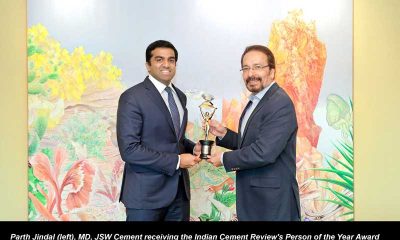
Parth Jindal, President, CMA and Managing Director, JSW Cement, said the industry is increasingly adopting cleaner technologies, improving energy efficiency and expanding the use of alternative fuels and raw materials. He also highlighted the growing importance of circular economy practices, where industrial by-products and waste streams from one sector are utilised as resources in another.
“The Indian Cement Industry is aligned to the Government’s commitments on carbon mitigation and is accelerating the adoption of cleaner technologies, resource efficiency and circular economy practices while actively exploring the potential of Carbon Capture, Utilisation and Storage (CCUS) as a critical pathway for deep decarbonisation,” said Jindal.
He added that coprocessing industrial waste and by-products helps conserve natural resources, reduce disposal requirements and lower the environmental footprint across multiple sectors.
According to Jindal, sustainability is no longer limited to manufacturing processes but is increasingly influencing investment decisions, innovation strategies and long-term growth plans within the industry.
Echoing similar views, Dr Raghavpat Singhania, Vice President, CMA and Managing Director, JK Cement, said sustainable development extends beyond emissions reduction and must also focus on responsible resource utilisation and waste minimisation.

“Sustainability in the built environment cannot be measured by emissions alone. It is equally about how efficiently we use resources, how effectively we minimise waste and how responsibly we create the infrastructure that will serve future generations,” said Singhania.
He noted that the cement industry is advancing its sustainability agenda through greater resource efficiency, increased circularity, technological innovation and continuous improvements in manufacturing practices. As a key contributor to India’s infrastructure development, the sector has a critical role to play in balancing economic growth with environmental responsibility.
On the occasion of World Environment Day, industry leaders reaffirmed their commitment to supporting India’s climate goals while delivering the materials required for resilient, durable and sustainable infrastructure.
Environmental sustainability requires immediate action, not just long-term commitments and discussions. Recycling, circular economy practices, and technology-driven waste management can help industries reduce environmental impact while supporting sustainable growth.
Author: Jignesh Kundaria, Director and CEO, Fornnax Technology
World Environment Day serves as an important reminder that environmental sustainability can no longer remain confined to discussions, reports, or long-term commitments. The environmental challenges facing the world today demand immediate, measurable, and collective action. Across industries and communities, waste generation continues to outpace our ability to process it responsibly, placing increasing pressure on ecosystems, natural resources, public health, and the well-being of future generations.
One of the most significant shifts required today is a change in how society perceives waste. Rather than being viewed as a material to be discarded, waste must be recognised as a valuable resource that can contribute to both economic growth and environmental protection when managed through the right technologies and systems. This mindset forms the foundation of the circular economy model that countries across the world are increasingly adopting to reduce landfill dependence, recover valuable materials, and create more sustainable industrial ecosystems.
India has made meaningful progress in strengthening awareness around sustainability, recycling, and environmental responsibility over the past decade. Significant efforts are being made to formalise the recycling sector through improved infrastructure, technology adoption, policy implementation, and broader stakeholder participation. These developments are creating a stronger foundation for responsible waste management and resource recovery across the country.
However, achieving long-term environmental impact requires collaboration from all stakeholders. Industries, policymakers, technology providers, and communities must work together with greater accountability to strengthen recycling ecosystems, encourage responsible waste management practices, and create sustainable outcomes through consistent execution rather than temporary interventions.
As someone closely associated with the recycling industry, I firmly believe that technology will play a decisive role in addressing future environmental challenges. Advanced recycling systems have the potential to recover valuable resources, reduce pollution, minimise landfill burdens, and conserve energy, creating a more sustainable future for generations to come. This belief is deeply reflected in Fornnax’s motto, “Committed to Create a Green Future,” which embodies our commitment to building long-term environmental value through innovation and responsible action.
At the same time, technology alone cannot deliver meaningful change. Real progress requires intent, awareness, participation, and a shared sense of responsibility. Sustainable development can only be achieved when innovation is supported by collective action and a genuine commitment to environmental stewardship.
On this World Environment Day, let us move beyond conversations and take meaningful steps towards creating a cleaner, greener, and more sustainable planet. By embracing innovation, strengthening recycling ecosystems, and acting responsibly today, we can create lasting environmental impact and secure a better future for generations to come.
Concrete
Dalmia Bharat Acquires Jaiprakash Associates Cement Assets for ₹2,850 Crore
Published
3 weeks agoon
May 25, 2026By
admin
Dalmia Cement executed a Business Transfer Agreement with Jaiprakash Associates and Adani Infra, to acquire 5.2 MnTPA of cement capacity across Madhya Pradesh and Uttar Pradesh.
Dalmia Cement (Bharat) announced on May 22, 2026 that it had signed a Business Transfer Agreement with Jaiprakash Associates Limited and Adani Infra (India) Limited for the acquisition of cement plants located at Rewa in Madhya Pradesh and Churk, Chunar and Sadwa in Uttar Pradesh. The deal was struck at an enterprise value of ₹2,850 crore and is expected to close within two weeks of execution.
The acquired assets from Jaiprakash Associates include 5.2 MnTPA of cement capacity and 3.3 MnTPA of clinker capacity. The package also covers 99 MW of thermal power capacity and railway sidings at Rewa, Chunar, and a common siding at Churk. This infrastructure gives the acquisition immediate operational utility beyond just production tonnage.
The transaction has a long backstory. Dalmia Cement had originally entered into a framework agreement with Jaiprakash Associates in December 2022, covering the sale of these business assets along with a long-term clinker supply arrangement. However, before the deal could be completed, Jaiprakash Associates was admitted to insolvency proceedings under the Insolvency and Bankruptcy Code. The earlier agreements could not be consummated as a result.
In an official statement, Puneet Dalmia, Managing Director & CEO, Dalmia Bharat, said, “I am very excited about addition of these assets in our portfolio. This serves as a great strategic fit for Dalmia. It helps us move forward in our journey to be a pan India player and provide a strong head start to serve the high potential markets in Central region. I am optimistic that the expansion potential of these assets along with close proximity with Dalmia’s captive mines will help us create a capacity hub for the future”.
Following the approval of Adani Group’s resolution plan for Jaiprakash Associates under the IBC framework, Dalmia approached the new management to revive discussions. The fresh Business Transfer Agreement was executed to settle all pending disputes, legal proceedings, and arbitration matters arising from the original framework agreement with Jaiprakash Associates.
Expanding market reach
Dalmia added, “Our familiarity with these assets under the earlier tolling arrangement gives us a deep understanding of the facilities and helps us establish strong connect with channel partners and vendors. We believe that this will help us in faster ramp up of capacities and quicker inroads into the market. As we look forward, I am very confident that we will be able to leverage the strengths of Dalmia to operate these assets in a manner where we can maximise value creation for all our stakeholders.”
With the addition of these plants, Dalmia Bharat’s total installed cement capacity will rise to 54.7 MnTPA upon consummation. The company has further expansion projects underway at Belgaum, Pune, and Kadapa, which are expected to take overall capacity to 66.7 MnTPA by Q2 to Q3 FY28.
The Central India location of the Jaiprakash Associates plants gives Dalmia Bharat faster access to markets in Madhya Pradesh and Uttar Pradesh than a greenfield build would have allowed. The company also cited debottlenecking and brownfield expansion as near-term opportunities at the acquired sites. Dalmia Bharat said the assets were expected to contribute positively to EBITDA and overall returns, given the pricing environment in the region and the company’s cost structure.
Shree Cement Targets Above Industry Volume Growth In FY27
Ramco Cements’ Hard Worker Campaign Wins Seven Awards
Cement Makers Reaffirm Commitment to Sustainable Growth
Building a Greener Future Together
JK Lakshmi Advances LC3 Cement Expansion
Shree Cement Targets Above Industry Volume Growth In FY27
Ramco Cements’ Hard Worker Campaign Wins Seven Awards
Cement Makers Reaffirm Commitment to Sustainable Growth
Building a Greener Future Together
JK Lakshmi Advances LC3 Cement Expansion
Trending News
-
Concrete3 weeks agoDalmia Bharat Acquires Jaiprakash Associates Cement Assets for ₹2,850 Crore
-
Concrete4 weeks agoPROMECON introduces infrared-based tertiary air measurement system for cement kilns
-
Concrete3 weeks agoCovestro Showcases AI Material Solutions at COMPUTEX
-
Concrete3 weeks agoVenus Pipes Commences Fittings Plant And Expands Seamless Capacity