Connect with us

Concrete

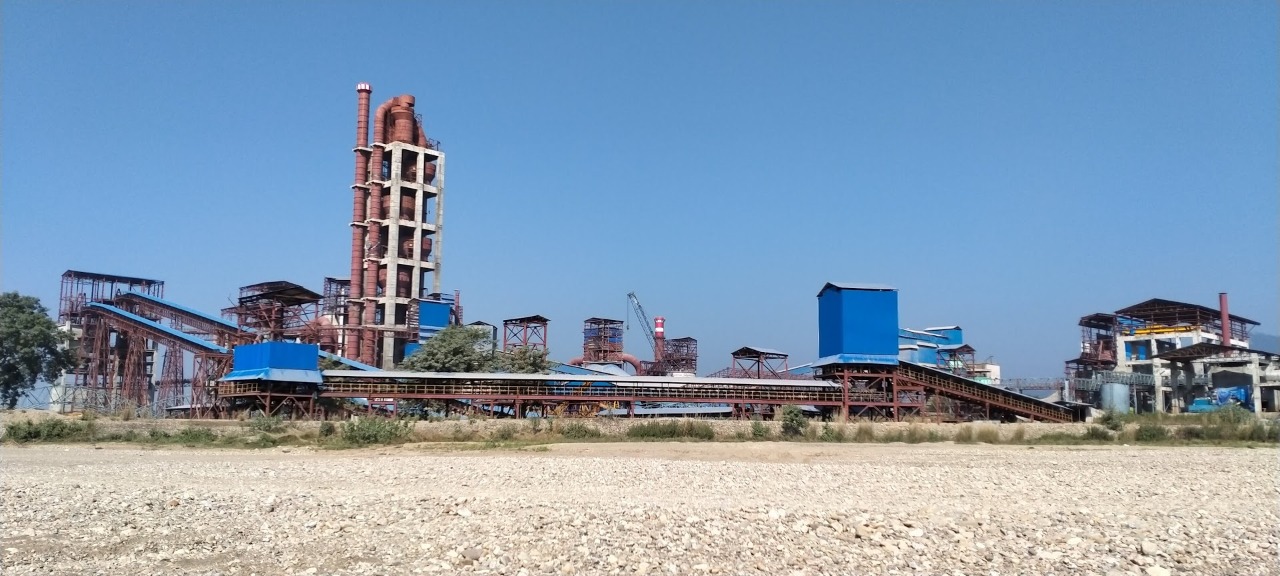
IT enables cost-effective clinkerisation at Samrat Cement plant

Published

on

Shares

The cement Industry in Nepal mainly depends on clinker received from Indian cement plants, which is then put into the grinding process in Nepal before sending into the market. One of the biggest challenges for Nepal-based cement companies is the ever-increasing cement manufacturing cost due to surges in the cost of clinker and other raw materials. Availability of resources is another big challenge. Hence, having a clinkerisation plant locally is becoming a need for them to survive in this sector.

Samrat Cement was facing the same challenge. The company came into the cement sector in 2013-14 with their grinding and packing unit at Lamahi-District Dang in Nepal with a vision to build a brand with enhanced quality cement. After establishing itself as a strong brand in Nepal, the company?? vision was to own a clinkerisation plant to cope with cement demand and to survive with manufacturing costs.

Conceptualisation of Project

To meet its vision, Samrat cement awarded a 4000 TPD Clinkerisation Plant to KHD Humboldt Wedag Indiain 2018. The first land excavation started in November 2018, and the entire project was completed in December 2020 with the first production of clinker in January 2021. As added by Basudev Pandeya, Managing Director of Samrat Cement, clinkerisation plant was conceptualised on the following basis.

  • The cost of clinkerisation has to be lower down about 20 to 25 per cent from purchased clinker.

  • The project must be conceptualised in such a manner that the co-generation to be capable to cater the power requirement of the total clinkerisation plant excluding Raw Material grinding.

  • During the selection of clinkerisation plant technology suppliers were called and the best technology was selected.

The main performance parameters are as under:

  • Clinkerisation plant capacity between 3500-4500 TPD to get an optimum range of Co-generation and heat-saving benefits.

  • Raw Material Grinding: KHD Roller Press capacity 345 tph with a specific power of 11.75 Kwh/t Raw meal.

  • KHD High-efficiency cyclone 5 stage Pre-heater (First installation) with a Pressure drop of 300 mmwg at PH fan Inlet and lowest heat consumption.

  • Total Specific power consumption from crusher to Clinkerisation as 43-45 kwh/t.

  • Selection of Roller Press in Raw material grinding enables low heat requirement hence more co-generation possible.

  • Waste Heat recovery plant with hot air

Fast track project with a Target time of completion of 18-24 months

IT Solution to meet the challenges

Based on the above consideration, KHD deployed an energy-efficient grinding machine, Roller Press (RP 16-170/180, Roller surface- CHF), in a closed circuit with V-separator (VS 96/20) dynamic separator (SKS ??LC 3500).

The advantage of this system is that higher capacity requirements are met with lower power consumption.

For Pyro-processing Line, new generation Preheater consists of newly developed High-Efficiency series HE cyclones (PH- 90HE72), Pyro top, Low NOx PYROJET Kiln Burner, 3 station rotary kiln (4.2 m dia x 65 m long), IKN cooler with 90M2/effective cooler area.

The implementation also included other equipment — Limestone crusher-stacker- Reclaimer (Make- Tenova Takraf, 650 TPH), Coal Crusher-Stacker ??eclaimer (Make- Lepton, 150 TPH) & coal mill (VRM-make Pfeiffer, 35 TPH).

Cost-analysis and decision-making

Pandeya said, ??xecuting a 1.5 million tonne per annum cement project at a hilly area like Nepal was never an easy task and required many resources and committed teamwork, further we faced a challenge when it falls during pandemic duration for about 8-9 months hence completing this project within two years is really a success story.??He added further that it would not be possible without the professional skills of the Samrat Team and the professional and enriched experience of KHD Humboldt Wedag India.

Talking about the plant location, the clinkerisation unit of Samrat Cement is located at Satbaria nearby Lamahi Town on verge of the National highway connecting Butwal-Nepalgunj, which is most favourable for a clinkerisation unit because the raw materials are available within a short distance and transportation of product and materials to their destination becomes very easy via national highway.

Plants in Nepal usually require a DG set to run clinkerisation or a UPS of 5-6MW capacity. It is noteworthy that plants, where it is required to have DG sets to run on a continuous basis, will be about three times costlier as compared to the cost of Grid power/co-generated power.

Samrat Cements wanted to go for a better solution, so they finalised on KHD five-stage pre-heater mainly to ensure the co-generation up to 30 to 35 Kwh/t clinker is met. This means there was no need to have any UPS or DG set to continue for the clinkerisation plant.

Pandeya further explains that one side it may look that this decision is costlier in terms of specific heat consumption which is about 20 Kcal/kg as compared with six stage pre-heater technology but on the other hand, the KHD high-efficiency pre-heater solution has its advantage with specific power saving of three units in PH fan and co-generation of additional three units at Pre-heater.

Specific power consumption has about one-third of the cost than that generated by DG sets. (Grid Power costs about 8 to 10 NPR/unit whereas DG generated power costs about 24-27 NPR/unit) so a total of six units saving gives a clear-cut monetary term advantage of about double as it lost in extra heat in five-stage pre-heaters in comparison to 6 stage pre-heater. [Consideration 27 NPR/kwh cost of power with DG set, 15,000 NPR/T landed cost of South African coal, 710 kcal/kg.cl heat consumption, 5500 kcal/kg heat value]

Benefits of a 5 stage Pre-heater

Samrat Cements believed that having a five-stage pre-heater was a wise decision as many plant sites including Nepal do not have strong soil, which may not be suitable for a pre-heater height of more than 125 m. Hence, for higher capacity kiln lines, it may require going for twin string of preheater tower, which has an impact of 20 per cent in civil cost. Below are the advantages.

Planning and execution

Clinkerisation plant was sequenced to start with Limestone crusher along with stacker reclaimer unit and this dc was achieved one month before the kiln light-up. A raw mill that is equipped with roller press was started 15 days before kiln light-up as the roller press circuit does not require hot gas during start-up as compared to VRMs where it is mandatory. This is how the company saved on the cost of Hot air generator.

Around 5000 tonnes of raw meal were grounded with roller press operated in finish mode and kept ready in raw meal silo. Coal mill was started along with kiln light-up and clinker was achieved very fast within 72 hours from kiln start-up.

As per plant operating personnel, the roller press operation in raw material grinding is found to be very simple and trouble-free. Moreover, it is energy efficient.

So far, the total clinkerisation power best achieved is 42.4 kwh/t (Table1). However, the plant started just a few months ago and the company sees great potential to further optimise below 40kwh/t.

Roadmap

Samrat Cement, Nepal is towards a mission of achieving manufacturing cement with the lowest energy consumption and at an economic cost. Producing green cement, minimising carbon emission, energy efficiency, using alternative fuels, and saving water are some of the targets set by the company in near future. Below is a detailed roadmap.

  • Producing green cement with a minimum carbon footprint and saving water. Hence waste heat recovery and roller press technology were given priority.

  • Commissioning of waste heat recovery system, which will cover almost all power consumption of pyro-section excluding some intermediate departments.

  • Expected pay-back period is 2.5 to 3 years for WHRS when compared with DG power.

  • Waste heat recovery system is expected to get commissioned by October 2021.

  • Clinker grinding system where ball mill of 3.4 m x 10 m is getting upgraded with KHD roller press, which will increase the capacity of clinker grinding up to 225tph and specific power shall be 23-25 kwh in finish mode.

  • Samrat cement team added further that total specific power consumption after cement mill upgradation is anticipated as 63 Kwh/t of PPC (From crusher to cement grinding), which will be a benchmark to the cement industry.

  • Usage of alternative fuels in pyro process to consume solid waste produced by the community.

Conclusion

The company is optimistic about achieving specific power consumption for Clinkerisation below 40 kwh/t and total cement production below 60-62 Kwh/t with 700 kcal/kgcl heat consumption. After a successful implementation of this project, the company is hopeful to achieve milestones in near future too.

  1. Waste Heat recovery system (WHRS) with 6 stage Pre-heater have a potential of cogeneration about 28 units/T clinker which needs a UPS to absorb power fluctuation/ switching from grid to DG sets. Hence an additional cost of UPS rating 6-7 MW is huge along with a cumbersome job to maintain UPS batteries. Whereas 5 stage preheaters have the potential for above as 32-35 kwh/t clinker. Hence total clinkerisation plant excluding either Raw Mill can be operated with its own generated power by WHRS.

  2. Pre-heater exit Pressure is lowest among all the plants nearby countries as it found only 250 mmwg at fan inlet while operating without WHRS, which means after WHRS operation it may reach to 300-320 mmwg.

  3. Pre-heater exit pressure is directly linked with Pre-heater fan power which is in the range of 3.5-3.9 Kwh/t.

4. Raw Mix Burnability is found to be easy burning and the combination of Limestone and Clay enriched with Silica and Alumina reacts well and lowers the Pre-heater temperature to 280-290 Deg.C in 5 Stage Pre-heater.

Continue Reading
Click to comment

Leave a Reply

Your email address will not be published. Required fields are marked *

Concrete

Cement Demand Revives As Prices Decline In Q3 FY26

Nuvama reports improved volume growth after price correction

Published

on

By

Shares

A report by Nuvama Financial Services (Nuvama) said cement sector demand revived in the third quarter of fiscal year twenty twenty six as prices declined, supporting volume growth across regions. The note indicated that sequential price correction helped replenish demand that had been subdued by elevated pricing earlier in the year. Nuvama quantified the price decline as a sequential correction that varied across states and segments, facilitating restocking by merchants and traders.

The report suggested that improved affordability after the price correction encouraged housing and infrastructure activity, with developers and contractors adjusting procurement plans. It added that regional dynamics varied, with some markets showing faster recovery while others remained reliant on seasonal construction cycles. Housing demand was driven by both affordable and mid segment projects, while infrastructure segment recovery was contingent on timely execution of public works.

Analysts at Nuvama assessed that the price moderation eased inventory pressures for manufacturers and distributors and supported margin stabilisation at several producers. Demand improvement was visible in both urban and rural segments, although the pace of recovery differed by state and trade channel. Producers were seen balancing price realisations with volume targets and managing input cost volatility through operational efficiencies.

The report recommended that investors monitor volumes and realisations closely as market equilibrium emerges in the coming quarters, noting that sustainability of recovery would depend on monsoon patterns and government infrastructure outlays. Overall, the assessment pointed to a cautiously optimistic outlook for the cement industry as price correction translated into tangible volume gains. Market participants were advised to track early signs of demand broadening beyond core construction hubs to assess the depth of the rebound.

Continue Reading

Concrete

Refractory demands in our kiln have changed

Published

on

By

Shares

Radha Singh, Senior Manager (P&Q), Shree Digvijay Cement, points out why performance, predictability and life-cycle value now matter more than routine replacement in cement kilns.

As Indian cement plants push for higher throughput, increased alternative fuel usage and tighter shutdown cycles, refractory performance in kilns and pyro-processing systems is under growing pressure. In this interview, Radha Singh, Senior Manager (P&Q), Shree Digvijay Cement, shares how refractory demands have evolved on the ground and how smarter digital monitoring is improving kiln stability, uptime and clinker quality.

How have refractory demands changed in your kiln and pyro-processing line over the last five years?
Over the last five years, refractory demands in our kiln and pyro line have changed. Earlier, the focus was mostly on standard grades and routine shutdown-based replacement. But now, because of higher production loads, more alternative fuels and raw materials (AFR) usage and greater temperature variation, the expectation from refractory has increased.
In our own case, the current kiln refractory has already completed around 1.5 years, which itself shows how much more we now rely on materials that can handle thermal shock, alkali attack and coating fluctuations. We have moved towards more stable, high-performance linings so that we don’t have to enter the kiln frequently for repairs.
Overall, the shift has been from just ‘installation and run’ to selecting refractories that give longer life, better coating behaviour and more predictable performance under tougher operating conditions.

What are the biggest refractory challenges in the preheater, calciner and cooler zones?
• Preheater: Coating instability, chloride/sulphur cycles and brick erosion.
• Calciner: AFR firing, thermal shock and alkali infiltration.
• Cooler: Severe abrasion, red-river formation and mechanical stress on linings.
Overall, the biggest challenge is maintaining lining stability under highly variable operating conditions.

How do you evaluate and select refractory partners for long-term performance?
In real plant conditions, we don’t select a refractory partner just by looking at price. First, we see their past performance in similar kilns and whether their material has actually survived our operating conditions. We also check how strong their technical support is during shutdowns, because installation quality matters as much as the material itself.
Another key point is how quickly they respond during breakdowns or hot spots. A good partner should be available on short notice. We also look at their failure analysis capability, whether they can explain why a lining failed and suggest improvements.
On top of this, we review the life they delivered in the last few campaigns, their supply reliability and their willingness to offer plant-specific custom solutions instead of generic grades. Only a partner who supports us throughout the life cycle, which includes selection, installation, monitoring and post-failure analysis, fits our long-term requirement.

Can you share a recent example where better refractory selection improved uptime or clinker quality?
Recently, we upgraded to a high-abrasion basic brick at the kiln outlet. Earlier we had frequent chipping and coating loss. With the new lining, thermal stability improved and the coating became much more stable. As a result, our shutdown interval increased and clinker quality remained more consistent. It had a direct impact on our uptime.

How is increased AFR use affecting refractory behaviour?
Increased AFR use is definitely putting more stress on the refractory. The biggest issue we see daily is the rise in chlorine, alkalis and volatiles, which directly attack the lining, especially in the calciner and kiln inlet. AFR firing is also not as stable as conventional fuel, so we face frequent temperature fluctuations, which cause more thermal shock and small cracks in the lining.
Another real problem is coating instability. Some days the coating builds too fast, other days it suddenly drops, and both conditions impact refractory life. We also notice more dust circulation and buildup inside the calciner whenever the AFR mix changes, which again increases erosion.
Because of these practical issues, we have started relying more on alkali-resistant, low-porosity and better thermal shock–resistant materials to handle the additional stress coming from AFR.

What role does digital monitoring or thermal profiling play in your refractory strategy?
Digital tools like kiln shell scanners, IR imaging and thermal profiling help us detect weakening areas much earlier. This reduces unplanned shutdowns, helps identify hotspots accurately and allows us to replace only the critical sections. Overall, our maintenance has shifted from reactive to predictive, improving lining life significantly.

How do you balance cost, durability and installation speed during refractory shutdowns?
We focus on three points:
• Material quality that suits our thermal profile and chemistry.
• Installation speed, in fast turnarounds, we prefer monolithic.
• Life-cycle cost—the cheapest material is not the most economical. We look at durability, future downtime and total cost of ownership.
This balance ensures reliable performance without unnecessary expenditure.

What refractory or pyro-processing innovations could transform Indian cement operations?
Some promising developments include:
• High-performance, low-porosity and nano-bonded refractories
• Precast modular linings to drastically reduce shutdown time
• AI-driven kiln thermal analytics
• Advanced coating management solutions
• More AFR-compatible refractory mixes

These innovations can significantly improve kiln stability, efficiency and maintenance planning across the industry.

Continue Reading

Concrete

Digital supply chain visibility is critical

Published

on

By

Shares

MSR Kali Prasad, Chief Digital and Information Officer, Shree Cement, discusses how data, discipline and scale are turning Industry 4.0 into everyday business reality.

Over the past five years, digitalisation in Indian cement manufacturing has moved decisively beyond experimentation. Today, it is a strategic lever for cost control, operational resilience and sustainability. In this interview, MSR Kali Prasad, Chief Digital and Information Officer, Shree Cement, explains how integrated digital foundations, advanced analytics and real-time visibility are helping deliver measurable business outcomes.

How has digitalisation moved from pilot projects to core strategy in Indian cement manufacturing over the past five years?
Digitalisation in Indian cement has evolved from isolated pilot initiatives into a core business strategy because outcomes are now measurable, repeatable and scalable. The key shift has been the move away from standalone solutions toward an integrated digital foundation built on standardised processes, governed data and enterprise platforms that can be deployed consistently across plants and functions.
At Shree Cement, this transition has been very pragmatic. The early phase focused on visibility through dashboards, reporting, and digitisation of critical workflows. Over time, this has progressed into enterprise-level analytics and decision support across manufacturing and the supply chain,
with clear outcomes in cost optimisation, margin protection and revenue improvement through enhanced customer experience.
Equally important, digital is no longer the responsibility of a single function. It is embedded into day-to-day operations across planning, production, maintenance, despatch and customer servicing, supported by enterprise systems, Industrial Internet of Things (IIoT) data platforms, and a structured approach to change management.

Which digital interventions are delivering the highest ROI across mining, production and logistics today?
In a capital- and cost-intensive sector like cement, the highest returns come from digital interventions that directly reduce unit costs or unlock latent capacity without significant capex.
Supply chain and planning (advanced analytics): Tools for demand forecasting, S&OP, network optimisation and scheduling deliver strong returns by lowering logistics costs, improving service levels, and aligning production with demand in a fragmented and regionally diverse market.
Mining (fleet and productivity analytics): Data-led mine planning, fleet analytics, despatch discipline, and idle-time reduction improve fuel efficiency and equipment utilisation, generating meaningful savings in a cost-heavy operation.
Manufacturing (APC and process analytics): Advanced Process Control, mill optimisation, and variability reduction improve thermal and electrical efficiency, stabilise quality and reduce rework and unplanned stoppages.
Customer experience and revenue enablement (digital platforms): Dealer and retailer apps, order visibility and digitally enabled technical services improve ease of doing business and responsiveness. We are also empowering channel partners with transparent, real-time information on schemes, including eligibility, utilisation status and actionable recommendations, which improves channel satisfaction and market execution while supporting revenue growth.
Overall, while Artificial Intelligence (AI) and IIoT are powerful enablers, it is advanced analytics anchored in strong processes that typically delivers the fastest and most reliable ROI.

How is real-time data helping plants shift from reactive maintenance to predictive and prescriptive operations?
Real-time and near real-time data is driving a more proactive and disciplined maintenance culture, beginning with visibility and progressively moving toward prediction and prescription.
At Shree Cement, we have implemented a robust SAP Plant Maintenance framework to standardise maintenance workflows. This is complemented by IIoT-driven condition monitoring, ensuring consistent capture of equipment health indicators such as vibration, temperature, load, operating patterns and alarms.
Real-time visibility enables early detection of abnormal conditions, allowing teams to intervene before failures occur. As data quality improves and failure histories become structured, predictive models can anticipate likely failure modes and recommend timely interventions, improving MTBF and reducing downtime. Over time, these insights will evolve into prescriptive actions, including spares readiness, maintenance scheduling, and operating parameter adjustments, enabling reliability optimisation with minimal disruption.
A critical success factor is adoption. Predictive insights deliver value only when they are embedded into daily workflows, roles and accountability structures. Without this, they remain insights without action.

In a cost-sensitive market like India, how do cement companies balance digital investment with price competitiveness?
In India’s intensely competitive cement market, digital investments must be tightly linked to tangible business outcomes, particularly cost reduction, service improvement, and faster decision-making.
This balance is achieved by prioritising high-impact use cases such as planning efficiency, logistics optimisation, asset reliability, and process stability, all of which typically deliver quick payback. Equally important is building scalable and governed digital foundations that reduce the marginal cost of rolling out new use cases across plants.
Digitally enabled order management, live despatch visibility, and channel partner platforms also improve customer centricity while controlling cost-to-serve, allowing service levels to improve without proportionate increases in headcount or overheads.
In essence, the most effective digital investments do not add cost. They protect margins by reducing variability, improving planning accuracy, and strengthening execution discipline.

How is digitalisation enabling measurable reductions in energy consumption, emissions, and overall carbon footprint?
Digitalisation plays a pivotal role in improving energy efficiency, reducing emissions and lowering overall carbon intensity.
Real-time monitoring and analytics enable near real-time tracking of energy consumption and critical operating parameters, allowing inefficiencies to be identified quickly and corrective actions to be implemented. Centralised data consolidation across plants enables benchmarking, accelerates best-practice adoption, and drives consistent improvements in energy performance.
Improved asset reliability through predictive maintenance reduces unplanned downtime and process instability, directly lowering energy losses. Digital platforms also support more effective planning and control of renewable energy sources and waste heat recovery systems, reducing dependence on fossil fuels.
Most importantly, digitalisation enables sustainability progress to be tracked with greater accuracy and consistency, supporting long-term ESG commitments.

What role does digital supply chain visibility play in managing demand volatility and regional market dynamics in India?
Digital supply chain visibility is critical in India, where demand is highly regional, seasonality is pronounced, and logistics constraints can shift rapidly.
At Shree Cement, planning operates across multiple horizons. Annual planning focuses on capacity, network footprint and medium-term demand. Monthly S&OP aligns demand, production and logistics, while daily scheduling drives execution-level decisions on despatch, sourcing and prioritisation.
As digital maturity increases, this structure is being augmented by central command-and-control capabilities that manage exceptions such as plant constraints, demand spikes, route disruptions and order prioritisation. Planning is also shifting from aggregated averages to granular, cost-to-serve and exception-based decision-making, improving responsiveness, lowering logistics costs and strengthening service reliability.

How prepared is the current workforce for Industry 4.0, and what reskilling strategies are proving most effective?
Workforce preparedness for Industry 4.0 is improving, though the primary challenge lies in scaling capabilities consistently across diverse roles.
The most effective approach is to define capability requirements by role and tailor enablement accordingly. Senior leadership focuses on digital literacy for governance, investment prioritisation, and value tracking. Middle management is enabled to use analytics for execution discipline and adoption. Frontline sales and service teams benefit from
mobile-first tools and KPI-driven workflows, while shop-floor and plant teams focus on data-driven operations, APC usage, maintenance discipline, safety and quality routines.
Personalised, role-based learning paths, supported by on-ground champions and a clear articulation of practical benefits, drive adoption far more effectively than generic training programmes.

Which emerging digital technologies will fundamentally reshape cement manufacturing in the next decade?
AI and GenAI are expected to have the most significant impact, particularly when combined with connected operations and disciplined processes.
Key technologies likely to reshape the sector include GenAI and agentic AI for faster root-cause analysis, knowledge access, and standardisation of best practices; industrial foundation models that learn patterns across large sensor datasets; digital twins that allow simulation of process changes before implementation; and increasingly autonomous control systems that integrate sensors, AI, and APC to maintain stability with minimal manual intervention.
Over time, this will enable more centralised monitoring and management of plant operations, supported by strong processes, training and capability-building.

Continue Reading

Trending News

SUBSCRIBE TO THE NEWSLETTER


Don't miss out on valuable insights and opportunities to connect with like minded professionals.


    This will close in 0 seconds