

Concrete
Adoption of IT in cement industry

The cement industry in India is more than a century old and is now second largest globally behind China in terms of installed capacity, production and consumption which is playing an important role in development of infrastructure in the country. Also, Government propels overall development in India and initiating policies like housing for all, road projects and Smart Cities Mission that ensures time-bound creation of world class infrastructure which will boost cement demand in the country.
Owing to its commodity nature, cement being a low cost and high-volume commodity comprising high transportation cost as almost 30 per cent of the cost of cement is involved in logistics. Deprived of automation and thriving on rather uneconomical modes of logistics, the Indian cement sector has for long been burdened with high logistics cost. Considering these facts, logistics has immense potential to deliver cost savings with customer expectations through improvement in service levels. Thus, Logistics in cement industry plays an indispensable role to decide the competitive advantage or disadvantage for a company.
However, cement industry has often been categorised as laggards when it comes to the adoption of digital technologies. But the benefits of digital technology, including revenue and other margin-impacting factors, are compelling the cement industry to consider harnessing the power of digital technology, more seriously. The digital space has witnessed major transformation in the last couple of years and the latest entrant to the digital space are the Internet of Things (IOT??), Artificial Intelligence (AI) and Live Dashboards for eliminating manual intervention and real time monitoring to upsurge operational efficiency. These technologies have enabled the supply chain management to innovate, drive cost reductions, improves service level and customer experiences.

Technology??ot a cost, but a revenue driver
Mehta believes that nowadays technology is no longer seen as a cost, but an opportunity and a revenue driver. He states that Shree Cement?? performance has been amongst the best in the industry because of its focused approach on constant improvement, challenging the status quo and finding innovative solutions. Shree Cement being one of the largest cement manufacturers in India with capacity of 43.40 MT and having 14 Plants across PAN India has the lowest logistics and distribution cost among the entire major cement players of India. We understand that ??oing more with less in lesser time is the key to stay competitive??
On the road to Digitalisation
Digitalisation is a very broad concept and its applications in the cement industry are countless. Over the past few years, with the help of data analytics, process reengineering and with the advent use of IOT?? and robotics, we have been led by example for other cement Industries. Our operational efficiency have been upsurged with continuously exploring innovating ways and technology through automations in the processes, seamless movement of vehicles inside the plant, understanding driver?? plight and improving facilities to decrease their discomforts. This transformation has already begun; it will only continue to accelerate. ??t all started with just a seed.??/p>
Here are few ways that are playing a major role in SCL journey to optimize logistics cost by working on time:

Automated bidding system: Road transportation is considered as a booming market in India but it is highly unorganised and volatile at the same time. Transportation of goods from one place to another has become a real pain point for the industries due to unavailability of vehicles at the right time and at right price. Over the years, cement industries has been burdened with high logistics cost due to traditional way of working. Earlier, we at Shree Cement were engaging transporters to operate fleets for particular routes/areas and for that, fixed basic freight were paid to them. Moreover, transporters with ideal fleets could not deploy their vehicles due to unavailability of real-time information of pending sales orders. As, real-time information access system was not available, order execution time was high and optimal freights could not be ascertained.
Thus, to create healthy competition among transporters, we introduced automated bidding system wherein transporters are taken to a single online window and all order details are visible to transporters. Ceiling freight has been fixed for each destination and at a pre-designated time, transporters can submit bids as desired within the time frame of the bidding and based on lowest freight bidded, orders are allocated to transporters for delivery. This bidding process runs at regular intervals in whole day.
In the initial phase, transporters were rigid looking to open access of orders to all at single window instead of direct allotment of orders for fixed routes. Over the period, system turns out to be flexible and transparent which creates an opportunity for transporters to engage fleets on more viable routes. Through this, we not only reduce the order execution time but also achieve reduction in freight cost by identifying gap between demand and supply of trucks and based on this information, able to maintain lowest current competitive freight rates expected by truckers.
Automated plant truck movement: Cement manufacturers usually face challenges while dispatching material as desired. Even though, they have the capability of dispatching over thousands of trucks every day, but doing it efficiently is a challenge. We at Shree Cement, have been handling 5,000 trucks on daily basis across all units. This massive volume was leading to Truck Turnaround Time (TAT) of 12-13 hours and sometimes even upto 15-18 Hrs due to lack of visibility and ultimately adding to our freight cost significantly.
Since, real-time truck position inside plant was not available leading to improper traffic management and Jams in plant premises, thus increase in TAT. All material is measured through weighbridges at multi-point and were operated manually by one personnel per shift. Security had to check the physical papers of trucks in absence of automations. This led to the vehicles being stranded within the plants at various stages as long as for 3-4 hours severely impacting the dispatch capacity. Even the historical data of vehicles couldn?? be checked leading to repetition, and the long waiting hours inside the plants with the engines running wasted lot of fuel as well traffic jams and safety issues.
To address these challenges, we have installed RFID based integrated logistics management system (ILMS), boom barriers at security check points, manless weighbridges, Auto Invoice Generation through robotics process automations (RPA) and Auto E-way bill through third party applications. This included IOT-based RFID tags and sensors, positioning sensors, cameras, LED displays, Voice command and software (integrated with ERP). Now, truck movement inside the plant premises is completely automatised with error free movement and commercial papers are generated automatically. In addition, real-time tracking of vehicles is being done leading to reduction in turnaround time to 4-5 hours. The visibility has increased dramatically leading to smooth and clutter-free movement. Not only this, all our 80 manless weighbridges and invoicing through RPA have saved 320 and 100 manpower respectively. This manpower was shifted to more productive operations resulted into more output and less new hiring.

Seamless clinker movement: Clinker movement from Integrated units to Grinding units with dedicated trucks on origin-destination pair. As dedicated trucks arrives in the plant, unique token number is generated through RFID and order is automatically allocated on FIFO basis. Once order is allocated, based on predictive analysis, trucks are auto called in for loading through SMS to the trucker based on truck position inside the plant. The trucker moves at manless weighbridge for both tare and gross weight and in between vehicle placed under the clinker loading hopper. Based on net weight, auto generation of commercial invoice and E-way bills handed over to driver at security gate, before leaving the plant premises. Same way, at unloading destinations, RFID based ILMS system and automated weighbridges have helped in seamless movement with minimal time. These automations have helped to reduce the clinker loading time from 8 Hrs to 2 Hrs and unloading time from 3 to 1.5 hours i.e. Net savings of 7.5 Hrs per trip. This translates into massive yearly savings of Rs 14-15 crore (Considering Rs 150 per hour cost of truck for 350 trucks daily) as a result of higher number of trips in a year. Reduced TAT as above, the transporters are reaping benefits through additional trips to earn freight and sharing benefits with us by way of reduction in freight cost.
Live dashboards: Real-time visibility is critical for efficient operation in any organization. Cement Industries operate in dynamic environment that are constantly changing, Bottlenecks in logistics, over-ordering of products, or long hold of orders at plant means losses in profits. For better decision making, various interactive real time Dashboards are prepared like dispatch, order pending, trucks waiting in plant beyond threshold limit, performance of transporter, e-way bill expiring, pending freight bills, etc. helps logistics team to see data upfront and make decisive decisions on real time basis. Based on algorithm and simulation, dashboards were designed in a way wherein trucks waiting in yard since long is being identified and paired with long pending orders based on their last trip history. Further, E-way bill expiring within the time frame are also identified and auto mail is being triggered to extend the validity of E-way bills which are likely to be expiring. Adding live dashboard make quicker decisions about prioritizing orders, review on time performance, and streamlining delivery process. This integrated system aids decision-makers to identify the weakest links in the supply chain and initiate cost saving actions.
From New Normal to New Future
There is a lot of fear and uncertainty in the world right now. At the same time, we??e also seen human ingenuity and compassion at work as people band together and leverage technology to fight Covid-19 as a global community. We are seeing first-hand how digital transformation can be used to not only improve business performance but to improve lives. Automation provides us with excellent tools both to fight the Covid-19 pandemic and to redefine the new normal in a post-Covid world. With the suspension of manufacturing and less support from logistics service providers, chains were seriously disrupted which in turn into high logistic cost. In this situation, IOTs, AI, and automations has proven that these are not only words but become inevitable for sustainable growth during pandemic.
Looking at the miserable condition of truck drivers in India, we at Shree cement took an initiative to improve driver?? conditions at our plant in view of pandemic. We make certain minimal interaction of driver with Plant staff and ensure that driver should remain inside his truck during the plant movement. Plant In to Plant Out movement are made automatic with the help of ERP-RFID based system and NPR (Number Plate recognition) integration. Also, Boom barrier were placed so as to allow entry to authorised vehicles only. This led to minimal interaction with driver and even after this, security features were enhanced. Moreover, rehabilitation facilities for drivers with social distancing maintained to avoid Covid-19 with proper masking was also enabled. With all these automations and facilities, SCL is becoming an attractive trucker destination.
The journey ahead
We have reached only halfway of journey. Way forward, we are working on GPS 24*7 real time data generated for improving efficiency and customer service levels. Further, Freight cost to be optimised with the help of machine learning and algorithm-based tools to take advantage of the demand-supply mismatch of orders & trucks by capitalising the benefit of spot gain in the freight bidding process. There is no doubt that digitalisation and automations is having an incredible impact on logistics across the globe and is here to stay.
Digital transformation of enterprises and automation of logistics are becoming the norm and necessity not solely for business development, but also for the long-term sustainability of company processes. For logistics, digitalisation is truly a pressing issue. To minimise operating costs, companies are being forced to re-evaluate their business models, to ensure smoothness and reliability of supply chain. The adoption of new technologies is driven by need to improve operational efficiency as well to increase utilisation of existing infrastructure. Thus, more and more industrial manufacturers are moving towards automated solutions to improve efficiency.

About the Author:
The article is authored by Yogesh Mehta (Vice President ??Shree Cement), who is a Chartered Accountant and has 30 years of experience in Cement Industry. He has proven to be a critical asset in driving Shree Cement?? Logistics function and winning CII-SCALE Award in cement industry since last five years. He has passion for performance, operational excellence and learning, which facilitates in steering company from 0.5 MT to 43.40 MT in 25 years.

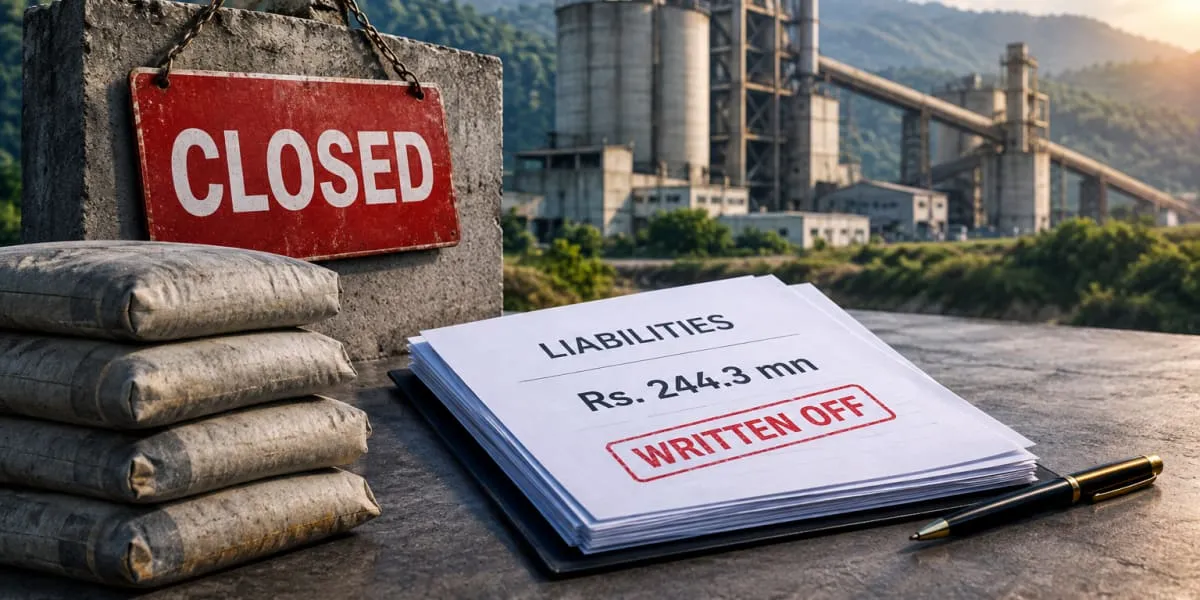



Meghalaya Cabinet Approves MCCL Closure, Writes Off Rs. 244.3 mn

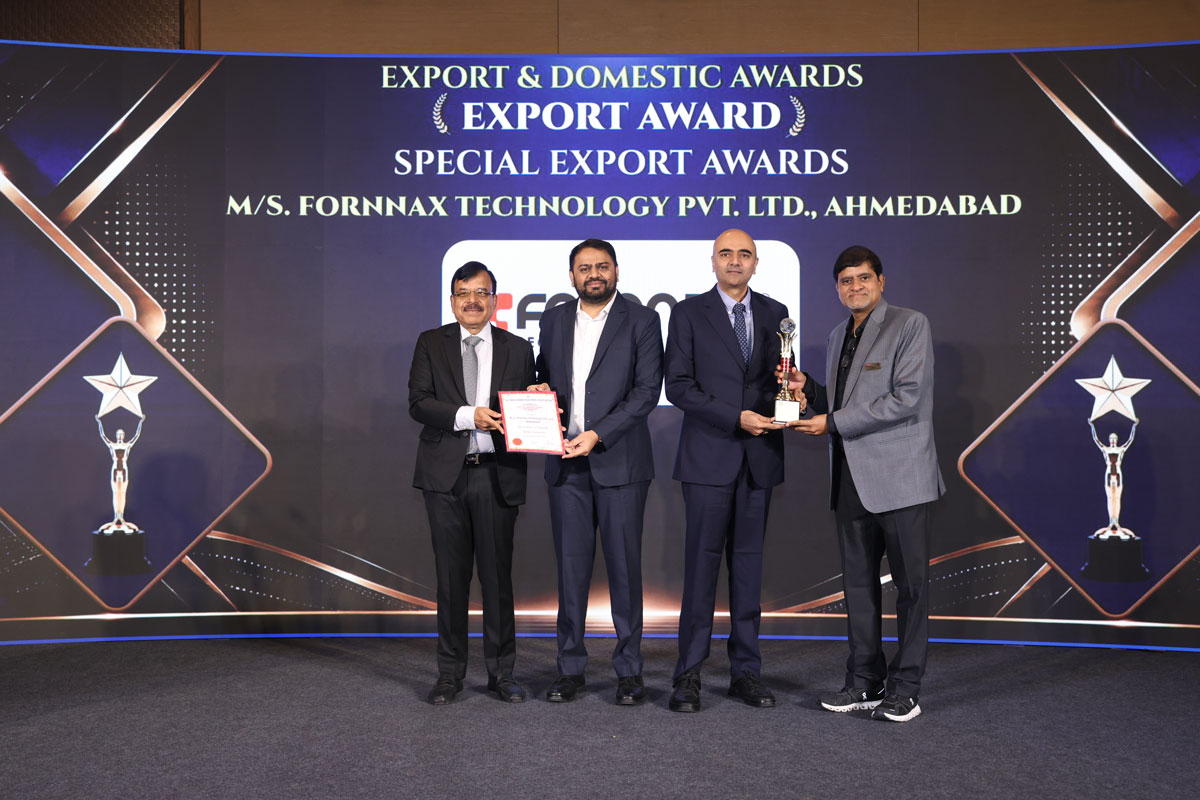
Fornnax Wins AIRIA’s Special Export Award for Rubber Machinery in 2025-26

Cement Prices Likely to Rise Rs. 10-15 per Bag from Mid-October

Nuvoco Marks 10 Years, Targets 35 MMTPA Capacity by FY28

J&K Government Notifies City Gas Distribution Policy
Meghalaya Cabinet Approves MCCL Closure, Writes Off Rs. 244.3 mn
Fornnax Wins AIRIA’s Special Export Award for Rubber Machinery in 2025-26
Cement Prices Likely to Rise Rs. 10-15 per Bag from Mid-October
Nuvoco Marks 10 Years, Targets 35 MMTPA Capacity by FY28
J&K Government Notifies City Gas Distribution Policy
-

 Concrete3 weeks ago
JSW Cement Receives Rs. 2.3 bn GST Demand Notice
-

 Concrete3 weeks ago
Andhra Pradesh Clears Rs. 30 bn My Home Cement Plant
-
 Concrete1 month ago
Jammu Division Begins First Cement Rail Traffic to Anantnag
-
 Concrete3 weeks ago
Montra Electric, Wonder Cement Deploy 250-Vehicle EV Fleet