Economy & Market
A reliability programme
Published
5 years agoon
By
admin
Many plant managers and engineers never get started with a reliability programme because the task seems so challenging. This integrated three-step process includes a System Review, Historical Review and Budget Review. Each step has multiple key components that must be considered when implementing a unit specific strategy, writes Shridhar Nambi, MD, Greenesol Power Systems.
STEP-1: SYSTEM REVIEW
Age of the unit Facilities built in the 1960s and ’70s experience damage related to the obvious number of hours of operation; however, they were designed with heavier wall thickness in both tubing and header components. As a result, these units tend to have longer life expectancies than some of the newer facilities. Facilities that were built in the 1980s pushed the limits with the do more with less approach. Tubing and headers were supplied with thinner walled components, conserving costs on construction, but ultimately reducing the service life of the critical components. Modern facilities are being constructed to adapt to the thermal cycling that has become a part of the energy culture of today and are experiencing earlier than expected failures. Many of these failures are the result of exotic materials that are being used which have not been in service long enough to know the true behavior of the material under the thermal and mechanical stresses of cycling a unit.
Design of the unit
Some boiler units clearly have inherent design flaws. Various design flaws include the placement of the burners in the furnace, how the tubing/headers are supported and/or the use of water guns or soot blowers. Understanding the inherent design flaws of a specific unit will help a company become proactive in their approach to preventative maintenance and ascertain areas to target for remaining useful life determinations.
Materials
Understanding the materials specific to a unit and recognising the inherent concerns of those materials (weld ability, resistance to elevated temperatures and pressure, heat transfer ability) will enable facilities to be more progressive in their pursuit to preventing service related damage.
STEP – 2: FAILURE ANALYSIS
The ability to identify and track the locations of a tube failure and its root cause is essential to comprehensively reducing forced outages. Once the root cause of the failure is properly identified, a long term plan can be implemented to ensure the failures/leaks have been rectified. Proper and current documentation is critical to managing failures and leaks and can be done in real-time with the use of a data management program such as the 4-SYTE System Strategy. Most common causes of failures have been seen to be stress rupture, water-side corrosion, fire-side corrosion, erosion, fatigue, The most likely failures can occur in water wall, economiser and superheater or reheater tube circuits.
Primary failure mechanisms are the processes that degrade the tube and produce a failure. Each failure mechanism may include several circumstances such as poor fuel quality, equipment malfunction or improper operation. Each would be considered a root cause since they have created the conditions for a failure mechanism to exist. Verification of the root cause is a vital activity in a failure investigation and is necessary to assure the correction of a failure problem. Secondary failure mechanisms such as adjacent tube washing or adjacent tube impact can produce a tube failure and are always a concern after an initial failure.
Modifications
At times inherent deficiencies of a unit design will be identified. As a result, the unit may undergo design modifications which can resolve the original design flaw concerns, but ultimately can create other issues such as steam flow restrictions and temperature excursions etc. Additionally, as part of the clean air initiatives currently underway, many units are being modified to burn alternative fuels. Recognising what modifications have transpired in a specific unit can lend perspective into potential side effects which may be occurring as a result of those modifications.
Replacements
As an aging plant begins to experience repeated failures, sections of tubing and other critical components will require replacement. These replaced sections will have fewer hours of operation and therefore will not need to be considered for inspection on the same schedule as original equipment within the unit. This observation is particularly unit specific and is a major basis for why a cookie-cutter approach to inspection/maintenance is ineffective and can lead to squandering of precious budget funding inspecting equipment that has not yet reached a point in its life cycle to require examination.
Operational changes
Most power generation facilities were designed on the assumption that they would be operated in a base-load mode or infrequently cycled. However, in response to local power market conditions and the terms of their power purchase agreements, many plants are now cycling their units more frequently than designers had intended. This results in greater thermal stresses, more pressure cycles, and therefore more cyclic fatigue damage and overall faster wear and degradation to the critical components due to both mechanical and corrosion processes.
As a general comment, cycling service has an adverse effect on the life expectancy of a unit. This is due to the fact that cycling results in fatigue loading (alternating cyclic stresses); whereas base load operation results in creep (sustained stresses). Depending on the severity of the stresses, and the number of cycles, fatigue loading can result in cracking, particularly at restraint locations.
Upsets
When a unit trips and is brought offline suddenly or experiences a water hammer event, an immense amount of thermal and mechanical fatigue can be introduced to the involved components. It is beneficial to understand if a unit has experienced any major upsets during its life cycle in order to determine if evaluating areas that wouldn’t normally come under the microscope is necessary. This is similarly unit specific and would be comparable to the considerations you would evaluate if you were purchasing a used car. Just as the purchaser would investigate any past maintenance troubles or collisions of the vehicle prior to purchasing, plant managers must consider the history of their units prior to determining the inspection prioritisation of their critical components.
Operational training
Often, the operators of units are responding to directives from a senior authority to bring the unit online or offline to meet the load requirements and capacity. Understanding the effects of ramping constraints in both unit commitment and economic dispatch is imperative. Operators can have a tremendous effect on the life expectancy of a unit simply by recognising the effects of proper ramp rate execution. Operators have direct control of the temperature of the unit; therefore proper unit specific training can add years to the life of the unit.
STEP – 3: DETERMINING REMAINING USEFUL LIFE
Determining the remaining useful life of critical components/tubing will allow for proper budgeting for replacements. Additionally, as systems begin to reach the end of their life cycle, more failures will inevitably begin to occur. Understanding when to cut your losses and replace sections will improve reliability. Many factors can affect the life expectancy of key components in a boiler including water chemistry, fuel type and quality, thermal cycles, materials, temperature excursions, inadequate heat transfer and flow rate. Understanding key factors associated with a specific unit that can ultimately contribute to shortening the life expectancy is paramount to predicting remaining useful life of critical components.
Prioritisation: inspection, repairs, replacement
The ability and necessity to develop a plan of action that includes prioritisation for inspection, repairs and/or replacements established from the unit specific design and historical operation will dramatically improve the budgetary process. Allotted funds will be used in an effective manner and outage planners will have the ability to provide back- up documentation required to warrant the necessity for such funding during the company fiscal budget planning process.
You may like
Economy & Market
Leonard Unveils Dual-Head Robotic Arm for Hazardous Industrial Demolition
Published
1 day agoon
October 30, 2026By
admin
Leonard unveils Descender Duo, a dual-head robotic demolition arm designed to improve industrial safety and reduce shutdown time by up to 50 per cent.
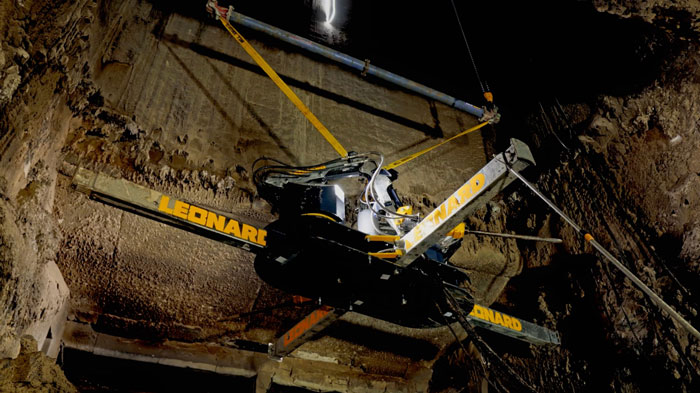
Industrial robotics and refractory services specialist Leonard has launched Descender Duo, a dual-head robotic demolition arm designed to improve safety, accelerate maintenance and reduce shutdown times in hazardous industrial environments. The system made its debut at Lisahally Power Station in Northern Ireland, removing 25 tonnes of slag material within hours.
Developed for the cement, metals, waste-to-energy and petrochemical industries, Descender Duo enables remote-controlled refractory demolition, anchor cutting and welding, and refractory spraying inside boilers, calciners and silos. Its vertical-access design eliminates the need for personnel to enter confined, high-risk spaces during these operations.
Weighing less than two tonnes, the pre-assembled system requires an access opening of just 1.2 m². Supported by an external overhead hoist, it uses electrically operated hydraulic stabilising legs to secure itself inside vessels. The robotic arm offers 360-degree rotation and is suited to vessels approximately 9 m in diameter, with its operating reach extendable through strategically positioned access points.
Equipped with two independently controlled robotic heads, Descender Duo can perform identical or different tasks simultaneously, including refractory demolition, anchor cutting and spraying. Its remote-control system incorporates live camera feeds, allowing operators to monitor operations without entering hazardous environments.
According to Leonard, the technology can deliver time savings of up to 50 per cent compared with manual methods. Its ability to operate at temperatures exceeding 100°C allows maintenance to begin as early as 24 hours after burner shutdown. An all-electric power supply further supports cleaner and more cost-efficient operations.
First Deployment Demonstrates Shutdown Efficiency
The system was first deployed at Burmeister & Wain Scandinavian Contractor’s (BWSC) Lisahally Power Station in Londonderry, Northern Ireland. The facility generates electricity from grade C waste wood, supplying approximately 40,000 homes and businesses.
Leonard and BWSC collaborated to develop a customised solution for the plant’s 26-metre furnace, where extensive external pipework created significant access challenges.
Mark Leonard, Managing Director, Leonard, said, “It required new thinking and rather than step away from the problem we were committed to solving it for the customer, with the customer. We’re relentless in our approach to tackling complex challenges, head-on. We took our years of cement plant experience, coupled with our working knowledge of the BWSC plant, and designed, engineered and tested a completely new vertical solution within just seven weeks from that initial conversation with the customer. That solution was the Descender Duo as we know it today.”
Traditionally, the furnace required a cooling period of up to 36 hours before preparatory work could begin, followed by manual slag removal using rope-access personnel. With Descender Duo, work commenced just 24 hours after shutdown, reducing downtime by up to one day.
The deployment removed 25 tonnes of slag within hours, eliminated the need for at least six workers to enter the hazardous furnace interior and saved 26 hours in the shutdown programme.
“The effectiveness exceeded expectation,” said Martin Doran, Plant Manager at Lisahally Power Station.
“When the Descender Duo concept was first discussed, we had to spend some time with the team from Leonard looking at how it was going to be moved into the furnace. Every site is different and that presented its own challenges, but nothing that the team couldn’t overcome. Once it was installed we were hugely impressed by its efficiency.”
Expanding Industrial Robotics Applications
Descender Duo joins Leonard’s existing portfolio of robotic maintenance solutions, including the Axis horizontal-access arm, Nano confined-space access arm, Charger cement mill media recharging system and Calibre cement mill media grading system.
Headquartered in Northern Ireland, Leonard provides robotic refractory demolition, installation, inspection and industrial maintenance services across the cement, metals, energy, biomass, glass and civil engineering sectors.
Formerly known as G Leonard, the company has more than 35 years of industry experience and operates across Europe, North America, the Middle East, Africa and Asia-Pacific.
The latest innovation reinforces Leonard’s focus on replacing hazardous manual processes with robotic systems that improve workforce safety, enhance operational efficiency and minimise industrial downtime.
Concrete
Martin Engineering Appoints Ashwini Khunte as India General Manager
Published
1 day agoon
October 30, 2026By
admin
Martin Engineering names Ashwini Khunte India General Manager to strengthen operations and drive growth across key bulk material handling sectors.
Pune
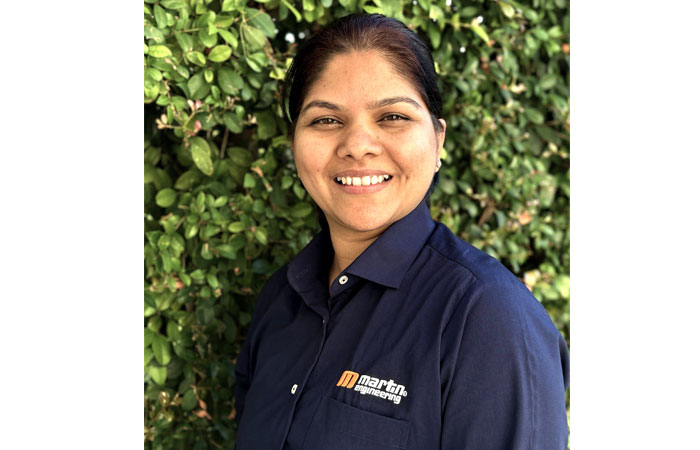
Martin Engineering, a global provider of bulk material handling solutions, has appointed Ashwini Khunte as General Manager of its India business, strengthening its leadership as the company expands its presence across the country’s cement, mining, steel, power and infrastructure sectors.
Khunte brings more than a decade of experience with Martin Engineering, having joined its Indian operations in 2013 as a Design Engineer, shortly after the company established its presence in the country in 2012.
A mechanical engineer by qualification, she spent her initial five years developing bulk material handling solutions in collaboration with the company’s operations team. During this period, she gained extensive experience addressing operational challenges in the steel, cement and coal industries. She subsequently moved into project engineering, managing major engineering, procurement and construction (EPC) and original equipment manufacturer (OEM) projects from initial enquiry to commissioning. Her responsibilities later expanded to overseeing Martin Engineering’s conveyor product portfolio in India, involving customer engagement, technical presentations and site visits across heavy industries.
In 2024, Khunte was promoted to Head of Sales & Marketing for the company’s Europe, Middle East, Africa and India (EMEAI) region. The position broadened her international market exposure and strengthened her strategic and commercial leadership capabilities.
Commenting on her appointment, Ashwini Khunte, General Manager, Martin Engineering India, said: “India represents a tremendous opportunity for Martin Engineering. The country’s continued investment in cement, mining, steel, power and infrastructure is creating increasing demand for safer, cleaner and more productive bulk material handling, and that’s exactly what we do. My priority will be to build on the strong foundations already established in India, while continuing to develop our people, strengthen customer relationships and bring practical solutions to the challenges faced by our industry.”
Robert Whetstone, Area Vice President – EMEAI, Martin Engineering, highlighted Khunte’s technical expertise, market understanding and leadership experience.
“Ashwini brings an exceptional combination of technical understanding, customer knowledge and commercial leadership. She has grown as Martin Engineering has grown, and has consistently demonstrated outstanding capability to transform her expertise into practical solutions. Her knowledge of the Indian market, together with her international experience, makes her ideally suited to lead our India business through its next stage of growth for years to come.”
Since establishing its Indian business in 2012, Martin Engineering has expanded its local workforce, manufacturing capabilities and dealership network. The company supplies conveyor products, transfer point solutions, material flow aids, training and technical support to bulk material handling industries. Khunte’s appointment positions the company to further strengthen customer relationships and expand its solutions portfolio in India’s growing industrial and infrastructure markets.
Concrete
Fornnax Wins AIRIA’s Special Export Award for Rubber Machinery in 2025-26
Published
2 weeks agoon
October 19, 2026By
admin
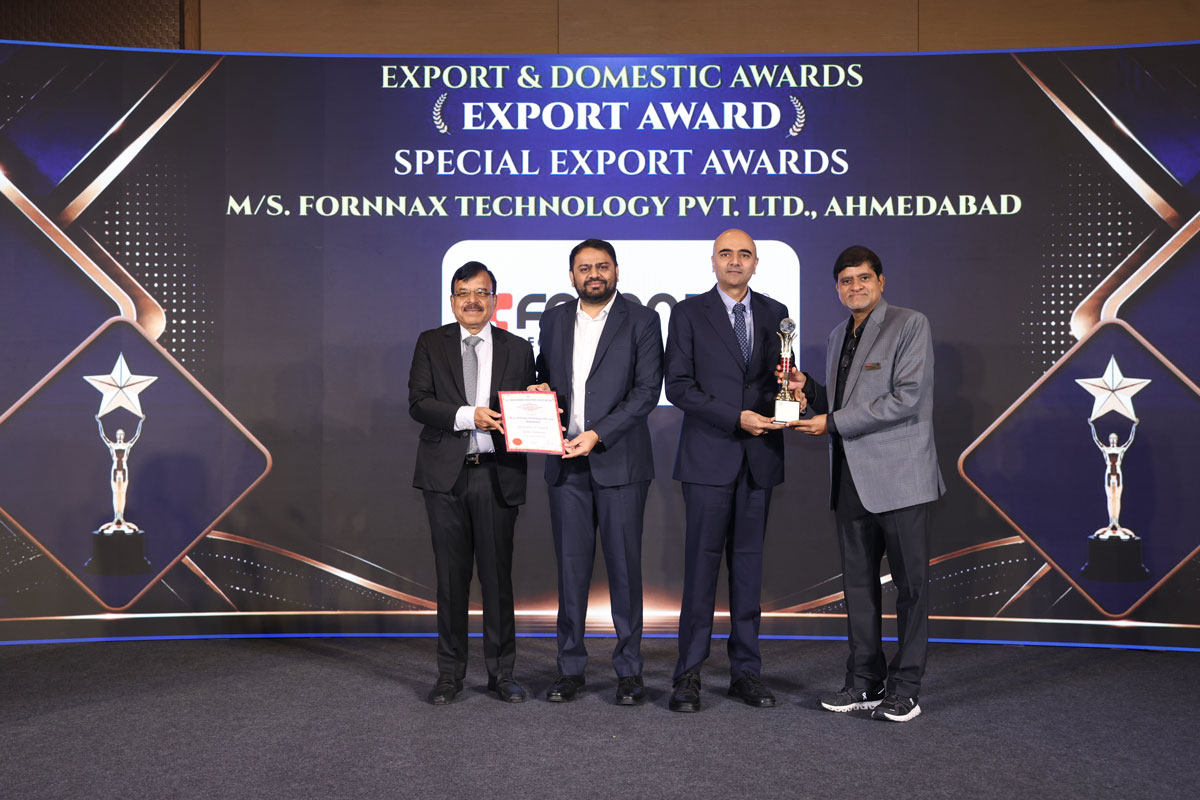
Fornnax Technology Pvt. Ltd. has been honoured with the Special Export Award – Rubber Machinery for 2025–26 by the All-India Rubber Industries Association (AIRIA), in recognition of its highest exports of tyre recycling plants to the European region.
With more than a decade of experience in India’s tyre recycling industry, Fornnax has contributed to the development of advanced recycling technologies and infrastructure. The company currently holds a 90% market share in India’s domestic tyre recycling sector, while exports account for 30% of its business, spanning markets such as Europe, Australia and the GCC.
The award marks another milestone for Fornnax, whose tyre recycling lines and advanced shredding technologies are supporting the growth of the circular economy in India and international markets.
Commenting on the recognition, Mr. Jignesh Kundaria, Founder and Director of Fornnax, said:
“This honour from AIRIA is a reflection of an incredible journey we have undertaken over the years. When we started Fornnax, there was no established recycling industry in India to follow. We chose to build for the future instead. Today, when you see India’s tyre recycling sector, it has already transformed into a dynamic, high-growth industry and we are extremely proud to have played our part in building it.”
Unlike standalone equipment suppliers, Fornnax focuses on developing complete, high-capacity recycling infrastructure. Its integrated systems combine multiple stages of shredding and size reduction to enable efficient, continuous operations. This system-level engineering approach helps recycling operators improve throughput, equipment reliability and operational consistency.
The recognition reinforces Fornnax’s commitment to developing engineering technologies that contribute to a more efficient and circular recycling ecosystem.
Looking ahead, the company aims to expand its international presence while continuing to develop advanced shredding and recycling solutions to address the growing volumes and evolving requirements of the global recycling industry.
For more information, visit: www.fornnax.com
JK Lakshmi Cement Begins Rs 110 Billion Assam Plant Project
Leonard Unveils Dual-Head Robotic Arm for Hazardous Industrial Demolition
JK Lakshmi Cement to Expand EV Fleet to 120 Vehicles by March 2027
JK Lakshmi Cement Breaks Ground on Rs 110 bn Assam Plant
Martin Engineering Appoints Ashwini Khunte as India General Manager
JK Lakshmi Cement Begins Rs 110 Billion Assam Plant Project
Leonard Unveils Dual-Head Robotic Arm for Hazardous Industrial Demolition
JK Lakshmi Cement to Expand EV Fleet to 120 Vehicles by March 2027
JK Lakshmi Cement Breaks Ground on Rs 110 bn Assam Plant