Connect with us

Economy & Market

A reliability programme

Published

on

Shares

Many plant managers and engineers never get started with a reliability programme because the task seems so challenging. This integrated three-step process includes a System Review, Historical Review and Budget Review. Each step has multiple key components that must be considered when implementing a unit specific strategy, writes Shridhar Nambi, MD, Greenesol Power Systems.

STEP-1: SYSTEM REVIEW

Age of the unit Facilities built in the 1960s and ’70s experience damage related to the obvious number of hours of operation; however, they were designed with heavier wall thickness in both tubing and header components. As a result, these units tend to have longer life expectancies than some of the newer facilities. Facilities that were built in the 1980s pushed the limits with the do more with less approach. Tubing and headers were supplied with thinner walled components, conserving costs on construction, but ultimately reducing the service life of the critical components. Modern facilities are being constructed to adapt to the thermal cycling that has become a part of the energy culture of today and are experiencing earlier than expected failures. Many of these failures are the result of exotic materials that are being used which have not been in service long enough to know the true behavior of the material under the thermal and mechanical stresses of cycling a unit.

Design of the unit

Some boiler units clearly have inherent design flaws. Various design flaws include the placement of the burners in the furnace, how the tubing/headers are supported and/or the use of water guns or soot blowers. Understanding the inherent design flaws of a specific unit will help a company become proactive in their approach to preventative maintenance and ascertain areas to target for remaining useful life determinations.

Materials

Understanding the materials specific to a unit and recognising the inherent concerns of those materials (weld ability, resistance to elevated temperatures and pressure, heat transfer ability) will enable facilities to be more progressive in their pursuit to preventing service related damage.

STEP – 2: FAILURE ANALYSIS

The ability to identify and track the locations of a tube failure and its root cause is essential to comprehensively reducing forced outages. Once the root cause of the failure is properly identified, a long term plan can be implemented to ensure the failures/leaks have been rectified. Proper and current documentation is critical to managing failures and leaks and can be done in real-time with the use of a data management program such as the 4-SYTE System Strategy. Most common causes of failures have been seen to be stress rupture, water-side corrosion, fire-side corrosion, erosion, fatigue, The most likely failures can occur in water wall, economiser and superheater or reheater tube circuits.

Primary failure mechanisms are the processes that degrade the tube and produce a failure. Each failure mechanism may include several circumstances such as poor fuel quality, equipment malfunction or improper operation. Each would be considered a root cause since they have created the conditions for a failure mechanism to exist. Verification of the root cause is a vital activity in a failure investigation and is necessary to assure the correction of a failure problem. Secondary failure mechanisms such as adjacent tube washing or adjacent tube impact can produce a tube failure and are always a concern after an initial failure.

Modifications

At times inherent deficiencies of a unit design will be identified. As a result, the unit may undergo design modifications which can resolve the original design flaw concerns, but ultimately can create other issues such as steam flow restrictions and temperature excursions etc. Additionally, as part of the clean air initiatives currently underway, many units are being modified to burn alternative fuels. Recognising what modifications have transpired in a specific unit can lend perspective into potential side effects which may be occurring as a result of those modifications.

Replacements

As an aging plant begins to experience repeated failures, sections of tubing and other critical components will require replacement. These replaced sections will have fewer hours of operation and therefore will not need to be considered for inspection on the same schedule as original equipment within the unit. This observation is particularly unit specific and is a major basis for why a cookie-cutter approach to inspection/maintenance is ineffective and can lead to squandering of precious budget funding inspecting equipment that has not yet reached a point in its life cycle to require examination.

Operational changes

Most power generation facilities were designed on the assumption that they would be operated in a base-load mode or infrequently cycled. However, in response to local power market conditions and the terms of their power purchase agreements, many plants are now cycling their units more frequently than designers had intended. This results in greater thermal stresses, more pressure cycles, and therefore more cyclic fatigue damage and overall faster wear and degradation to the critical components due to both mechanical and corrosion processes.

As a general comment, cycling service has an adverse effect on the life expectancy of a unit. This is due to the fact that cycling results in fatigue loading (alternating cyclic stresses); whereas base load operation results in creep (sustained stresses). Depending on the severity of the stresses, and the number of cycles, fatigue loading can result in cracking, particularly at restraint locations.

Upsets

When a unit trips and is brought offline suddenly or experiences a water hammer event, an immense amount of thermal and mechanical fatigue can be introduced to the involved components. It is beneficial to understand if a unit has experienced any major upsets during its life cycle in order to determine if evaluating areas that wouldn’t normally come under the microscope is necessary. This is similarly unit specific and would be comparable to the considerations you would evaluate if you were purchasing a used car. Just as the purchaser would investigate any past maintenance troubles or collisions of the vehicle prior to purchasing, plant managers must consider the history of their units prior to determining the inspection prioritisation of their critical components.

Operational training

Often, the operators of units are responding to directives from a senior authority to bring the unit online or offline to meet the load requirements and capacity. Understanding the effects of ramping constraints in both unit commitment and economic dispatch is imperative. Operators can have a tremendous effect on the life expectancy of a unit simply by recognising the effects of proper ramp rate execution. Operators have direct control of the temperature of the unit; therefore proper unit specific training can add years to the life of the unit.

STEP – 3: DETERMINING REMAINING USEFUL LIFE

Determining the remaining useful life of critical components/tubing will allow for proper budgeting for replacements. Additionally, as systems begin to reach the end of their life cycle, more failures will inevitably begin to occur. Understanding when to cut your losses and replace sections will improve reliability. Many factors can affect the life expectancy of key components in a boiler including water chemistry, fuel type and quality, thermal cycles, materials, temperature excursions, inadequate heat transfer and flow rate. Understanding key factors associated with a specific unit that can ultimately contribute to shortening the life expectancy is paramount to predicting remaining useful life of critical components.

Prioritisation: inspection, repairs, replacement

The ability and necessity to develop a plan of action that includes prioritisation for inspection, repairs and/or replacements established from the unit specific design and historical operation will dramatically improve the budgetary process. Allotted funds will be used in an effective manner and outage planners will have the ability to provide back- up documentation required to warrant the necessity for such funding during the company fiscal budget planning process.


Continue Reading
Click to comment

Leave a Reply

Your email address will not be published. Required fields are marked *

Concrete

Wonder Cement appoints Mahesh Singh as VP Corporate Brand Communication 

Published

on

By

Shares

Singh brings 20+ years of brand and marketing experience, and will lead integrated corporate brand communication initiatives at Wonder Cement 

New Delhi

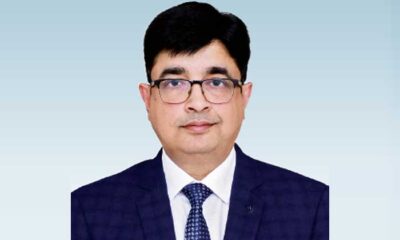
Wonder Cement, a leading cement manufacturer, has appointed Mahesh Singh as Vice President – Corporate Brand Communication. In his new role, he will oversee corporate brand strategy and communication, including digital and performance marketing, public relations, trade, events, exhibitions, sports and experiential marketing. 

Singh brings over two decades of experience across marketing and communications, with roles spanning the automotive industry, agencies and entrepreneurship. He spent more than a decade with Honda Motorcycle & Scooter India, working across integrated communication, media, digital, retail and consumer engagement. His stint also included helping build the company’s digital marketing capabilities. 

He moved to dentsu X India as Vice President – Strategy & Planning, working across categories such as automotive, auto components, electric vehicles, FMCG, consumer electronics, BFSI, apparel and brand consulting. His responsibilities included media and marketing strategy, product launches, content, performance marketing and consumer activations. 

Singh subsequently took an entrepreneurial route with Radiant Brands before joining Shriram Ltd (SPR Autotech) as Head – Marketing & Communications. There, his remit included brand and corporate strategy, communications, PR and ORM, retail identity, loyalty programmes and events. 

At Wonder Cement, Singh will be responsible for bringing together the company’s corporate brand communication initiatives across digital, performance marketing, PR, trade, sports and experiential platforms. The role will focus on creating an integrated approach to communication across consumers, trade partners and other key stakeholders. 

The appointment brings to Wonder Cement a marketer whose career has spanned the brand, agency and entrepreneurial sides of the communications ecosystem. 

Wonder Cement, part of the RK Group, is a cement manufacturer with roots in Rajasthan and a focus on quality, trust and transparency. The company has grown to six manufacturing plants, and a cement capacity of 21.5 MTPA. With more than 2,000 employees and a network of over 5,000 dealers, its operations span manufacturing, distribution and customer engagement, with a focus on consistent product quality and efficient execution. 

Continue Reading

Concrete

JSW Cement commissions additional 1 MTPA grinding unit at Nagaur

Published

on

By

Shares

With this commissioning, JSW Cement’s total cement grinding capacity has increased to 25.10 MTPA, 
Mumbai

JSW Cement, one of India’s leading green cement producers and part of the diversified JSW Group, today announced the successful commissioning of an additional 1.00 MTPA cement grinding unit at Nagaur, Rajasthan. The commissioning marks another significant milestone in the Company’s growth strategy.

With this commissioning, JSW Cement’s total cement grinding capacity has increased to 25.10 MTPA, while its total clinker manufacturing capacity, including clinker capacity at its joint venture, JSW Cement FZC, stands at 9.74 MTPA.

JSW Cement had commenced operations in North India in March 2026 with the Nagaur Integrated Plant, comprising a 3.30 MTPA clinkerisation unit and 2.50 MTPA cement grinding unit. With the commissioning of the additional 1.00 MTPA cement grinding unit, the plant’s total cement grinding capacity has increased to 3.50 MTPA, enhancing the company’s ability to cater to the growing cement demand across Rajasthan, Haryana, Punjab and the National Capital Region (NCR). The expansion has been funded through a strategic mix of equity and long-term debt.

During the quarter ended 30th September 2026, JSW Cement has also commissioned the Alternate Fuel Handling System and the Waste Heat Recovery system (WHRS) at the Nagaur Integrated Plant.

Nilesh Narwekar, CEO, JSW Cement, said: “The commissioning of additional 1.00 MTPA grinding capacity at Nagaur is a key strategic priority for us and will accelerate JSW Cement’s expansion into North India. We look forward to servicing the growing needs of the region and contributing to the economic growth of Rajasthan, Haryana, Punjab and the NCR area. I am delighted to share that the company has commissioned this grinding unit within the expected timeline, showcasing our project execution capabilities. Further, the Alternate Fuel Handling System and the Waste Heat Recovery system (WHRS) are expected to substantially reduce our production costs going forward.”

Continue Reading

Concrete

UltraTech becomes first Indian cement firm to cross 2 GW green energy

Published

on

By

Shares

UltraTech Cement has crossed 2 GW of captive green energy capacity, with renewables and waste heat recovery meeting 48 per cent of its power needs.

Mumbai

UltraTech Cement Limited has surpassed 2 GW of installed green energy capacity for captive use, becoming the first cement company in India to achieve the milestone. The Aditya Birla Group company commissioned 116.55 MW of wind capacity at its Inter-State Transmission System-connected wind-solar hybrid project in Barmer, Rajasthan, along with 10 MW of Waste Heat Recovery System capacity at Sarlanagar Cement Works in Karnataka.

With these additions, UltraTech’s cumulative installed green energy capacity has reached 2,024 MW. This includes 1,580 MW of renewable energy capacity and 444 MW of waste heat recovery capacity, together meeting around 48 per cent of the company’s current power requirements.

The company said the milestone reflects the progress of its long-term energy transition strategy. In FY27 so far, nearly one-third of UltraTech’s 76 manufacturing units in India have maintained green energy utilisation above 50 per cent of their electricity requirements, while five units have crossed 95 per cent.

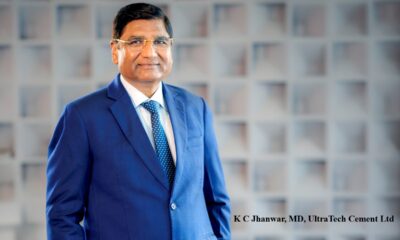
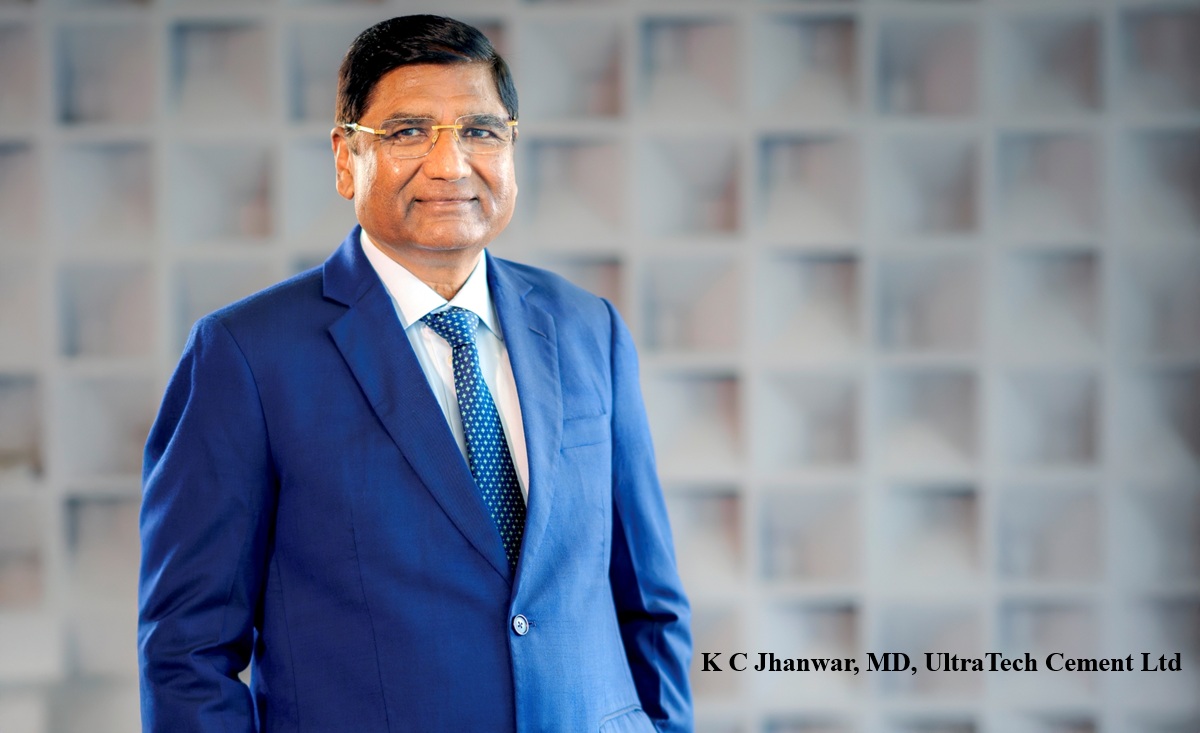
K C Jhanwar, Managing Director, UltraTech Cement Limited, said, “Crossing the 2 GW green energy milestone is the result of a strategy we have pursued consistently over the past decade. Cement is an energy-intensive, hard-to-abate sector, and showing that reliability and growth can go hand in hand with a rapid shift to green energy sets a benchmark for the industry. With nearly half of our power needs now met through green energy, we are significantly less exposed to fossil fuel supply constraints and power price volatility. As we scale up renewables, waste heat recovery and battery storage across our operations, we are building an energy foundation for stable, long-term growth.”

UltraTech commissioned 430 MW of green energy capacity in FY26 and continues to expand its renewable energy and waste heat recovery portfolio.

The company is also progressively integrating Battery Energy Storage Systems across its operations to improve renewable energy utilisation and supply reliability.

In 2025, UltraTech operationalised what it described as India’s first on-site hybrid round-the-clock renewable energy project at Sewagram Cement Works in Gujarat. The project combines solar, wind and battery storage.

As part of its decarbonisation strategy, UltraTech said it has not invested in new captive thermal power capacity for either greenfield projects or brownfield expansions at its integrated units for more than a decade.

The company said its expanding green energy portfolio is helping reduce dependence on conventional grid electricity and fossil fuel-based power, while lowering exposure to fluctuations in coal and electricity prices.

UltraTech aims to increase green energy’s share in its total power mix to 85 per cent by 2030. As a member of RE100, it has also committed to meeting 100 per cent of its electricity requirement through renewable sources by 2050.

UltraTech Cement, the cement flagship of the Aditya Birla Group, has a total grey cement capacity of 210.1 MTPA and white cement and putty capacity of 3.5 MTPA. The company is also a signatory to the GCCA Climate Ambition 2050 and has committed to the GCCA Net Zero Concrete roadmap.

Continue Reading

Video Thumbnail
▶

    SIGN-UP FOR OUR GENERAL NEWSLETTER

    Trending News

    SUBSCRIBE TO THE NEWSLETTER


    Don't miss out on valuable insights and opportunities to connect with like minded professionals.


      This will close in 0 seconds