Connect with us

Concrete

Core sectors output remain negative

Published

on

Shares

In December 2020, the eight core sectors output growth remained in a negative trajectory for the 10th successive month with a contraction of 1.3 per cent during the month compared with negative growth of 1.3 per cent during November 2020 and 3 per centin December 2019. There has been an upward revision in the core sector output growth in November from -2.6 per cent to -1.4 per cent.

Barring coal and electricity, all other components of the core index continue to show de-growth. The cumulative index of eight core sector during April ??December 2020 contracted by 10.1 per cent indicative of the adverse impact on industrial production during the lockdown period compared with the 0.6 per cent growth in the corresponding period of last year. Barring fertiliser, there was a broad based contraction across sectors during this period. Double digit decline in output during this period is recorded in natural gas, refinery, steel and cement.

Key highlights:

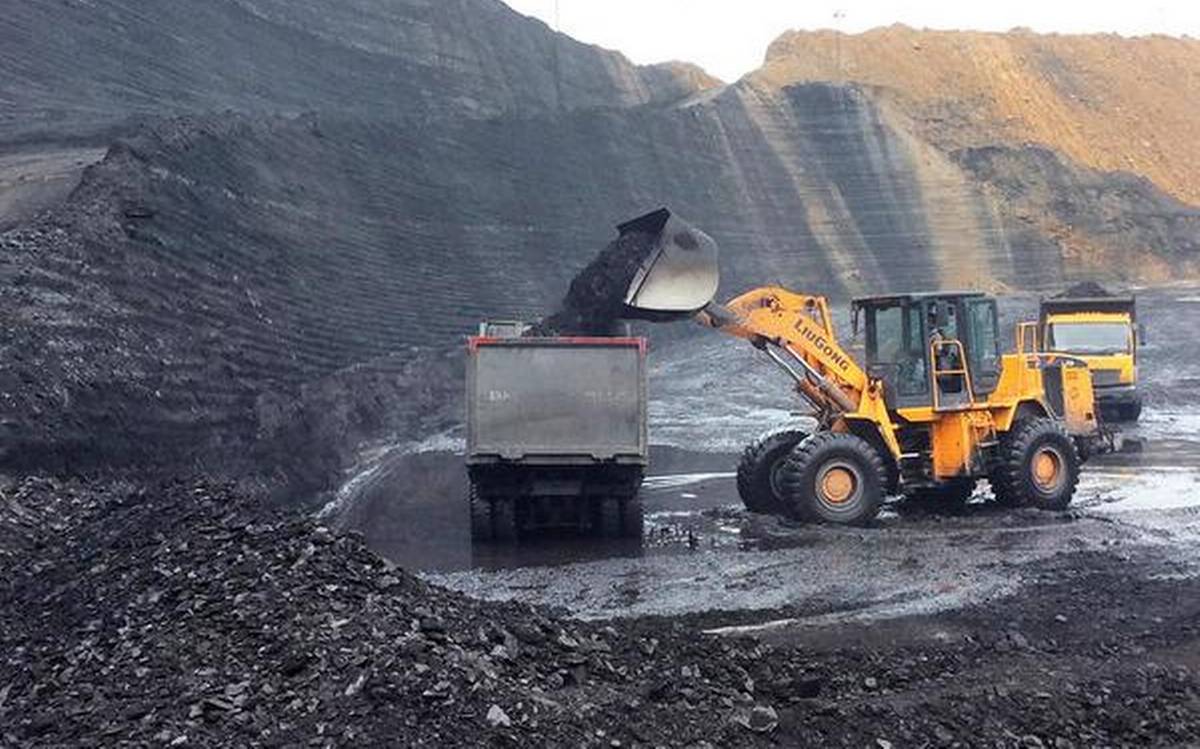
  • Coal production growth grew by 2.2 per cent in December 2020, which is the slowest in the last 5 months. Coal production has recorded positive growth which indicates revival in demand for power post easing in lockdown and resumption of industrial activities.

  • Crude Oil production has fallen by 3.6 per cent in December 2020 due to COVID-19 restrictions/lockdown, nonavailability of drilling equipment and less than planned contribution from workover wells, drilling wells and old wells. The negative growth in crude oil production has sustained for nearly 3 years.

  • Natural gas production in the country fell by 7.1 per cent in December largely due to a fall in output of western offshore fields of private/JV companies. This is the 19th consecutive month of de-growth in natural gas production.

  • Refinery production has fallen by 2.7 per cent and fall in production has been narrowing with each passing month with the easing of restrictions and as the economy has been slowly reflating. There has also been an increase in refinery utilisation during December ??0 which is now 101 per cent and this can be ascribed to the increase in demand for petroleum products as there is an uptick in economic activities. The month of December 2020 saw growth in consumption of LPG 7.4 per cent, Petrol (MS) 9.3 per cent, Bitumen 20.9 per cent, Lubes & Greases 8.5 per cent, Light Diesel Oil (LDO) 87.4 per cent and products categorised under ??thers??8.4 per cent compared with December 19.

  • Fertilizer production has fallen by 2.9 per cent due to a high base effect and as the rabi sowing season almost comes to an end.

  • Output of steel sector has contracted for the second consecutive month by 2.7 per cent in December after registering three consecutive month of positive growth during Aug-October 2020. Low demand from automobile sector and high raw material costs and relatively muted construction activities in parts of the country must have weighed on the steel production.

  • Cement production fell to a 4-month low falling by 9.7 per cent in December 2020 compared with -7.3 per cent in November 2020 and 5.4 per cent in December 2019. The fall can be ascribed to muted construction activities.

  • Electricity production grew by 4.2 per cent in December 2020 compared with 3.5 per cent in November 2020 on account of further normalisation of economic activity.

CARE Ratings??View

Going ahead, the growth in the eight core sectors will be contingent upon the normalisation of economic activities and high base effect. The growth in industrial production is likely to be marginally positive but will be contingent on the growth in consumer durables segment.

Courtesy: CARE Ratings

ABOUT THE AUTHOR:

The article is authored by Sushant Hede, Associate Economist with CARE Ratings. He can be contacted at: sushant.hede@careratings.com | +91-22-6837 4348.

Disclaimer: This report is prepared by CARE Ratings Limited. CARE Ratings has taken utmost care to ensure accuracy and objectivity while developing this report based on information available in public domain. However, neither the accuracy nor completeness of information contained in this report is guaranteed. CARE Ratings is not responsible for any errors or omissions in analysis / inferences / views or for results obtained from the use of information contained in this report and especially states that CARE Ratings has no financial liability whatsoever to the user of this report

Continue Reading
Click to comment

Leave a Reply

Your email address will not be published. Required fields are marked *

Concrete

30-Day Traffic Diversion In Place For CC Road Works In Madhapur

Diversions in place from May 16 for cement concrete road works

Published

on

By

Shares

The Cyberabad Traffic Police issued a traffic advisory as road works begin for the laying of a cement concrete (CC) road from Jaya Shankar Statue to RRR Restaurant at Parvathnagar in Madhapur limits. The advisory indicated that traffic diversions will be in place for 30 days from May 16 to ensure the smooth flow of vehicles and to minimise congestion on the affected stretch. The measure aims to balance uninterrupted construction activity with the movement needs of commuters.

Traffic moving from Toddy Compound towards Parvathnagar village will be diverted at Parvathnagar junction towards Sunnam Cheruvu and the 100 feet road. Local motorists and public transport operators have been advised to follow the diversionary route as directed by traffic personnel on duty. Alternate routes and signage have been planned to mitigate delays and to manage peak hour congestion.

Police officials said the diversion had been planned to facilitate uninterrupted road works while maintaining traffic movement in the area. Commuters were urged to plan their travel accordingly and to cooperate with traffic staff managing the stretch. Authorities indicated that enforcement of diversions would be active and that violations could attract penalties.

The 30 day schedule is intended to allow contractors to complete the laying and curing phases with minimal interruption to vehicular flow. Residents and businesses in adjacent localities have been advised to factor the diversion into deliveries and travel plans. The traffic police promised continuous monitoring of the works and the operational diversions and emphasised that temporary inconvenience was necessary for longer term improvement of the road network. Traffic personnel will be stationed at key junctions and additional signage and temporary markings will be displayed to guide motorists and pedestrians through the revised alignments while public transport services will follow the diversion where feasible and operators have been asked to adjust timetables to minimise disruption.

Continue Reading

Concrete

HeidelbergCement India Receives Consent For Khandwa Grinding Unit

Consent granted by Madhya Pradesh Pollution Control Board

Published

on

By

Shares

HeidelbergCement India (HeidelbergCement India) has received regulatory consent to establish a cement blending and grinding unit at Village Dongaliya, Tehsil Punasa, District Khandwa in Madhya Pradesh. The consent was granted by the Madhya Pradesh Pollution Control Board under the Water (Prevention & Control of Pollution) Act, 1974 and the Air (Prevention & Control of Pollution) Act, 1981 and is dated 17 May 2026. The company disclosed the development in a filing made under Regulation 30 of the SEBI (Listing Obligations and Disclosure Requirements) Regulations, 2015.

The project plan envisages procurement of long term availability of fly ash and the allotment of land on lease for setting up the unit. The proposed facility is described as a blending and grinding installation which will process cementitious materials sourced from nearby operations and suppliers. Company filings state the measures required to secure raw material logistics and statutory compliance before commencing construction.

The addition of a grinding unit in Khandwa is intended to strengthen regional supply and improve logistical efficiency by reducing haulage distances for finished product. The unit is expected to complement existing capacities in central India and to offer flexibility in product mix through blending operations. The reliance on fly ash as a supplementary cementitious material will necessitate long term supply agreements with thermal power producers and coordination with waste utilisation policies.

The disclosure to the regulator and to the stock exchanges follows standard corporate governance practice and aims to keep investors apprised of capital expenditure initiatives. The company indicated that subsequent permits and clearances would be sought in accordance with applicable environmental and land use rules. The project is presented as part of HeidelbergCement India’s broader strategy to optimise capacity distribution and to respond to regional demand dynamics.

Continue Reading

Concrete

PROMECON introduces infrared-based tertiary air measurement system for cement kilns

Published

on

By

Shares

The new solution promisescontinuous, real-time tertiary air flow measurement in cement plant operations.

PROMECON GmbH has launched the McON IR Compact, an infrared-based measuring system designed to deliver continuous, real-time tertiary air flow measurement in cement plant operations. The system addresses the longstanding process control challenge of accurate tertiary air monitoring under extreme kiln conditions. It uses patented infrared time-of-flight measurement technology that operates without calibration or maintenance intervention.

Precise tertiary air measurement is a critical requirement for stable rotary kiln operation. The McON IR Compact is engineered to function reliably at temperatures up to 1,200°C and in the presence of abrasive clinker dust. Its vector-based digital measurement architecture ensures that readings remain unaffected by swirl, dust deposits or drift. Due to these conditions conventional measurement systems in pyroprocess environments are often compromised.

The system is fully non-intrusive and requires no K-factors, recalibration or periodic readjustment, enabling years of uninterrupted operation. This design directly supports plant availability and reduces the maintenance overhead typically associated with process instrumentation in high-temperature zones.

PROMECON has deployed the McON IR Compact at multiple cement facilities, including Warta Cement in Poland. Plant operators report that the system has aided in identifying blockages, optimising purging cycles for gas burners, and supplying accurate flow data for AI-based process optimisation programmes. The practical outcomes include more stable kiln operation, improved process control, and earlier detection of process disturbances.

On the energy side, real-time tertiary air data enables reduction in induced draft fan load and helps flatten process oscillations across the pyroprocess. This translates to lower fuel and energy consumption, fewer unplanned shutdowns, and a measurable reduction in NOx peaks. This directly reflects on the downstream cost implications for plants operating SCR or SNCR systems for emissions compliance.

Continue Reading

Video Thumbnail

    SIGN-UP FOR OUR GENERAL NEWSLETTER


    Trending News