

Concrete
Challenges of Indian aggregate industry


Aggregate Industry
In last month?? issue, we have seen ??verview of Aggregate Industry??and we understand globally, India is the largest aggregates market after China, it continues to grow fast and is structurally transforming. The overall aggregate market is growing at a higher CAGR than cement over the past five years and should continue the same trend going forward. Now in this article, we will see the challenges faced by responsible Indian aggregate industry.
In India, at present regulatory framework for minor minerals like aggregates is at nascent stage. These rules are suitable for small scale players. Enforcement of all statutory compliance are not uniform. There are many challenges for organised players to enter into long-term commercial aggregates business. Following are challenges for organised players:
Obtaining reserves: The biggest challenge for setting up an aggregate business is to acquire appropriate reserves. Prerequisite for appropriate reserves:
1. Size of quarry: Considering production of five lakh tonnes p.a. over a time frame of 15 to 20 years, one would require a land parcel of the size of 30 to 50 acres, which is compliant to EC (Environment Clearance) rules. However, acquisition of land parcel of this size is difficult as usually there could be multiple owners.
2. Quality: Technical properties such as specific gravity, water absorption, crushing value etc. shall be superior or at least in-line with locally available aggregates.
3. Logistics: Logistics cost being a dominant factor, it is very critical to be in a competitive distance from the market.
It is noticed that in many states, corporates are not allowed to acquire an agricultural land unless the same has been converted to N.A. (non agriculture), which can be a time consuming and costly activity.
Licensing and permissions: As mining of minor minerals is a state subject, each state has different rules and regulations, hence mining lease permit procedure differ. Mining leases are issued in two ways:
-
Mining lease on revenue/Government land: Issue of this leases were common trend in majority of states till 2014, Post 2014, both Central as well as State Governments have restricted issue of leases on revenue land and introduced auctioning of mining leases to bring transparency.
-
Mining lease on private land: Issue of mining leases on private land is now common practice provided selected land shall be within the guidelines as per applicable rules.
Typically mining leases are issued for a period from 5 to 10 years depending on the approving authority. In case of specific requirements of government projects like highways, dams etc., mining lease is issued for required period. Subsequent to above, there are series of permissions to be obtained in a sequence, as rules are not very clear and are left to interpretation, whole procedure becomes tedious and time consuming.
Logistics: Logistics is an important cost element in arriving at selling price of aggregates. This depends to a large extent on size of vehicles available in the market along with distance of market from the crusher. Since safe load carriage is not uniformly implemented by the Authorities, some irresponsible players by overloading trucks reduce their transport cost, thus getting undue advantage.
Local issues/CSR: Quarry and mining business across the world encounter local issues and the same is true for India. The only difference in our country is the fact that local issues are more varied than elsewhere.
-
Habitation close to the quarry ??as per current laws applicable to minor minerals a quarry can be set up within prescribed distance from habitation. This leads to a situation where routine local complaints arise.
-
Majority times access/ingress to quarry passes through villages and there are chances of restrictions on vehicle movement by villagers.
Drilling and blasting practices: Majority of the places in India, have restrictions of using large diameter holes for blasting due to local norms. At such places, jack-hammer drilling with 25 mm dia holes is practised which is difficult to manage for corporate players due to major compliance of labour laws, implementing and following mines act /rules and Health and Safety Compliance (HSE).
Competition from local/irresponsible players: As aggregates market in India is fragmented with more than 12,000 family businesses having small quarries and low capacity plants, dominated by local players, it is a challenge to compete with these players in terms of price. In many markets the competition is from proprietary players, who have small plants and work on very thin budgets by non-compliance with laws including labour laws, usually offer lower prices.
The irresponsible players being major competitors and as they indulge in following practices:
-
Irresponsible way of business ??Evasion of royalty/GST
-
Adopting inadequate HSE standards
-
Low on compliance
-
Overloading during aggregates transportation
This makes it difficult for responsible players to compete.
Scarcity of skilled manpower: Skilled manpower is not easily available for this industry as most of the qualified miners, engineers prefer to work for major mineral quarries.
In spite of above challenges, the aggregate industry looks attractive. As captured earlier in the reports, we estimate the growth of aggregates industry in double digits. Non availability of high quality fine aggregates and restriction on natural sand dredging will open an opportunity for manufactured concrete/plaster sand.
Compliance environment is improving and is now becoming more suitable for corporates /responsible players to enter this industry. With Government?? focus on complex infrastructure projects such as metro railway, trans harbour link, bullet train, etc., the durability of the structure becoming a more crucial parameter, superior quality aggregates would be the requirement, which should suit the responsible players.
ABOUT THE AUTHOR:
Sanjay Nikam holds a degree in Mechanical Engineering and a post graduate diploma in management. Has more than 20 years of experience in the field of ready-mixed concrete including aggregates. He has extensive exposure to international aggregate business, and presently heads a consultancy organisation since 2016. He can be reached at: suru0913@gmail.com.

Concrete
UltraTech Cement Expands in Andhra Pradesh with Rs. 26.5 bn
Petnikota plant adds 3.6 MTPA cement dispatch capacity
Concrete
Nuvoco reports 13.5% revenue growth in Q2 FY27
Cement sales rose 9% to 4.7 MMT, while EBITDA increased 11%.

Concrete
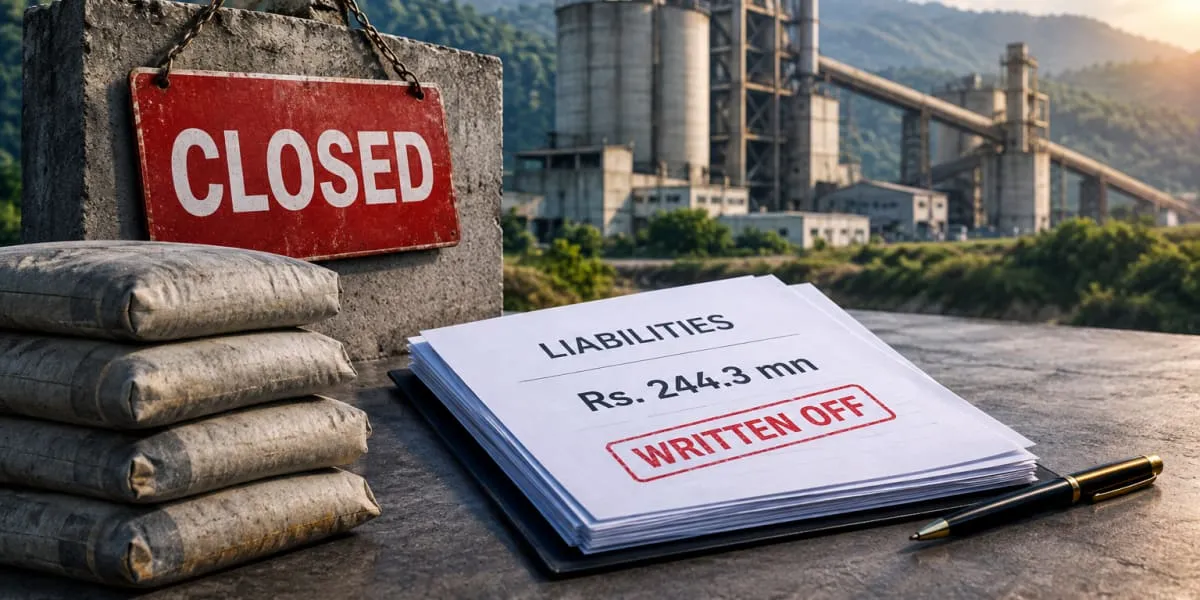
Meghalaya Cabinet Approves MCCL Closure, Writes Off Rs. 244.3 mn
Cabinet approves winding up of state-owned cement company


UltraTech Cement Expands in Andhra Pradesh with Rs. 26.5 bn

Nuvoco reports 13.5% revenue growth in Q2 FY27

Meghalaya Cabinet Approves MCCL Closure, Writes Off Rs. 244.3 mn

Fornnax Wins AIRIA’s Special Export Award for Rubber Machinery in 2025-26

Cement Prices Likely to Rise Rs. 10-15 per Bag from Mid-October
UltraTech Cement Expands in Andhra Pradesh with Rs. 26.5 bn
Nuvoco reports 13.5% revenue growth in Q2 FY27
Meghalaya Cabinet Approves MCCL Closure, Writes Off Rs. 244.3 mn
Fornnax Wins AIRIA’s Special Export Award for Rubber Machinery in 2025-26
Cement Prices Likely to Rise Rs. 10-15 per Bag from Mid-October
-

 Concrete4 weeks ago
JSW Cement Receives Rs. 2.3 bn GST Demand Notice
-

 Concrete3 weeks ago
Andhra Pradesh Clears Rs. 30 bn My Home Cement Plant
-
 Concrete4 weeks ago
Montra Electric, Wonder Cement Deploy 250-Vehicle EV Fleet
-
 Concrete3 weeks ago
Cement Prices Rise Rs. 7 per Bag in September; October Hikes Expected