Connect with us

Concrete

SPECTRAFLOW, now in India

Published

on

Shares

Cross belt analysers have been gaining popularity over years especially for the raw material analysis that goes for raw meal preparations. This leads to consistency of raw meal before clinkerisation takes place.

Ramco Cements, an independent Indian group, ordered a Crossbelt and Airslide analyzer from SpectraFlow analytics, for their new integrated plant at Kalvatala, to optimize the stability of their raw meal.

Ramco Cements Limited, founded in 1961, is a reputed cement manufacturer in India, headquartered in Chennai. Ramco Cements produces superior quality cement at their state-of-the art facilities including integrated cement plants and grinding units. The company is the fifth largest cement manufacturer in India and also produces Ready Mix Concrete and Dry Mortar products and operates one of the largest wind farms in the country.

About Ramco Cements Limited, Kalvatala plant:

Greenfield integrated cement plant is being setup at Kalvatala, Kolimigundla Mandal, Kurnool District. The foundation stone was laid in December 2018 and the plant shall be operational in first quarter of 2021. The project will include a Waste Heat Recovery System and a Thermal Power Plant.

FLS was chosen as the main equipment supplier and Ramco Project Team looked after specialized components themselves and choose SpectraFlow Analytics Crossbelt Analyzer for their stockpile and pre-blending management and SpectraFlow Airslide Analyzer for the raw meal optimization of their two raw mills.

SpectraFlow Installation for Quarry/Stockpile Optimization:

The SpectraFlow Crossbelt Analyzer is the online analyzer to be able to measure raw materials on belt conveyors. As raw materials from the quarry are processed through a crusher the raw material on the conveyor belt is statistically homogeneous and therefore the analytical results of the SpectraFlow Crossbelt Analyzer are accurate.

By using SpectraFlow Crossbelt analyzer and a site specific blending strategy at Kavalatala the high variation in the local raw materials shall be balanced out to increase consistency of the stockpile quality.

Summarized benefits are:

– No need of sampling. Sampling from conveyor belts is unrepresentative and slow for process optimization. Additionally, sampling is very work intensive regarding operation and maintenance.

– The analyzer together with a Pre-Blending control software from RAMCO SYSTEMS is fully automating the feed from the hoppers. The analyzer delivers the analytical results and according the setpoint the software is adjusting the feeders into the mixing stage

– The analyzer together with a Pre-Blending control software is informing the quarry/crusher operators of the current composition of the stockpile and accordingly the trucks can be coordinated to reach the setpoint of the stockpile.

– Stockpile quality will be homogeneous and on setpoint. That results in stable and low additive consumption at the raw mill.

– Stable feed from the stockpile leads to stable raw mill operation and fine raw meal/clinker quality.

SpectraFlow Installation for Raw Mill Optimization:

The SpectraFlow Airslide Analyzer is the online analyzer to be able to measure raw materials in airslides. As raw materials in airslides are very homogeneous and dry the analytical results of the SpectraFlow Airslide Analyzer are very accurate and based on these accurate results the raw mix control software can optimize the weight feeders before the raw mill in real time every minute. This results in very low LSF STDEV without the need of extensive sampling and laboratory efforts.

Kalvatala operates 2 Roller Press raw. The raw meal will feed to a joint airslide where the SpectraFlow Airslide analyzer will measure.

For the control of the weight feeders at the 2 raw mills Ramco will use control software from RAMCO SYSTEMS.

By using SpectraFlow an increase in the raw meal homogeneity will be achieved.

Summarized benefits are:

– Two raw mills can be controlled by one online analyzer.

– No need of intensive sampling. No automated sample transport system, no automated laboratory required.

– High cost reduction due to reduced laboratory usage (CAPEX, OPEX, man power,??

– The analyzer together with the control software is fully automating the raw material grinding. The analyzer delivers the analytical results and according the setpoint the software is adjusting the weight feeders of the additive bins.

– Adjustment of the weight feeders in real time every minute. No time delay due to sampling, sample preparation, ??/p>

– Lower LSF STDEV/better and more consistent raw mill quality


RAMCO SYSTEMS

SpectraFlow order

This SpectraFlow order is the 39th order for the Cement Industry and the 1st installation in India. This order raises the installed based in India to 2 analyzers (1 Crossbelt & 1 Airslide) and worldwide to 56 analyzers (31 Crossbelt & 25 Airslide).

SpectraFlow Analytics Ltd. Switzerland are the experts in providing online analysis for the cement and minerals industry without any radioactive sources nor neutron generators. The NIR technology used for the SpectraFlow Analyzers is not requiring any permits or licenses and there are no restrictions in buying, importing or maintaining the analyzers. This results in very low operating costs and high availability of the analyzers combined with highly accurate measurement results.

For further information, contact: Vijay Kumar Vemuri, Managing Partner, SPV Engineers, 2242, BHEL MIG,

Phase-I, Serilingampally, Hyderabad – 502032

M no. +91 8885744161, Email:vk.vemuri@spvengineers.com

Continue Reading
Click to comment

Leave a Reply

Your email address will not be published. Required fields are marked *

Concrete

Our strategy is to establish reliable local partnerships

Published

on

By

Shares

Jean-Jacques Bois, President, Nanolike, discusses how real-time data is reshaping cement delivery planning and fleet performance.

As cement producers look to extract efficiency gains beyond the plant gate, real-time visibility and data-driven logistics are becoming critical levers of competitiveness. In this interview with Jean-Jacques Bois, President, Nanolike, we discover how the company is helping cement brands optimise delivery planning by digitally connecting RMC silos, improving fleet utilisation and reducing overall logistics costs.

How does SiloConnect enable cement plants to optimise delivery planning and logistics in real time?
In simple terms, SiloConnect is a solution developed to help cement suppliers optimise their logistics by connecting RMC silos in real time, ensuring that the right cement is delivered at the right time and to the right location. The core objective is to provide real-time visibility of silo levels at RMC plants, allowing cement producers to better plan deliveries.
SiloConnect connects all the silos of RMC plants in real time and transmits this data remotely to the logistics teams of cement suppliers. With this information, they can decide when to dispatch trucks, how to prioritise customers, and how to optimise fleet utilisation. The biggest savings we see today are in logistics efficiency. Our customers are able to sell and ship more cement using the same fleet. This is achieved by increasing truck rotation, optimising delivery routes, and ultimately delivering the same volumes at a lower overall logistics cost.
Additionally, SiloConnect is designed as an open platform. It offers multiple connectors that allow data to be transmitted directly to third-party ERP systems. For example, it can integrate seamlessly with SAP or other major ERP platforms, enabling automatic order creation whenever replenishment is required.

How does your non-exclusive sensor design perform in the dusty, high-temperature, and harsh operating conditions typical of cement plants?
Harsh operating conditions such as high temperatures, heavy dust, extreme cold in some regions, and even heavy rainfall are all factored into the product design. These environmental challenges are considered from the very beginning of the development process.
Today, we have thousands of sensors operating reliably across a wide range of geographies, from northern Canada to Latin America, as well as in regions with heavy rainfall and extremely high temperatures, such as southern Europe. This extensive field experience demonstrates that, by design, the SiloConnect solution is highly robust and well-suited for demanding cement plant environments.

Have you initiated any pilot projects in India, and what outcomes do you expect from them?
We are at the very early stages of introducing SiloConnect in India. Recently, we installed our
first sensor at an RMC plant in collaboration with FDC Concrete, marking our initial entry into the Indian market.
In parallel, we are in discussions with a leading cement producer in India to potentially launch a pilot project within the next three months. The goal of these pilots is to demonstrate real-time visibility, logistics optimisation and measurable efficiency gains, paving the way for broader adoption across the industry.

What are your long-term plans and strategic approach for working with Indian cement manufacturers?
For India, our strategy is to establish strong and reliable local partnerships, which will allow us to scale the technology effectively. We believe that on-site service, local presence, and customer support are critical to delivering long-term value to cement producers.
Ideally, our plan is to establish an Indian entity within the next 24 months. This will enable us to serve customers more closely, provide faster support and contribute meaningfully to the digital transformation of logistics and supply chain management in the Indian cement industry.

Continue Reading

Concrete

Compliance and growth go hand in h and

Published

on

By

Shares

Pankaj Kejriwal, Whole Time Director and COO, Star Cement, on driving efficiency today and designing sustainability for tomorrow.

In an era where the cement industry is under growing pressure to decarbonise while scaling capacity, Star Cement is charting a pragmatic yet forward-looking path. In this conversation, Pankaj Kejriwal, Whole Time Director and COO, Star Cement, shares how the company is leveraging waste heat recovery, alternative fuels, low-carbon products and clean energy innovations to balance operational efficiency with long-term sustainability.

How has your Lumshnong plant implemented the 24.8 MW Waste Heat Recovery System (WHRS), and what impact has it had on thermal substitution and energy costs?
Earlier, the cost of coal in the Northeast was quite reasonable, but over the past few years, global price increases have also impacted the region. We implemented the WHRS project about five years ago, and it has resulted in significant savings by reducing our overall power costs.
That is why we first installed WHRS in our older kilns, and now it has also been incorporated into our new projects. Going forward, WHRS will be essential for any cement plant. We are also working on utilising the waste gases exiting the WHRS, which are still at around 100 degrees Celsius. To harness this residual heat, we are exploring systems based on the Organic Rankine Cycle, which will allow us to extract additional power from the same process.

With the launch of Star Smart Building Solutions and AAC blocks, how are you positioning yourself in the low-carbon construction materials segment?
We are actively working on low-carbon cement products and are currently evaluating LC3 cement. The introduction of autoclaved aerated concrete (AAC) blocks provided us with an effective entry into the consumer-facing segment of the industry. Since we already share a strong dealer network across products, this segment fits well into our overall strategy.
This move is clearly supporting our transition towards products with lower carbon intensity and aligns with our broader sustainability roadmap.

With a diverse product portfolio, what are the key USPs that enable you to support India’s ongoing infrastructure projects across sectors?
Cement requirements vary depending on application. There is OPC, PPC and PSC cement, and each serves different infrastructure needs. We manufacture blended cements as well, which allows us to supply products according to specific project requirements.
For instance, hydroelectric projects, including those with NHPC, have their own technical norms, which we are able to meet. From individual home builders to road infrastructure, dam projects, and regions with heavy monsoon exposure, where weather-shield cement is required, we are equipped to serve all segments. Our ability to tailor cement solutions across diverse climatic and infrastructure conditions is a key strength.

How are you managing biomass usage, circularity, and waste reduction across
your operations?

The Northeast has been fortunate in terms of biomass availability, particularly bamboo. Earlier, much of this bamboo was supplied to paper plants, but many of those facilities have since shut down. As a result, large quantities of bamboo biomass are now available, which we utilise in our thermal power plants, achieving a Thermal Substitution Rate (TSR) of nearly 60 per cent.
We have also started using bamboo as a fuel in our cement kilns, where the TSR is currently around 10 per cent to 12 per cent and is expected to increase further. From a circularity perspective, we extensively use fly ash, which allows us to reuse a major industrial waste product. Additionally, waste generated from HDPE bags is now being processed through our alternative fuel and raw material (AFR) systems. These initiatives collectively support our circular economy objectives.

As Star Cement expands, what are the key logistical and raw material challenges you face in scaling operations?
Fly ash availability in the Northeast is a constraint, as there are no major thermal power plants in the region. We currently source fly ash from Bihar and West Bengal, which adds significant logistics costs. However, supportive railway policies have helped us manage this challenge effectively.
Beyond the Northeast, we are also expanding into other regions, including the western region, to cater to northern markets. We have secured limestone mines through auctions and are now in the process of identifying and securing other critical raw material resources to support this expansion.

With increasing carbon regulations alongside capacity expansion, how do you balance compliance while sustaining growth?
Compliance and growth go hand in hand for us. On the product side, we are working on LC3 cement and other low-carbon formulations. Within our existing product portfolio, we are optimising operations by increasing the use of green fuels and improving energy efficiency to reduce our carbon footprint.
We are also optimising thermal energy consumption and reducing electrical power usage. Notably, we are the first cement company in the Northeast to deploy EV tippers at scale for limestone transportation from mines to plants. Additionally, we have installed belt conveyors for limestone transfer, which further reduces emissions. All these initiatives together help us achieve regulatory compliance while supporting expansion.

Looking ahead to 2030 and 2050, what are the key innovation and sustainability priorities for Star Cement?
Across the cement industry, carbon capture is emerging as a major focus area, and we are also planning to work actively in this space. In parallel, we see strong potential in green hydrogen and are investing in solar power plants to support this transition.
With the rapid adoption of solar energy, power costs have reduced dramatically – from 10–12 per unit to around2.5 per unit. This reduction will enable the production of green hydrogen at scale. Once available, green hydrogen can be used for electricity generation, to power EV fleets, and even as a fuel in cement kilns.
Burning green hydrogen produces only water and oxygen, eliminating carbon emissions from that part of the process. While process-related CO2 emissions from limestone calcination remain a challenge, carbon capture technologies will help address this. Ultimately, while becoming a carbon-negative industry is challenging, it is a goal we must continue to work towards.

Continue Reading

Concrete

Turning Downtime into Actionable Intelligence

Published

on

By

Shares

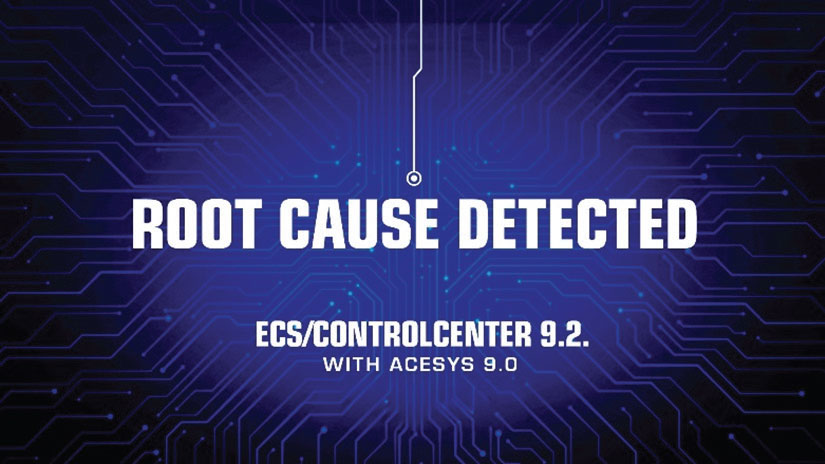
Stoppage Insights instantly identifies root causes and maps their full operational impact.

In cement, mining and minerals processing operations, every unplanned stoppage equals lost production and reduced profitability. Yet identifying what caused a stoppage remains frustratingly complex. A single motor failure can trigger cascading interlocks and alarm floods, burying the root cause under layers of secondary events. Operators and maintenance teams waste valuable time tracing event chains when they should be solving problems. Until now.
Our latest innovation to our ECS Process Control Solution(1) eliminates this complexity. Stoppage Insights, available with the combined updates to our ECS/ControlCenter™ (ECS) software and ACESYS programming library, transforms stoppage events into clear, actionable intelligence. The system automatically identifies the root cause of every stoppage – whether triggered by alarms, interlocks, or operator actions – and maps all affected equipment. Operators can click any stopped motor’s faceplate to view what caused the shutdown instantly. The Stoppage UI provides a complete record of all stoppages with drill-down capabilities, replacing manual investigation with immediate answers.

Understanding root cause in Stoppage Insights
In Stoppage Insights, ‘root cause’ refers to the first alarm, interlock, or operator action detected by the control system. While this may not reveal the underlying mechanical, electrical or process failure that a maintenance team may later discover, it provides an actionable starting point for rapid troubleshooting and response. And this is where Stoppage Insights steps ahead of traditional first-out alarm systems (ISA 18.2). In this older type of system, the first alarm is identified in a group. This is useful, but limited, as it doesn’t show the complete cascade of events, distinguish between operator-initiated and alarm-triggered stoppages, or map downstream impacts. In contrast, Stoppage Insights provides complete transparency:

  • Comprehensive capture: Records both regular operator stops and alarm-triggered shutdowns.
  • Complete impact visibility: Maps all affected equipment automatically.
  • Contextual clarity: Eliminates manual tracing through alarm floods, saving critical response time.


David Campain, Global Product Manager for Process Control Systems, says, “Stoppage Insights takes fault analysis to the next level. Operators and maintenance engineers no longer need to trace complex event chains. They see the root cause clearly and can respond quickly.”

Driving results
1.Driving results for operations teams
Stoppage Insights maximises clarity to minimise downtime, enabling operators to:
• Rapidly identify root causes to shorten recovery time.
• View initiating events and all affected units in one intuitive interface.
• Access complete records of both planned and unplanned stoppages

  1. Driving results for maintenance and reliability teams
    Stoppage Insights helps prioritise work based on evidence, not guesswork:
    • Access structured stoppage data for reliability programmes.
    • Replace manual logging with automated, exportable records for CMMS, ERP or MES.(2)
    • Identify recurring issues and target preventive maintenance effectively.

  2. A future-proof and cybersecure foundation
    Our Stoppage Insights feature is built on the latest (version 9) update to our ACESYS advanced programming library. This industry-leading solution lies at the heart of the ECS process control system. Its structured approach enables fast engineering and consistent control logic across hardware platforms from Siemens, Schneider, Rockwell, and others.
    In addition to powering Stoppage Insights, ACESYS v9 positions the ECS system for open, interoperable architectures and future-proof automation. The same structured data used by Stoppage Insights supports AI-driven process control, providing the foundation for machine learning models and advanced analytics.
    The latest releases also respond to the growing risk of cyberattacks on industrial operational technology (OT) infrastructure, delivering robust cybersecurity. The latest ECS software update (version 9.2) is certified to IEC 62443-4-1 international cybersecurity standards, protecting your process operations and reducing system vulnerability.

What’s available now and what’s coming next?
The ECS/ControlCenter 9.2 and ACESYS 9 updates, featuring Stoppage Insights, are available now for:

  • Greenfield projects.
  • ECS system upgrades.
  • Brownfield replacement of competitor systems.
    Stoppage Insights will also soon integrate with our ECS/UptimeGo downtime analysis software. Stoppage records, including root cause identification and affected equipment, will flow seamlessly into UptimeGo for advanced analytics, trending and long-term reliability reporting. This integration creates a complete ecosystem for managing and improving plant uptime.

(1) The ECS Process Control Solution for cement, mining and minerals processing combines proven control strategies with modern automation architecture to optimise plant performance, reduce downtime and support operational excellence.
(2) CMMS refers to computerised maintenance management systems; ERP, to enterprise resource planning; and MES to manufacturing execution systems.

Continue Reading

Trending News