Connect with us

Concrete

Nuvoco strong core values

Published

on

Shares

While the world was grappling with a situation that off-guarded everyone and pervaded every facet of our lives; Nuvoco ensured that all its stakeholders, not limited to its employees were safe and secure.

Nuvoco Vistas is a leading manufacturer and retailer of building materials in India, offering a diversified business portfolio under three broad business segments, namely, cement, ready-mix concrete (RMX) that enjoys a pan-India presence, and modern building materials (MBM).

Guided by one of the core values, care; Nuvoco has always made a responsible and sustainable contribution to the society in which it operates to ensure a safe and healthy environment for all its stakeholders. Nuvoco’s corporate social responsibility initiatives focus on five themes; namely, Surakshit Bharat (safety), Swasth Bharat (health), Shikshit Bharat (education), Saksham Bharat (livelihood) and Sanrachit Bharat (infrastructure development) through which we have reached out to 1,98,000 people across 103 villages.

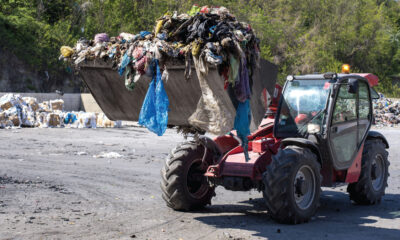
  • Surakshit Bharat (safety): Keeping safety at the heart of all that we do, through this initiative, we are able to build awareness on safety (on the road and at home) and endeavours to stimulate behavioural change in the communities living in the close proximity of our operating units. We also extend support towards building a safer world while addressing issues like waste management in the villages and promoting the ban of single-use plastic while showcasing its harmful effects on the environment.
  • Swasth Bharat (health): Focus is to provide access to primary health care, improved sanitation and safe drinking water to the communities and addressing the needs of adolescent girls. Under the flagship program, project Angan we have adopted more than 170 Anganwadis across locations that promotes joyful learning for children and improving overall service delivery of Anganwadis especially focusing on mother and child health. Continuing our focus, Swasth Matritva is another such project where we have provided mobile ante-natal care (ANC) check-up kits integrated with a mobile app to the government health workers in rural areas. Through this kit, they were able to conduct regular ANC checkups, even during COVID-19 times, and thus contributing towards safe motherhood. We have also helped form girls health groups focusing on adolescent girls; one of its major activities is to promote the use of sanitary pads to maintain hygiene during menstruation. We have also been able to provide preventive healthcare facilities, free medical and health check-up camps and spread awareness on WASH (water sanitation and hygiene) in schools.
  • Shikshit Bharat (education): The focus of this initiative, is to provide access to new-age education facilities in government schools to improve the quality of education. We have been supporting approx 50 government school across locations by installing smart classes and providing better infrastructure facilities and special health care facilities for girls (construction of toilets and installation of sanitary pad dispenser and incinerator in girls toilet, etc.) in schools. Through our project Shikshit Sunderhattu (winner of FICCI CSR Jury Award 2018-19 for education) in Jamshedpur, we were able to establish "Birsa Prathmik Vidyalaya" through community participation and educate the tribal children of the Sunderhattu and Sarenbera villages, which have shaped the lives of more than 500 tribal children by bringing them into mainstream education.
  • Saksham Bharat (livelihood): This initiative focuses on diversifying livelihood by imparting new skills to the youth and women to enable them to become self-reliant. Projects like Aakriti (a women enterprise for garment manufacturing) and Samridhi (women group-led initiative for mushroom cultivation) have helped to accelerate progress towards the economic empowerment of rural women. These projects were also awarded FICCI CSR Awards – 2016 and 2017, respectively. Project Aakriti transformed itself from a training center to a garment manufacturing centre with turnover of more than 35 lakh per annum and supporting livelihood of more than 500 women across locations. While Project Smariddhi in West Bengal is providing additional livelihood support to more than 100 women members. Other skill development programs like computer training, bag making, food processing are also some of the initiatives looked upon.
  • Sanrachit Bharat (infrastructure development): Through this initiative, we have been working towards improving the quality of life by developing community infrastructure through the construction and repair of roads and providing safe drinking water through pond distillation and rainwater harvesting. We were also able to refurbish the school buildings, build community centers, improve drainage systems in villages and conduct tree plantations in communities and villages where we operate.
  • While the world was grappling with a situation that off-guarded everyone and pervaded every facet of our lives; Nuvoco ensured that all its stakeholders, not limited to its employees were safe and secure. Our employees came forward to support the channel partners (dealers and sub-dealers) and the local communities by contributing a day’s salary. Plant teams and their families came ahead to support the nearby villages by producing and distributing face masks, food packets, and other essential services. Nuvocans’ combined were able to distribute approximately 12,000 safety kits comprising of N95 mask, cotton mask, face shield and temperature scanners in the east and north markets and to the local district administration across locations. They also supported in installing approximately 750 hand wash stations (a foot-operated washbasin developed in-house that enables people to avoid handling taps or soap dispensers) at public places in Jharkhand, Bengal and Chhattisgarh markets and donated a ventilator machine at the government hospital in Janjgir Champa district of Chhattisgarh.

    ABOUT THE AUTHOR: Joydeep Chatterjee, Chief of CSR & Corporate Affairs at Nuvoco.

    BLURB
    Nuvoco’s CSR initiatives focus on five themes; namely, Surakshit Bharat (safety), Swasth Bharat (health), Shikshit Bharat (education), Saksham Bharat (livelihood) and Sanrachit Bharat (infrastructure development).

    Continue Reading
    Click to comment

    Leave a Reply

    Your email address will not be published. Required fields are marked *

    Concrete

    UltraTech Cement FY26 PAT Crosses Rs 80 bn

    Company reports record sales, profit and 200 MTPA capacity milestone

    Published

    on

    By

    Shares

    UltraTech Cement reported record financial performance for Q4 and FY26, supported by strong volumes, higher profitability and improved cost efficiency. Consolidated net sales for Q4 FY26 rose 12 per cent year-on-year to Rs 254.67 billion, while PBIDT increased 20 per cent to Rs 56.88 billion. PAT, excluding exceptional items, grew 21 per cent to Rs 30.11 billion.

    For FY26, consolidated net sales stood at Rs 873.84 billion, up 17 per cent from Rs 749.36 billion in FY25. PBIDT rose 32 per cent to Rs 175.98 billion, while PAT increased 36 per cent to Rs 83.05 billion, crossing the Rs 80 billion mark for the first time.

    India grey cement volumes reached 42.41 million tonnes in Q4 FY26, up 9.3 per cent year-on-year, with capacity utilisation at 89 per cent. Full-year India grey cement volumes stood at 145 million tonnes. Energy costs declined 3 per cent, aided by a higher green power mix of 43 per cent in Q4.

    The company’s domestic grey cement capacity has crossed 200 MTPA, reaching 200.1 MTPA, while global capacity stands at 205.5 MTPA. UltraTech also recommended a special dividend of Rs 2.40 billion per share value basis equivalent to Rs 240.

    Continue Reading

    Concrete

    Towards Mega Batching

    Optimised batching can drive overall efficiencies in large projects.

    Published

    on

    By

    Shares

    India’s pace of infrastructure development is pushing the construction sector to work at a significantly higher scale than previously. Tight deadlines necessitate eliminating concreting delays, especially in large and mega projects, which, in turn, imply installing the right batching plant and ensuring batching is efficient. CW explores these steps as well as the gaps in India’s batching plant market.

    Choose well

    Large-scale infrastructure and building projects typically involve concrete consumption exceeding 30,000-50,000 cum per annum or demand continuous, high-volume pours within compressed timelines, according to Rahul R Wadhai, DGM – Quality, Tata Projects.

    Considering the daily need for concrete, “large-scale concreting involves pouring more than 1,000–2,000 cum per day while mega projects involve more than 3,000 cum per day,” says Satish R Vachhani, Advanced Concrete & Construction Consultant…

    To read the full article Click Here

    Continue Reading

    Concrete

    Andhra Offers Discom Licences To Private Firms Outside Power Sector

    Policy allows firms over 300 MW to seek distribution licences

    Published

    on

    By

    Shares

    The Andhra Pradesh government will allow private firms that require more than 300 megawatt (MW) of power to apply for distribution licences, making the state the first to extend such licences beyond the power sector. The policy targets information technology, pharmaceuticals, steel and data centres and aims to reduce reliance on state utilities as demand rises for artificial intelligence infrastructure.

    Approved applicants will be able to procure electricity directly from generators through power purchase agreements, a change officials said will create more competitive tariffs and reduce supply risk. Licence holders will use the Andhra Pradesh Transmission Company (APTRANSCO) network on payment of charges and will not need a separate distribution network initially.

    Licences will be granted under the Electricity Act, 2003 framework, with the Central and State electricity regulators retaining authority over terms and approvals. The recent Electricity (Amendment) Bill, 2025 sought to lower entry barriers, enable network sharing and encourage competition, while the state commission will set floor and ceiling tariffs where multiple discoms operate.

    Industry players and original equipment manufacturers welcomed the policy, saying competitive supply is vital for large data centre investments. Major projects and partnerships such as those involving Adani and Google, Brookfield and Reliance, and Meta and Sify Technologies are expected to benefit as capacity expands in the state.

    Analysts noted India’s data centre capacity is forecast to reach 10 gigawatts (GW) by 2030 and cited International Energy Agency estimates that global data centre electricity consumption could approach 945 terawatt hours by the same year. A one GW data centre needs an equivalent power allocation and one point five times the water, which authorities equated to 150 billion litres (150 bn litres).

    Advisers warned that distribution licences will require close regulation and monitoring to prevent misuse and to ensure tariffs and supply obligations are met. Officials said the policy aims to balance investor requirements with regulatory oversight and could serve as a model for other states.

    Continue Reading

    Video Thumbnail

      SIGN-UP FOR OUR GENERAL NEWSLETTER


      Trending News

      SUBSCRIBE TO THE NEWSLETTER


      Don't miss out on valuable insights and opportunities to connect with like minded professionals.


        This will close in 0 seconds