Economy & Market
Logistics Untapped potential
Published
7 years agoon
By
admin
There are many elements that can make "Make-in-India" thrive. A sound industrial policy is one of them, and logistics is certainly another. Right now, logistics costs in India are 13-14 per cent! How it can be brought down to 10 per cent or even below? ICR takes a look.
Logistics-moving goods and connecting producers with consumers-is a critical part of the modern economy. India’s logistics sector is highly defragmented and the aim is to reduce the logistics cost from the present 14 per cent of GDP to less than 10 per cent by 2022, according to an update from the Department of Commerce. India’s logistics sector is very complex with more than 20 government agencies, 40 partnering government agencies (PGAs), 37 export promotion councils, 500 certifications, 10,000 commodities, and 160 billion market size. It also involves 12 million employment base, 200 shipping agencies, 36 logistic services, 129 ICDs, 168 CFSs, 50 IT ecosystems and banks and insurance agencies. Further, 81 authorities and 500 certificates are required for EXIM.
India has been grappling with high logistics costs of 16-18 percent to start with making exports uncompetitive vis-a-vis China, which has lower logistic costs of 8-10 per cent, in the US and Europe it is 8-9 per cent while in Japan it is 11 per cent.
Completing the dedicated freight corridor (DFC) project will free up some of the existing railway network for passenger trains. As Procycon Mukherjee points out in his article, the existing rail network has been designed to move passengers and not freight. Therefore, it is need based to have such a kind of project DFC. Appropriate technology will be used to enable Indian railways to regain its market share of freight transport by creating additional capacity and guaranteeing efficient, reliable, safe and cheaper options for mobility to its users. This is one step in the direction of reducing logistic cost.
DFCs: Regaining market share
Currently, the Indian Railways has lost a significant portion of its goods business to the road sector and has hoped that it would be able regain market share once DFC is operational. Some of the positives of DFC, Indian Railways will run freight train at the maximum speed of 100 km/per hour against the current maximum speed of 75 kmph on tracks. The average speed of freight trains will also be increased from existing speed of 26 kmph on Indian Railways lines to 70 kmph on DFC.
The Dedicated Freight Corridor Corporation of India Limited (DFCCIL) is a public sector undertaking corporation run by the Government of India’s Ministry of Railways to undertake planning, development, and mobilisation of financial resources and construction, maintenance and operation of the DFCs. While the western DFC will cover 1,504 km from Jawaharlal Nehru Port Trust near Navi Mumbai to Dadri in Uttar Pradesh through Vadodara-Ahmedabad-Palanpur-Phulera-Rewari, the Eastern DFC covers 1,856 km from Ludhiana in Punjab to Dankuni, near Kolkata in West Bengal, and will traverse the states of Haryana, Uttar Pradesh, Bihar and Jharkhand. The Railways plan to complete more than 60-70 per cent of the work in the two corridors this financial year and make them fully operational by 2021.
The three new DFCs will cover 5,769 km. The preliminary engineering and traffic system study of these corridors has already been completed. After the cabinet approval, DFCCIL-a special purpose vehicle set up in 2006 under the railways ministry?will undertake a detailed project planning including plans for land acquisition. While the East-West Corridor (2,328km) will be built between Kolkata and Mumbai, the North-South Corridor (2,327 km) is planned between Delhi and Chennai and the East Coast Corridor (1,114 km) between Kharagpur and Vijaywada.
Inland waterways: Untapped potential
India is blessed with 7,551 km of coastline and about 14,500 km of navigable inland waterways. Yet this sector has remained neglected despite universal acceptance that transportation through waterways, both coastal and inland, is fuel efficient, environment friendly and more economical than rail and road. Of the navigable inland waterways, 4,503 km are national waterways, the development and maintenance of which is the responsibility of the Indian government and the remaining portion is with state governments.
Using waterways for transporting people and goods is nothing new for India. Until about 100 years ago, the Ganga River was a busy waterway that was used for the movement of commodities such as tea, jute, and spices. But with the coming of the railways, this watercourse fell into disuse. At present, according to a World Bank report, India’s freight movement traverses mainly on roads (65 per cent). Railways come next (27 per cent); waterways account for just (0.5 per cent) of the movement. The freight movement on waterways across countries is also much higher in the West and China than in India: In the US, it’s about 8.3 per cent; in Europe 7 per cent; and in China it is 8.7 per cent. There are several reasons why the Centre is so enthusiastic about the waterways project. According to the World Bank, which is financing the National Waterway Project, the cost to transport one tonne of freight over one km for highways is Rs 2.28. It is Rs 1.41 for railways and Rs 1.19 for waterways. Second, its greener means less polluting.
"As per RITES Report of 2014 on "Integrated National Waterways Transportation Grid", one litre of fuel moves 24 tonne km by road, 95 tonne km on rail and 215 tonne km on inland water transport. Third, ferrying goods via waterways is faster than on congested road and rail networks, which slows the movement of cargo, adding to uncertainties, and increasing the costs of trade. Fourth is the pollution cost of traffic bottlenecks.
While there are several positives of the waterways project, any infrastructure development will have environmental costs, and those must be taken into account while evaluating the benefits of the project. This is because while the main infrastructure [waterway] is naturally available in this case, it needs to be "trained, maintained and upgraded" to ensure that the movement of cargo carriers is possible.
One important aspect of this "training" a waterway is dredging, which is required to ensure that the required water depth is maintained everywhere for the goods carriers to pass.
India has six national waterways: the Allahabad-Haldia stretch of the Ganga river (running through Uttar Pradesh and West Bengal); the Dhubri-Sadiya stretch of the Brahmaputra (Assam); the Kottappuram-Kollam stretch of the West Coast canal along with the Udyogamandal and Champakkara canals (Kerala); the Kakinada-Puducherry stretch along with the designated stretches of the Godavari and Krishna rivers (Andhra Pradesh, Puducherry); the designated stretches of the East Coast canal, the Brahmani river and the Mahanadi delta (Odisha); and the Lakhipur-Bhanga stretch of the Barak river (southern Assam). Ships that can travel freely through sea and river channels were first freed from a few provisions of the Merchant Shipping Act in 2011. Incidentally Merchant Shipping Act regulates the movement of ships in the river and in sea. This relaxation is now being significantly expanded to cover more ships. The changes in the Act on river-sea vessels were aimed at reducing the costs of constructing and operating vessels to encourage coastal shipping, inland water transport and trade. It was also designed to encourage the upgradation of existing inland vessels for coastal operations.
A seamless integration of river-sea trade using coastal ships is expected to provide an alternative means of quick discharge and dispersal of cargo from mother ships docking at big ports and their onward movement by sea to various smaller ports along the coast as well as inland locations. As ships built under the river-sea vessel regulations require very little depth to dock, they can load and unload cargo at smaller ports, which is not possible for bigger ships.
The Sagarmala programme is an initiative by the Ministry of Shipping to promote port-led development in the country through harnessing India’s 7,500 km long coastline, 14,500 km of potentially navigable waterways and strategic location on key international maritime trade routes. Sagarmala’s vision can have a potentially transformative impact on India’s logistics competitiveness and the wider economy.
Road transport and hurdles
There has been a significant increase in the commercial vehicles on the road in the recent times. Increase in commercial vehicles is a reflection of increasing demand for the movement of goods. According to surveys by the Indian Foundation of Transport Research and Training, one in every three trucks in the country is overloaded and they are to blame for 50 per cent of road accidents. In 2011, overloaded trucks accounted for 20 per cent of road accidents and in 2013, around 38,370 people were killed because of these overloaded vehicles.
Most trucks are found overloaded by 25-50 per cent. Senior fellow and coordinator of the Indian Foundation of Transport Research and Training (IFTRT), SP Singh, said: "When a truck is overloaded by 10 per cent, it’s steering and brake control is reduced by 50 and 40 per cent, respectively. Overloading also reduces the productive life of the road by 80 per cent and the productive life of the truck by 30 per cent."
But small-time operators and middlemen who run the majority of the country’s trucks consider overloading a necessary evil. Part of the problem is the industry’s skewed ownership pattern that makes accountability difficult. The problem lay in the lack of implementation of the Motor Vehicles Act. As an example, Singh mentioned the over 260 computerised weighbridges which has not stopped trucks in the capital from getting overloaded.
Around 5,000 cargo operators control the freight movement and only in about 2-3 per cent of the cases do customers access the truck owners directly to book for their goods. S Sriram, the professor of Transport Economics at Mumbai University, attributed the ownership structure to low capital requirements, easily available truck driving licenses, and easy availability of freight. He said the operators regularly loaded their trucks beyond the permissible axle load to maximise each vehicle’s earnings and the consignors of bulk commodities, like fertilisers, steel and cement, overloaded the vehicles in order to get freight service.
It’s a fact that when a truck is overloaded, the control on the steering and brake are reduced. In addition, frequent overloading reduces the productive life of the truck as well as the life of the road. In order to reduce the overloading of trucks and accidents, the Government has taken some major steps. For instance, a high penalty has been proposed in the Road Transport and Safety Bill for those who fail to comply with the new rules, with a suspension of permits for one month upon the first offense and a cancellation of permits if the offense is repeated. But these measurements are not enough to solve the problem as the truck owners or operators are still continuing to load their trucks beyond the permissible axle load to maximise each vehicle’s earnings.
Similarly, the consignors of bulk commodities like fertilizers, steel, and cement, overload the vehicles in order to save on the freight cost. Considering the trip economics, they are willing to pay higher prices to enter the city. In fact, there are a few states that have almost legalised overloading by issuing formal permits; illicit payments mostly clear the way for the vehicles. While there are weighing stations on the highways, it is surprising that many states or cities in India don’t even have check-posts to stop overloaded trucks from entering into the city or a dedicate area such as bridges. So, it appears that the main solution to overloading may lie in the proper implementation and enforcement of the Motor Vehicles Act.
In order to curb overloading, government or transport officers should more aggressively follow the Motor Vehicles Act and take strict actions against the rules violators. With such enforcement of the regulation, we can expect to see lower accidents, a lesser number of casualties and less damage on the Indian roads. All these will lead to higher productivity of the transport companies and that of the logistics sector.
Another problem which is often encountered by the truck operators is so called local truck owners not allowing "outside" truck operators to load consignment at few locations where local truck associations are very strong and classify themselves as local v/s outside. This results in the returning the truck empty after unloading the goods. It leads to waste of fuel and increase in transport cost. Turnaround time of truck is another pain point for easy truck movement. Normally at any factory gate you will find number of trucks parked in hundreds waiting to receive their load. Many factories call the trucks on ad-hoc basis, whereas very few have a system of first in and first out. Use of technology will only improve the scene.
After introduction of GST, crossing the border of a state has become little easy, yet at many places authorities still insist on paper documents creating stoppages to make quick money. Ministry can think of creating flying squads to arrest such harassments.
Rivigo experiment
India needs one million new truck drivers every year for the next 10 years to support the ecosystem and achieve our GDP growth aspiration. It is estimated that India will have 480 drivers for every 1,000 trucks on the road by 2022. The problem is not in the truck driver’s income or skill gaps but is deep-rooted in his terrible lifestyle away from his family. Long periods of absence leading to social disrespect, stigma and a risk perception of the job which makes their families push them to quit their job. Truck drivers play a vital role in freight transportation industry but unfortunately, drivers don’t get their fair share of economic growth. At Rivigo, a start up logistic company is working relentlessly to build a system that strives to improve their socio-economic conditions through couple of measures. It follows relay models that helps over 95 per cent of the pilots (drivers) get back home every day and spend quality time with their families. Rivigo has been an innovator and trend setter in logistics.
This supply demand gap has put pressure on the logistics companies. Every transporter or logistics company cites recruitment and retention of truck drivers as the biggest growth inhibitor for them. This has been also being highlighted in the draft National Logistics Policy council in their latest report.
Relay trucking model
The solution to curb the unprecedented shortage of truck drivers in India is clear -to make truck driving a regular day job using relay trucking. Relay trucking is an operating model innovation where drivers change over after every few hundred kilometres of driving through a network of change-over stops called "relay pit-stops" and then get rostered back to their home base to return to their families every single day. Relay Trucking is better service, more efficient and "Human."
Rivigo has been transforming the sector with their global-first driver relay model and cutting-edge technology to consistently provide unparalleled delivery times and reliability to clients. They are solving the challenges of the logistics industry using technology – be it problems like fuel analytics, route planning, human behaviour analysis or pure-drudgery elimination tasks like auto-alert systems and intelligent decision systems. Their technology obsession has resulted in simple, intuitive technology products gaining quick and easy adoption by the trucking ecosystem stakeholders.
Post demonetisation of high value currency, the logistics industry is grappling with cash shortage which has affected fleet operations across the nation and has crippled the Indian highways. Fleet owners have come to a bottleneck and cash shortage is threatening delivery of goods to consumers and businesses. 90 per cent of trucking spend and 40-50 per cent of the non-trucking logistics spend is rendered in cash.
About 85 per cent of the fleet owners who own less than five trucks spend hard cash towards diesel purchase, which comprises 45-50 per cent of the cost of trucking. Toll charges, which amount to 10-15 per cent of trucking cost and other overheads such as driver wages and vehicle maintenance, are also disbursed in cash. Only EMIs and replacement capex including tyre-related expenses are done to an extent through digital modes such as bank transfers and cheque payments. Overall, road logistics cash spend is estimated to be $100 to $110 billion or Rs 650,000 to 750,000 crore which would easily add up to 40 per cent of the cash in circulation in our economy. This is assuming the multiplier effect of currency that applies both ways, that is, the drivers who now get paid through digital modes will largely continue to spend through digital modes (also enabled by the current push towards cashless economy) Operations in the trucking sector can be made entirely cashless through the use of E-POD to get direct payment transfers from customers, automated bank transfers with the breakthrough same day settlement for brokers, integrated payment solutions with fuel companies for dealer payments and toll payments can be achieved through NHAI initiative on FASTag through RFID tags and wallet solutions. Also, fleet owners can remunerate truck driver wages, reimbursements and incentive payments directly through the Jandhan accounts.
Apart from digitisation and faster turnaround of trucks, cashless trucking economy will bring significant second order benefits. It will ensure less inefficacy owing to proper accounting of cash-related wastages (fuel, toll payments), eliminating instances of kerosene mixing by drivers and poor quality roads" usage to avoid toll cash, which also directly leads to the poor health of the fleet and poses a safety hazard. On the other hand, drivers will face less harassment from RTO and sales tax officers on highways and check posts. It will also improve road safety and adherence to regulations as it is a level playing field for non-compliant and compliant fleet owners, ending overloading and violation of safety norms. Truck drivers, loaders and all the large skill pools can be brought into the mainstream economy and will qualify for loans from financial institutions. Furthermore, it will also ensure employers and contractors pay minimum wages to workers in this sector. Lack of in-hand cash will reduce instances of substance abuse (including alcohol) and negatively impact the commercial sex worker trade on the highways which often leads to contraction of HIV amongst truck drivers.
There is short term pain to the sector due to lack of cash but in the long term, it can turn around the sector completely by making it efficient and safer and contribute significantly in making India cashless.
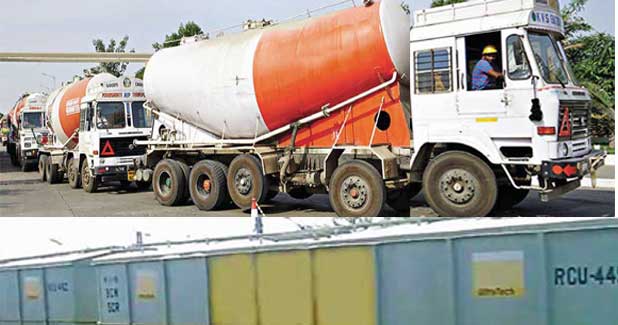
Now coming to cement specific, where subject is little different. In cement around 30 per cent cost is incurred on logistics, which is substantially higher than the general industry norms. There is enough scope to bring it down and companies like Shree Cement are setting an example. Cement plants need to make extensive use of technology to bring down the cost. In many places cement plant uses a mixed model of railways and road for dispatch of cement but there are few locations like Gagal (Burmana) where only road movement is possible since rail head is absent. Many of the hurdles explained above are quite pronounced in cement industry and need to be tackled on war footing. Taking advantage of present economic slowdown, there can’t be better time to undertake such initiatives.
– VIKAS DAMLE
You may like
-
TSR Will Define Which Cement Companies Win India’s Net-Zero Race
-
We can tailor solutions to local needs
-
Stainless Academy To Train 5 Lakh MSMEs By 2030
-
We are deeply focused on localisation
-
Nippon Paint India Appoints Sharad Malhotra as Managing Director
-
Maiden Forgings Becomes Approved Supplier to OFB Murad Nagar
Economy & Market
We always stay at our customer’s side
Published
2 days agoon
November 26, 2026By
admin
Justus von Wedel, Managing Director, IKN GmbH, discusses long-term service commitments and sustained performance the company has delivered over 25 years.
Twenty-five years after its first Indian cooler started up at Arasmeta, IKN counts more than 80 coolers across the country. Justus von Wedel, Managing Director, IKN GmbH, explains how a single-product specialist earned that trust through engineering depth, local execution and accountability that begins only after commissioning.
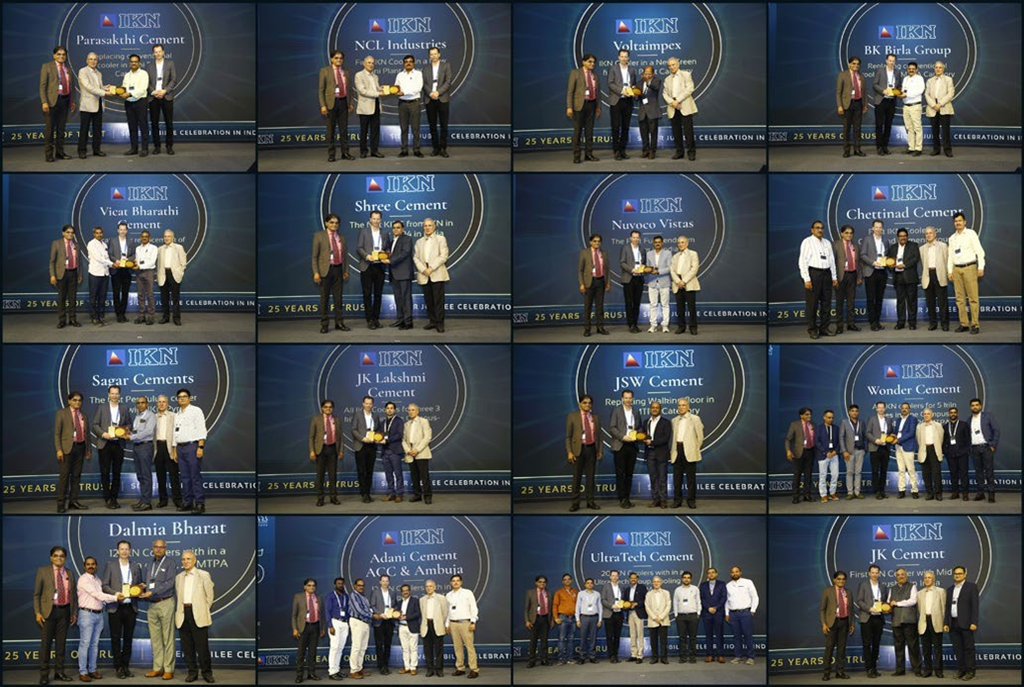
Silver Jubilee awards: IKN India thanks its customers on stage, from first-cooler partners to India’s largest cement groups
Which defining milestones and strategic decisions have shaped the company’s engineering philosophy and established its reputation in the cement industry?
IKN was founded on one conviction: the clinker cooler requires a specialist. While most suppliers treat the cooler as one item in a pyro package, we have built our company around the cooler for four and a half decades. This focus is in line with the often-heard comment “the cooler is the heart of the pyroline”. While it is less than three per cent of a greenfield project cost, it decides kiln stability, fuel efficiency and plant availability.
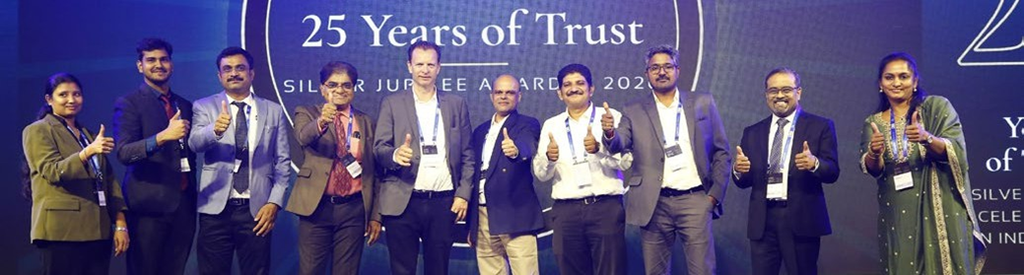
Team IKN India with IKN GmbH leadership
In India, the defining milestone was our first cooler at Lafarge Arasmeta in 2001. More than 24 years later, it still runs at above 70 per cent recuperation
efficiency and a power consumption below 4 kWh/t, without a second capex. That cooler became proof that a machine bought once should deliver the same benefits for at least three decades.
The second decisive step was building a strong IKN India team for engineering, execution and after-sales, backed by a spare parts warehouse in Chennai. German design with Indian execution is what allowed us to scale.
The third was a strategic choice we have never changed: We do not compete on purchase price; instead, we compete on lifecycle cost. Today IKN has more than 80 coolers operating in India, cooling cooling more than 180 million tonnes of clinker a year (over 200 million tonnes including KIDS installations), with 18 lines at 10,000 t/d or more.
How has IKN’s expertise in clinker cooling and pyro processing evolved to address the industry’s growing demands for operational efficiency, reliability and sustainability?
Indian plants are among the most demanding in the world: high throughput, abrasive raw materials, aggressive fuel choice, variable clinker quality and rising alternative fuel use. Our technology has evolved directly from these conditions.
The Pendulum Cooler moves clinker without any transport element passing through the bed, so the full grate area is available for cooling and the bed is not mixed. This gives a steeper cooling curve, lower air demand and loadings well beyond 50 t/d/ m². At the inlet, the IKN KIDS has progressed to the KIDS 4.0, with Coanda Wing® aeration and Inlet Motion Devices that easily handle agglomerations, snowman formation and fine clinker. The majority of the Indian coolers supplied by us operate with hot air recirculation up to 120°C, which is possible because there are no bearings or oil lines inside the under-grate compartments. Our coolers operate reliably at a 40 to 50 per cent thermal substitution rate (TSR) with alternative fuels and raw materials (AFR).
Against other designs available in the market, our operating references show 1.5 to 2.0 kWh/t lower electrical power consumption and 10 to 15 kcal/kg lower cooler losses. For a 10,000 t/d line that is roughly INR 10 crore a year, every year. In pyro
processing, the IKN Alternative Fuel Converter (AFC) combines gasification and pyrolysis to produce syngas that can replace coal or lignite in the kiln burner. The technology is being deployed in markets with mature waste management systems, markets with established waste management systems, and it is ready for India as the country’s alternative fuel ecosystem matures.
Which technological breakthroughs best demonstrate IKN’s ability to translate complex engineering challenges into measurable customer benefits, and how are these innovations shaping its future solutions?
I would point to three. First, the pendulum suspension and net cooling area. This is the reason our coolers carry higher loads at lower discharge temperatures, and it is also why 45 of our Indian installations are replacements or retrofits of other cooler designs. In many retrofits, power fell by 1.5 kWh/t and cooler losses dropped by 20 to 50 kcal/kg Second, the IKN KIDS with Coanda Wing® technology. Uniform aeration at the inlet is what protects the grate, prevents red river and sustains recuperation. More than 800 KIDS systems operate worldwide.
Third, digital condition monitoring. Our Cooler Condition Monitoring (CCM) system records hydraulic or electric drive and process data, including pyro data, at millisecond resolution and gives our analytics team remote visibility of the cooler health. We now regularly identify deviations before they become breakdowns, and advise the plant with specific corrective actions.
These innovations shape where we go next: smarter inlet geometry for higher alternative fuel use, deeper analytics, and service models in which IKN takes accountability for sustained performance and spare parts cost over the life of the cooler.
How have long-standing customer relationships and project experiences influenced IKN’s engineering approach, project execution and commitment to delivering lasting value?
Our customers have taught us that successful commissioning is only the beginning. The real test is whether performance holds in year five, year ten and year twenty. Many of our largest customers started with one order after careful evaluation, then returned for line after line. Together, India’s leading cement groups operate more than 80 IKN coolers, cooling over 200 million tonnes of clinker a year including KIDS installations.
These relationships changed how we work. Project execution is now led locally, with IKN India engineers on site from erection through the performance test. We learned that sustaining performance depends on genuine parts, correct operating practice and early detection of problems. That led to our Customer Care Service Program (CCSP): structured expert
visits, remote monitoring through CCM, prioritised supply of original spares and predictable spare parts cost. With CCSP, the plant gets predictable maintenance costs, and IKN stays accountable for the outcome long after handover.
For us, trust is built in the shutdowns and the difficult days, not only at inauguration. We always stay at our customer’s side.
As IKN celebrates 25 years of engineering excellence and trust, what are its strategic priorities and growth ambitions for the next decade, particularly in supporting the cement industry’s decarbonisation and digitalisation goals?
Our priorities for the next decade follow the industry’s two big shifts.
On decarbonisation, every kcal/kg the cooler recovers is fuel, and CO2, the kiln does not need. We will keep pushing recuperation efficiency and accepting higher alternative fuel rates without loss of cooler performance. The IKN AFC is designed to let plants move a large share of the kiln burner fuel to syngas made out of alternative fuels. IKN is also part of the LEILAC2 project on CO2 capture in cement production.
On digitalisation, CCM is the foundation. We are expanding analytics across the installed base so plants can move from reactive maintenance to predictive, data-led operation, with IKN experts supporting remotely.
Growth will come from India’s capacity expansion, from retrofits of older coolers, and from lifecycle service. Our ambition is simple: that every IKN Pendulum Cooler in India performs in its twentieth year as it did at commissioning, and that our customers continue to choose IKN for the next 25 years.
India’s economy and cement demand are growing fast, while inflation and exchange
rate fluctuations raise the cost of imported technology. How does IKN keep its solutions affordable for Indian cement producers?
Growth in India is an opportunity, but every producer is watching cost per tonne closely. We address this in four ways.
First, localisation. IKN India brings strong local engineering, project execution and site supervision, while the core technology comes from IKN in Germany. This keeps our solutions competitive and reduces the impact of currency movement.
Second, lifecycle value and payback. The capex of a cooler is spent once, while the savings in power and fuel are earned in rupees every year. Inflation and currency movement do not act only on the equipment price. They raise the customer’s fuel and power costs in the same way, so the value of every kcal/kg and kWh/t saved rises with them. This is why the payback period of an IKN cooler has remained essentially the same over the years, whatever the market conditions. In an inflationary environment,
an efficient cooler protects the plant’s margin more, not less. Third, predictability. For imported spares and multi-year service contracts, we follow transparent, rule-based pricing, so the customer knows in advance how costs are set. We also keep critical spares in stock in Chennai, so plants are not exposed to sudden price or freight changes during an urgent shutdown. Fourth, continuous improvement. Looking back over IKN’s four and a half decades worldwide, this relationship between price and value has not changed. Our focus has always been on engineering and on improving the value the customer receives. Each generation of the cooler recovers more heat, uses less power, carries higher loads and lasts longer than the one before, and every such improvement adds to the customer’s annual savings and makes the payback faster. Measured by the value delivered for every euro or rupee invested, an IKN cooler today is more affordable than it was 40 years ago.
Spare part consumption and purchase price are a major concern for plant maintenance teams. How does IKN help customers control the real cost of spares?
The purchase price of a spare part is only one part of the cost. What the plant really pays for is the cost per tonne of clinker, which depends on how long the part lasts and, on the production loss when it fails.
Genuine IKN parts are made to the original design and tolerances. The geometry of a nozzle or a grate element decides how air is distributed across the clinker bed. A copy made to different tolerances or out of a different material can change this pattern, create hot zones and shorten the life of the surrounding components. Non-OEM copies also carry no reliability guarantee and no performance responsibility, so the plant carries the full risk when they fail.
Through our CCSP, we make spare cost predictable. The plant gets a predictable spares budget and pays only for what it actually uses. Our engineers visit regularly, the CCM data shows how components are wearing, and spares are planned before each shutdown. Our experience is clear: a plant running original parts within the right operating conditions achieves longer campaigns and a lower cost per tonne, even if the unit price of a copy looks cheaper. When IKN is with the plant, our technology and more than 300 specialists stand behind it for the entire life cycle of the plant.

Join the 16th Cement Expo 2026 from 15–17 December 2026. Scan here to know more.
Economy & Market
Montra Electric becomes First Indian Brand to roll out 1,000 electric heavy-duty trucks
Published
2 days agoon
November 26, 2026By
admin
Driven by customer’s trust and repeat buys 1000 Rhino trucks have covered over 36 million km; removing an estimated 30.4 million kgs of tailpipe CO₂ emissions; and saved customers more than Rs 700 million. First OEM to receive PM E-DRIVE certificate for a heavy-duty electric truck
New Delhi
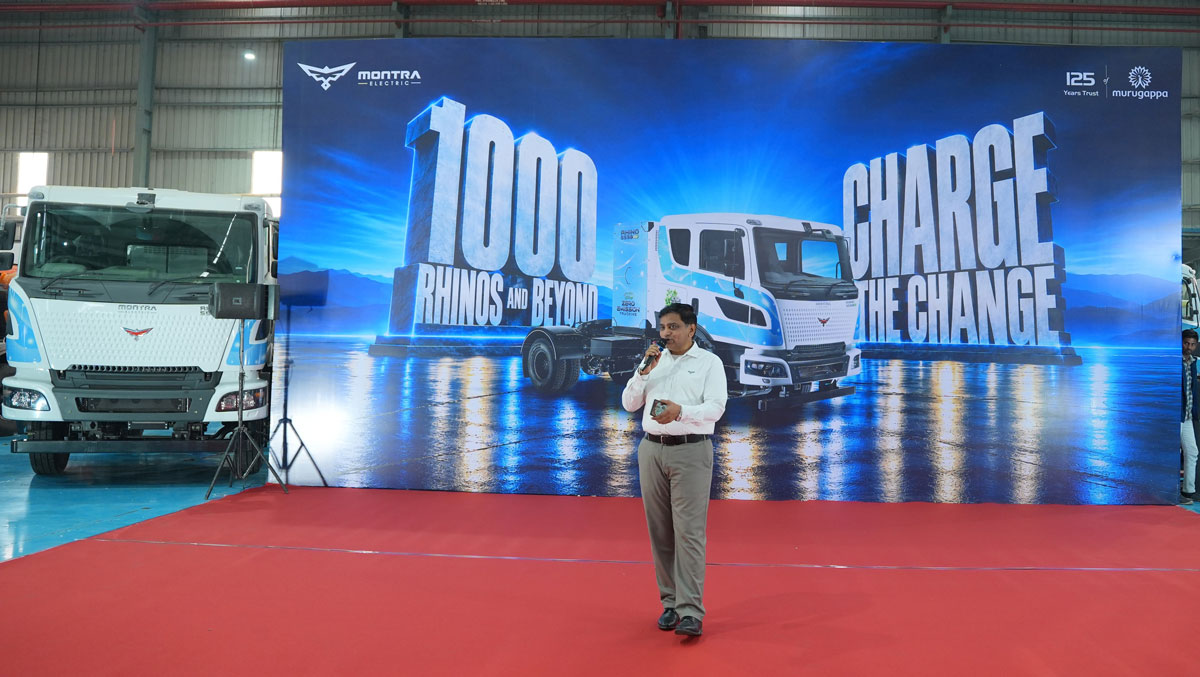
Montra Electric, India’s full-spectrum electric commercial vehicle brand, today rolled out its 1,000th Rhino electric truck at its Manesar facility. Montra Electric has become the first Indian brand to achieve this milestone.
To mark this milestone, the brand is marking the milestone under the theme ‘1,000 Rhinos & Beyond. Charge the Change.’The impactcan bemeasured from the fact that all the Rhino trucks deployed to date have together covered more than 36 million kilometres and removed an estimated 30.4 million kgs of tailpipe C02 emissions; roughly what 14 lakh trees absorb in a year. They have also saved their operators more than Rs 700 million in running costs.
The PM E-DRIVE scheme added to the momentum when the Rhino 5538 EV became India’s first heavy-duty electric truck to be certified under in January 2026. This scheme gives buyers an incentive of up to Rs 9.6 lakh per vehicle.
Commenting on the milestone, Jalaj Gupta, Managing Director, Montra Electric, (TI Clean Mobility Pvt Ltd), said, “When we started, there was no electric heavy truck market in India to build on. We had to prove, load after load, that these trucks could do the job and pay for themselves. With policy support such as PM E-DRIVE, and customers coming back to expand their fleets, electric heavy trucking in India has reached a tipping point. Our first 1,000 Rhinos belong as much to our customers and partners as they do to us. They backed electric trucks early, and the next 1,000 will be built on that trust.”
Montra Electric entered the segment at a time when very few Indian fleet operators had ever run an electric heavy truck. Charging points were scarce, and buyers doubted that a battery-powered truck could haul full loads over long distances and still make commercial sense. The company chose to settle those doubts on its customers’ routes, one deployment at a time.
Navneet Sethi, CEO-eM&HCV, Montra Electric, (IPL Tech Pvt Ltd), said, “The 1,000th Rhino roll-out marks an important milestone in demonstrating the commercial viability of electric heavy-duty trucking in India. Our trucks have demonstrated their ability to deliver on the parameters that matter the most to fleet operators – performance under load, operational uptime, range and cost efficiency, across demanding applications and long-haul routes. The growing number of repeat orders reflects customer confidence in the product and its ability to deliver tangible business value. Our next priority is to build on this momentum, deepen customer partnerships and expand the footprint of electric heavy-duty trucks across key applications and markets in India.”
As Montra Electric enters its next phase of growth, the focus will be on scaling deployments, deepening customer partnerships and expanding the adoption of electric commercial vehicles across India’s transportation ecosystem. From setting out to create a market for electric heavy-duty trucking to demonstrating its commercial viability at scale, Montra Electric’s journey reflects the possibilities that emerge when technology, customer confidence and a long-term commitment converge.
Montra Electric is a pioneering clean mobility brand from the Murugappa Group, one of India’s oldest and most respected business conglomerates, with a legacy spanning 126 years. Drawing on deep expertise in converting ‘Metal to Mobility’, earned over decades of manufacturing high-precision automotive and industrial components for India and global markets, and a track record of building strong brands, Montra Electric has set out with a vision of clean mobility. The company operates under four business verticals: e-3Wheelers, e-Small Commercial Vehicles, e-Tractors and e-Medium & Heavy Commercial Vehicles. Montra Electric’s fast-expanding portfolio includes India’s first 55-tonne electric truck trailer RHINO, the 3.5-tonne small commercial vehicle EVIATOR, the last-mile passenger vehicle SUPER AUTO, the last-mile delivery solution SUPER CARGO and India’s first electric tractor, E-27.
Concrete
ABB Extends Drive Lifespan at ACC Cement Plant Without Production Shutdown
Published
2 weeks agoon
November 12, 2026By
admin
ABB reconditions 25 drives at ACC’s Jamul cement plant, avoiding 16 tonnes of CO₂ emissions while improving reliability through predictive maintenance.
Chhattisgarh
ABB has signed a multi-year Motion OneCare service agreement with ACC Limited, part of the Adani Group, to modernise ageing industrial drives at its Jamul cement plant in Chhattisgarh, improving operational reliability while avoiding approximately 16 tonnes of carbon dioxide (CO₂) emissions without disrupting production.
Announced on 27 October 2026, the agreement combines scheduled drive reconditioning, digital condition monitoring and energy appraisals to extend equipment lifespan, improve plant uptime and optimise maintenance costs. The initiative marks a shift from conventional equipment replacement towards a more resource-efficient approach to industrial asset management.
The first phase, completed in April 2026, involved the on-site reconditioning of 25 ABB ACS800 variable speed drives without a major plant shutdown. By retaining the existing cabinets and restoring the drive modules rather than replacing entire panels, ABB helped ACC preserve capital investment, minimise material consumption and avoid approximately 16 tonnes of CO₂ emissions.
A second phase, covering an additional 25 ACS800 drive modules, is scheduled for the fourth quarter of 2026. The programme is designed to improve long-term equipment reliability while allowing maintenance activities to be aligned with the plant’s operational schedules.
The ACS800 drives, installed at Jamul in 2010, had delivered more than a decade of near-continuous service in demanding cement manufacturing conditions. However, ageing electrical components and changing fault patterns had begun to affect their ability to meet the plant’s reliability requirements.
Rather than opting for complete equipment replacement, ACC engaged ABB’s certified engineers to conduct a comprehensive asset health assessment. The evaluation found that the existing cabinets and enclosures remained structurally sound, making targeted reconditioning a technically viable and cost-effective alternative to full replacement.
Drawing on nearly two decades of experience with ACC’s equipment and operating requirements, ABB developed a maintenance framework tailored to the plant’s shutdown windows, budget cycles and production priorities.
The Motion OneCare agreement incorporates planned equipment restoration, condition-based monitoring and energy assessments, enabling ACC to adopt a more systematic approach to maintaining critical electrical infrastructure.
As part of the programme, ACC has implemented ABB Ability™ Digital Powertrain Insights to monitor drive performance and identify emerging operational issues before they result in equipment failures.
The digital platform provides continuous visibility into parameters such as temperature, current, vibration and fault patterns. These insights allow maintenance teams to detect early signs of equipment deterioration, schedule interventions more effectively and reduce the likelihood of unexpected downtime.
Amit Gupta, Local Division Manager, Motion Services, ABB India, said: “We know what unchecked wear costs over time: a small inefficiency that eats away at ROI for years. At Jamul, the evidence pointed clearly to assets with productive life still in them.”
“Our job was to restore them properly and give the team the tools to stay ahead of the next problem. At ABB, we don’t just fix what fails. We want to protect what works.”
The initiative also demonstrates the growing relevance of circular economy principles in cement manufacturing, where extending the service life of existing industrial equipment can reduce capital expenditure, material consumption and the environmental impact associated with manufacturing replacement components.
According to ABB, drive reconditioning can reduce lifecycle emissions by 50 to 80 per cent compared with complete equipment replacement. By preserving functional components and restoring critical modules, the process helps retain the economic and material value of existing industrial assets.
The addition of energy appraisals in subsequent phases will further expand the programme beyond equipment restoration, enabling ACC to assess drive performance, identify energy-saving opportunities and improve operating efficiency.
For cement manufacturers, variable speed drives play an important role in controlling motors and optimising energy consumption across production processes. Maintaining their reliability and efficiency is essential for minimising operational disruptions and managing electricity costs.
Vinod Bahety, CEO – Cement Business, Adani Group, said: “Moving from reactive firefighting to a structured maintenance plan was exactly what this operation needed. That kind of peace of mind doesn’t come easily. It comes from a partner that understands how your business runs.”
“We didn’t need a full system overhaul; we needed expert support, actionable insights, and a plan we could execute around our schedule. That’s what we got.”
The project supports ACC’s broader strategy to improve manufacturing efficiency through digital transformation, preventive maintenance and sustainable asset management.
ACC, a subsidiary of Ambuja Cements and part of the Adani Group, operates 20 cement manufacturing facilities and 119 ready-mix concrete plants across India. The company has been advancing initiatives focused on renewable energy, circular economy practices and technology-driven operational improvements.
Alongside Ambuja Cements, ACC is part of a large-scale building materials business committed to achieving net-zero emissions by 2050, with near-term and net-zero targets validated by the Science Based Targets initiative (SBTi).
The Jamul initiative aligns with these sustainability objectives by demonstrating how equipment life extension and digital monitoring can contribute to resource efficiency without requiring large-scale replacement of existing infrastructure.
ABB, a global technology company specialising in electrification and automation, brings more than 140 years of industrial expertise and employs approximately 110,000 people worldwide. Its Motion Services business supports industrial customers through equipment maintenance, modernisation, digital monitoring and lifecycle management solutions.
The agreement also reflects a wider shift in industrial maintenance practices, with manufacturers increasingly adopting predictive technologies to improve equipment availability, manage costs and reduce unplanned shutdowns.
With 25 drives already reconditioned and another 25 scheduled for restoration, ABB’s collaboration with ACC illustrates how targeted modernisation, digital monitoring and circular maintenance practices can extend the operational life of critical equipment while supporting more efficient and sustainable cement production.
We always stay at our customer’s side
Montra Electric becomes First Indian Brand to roll out 1,000 electric heavy-duty trucks
NCL Industries Approves Rs. 5.95 bn Solar-Wind Investment
Cement Makers See Margin Relief as Oil Prices Lower Fuel Costs
ABB Extends Drive Lifespan at ACC Cement Plant Without Production Shutdown
We always stay at our customer’s side
Montra Electric becomes First Indian Brand to roll out 1,000 electric heavy-duty trucks
NCL Industries Approves Rs. 5.95 bn Solar-Wind Investment
Cement Makers See Margin Relief as Oil Prices Lower Fuel Costs
ABB Extends Drive Lifespan at ACC Cement Plant Without Production Shutdown
Trending News
-
Concrete4 weeks agoCII Calls for Greater Alternative Fuel Use in Cement Industry
-
Concrete3 weeks agoShree Cement Expands Bangur Concrete Network with Patna Plant
-
Concrete1 month agoSameera Group Enters Industrial and Logistics Real Estate
-

Concrete4 weeks agoMartin Engineering Appoints Ashwini Khunte as India General Manager