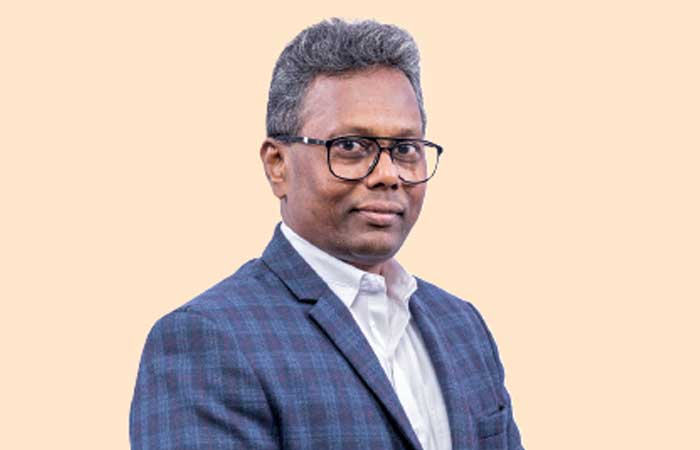
Arasu Shanmugam, Director and CEO-India, IFGL, discusses the diversification of the refractory sector into the cement industry with sustainable and innovative solutions, including green refractories and advanced technologies like shotcrete.
Tell us about your company, it being India’s first refractory all Indian MNC.
IFGL Refractories has traditionally focused on the steel industry. However, as part of our diversification strategy, we decided to expand into the cement sector a year ago, offering a comprehensive range of solutions. These solutions cover the entire process, from the preheater stage to the cooler. On the product side, we provide a full range, including alumina bricks, monolithics, castables, and basic refractories.
In a remarkably short span of time, we have built the capability to offer complete solutions to the cement industry using our own products. Although the cement segment is new for IFGL, the team handling this business vertical has 30 years of experience in the cement industry. This expertise has been instrumental in establishing a brand-new greenfield project for alumina bricks, which is now operational. Since production began in May, we are fully booked for the next six months, with orders extending until May 2025. This demonstrates the credibility we have quickly established, driven by our team’s experience and the company’s agility, which has been a core strength for us in the steel industry and will now benefit our cement initiatives.
As a 100 per cent Indian-owned multinational company, IFGL stands out in the refractory sector, where most leading players providing cement solutions are foreign-owned. We are listed on the stock exchange and have a global footprint, including plants in the United Kingdom, where we are the largest refractory producer, thanks to our operations with Sheffield Refractories and Monocon. Additionally, we have a plant in the United States that produces state-of-the-art black refractories for critical steel applications, a plant in Germany providing filtering solutions for the foundry sector, and a base in China, ensuring secure access to high-quality raw materials.
China, as a major source of pure raw materials for refractories, is critical to the global supply chain. We have strategically developed our own base there, ensuring both raw material security and technological advancements. For instance, Sheffield Refractories is a leader in cutting-edge shotcreting technology, which is particularly relevant to the cement industry. Since downtime in cement plants incurs costs far greater than refractory expenses, this technology, which enables rapid repairs and quicker return to production, is a game-changer. Leading cement manufacturers in the country have already expressed significant interest in this service, which we plan to launch in March 2025.
With this strong foundation, we are entering the cement industry with confidence and a commitment to delivering innovative and efficient solutions.
Could you share any differences you’ve observed in business operations between regions like Europe, India, and China? How do their functionalities and approaches vary?
When it comes to business functionality, Europe is unfortunately a shrinking market. There is a noticeable lack of enthusiasm, and companies there often face challenges in forming partnerships with vendors. In contrast, India presents an evolving scenario where close partnerships with vendors have become a key trend. About 15 years ago, refractory suppliers were viewed merely as vendors supplying commodities. Today, however, they are integral to the customer’s value creation chain.
We now have a deep understanding of our customers’ process variations and advancements. This integration allows us to align our refractory solutions with their evolving processes, strengthening our role as a value chain partner. This collaborative approach is a major differentiator, and I don’t see it happening anywhere else on the same scale. Additionally, India is the only region globally experiencing significant growth. As a result, international players are increasingly looking at India as a potential market for expansion. Given this, we take pride in being an Indian company for over four decades and aim to contribute to making Aatma Nirbhar Bharat (self-reliant India) a reality.
Moving on to the net-zero mission, it’s crucial to discuss our contributions to sustainability in the cement industry. Traditionally, we focused on providing burnt bricks, which require significant fuel consumption during firing and result in higher greenhouse gas emissions, particularly CO2. With the introduction of Sheffield Refractories’ green technology, we are now promoting the use of green refractories in cement production. Increasing the share of green refractories naturally reduces CO2 emissions per ton of clinker produced.
Our honourable Prime Minister has set the goal of achieving net-zero emissions by 2070. We are committed to being key enablers of this vision by expanding the use of green refractories and providing sustainable solutions to the cement industry, reducing reliance on burnt refractories.
Technology is advancing rapidly. What role does it play in helping you achieve your targets and support the cement industry?
Technology plays a critical role in achieving our goals and supporting the cement industry. As I mentioned earlier, the reduction in specific refractory consumption is driven by two key factors: refining customer processes and enhancing refractory quality. By working closely as partners with our customers, we gain a deeper understanding of their evolving needs, enabling us to continuously innovate. For example, in November 2022, we established a state-of-the-art research centre in India for IFGL, something we didn’t have before.
The primary objective of this centre is to leverage in-house technology to enhance the utilisation of recycled materials in manufacturing our products. By increasing the proportion of recycled materials, we reduce the depletion of natural resources and greenhouse gas emissions. In essence, our focus is on developing sustainable, green refractories while promoting circularity in our business processes. This multi-faceted approach ensures we contribute to environmental sustainability while meeting the industry’s demands.
Of course, this all sounds promising, but there must be challenges you’re facing along the way. Could you elaborate on those?
One challenge we face is related to India’s mineral resources. For instance, there are oxide deposits in the Saurashtra region of Gujarat, but unfortunately, they contain a higher percentage of impurities. On the magnesite side, India has deposits in three regions: Salem in Tamil Nadu, Almora in Uttarakhand, and Jammu. However, these magnesite deposits also have impurities. We believe the government should take up research and development initiatives to beneficiate these minerals, which are abundantly available in India, and make them suitable for producing high-end refractories. This task is beyond the capacity of an individual refractories company and requires focused policy intervention. While the government is undertaking several initiatives, beneficiation of minerals like Indian magnesite and Indian oxide needs to become a key area of focus.
Another crucial policy support we require is recognising the importance of refractories in industrial production. The reality is that without refractories, not even a single kilogram of steel or cement can be produced. Despite this, refractories are not included in the list of core industries. We urge the government to designate refractories as a core industry, which would ensure dedicated focus, including R&D allocations for initiatives like raw material beneficiation. At IFGL, we are taking proactive steps to address some of these challenges. For instance, we own Sheffield Refractories, a global leader in shotcrete technology. We are bringing this technology to India, with implementation planned from March onwards. Additionally, our partnership with Marvel Refractories in China enables us to leverage their expertise in providing high-quality refractories for steel and cement industries worldwide.
While we are making significant efforts at our level, policy support from the government—such as recognising refractories as a core industry and fostering research for local raw material beneficiation—would accelerate progress. This combined effort would greatly enhance India’s capability to produce high-end refractories and meet the growing demands of critical industries.
Could you share your opinion on the journey toward achieving net-zero emissions? How do you envision this journey unfolding?
The journey toward net zero is progressing steadily. For instance, even at this conference, we can observe the commitment as a country toward this goal. Achieving net zero involves having a clear starting point, a defined objective, and a pace to progress. I believe we are already moving at an impressive speed toward realising this goal. One example is the significant reduction in energy consumption per ton of clinker, which has halved over the past 7–8 years—a remarkable achievement.
Another critical aspect is the emphasis on circularity in the cement industry. The use of gypsum, which is a byproduct of the fertiliser and chemical industries, as well as fly ash generated by the power industry, has been effectively incorporated into cement production. Additionally, a recent advancement involves the use of calcined clay as an active component in cement. I am particularly encouraged by discussions around incorporating 12 per cent to 15 per cent limestone into the mix without the need for burning, which does not compromise the quality of the final product. These strategies demonstrate the cement industry’s constructive and innovative approach toward achieving net-zero emissions. The pace at which these advancements are being adopted is highly encouraging, and I believe we are on a fast track to reaching this critical milestone.
– Kanika Mathur