The cement business, which was on the path of revival, had to move a step back due to demonetisation. However, the sector seems to have shrugged off the immediate impact of the cashless economy, and is moving ahead.
Demonetisation may have landed people in trouble, but it has also resulted in daily wage earners, workers and small shopkeepers connecting with the banking system. After the government’s radical financial shake-up, a majority of the daily wage earners and other stakeholders dealing in cash were compelled to move to the banking system. When even grocery shops started operating point-of-sale terminals for doing their daily transactions, how could a cement retailer be left behind?
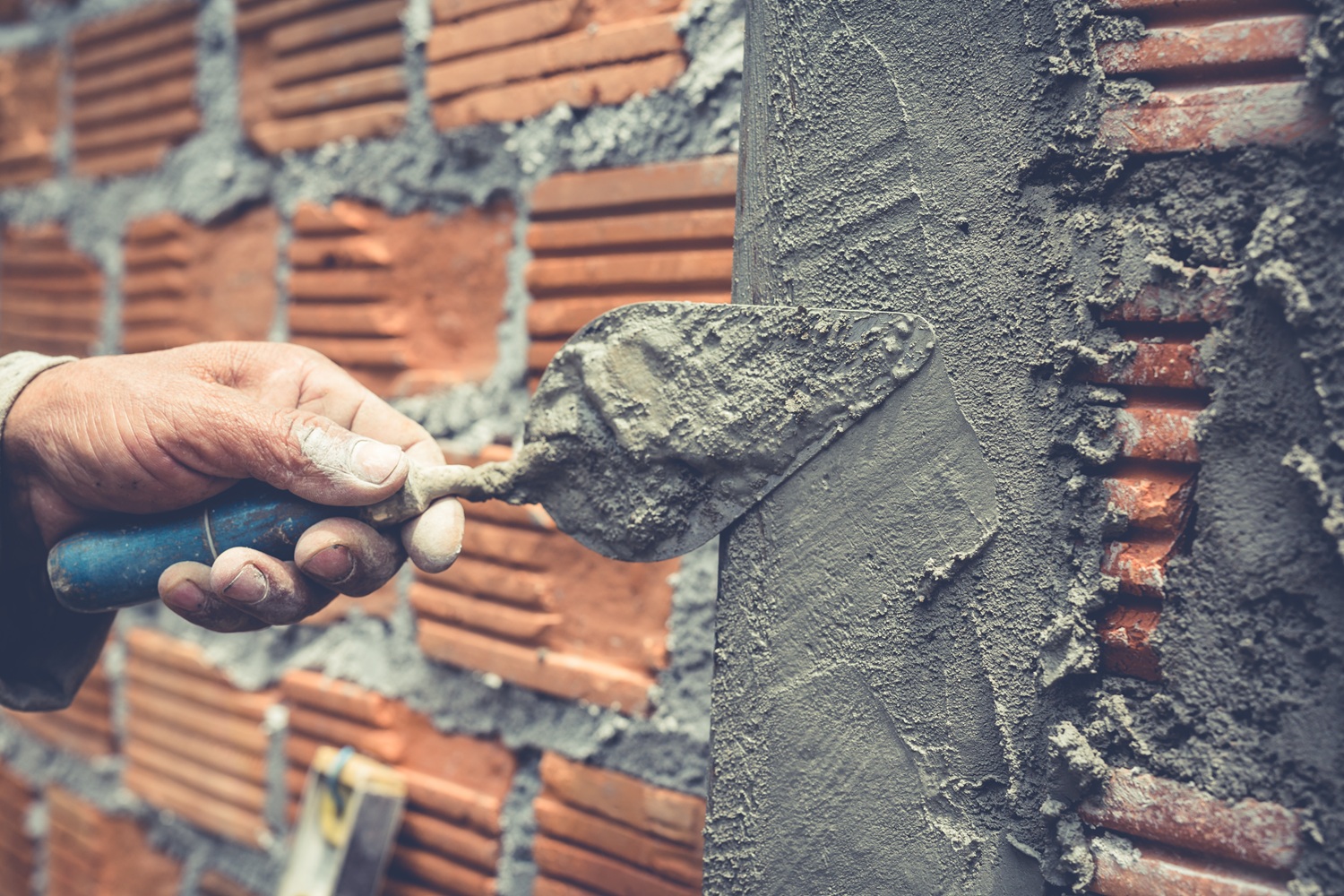
However, solutions weren’t easy to come by. Demonetisation really posed a problem to the retail cement business, where traders generally sell a limited number of bags for end-user consumption. A majority of this business happens either through masons or small-time contractors.
In this issue, we cover the steps taken by Ambuja Cement to mitigate the situation after demonetisation. A number of other companies encouraged their channel partners to move to digital payments through various schemes. POS machines were purchased in bulk and distributed. Help from banks was taken to open bank accounts. However, three months down the line, we find that the enthusiasm in moving towards digital money is fading away.
Why cashless transactions?
When we consider the many advantages that a currency-free system brings to each sector, especially in regards to convenience, efficiency and security, it is easy to appreciate why almost everyone will gladly accept the coming of the cashless economic system without having to be forced into it. But the transfer process will need some handholding and a little bit of force. However, the following parameters must be kept in mind before transiting to a cashless economy:
Problems with Cheques
In our present monetary system, the use of cheques to make payment for a purchase creates a bottleneck, or slows down the process. The system requires more clerical inputs and it is time consuming. In the normal business cycle, issuing post-dated cheques is a common practice. In this issue, we have covered the problems of accepting post-dated cheques and a few relevant points covering the use of these financial instruments. Digital payments, of course, will always be faster and more secure than cheque payments.
Problems with Cash
There are still many problems inherent in doing business with cash. These include waiting for the customer to find the cash they wish to present for payment. More clerks are needed to handle cash transactions. This means inadvertent errors of omission and commission, because the entire payment process is manually supervised. The expenses associated with the handling, counting, and transporting of cash are substantial. The costs of handling and the delays between the time money is received and the time it is available for use, is passed on to the customer in the form of higher prices, or the expense reduces the profits of a company.
No Cheques, No Cash, No Problem
When payment is made using the cashless system, the person making the purchase will be instantly identified and the amount of the purchase will be checked against the customer’s account balance to ensure they have sufficient funds to pay for the goods or services. The sale will then be immediately approved or declined. Once these steps have been taken, the amount of the purchase is immediately transferred from the customer’s account to the business’s financial account.
There’s no problem with insufficient funds, and no time consuming waiting in line by other customers. All of the steps that are needed to complete the transaction will be done in a matter of microseconds.
By eliminating paper currency, coins and cheques, businesses will no longer have the expense of accounting for the cash and paper instruments that come into, or are passed through the business. Businesses will no longer have to transport currency or cheques to the bank. This will allow for a much more efficient, secure, and therefore more profitable use of funds.
There will no longer be any handling, manual counting, or transporting of currency because there will no longer be any form of physical currency. No more transporting funds over streets and highways by armoured vehicles. All ‘money’ will consist of electronic credits stored within and transferred between computers.
Since the cashless system will enable businesses to instantly transfer payments to their accounts, the funds received will be available for immediate use by the business. The other concerns which a cashless economy can easily address are that of security, shoplifting, theft and counterfeit currency.
Human Error
Since money will no longer pass through the hands of employees and all counting will be done by computers, errors due to employees miscounting currency will no longer be a problem. Losses due to currency or cheques being misplaced, lost, or stolen will also be eliminated since physical currency will no longer exist.
Banking partners will also develop over time, and financial technology companies are introducing innovative solutions -especially in the payments space. Many of the traditional processes of a corporate treasury however, have yet to become digital. This creates a mismatch between the digital demands of the consumer and the day-to-day offline practices of a corporate treasurer.
There is one bright hope in our country and that is penetration of mobile phones. The mobile companies would like to take full advantage of mobile connectivity for financial transactions. Also, it is important to note the rise in number of users of e-commerce, a domain which is steadily growing in the country.
With reference to the cement industry, there is no doubt that the sector collectively took steps to face the demonetisation challenge. Individually, every corporate initiated actions to support its channel partners to come out of the blues. However, what was surprising is that various dealer associations spread across the country had a very cold initial response to demonetisation. It is quite likely that all these trade bodies are of the view that more digitalisation will happen when GST is rolled out.
Navroze Dastur, Managing Director, NCR India, says, oCash is like water; a basic necessity without which survival is a challenge. Nevertheless, cash use doesn’t seem to be waning all that much, with around 85 per cent of global payments still made using cash. One of the main reasons is that there is nothing to truly compete with the flexibility of notes and coins.’
He adds, ‘The low literacy rates in rural India, along with the lack of Internet access and power, make things extremely difficult for people to adopt the e-transaction route. The financial technology industry would be unwise to ignore the rise of mobile transaction services, person-to-person networks and the whole range of digital disruption in the payments arena from the likes of Bitcoin, ApplePay and PayPal that undoubtedly is putting pressure on cash.’
The risks associated with electronic payment instruments are far more diverse and severe. Recently lakhs of debit card users had their data stolen by hackers; the ability of Indian financial institutions to protect electronic currency came into question u also an important reason why people favour cash. A report by Boston Consulting Group (BCG) and Google India revealed that last year, around 75 per cent of transactions in India were cash-based, while in developed nations such as the US, Japan, France, and Germany, it was around 20-25 per cent. The depletion in cash due to demoneti?sation has pushed digital and e-transactions to the forefront; e-banking, e-wallets, and other transaction apps are becoming more prevalent. Remember, the modus operandi for corruption is cash. Imagine paying a corrupt official through your e-wallet – it will never happen.
The challenge to go digital
A major obstacle for the quick adoption of alternate modes of payments is Internet penetration, which is crucial because point-of-sale terminals work over mobile Web connections. The low literacy rates in rural India, along with the lack of infrastructure like Internet access and power, make things extremely difficult for people to adopt the e-transaction route.
Cash is here to stay!
As per data in July this year, 881 million transactions were made using debit cards at ATMs and POS terminals. Out of these, 92 per cent were cash withdrawals from ATMs. Currently, there is a mix of cash and cashless transactions happening across the country, while many enablers are working towards turning the cashless economy dream into a reality. We have taken big strides towards becoming a cashless economy; however, it will take more than a generation to change the habit from cash to no cash transactions. Rushing the economy into a cashless state without proper planning and infrastructure will be disastrous and its consequences will be everlasting. A gradual move towards a less-cash society, as envisioned by the Prime Minister, is the right way forward.
Southern cement companies better off during cash crunch
In the December quarter, cement consumption in AP and Telangana grew by 1.4-1.5 million tonnes (MT) per month and by 2-2.2 MT per month in Kerala and Tamil Nadu. Cement prices in the south remained fairly stable compared with a fall in other regions. But for southern companies, volume growth and cost efficiencies brought about a 19 per cent -50 per cent jump in net profits.
Southern cement companies have registered 20 per cent growth in the December 2016 quarter, even as the overall industry was not doing well post demonetisation. There are two reasons for the improved performance. The southern region is largely a non-retail market and hence is less dependent on cash. A strong pick-up in construction activities in Telangana and Andhra Pradesh has resulted in prices remaining firm.
In the next year, Tamil Nadu, Kerala and Karnataka are expected to grow by 4-10 per cent and AP and Telangana are expected to grow by 20-25 per cent. These companies have no capacity expansion planned in the near future, as the capacities they aimed to achieve are up and running. Besides, these companies have reduced debt through operating cash-flows, which has lowered interest expense, enhancing their earnings.
Source: The Economic Times