Economy & Market
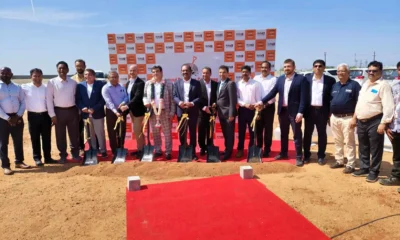
Shree Cement Chairman chalks out growth plans
Published
10 years agoon
By
admin
In an interview with Business Standard, Benu Gopal Bangur, chairman of Shree Cement has said that he plans to ramp up capacity to 40 million tonnes in the next four-five years.
Speaking on the challenges that he faced when Shree Cement started operations, Bangur said that the real problem was finance at that time. The company?s first IPO could only muster subscription of 30 per cent, and the share priced had tanked to Rs 6 from Rs 10.
Bangur told the publication that Punjab National Bank had supported Shree Cement by agreeing to a loan recast, and the company also received support from the State Bank of Bikaner & Jaipur.
The Chairman felt that the business environment had improved from the years when cement used to be a controlled commodity, and producers had no selling rights. However, Bangur said in the interview that the new regulations were causing a slowdown as it takes five to seven years to purchase land for a plant, and procuring the relevant equipment.
He continues to be involved in board meetings and strategic decision-making. Despite a net worth of $5.9 billion, Bangur said that his lifestyle and mode of working remained the same, and he (along with his organisation) would continue to remain debt-free.
World Cement Association to be launched
According to worldcement.com, the World Cement Association (WCA) will be launched to represent and promote the cement industry worldwide, as well as support the commercial and legal interests of its members internationally.
WCA?s corporate members will be worldwide cement manufacturers and will have full voting rights at General Assemblies and will elect the board of directors. World Cement Association has associate memberships for cement equipment manufacturers, logistics, shipping and trading companies, suppliers and service providers to the cement industry. National and regional associations and other related industry bodies will be affiliated members, says the report.
The World Cement Association will give members access to its comprehensive cement industry statistical data service, and will host industry events, seminars and awards. It also aims to promote industry best practice at all levels, especially in emerging markets, with focus areas including sustainability, climate change, health & safety and promoting fair trade practices worldwide.
India?s largest limestone block receives record bid
Rajasthan has received a record eight times the reserved price for the largest limestone block in the country in the e-auction conducted at Udaipur. The block, situated in Jayal tehsil of Nagaur, has 168 million tonnes (MT) of high-grade limestone resources, reports the Times of India.
The news item says that three major cement companies – Emami Cements, JSW Cements and Mangalam Cements – were in the fray for bidding. The reserve price for the block was approximately Rs 35 per tonne. The block received a final bid of around Rs 300 per tonne from Emami Cements which is more than eight times the reserve price.
"This is a major success for the department as it will result in revenue of at least Rs 6,000 crore for the state over the life of the mine, as well as create hundreds of jobs in the area. Rajasthan is already the leading cement manufacturer in the country with the presence of 23 cement plants and this will further consolidate the state?s position," Secretary (Mines) Aparna Arora said in a release.
"The government is committed to making Rajasthan the top mining destination in the country and is taking several steps to boost mining in the state. We are investing in world-class exploration capabilities as well as focusing on clearing all pending applications," the Secretary said.
Domestic cement demand to touch 6% in FY17: ICRA
India?s demand for cement is expected to rise to 6 per cent in the current financial year against 4.6 per cent in 2015-16, ratings agency ICRA has said.
This is expected to support cement prices in the near term. However, the energy cost benefits are expected to reverse in second half of 2016-17, given the recent hike in the pet coke and coal prices, ICRA said in a statement.
ICRA Ratings Senior VP Sabyasachi Majumdar said demand in 2016-17 is likely to be mainly driven by the pick-up in the infrastructure segment, primarily road projects and housing segment and the likelihood of a recovery in the rural demand from second half of this fiscal, given the better monsoons.
"This is likely to support cement prices in near term. Notwithstanding the improved sentiments in these sectors, a number of structural constraints need to be sorted out for project implementation to gather pace in the other infra sub segments," he added.
Pakistan records strong cement sales growth
Total cement dispatches in Pakistan during the first two months of the current fiscal year clocked up at 4.9 MT, a 14 per cent increase from 4.3 MT recorded in the same period of 2015-16. However, according to data released by the All Pakistan Cement Manufacturers Association (APCMA), overall export dispatches have decreased. Exports in July-August were down almost 1 per cent on a year-on-year basis to 1.022 MT. Overall domestic sales in August rose 21 per cent to 3.02 MT from 2.5 MT in August 2015. Cement sales in the north zone were 2.495 MT in August, up 22.6 per cent from a year ago. In the south zone, sales recorded an increase of 13.2 per cent at 0.532 MT from the same month of 2015.
Exports to Afghanistan dropped 12 per cent to 346,928 t in July-August on an annual basis, APCMA data shows. Exports by sea suffered even more. As opposed to 537,120 t exported during the first two months of the preceding fiscal year, exports by sea in July-August 2016 were 407,120 t, showing a 24 per cent decline on an annual basis. However, increased exports to India made up for these shortfalls to some extent. Exports to India during the first two months of the current fiscal year grew 167 per cent year-on-year to 268,230 t.
A spokesman for the APCMA said the industry has been doubling its production capacity every seven to eight years. The buoyancy in the sector on the back of healthy domestic consumption during the last 20 months has encouraged the industry players to go for further capacity expansion. He said growth in the sector during the first two months of the fiscal year was in spite of Eid holidays. Growth of domestic consumption in August was also ?impressive,? as consistent rains failed to hurt construction activities, he added. He said upcoming projects along the China-Pakistan Economic Corridor (CPEC) will further boost cement consumption.
The industry has yet to realise its export potential due to the lack of support from the government. The loss of the Afghanistan market is a matter of concern for the industry, which has been marginalised there because of subsidised Iranian exports.
Cement outlook to improve from Oct
Adversely impacted by heavy rains and sand mining issues, the cement industry?s volumes seem to have slowed down to 22 million tonnes (MT) during August, but is expected to improve from October as construction activities resume post monsoon, says a report from ICICI Securities.
The volumes have been impacted primarily due to decline in cement growth in the north and the central regions. These regions have likely seen a decline of 5-7 per cent in August compared to same year-ago period, due to heavy rains and sand mining issues.
Meanwhile, the eastern part of the country continued with its growth momentum with 6 per cent in the last month over the same period a year ago. The southern region also appeared to have grown 5-6 year-on-year on a low base from last year, the report said.
"Our channel checks suggest cement industry volumes are likely to have grown in low single-digit year-on-year to 22 MT during August (production grew 1.4 per cent year-on-year during July), impacted by heavy rains and sand mining issues, particularly in the North and the Central regions," ICICI Securities said.
However, it said volumes and prices are expected to improve from October as construction activities resume post monsoon. Further, the report said the "average pan-India prices, which saw an estimated 3 per cent month-on-month decline in July, further declined by 1-2 per cent month-on-month. While pet coke prices have risen by ~80 per cent over the past six months and the same is likely to impact margins in a seasonally weak period, we expect it to be passed on to consumers in the medium term."
Nepal imposes ban on a few cement brands
Nepal has imposed a temporary ban on sales of various brands of cement after laboratory tests showed these products did not meet their minimum standards set by the government, according to Republica Online.
The Nepal Bureau of Standards and Metrology (NBSM) has temporarily banned OPC and PPC Super Advance and Infratech cement produced by Shree Araniko Cement Pvt Ltd, and Reliance Super Shakti and Reliance Cement produced by Reliance Cement Pvt Ltd. Likewise, NBSM has imposed a ban on PPC Kalash Gold Cement produced by Shree Cement Pvt Ltd.
According to Bishwo Babu Pudasaini, Director General of NBSM, samples of these cements failed to meet the compressive strength level standards set by the government.
Nepal also banned PPC brand of Bajra Shakti, Tri Shakti Supper and JBC cement produced by Jaya Bageshwori Cements Pvt Ltd, and PPC brand of Yeti, Rock Strong and Gaurav Cement produced by Jay Mangalmaya Cements Pvt Ltd. According to NBSM officials, these samples of PPC exceeded the 28-percent insoluble residue level set by the government.
Courtesy: Business Standard, Economic Times
Concrete
Indian Railways Plans Green Fly Ash Transport Network
Published
2 hours agoon
June 27, 2026By
admin
Specialised rail logistics will move fly ash from power plants to infrastructure industries.
New Delhi
Indian Railways is planning a large-scale green logistics initiative to transport fly ash from thermal power plants to industries where it can be reused in infrastructure and construction activities.
The initiative was discussed during a review meeting chaired by Union Minister for Railways Ashwini Vaishnaw. Union Ministers of State for Railways V Somanna and Ravneet Singh Bittu were also present.
India generates nearly 340 million tonnes of fly ash every year from thermal power plants. The proposed initiative aims to create an efficient rail-based transport system using specialised containers and dedicated logistics arrangements to move fly ash safely from power plants to end-use industries.

Fly ash is widely used in road construction, cement manufacturing, brick production, concrete, blocks and boards. By improving its movement through the railway network, the initiative is expected to support better utilisation of this industrial by-product while reducing environmental concerns linked to storage and disposal.
The move also aligns with India’s circular economy goals by converting waste from thermal power generation into a useful raw material for the construction and infrastructure sectors. Wider availability of fly ash can help reduce material costs in areas such as bricks and cement, supporting more affordable infrastructure and housing development.
Through this initiative, Indian Railways aims to provide a cleaner, safer and more organised transport solution for fly ash, turning an environmental challenge into an infrastructure resource.
Gears, drives, and motors have evolved from essential mechanical components into strategic enablers of reliability, efficiency, and sustainability in modern cement plants. ICR explores how advanced motion technologies, predictive maintenance, digitalisation, and intelligent drive systems are helping cement manufacturers reduce downtime, optimise energy use, and build future-ready operations.
As the Indian cement industry prepares for another phase of capacity expansion, the focus is shifting from merely increasing production volumes to improving operational efficiency, reliability, and sustainability. According to industry estimates, India is expected to add nearly 160–170 million tonnes of cement capacity between FY26 and FY28, driven by infrastructure investments, urbanisation, and housing demand. In this environment, gears, drives, and motors have emerged as critical enablers of productivity, forming the backbone of every major process from raw material extraction and grinding to clinker production and cement dispatch.
Motors alone account for nearly 60 per cent to 70 per cent of industrial electricity consumption globally, according to the International Energy Agency (IEA), while rotating equipment failures remain among the leading causes of unplanned downtime across heavy industries. In cement plants, where equipment operates under high loads, extreme dust conditions, elevated temperatures, and continuous-duty cycles, the performance of gears, drives, and motors directly influences energy consumption, maintenance costs, plant availability, and overall profitability. As digitalisation and Industry
4.0 technologies gain momentum, these systems are evolving from passive mechanical components into intelligent assets capable of delivering real-time operational insights.
Why gears, drives, and motors are the backbone of cement plant operations
Every major process in a cement plant depends on the seamless operation of gears, drives, and motors. Raw mills, vertical roller mills, crushers, kiln drives, conveyor systems, fans, and clinker coolers all rely on rotating equipment to maintain continuous production. A failure in any one of these systems can disrupt entire process chains, highlighting their strategic importance.
Modern cement plants process thousands of tonnes of material daily, requiring equipment capable of transmitting enormous torque while maintaining precision and reliability. Kiln drives and grinding systems, in particular, operate under some of the highest mechanical loads found in industrial manufacturing. The ability of gears and motors to withstand these conditions directly impacts plant throughput and production stability.
Satish Maheshwari, Chief Manufacturing Officer, Shree Cement says, “Effective lubrication management remains one of the most critical factors in extending the lifespan of cement plant drive systems. Proper lubrication, supported by regular oil analysis, vibration diagnostics, and condition monitoring, helps minimise wear, prevent unexpected failures, and maintain the integrity of critical components such as gearboxes, motors, and drive assemblies. By identifying potential issues at an early stage, plants can move from reactive maintenance to a more proactive and reliability-focused approach.”
“Smart motors, intelligent drives, and next-generation gearboxes are set to redefine cement plant maintenance and performance. Equipped with embedded sensors, IoT connectivity, digital twins, and AI-driven diagnostics, these technologies enable real-time condition monitoring, predictive maintenance, and seamless digital integration. As the industry embraces Industry 4.0, smart drive systems will play a pivotal role in improving energy efficiency, reducing downtime, and optimising asset performance across the cement manufacturing value chain” he adds.
Industry studies suggest that rotating equipment accounts for a significant proportion of maintenance expenditure in process industries. Effective design, selection, and maintenance of gears, drives, and motors therefore have a direct influence on asset utilisation, operational efficiency, and total cost of ownership.
The cost of downtime: reliability challenges in rotating equipment
Unplanned downtime remains one of the most expensive challenges facing cement manufacturers. Industry estimates indicate that a major failure involving a critical gearbox, kiln drive, or grinding mill can result in production losses running into lakhs of rupees per hour, depending on plant capacity and operating conditions.
Sanjeev Arora, President – Motion Business & IEC LV Motors Division, ABB India says, “One of the most significant shifts taking place in industrial decision-making today is moving away from evaluating equipment based solely on upfront capital cost toward understanding total cost of ownership (TCO). In a typical motor system, the purchase price often represents only a small fraction of the total lifecycle cost however energy consumption, maintenance requirements, downtime and operating efficiency account for the vast majority of long-term operational expenses. For cement manufacturers operating in highly competitive markets, this distinction is critical.”
“A high efficiency motor paired with an appropriately configured variable speed drive may require a higher initial investment, but the long-term benefits are substantial. Reduced electricity consumption, lower maintenance needs, longer service intervals and improved process stability can deliver faster payback and stronger profitability over time” he adds.
Cement plants present a particularly challenging environment for rotating equipment. Dust ingress, thermal fluctuations, shock loads, vibration, shaft misalignment, and lubrication contamination contribute significantly to equipment degradation. Studies by SKF indicate that nearly 50 per cent of bearing failures are linked to lubrication issues and contamination, while improper alignment and vibration-related problems remain leading causes of gearbox and motor failures.
Energy-efficient motors and drives: unlocking operational savings
Energy is one of the largest operating expenses for cement manufacturers, often accounting for 25 per cent to 35 per cent of total production costs. Grinding operations alone can consume nearly 60 per cent to 70 per cent of a plant’s electrical energy, making energy-efficient motors and drives a strategic investment.
According to the International Energy Agency, high-efficiency motors combined with Variable Frequency Drives (VFDs) can reduce energy consumption by 20 per cent to 30 per cent in suitable applications. By matching motor speed and torque to actual process requirements, VFDs minimise unnecessary power consumption while reducing mechanical stress on equipment, improving both efficiency and reliability.
Advances in gearbox design and power transmission technologies
Modern gearbox technology has evolved significantly in response to the increasing demands of cement manufacturing. Advanced materials, case-hardened gears, optimised tooth profiles, improved surface finishing, and enhanced lubrication systems are helping reduce friction, wear, and thermal loading.
Girish Hanchate, Director – Industrial Market, India SKF India (Industrial) says, “Smart diagnostics are significantly improving the lifecycle of gears, motors, and other rotating equipment by enabling a shift from reactive maintenance to condition-based asset management. Hidden issues such as vibration anomalies, bearing defects, misalignment, and temperature fluctuations can quietly reduce plant throughput by 10 per cent to 20 per cent while increasing energy consumption long before a breakdown occurs. By leveraging advanced sensors, predictive analytics, machine learning, and real-time monitoring of vibration, temperature, and motor current, cement manufacturers can detect developing faults early, optimise maintenance schedules, and prevent costly secondary damage. This not only improves reliability but also supports energy efficiency and sustainability objectives.”
“The next major evolution in drive and bearing technology lies in the development of fully integrated smart mechanical ecosystems that combine high-performance bearings, advanced lubrication management, and digital intelligence. Sensor-enabled condition monitoring embedded directly within bearings and drive systems allows operators to capture critical operational data at the source, enabling predictive maintenance and real-time performance optimisation. Innovations such as SKF’s VA9A1 Spherical Roller Bearing series, engineered specifically for demanding cement applications such as crushers and kilns, demonstrate this trend. By increasing internal bearing space and optimising lubricant flow, these designs improve grease retention, reduce wear, minimise downtime, and create more resilient, energy-efficient rotating equipment systems for the future of cement manufacturing” he adds.
Manufacturers are increasingly focusing on compact, high-torque gearbox designs capable of delivering higher power density while maintaining service life. Innovations such as condition-monitored gear systems, improved sealing technologies, and modular gearbox architectures are simplifying maintenance while enhancing operational reliability.
Predictive maintenance, condition monitoring, and asset health management
The shift from reactive to predictive maintenance is transforming asset management across the cement industry. Technologies such as vibration monitoring, thermography, oil analysis, ultrasound testing, and motor current signature analysis are enabling operators to identify potential failures before they occur.
Research by Deloitte suggests that predictive maintenance can reduce breakdowns by up to 70 per cent and lower maintenance costs by 25 per cent. In cement plants, where shutdown windows are limited and equipment operates continuously, predictive maintenance offers a powerful tool for improving reliability and extending asset life.
Digitalisation, industry 4.0, and the rise of intelligent drive systems
Industry 4.0 technologies are redefining the role of gears, drives, and motors. Smart sensors embedded within motors, bearings, and gear systems can continuously monitor temperature, vibration, load, lubrication condition, and energy consumption.
Girish Hanchate says, “As the industry embraces automation, sustainability, and digital transformation, the importance of intelligent motion technologies will continue to grow. The convergence of advanced engineering, predictive maintenance, and Industry 4.0 solutions is creating a new generation of cement plants where reliability, efficiency, and sustainability work together to deliver long-term value. For cement manufacturers navigating increasing production demands and environmental expectations, investing in smarter gears, drives, and motors is no longer optional—it is a business imperative.”
Cloud-based monitoring platforms and Industrial Internet of Things (IIoT) architectures enable maintenance teams to access equipment health data remotely, improving visibility across geographically dispersed operations. Advanced analytics and
artificial intelligence are further enhancing fault detection capabilities, enabling more accurate maintenance planning.
The emergence of digital twins represents another significant development. By creating virtual replicas of physical assets, operators can simulate operating conditions, predict failures, optimise maintenance schedules, and improve lifecycle management decisions. These technologies are helping transform rotating equipment into intelligent assets that actively contribute to operational decision-making.
Building future-ready cement plants through smart motion technologies
The future of cement manufacturing will depend heavily on the ability to integrate mechanical reliability with digital intelligence. Smart motion technologies combine high-efficiency motors,
intelligent drives, condition monitoring systems, and automation platforms to create more responsive and efficient operations.
Sustainability goals are also accelerating investment in advanced motion technologies. Reduced energy consumption, improved equipment efficiency, and extended asset life contribute directly to lower carbon emissions and reduced resource consumption.
These benefits align closely with the industry’s decarbonisation objectives.
As capacity expansions continue across India, future-ready cement plants will increasingly prioritise reliability, flexibility, and data-driven decision-making. Organisations that successfully integrate smart motion technologies into their operations will be better positioned to reduce costs, improve productivity, and maintain a competitive advantage in a rapidly evolving market.
Conclusion
Gears, drives, and motors are no longer viewed solely as mechanical components; they have become strategic assets that influence every aspect of cement plant performance. Their reliability affects production continuity, their efficiency impacts operating costs, and their digital capabilities increasingly shape maintenance and operational strategies.
- –Kanika Mathur
Lubrication has evolved from a routine maintenance activity into a critical driver of reliability, energy efficiency, and sustainability in cement manufacturing. ICR explores how advanced lubricants, predictive maintenance, and Total Lubrication Management are helping cement plants reduce downtime, optimise performance, and achieve long-term operational excellence.
In the cement industry, discussions around operational excellence often focus on kiln efficiency, alternative fuels, digitalisation, and process optimisation. Yet one of the most influential factors affecting equipment reliability, energy consumption, maintenance costs, and sustainability often receives far less strategic attention: lubrication. From vertical roller mills and kiln drives to crushers, conveyors, clinker coolers, and large industrial gearboxes, every critical asset depends on effective lubrication to minimise friction, reduce wear, and ensure uninterrupted operation.
The importance of lubrication extends far beyond routine maintenance. According to tribology research, nearly 23 per cent of global energy consumption is associated with overcoming friction and replacing worn components. Researchers have estimated that implementing advanced tribological practices could reduce global energy consumption by as much as 8.7 per cent in the long term. For cement manufacturers operating in highly demanding environments characterised by abrasive dust, heavy loads, high temperatures, vibration, and continuous operations exceeding 8,000 hours annually, lubrication has evolved from a maintenance function into a strategic lever for reliability, sustainability, and profitability.
The significance of this opportunity becomes even clearer when viewed against the backdrop of the cement industry’s environmental challenges. According to the International Energy Agency (IEA), cement manufacturing accounts for approximately 7–8 per cent of global CO2 emissions and consumes nearly 5 per cent of industrial energy worldwide. While much attention is rightly directed toward alternative fuels, clinker factor reduction, and carbon capture technologies, maintenance practices such as lubrication remain one of the most practical and immediately deployable avenues for improving efficiency and reducing emissions.
Why lubrication is critical to cement plant reliability
Cement manufacturing relies on some of the most heavily loaded rotating equipment found in industrial production. Kiln support rollers, girth gears, vertical roller mills, crushers, conveyors, ID fans, and large gearboxes operate under extreme conditions where temperatures, loads, and contamination levels routinely challenge equipment integrity. Under such circumstances, lubricants serve not merely as friction-reducing agents but as essential protective barriers that prevent metal-to-metal contact, dissipate heat, minimise wear, and extend component life.
A modern integrated cement plant may contain thousands of lubrication points distributed across critical and auxiliary equipment. Even a minor lubrication-related issue can escalate rapidly when equipment operates continuously around the clock. Unlike batch manufacturing operations, cement plants often have limited opportunities for shutdowns, making asset reliability a key business priority. Effective lubrication directly contributes to machine availability, process stability, and production continuity.
Industry studies consistently demonstrate the relationship between lubrication and reliability. Research published by SKF indicates that approximately 36 per cent of premature bearing failures are caused by poor lubrication practices, while bearing damage accounts for nearly 50 per cent of rotating equipment failures globally. Similarly, studies by Machinery Lubrication have found that improper lubrication contributes to roughly 43 per cent of mechanical failures and more than half of bearing-related breakdowns. These statistics highlight a critical reality: lubrication is not simply a maintenance task but a reliability strategy.
The consequences of lubricant failure extend well beyond replacement parts. A failed bearing in a vertical roller mill, kiln drive, or critical conveyor system can trigger extended downtime, emergency maintenance costs, production losses, and supply chain disruptions. In large integrated cement plants, even a few hours of unplanned downtime can result in significant financial losses, making lubrication one of the most cost-effective reliability investments available.
Hidden cost of poor lubrication management
Many organisations continue to treat lubrication as a consumable expense rather than a strategic asset management function. This mindset often results in inconsistent lubrication schedules, incorrect lubricant selection, contamination issues, over-lubrication, under-lubrication, and inadequate monitoring practices. The resulting impact is often far greater than the actual cost of the lubricant itself.
Professor Procyon Mukhejee says “Lubricant purchasing often followed a conventional sourcing model: negotiate annual contracts, standardise product grades and optimise price. That logic is still relevant but no longer sufficient. In a cement plant, a lower-cost lubricant that reduces purchase spend may increase oil replacement frequency, raise wear rates or contribute to avoidable downtime. That trade-off is forcing procurement teams to think differently.”
According to industry research, up to 70 per cent of mechanical failures can be linked to contamination, improper lubricant selection, or inadequate lubrication practices. Noria Corporation estimates that world-class lubrication programmes can reduce maintenance costs by 20–40 per cent and extend equipment life by as much as 50 per cent. Conversely, reactive lubrication practices increase spare-part consumption, raise labour requirements, accelerate equipment wear, and elevate operational risk.
The hidden costs are particularly severe in cement plants because contaminants such as dust, moisture, and wear particles are ever-present. Even microscopic contaminants can damage bearing surfaces and gear teeth, leading to premature failure. Poor lubrication management also increases energy consumption because higher friction levels require greater power input to maintain production rates. As a result, the true cost of poor lubrication extends far beyond maintenance budgets and directly impacts overall plant profitability.
Lubricants and energy efficiency
Energy represents one of the largest operating expenses in cement manufacturing. Grinding operations alone account for approximately 60–70 per cent of total electrical energy consumption within a typical cement plant. Consequently, any improvement in equipment efficiency can generate substantial cost savings over time.
Lubricants contribute directly to energy efficiency by reducing friction between moving surfaces. Lower friction means less resistance, lower operating temperatures, and reduced power requirements. Advanced lubricant formulations are specifically designed to optimise film strength while minimising energy losses across gears, bearings, and hydraulic systems.
Dr SB Hegde, Global Cement Industry Expert says, “One of the most overlooked aspects of lubrication in cement plant operations is effective contamination control combined with disciplined greasing practices. Cement dust, which is often harder than bearing steel, can mix with lubricants and create an abrasive grinding paste that accelerates wear and is responsible for a significant share of bearing failures. Despite this, many plants still rely on manual, time-based greasing and outdated sealing systems, resulting in higher energy consumption, premature component wear, and frequent unplanned shutdowns. Automatic lubrication systems, coupled with robust dust exclusion measures, remain one of the most underutilised yet effective reliability solutions in the industry.”
“Smart lubrication practices can have a direct and measurable impact on both profitability and sustainability. The use of high-performance synthetic lubricants, combined with predictive oil condition monitoring, can typically deliver energy savings of 3–4 per cent, translating into substantial annual cost reductions for cement manufacturers. In one notable case, a large cement producer implemented wireless condition monitoring alongside advanced lubrication practices on critical assets and achieved a 57-times return on investment within six months. The initiative generated savings exceeding `8.4 crore and prevented a major bearing failure that could have caused more than 160 hours of downtime, highlighting the significant financial value of proactive lubrication management” he adds.
Research by ExxonMobil and other lubricant manufacturers has demonstrated that synthetic lubricants can reduce energy consumption in industrial gear systems by 2–6 per cent under appropriate operating conditions. While these savings may appear modest on an individual machine basis, the cumulative impact across multiple mills, fans, conveyors, and drive systems can be considerable. For large cement manufacturers operating energy-intensive facilities, even a 2 per cent reduction in power consumption can translate into significant annual cost savings.
Furthermore, reduced friction contributes to improved equipment performance and lower heat generation, enabling machinery to operate more consistently under demanding conditions. In an industry where energy efficiency and carbon reduction targets are becoming increasingly important, lubrication represents a practical pathway for achieving measurable improvements.
Advances in synthetic and high-performance lubricants
The lubricant industry has undergone significant transformation over the past decade. Traditional mineral oils are increasingly being supplemented or replaced by synthetic and semi-synthetic formulations engineered specifically for demanding industrial applications.
Modern synthetic lubricants provide superior oxidation resistance, thermal stability, viscosity retention, load-carrying capacity, and wear protection compared to conventional products. These characteristics are particularly valuable in cement applications where equipment is exposed to extreme temperatures, heavy loads, and continuous operation.
Many premium synthetic lubricants now deliver service lives two to five times longer than traditional mineral oils. This not only reduces lubricant consumption but also minimises maintenance interventions and associated downtime. For cement manufacturers, extended oil drain intervals can significantly improve equipment availability and reduce lifecycle costs.
Synthetic gear oils have gained widespread acceptance in applications such as kiln drives, vertical roller mills, and high-load gearboxes. Field studies have reported gearbox temperature reductions of up to 10°C following conversion from conventional lubricants to advanced synthetic alternatives. Lower operating temperatures contribute directly to improved component life, reduced oxidation, and enhanced overall reliability.
Predictive maintenance, oil analysis, and condition monitoring
The emergence of predictive maintenance has transformed lubrication from a reactive maintenance activity into a proactive asset management discipline. Rather than relying solely on time-based maintenance schedules, cement plants increasingly use oil analysis and condition monitoring technologies to assess equipment health continuously.
Oil analysis provides a wealth of information about both lubricant condition and machine health. Parameters such as viscosity, oxidation, contamination levels, moisture content, additive depletion, and wear particle concentrations can reveal developing problems long before equipment failure occurs. In many cases, lubrication-related abnormalities represent the earliest warning signs of impending mechanical issues.
Gaurav K Mathur says “Dust contamination remains the single biggest lubrication-related challenge affecting cement plant productivity today. Airborne silica and clinker dust penetrate bearings, gear housings, and lubrication systems, transforming lubricants from protective agents into abrasive mediums. These contaminants are often as hard as bearing steel and create a three-body abrasion mechanism that rapidly accelerates wear, especially under the high temperatures, shock loads, vibration, and continuous-duty operating conditions typical of cement plants. Poor sealing systems can increase wear rates by three to five times, leading to premature failures, rising maintenance costs, and reduced equipment life. Compounding the issue is a growing industry-wide shortage of experienced lubrication professionals, resulting in a loss of critical maintenance expertise and an increasing reliance on reactive rather than predictive maintenance.”
Reliability experts frequently describe oil analysis as a “blood test” for machinery because it provides valuable insights into internal equipment conditions without requiring disassembly. Studies suggest that every dollar invested in predictive maintenance can generate returns of five to ten dollars through avoided failures and reduced downtime.
Leading cement producers increasingly combine oil analysis with vibration monitoring, thermography, ultrasonic inspection, and digital condition monitoring platforms. This integrated approach enables maintenance teams to move from reactive maintenance to predictive asset management, reducing downtime while improving equipment lifespan and operational reliability.
Total lubrication management: a strategic approach to asset health
As reliability expectations continue to increase, many cement manufacturers are adopting Total Lubrication Management (TLM) programmes.
TLM extends beyond lubricant selection and incorporates every aspect of lubrication management, including storage, handling, contamination control, application methods, oil analysis, training, and continuous improvement.
Gaurav K Mathur, Director & Chief Executive, Global Technical Services says, “Smarter lubrication practices can significantly reduce both energy consumption and maintenance expenditure. The implementation of Total Lubrication Management (TLM), supported by careful lubricant selection, customised lubrication strategies, and robust contamination control, helps reduce friction across critical equipment and improve operational efficiency by up to 3 per cent. In energy-intensive cement plants, even marginal efficiency gains can translate into substantial cost savings. Improved lubrication practices also reduce wear, minimise overheating, extend equipment life, and lower the frequency of maintenance interventions, directly contributing to higher plant availability and lower total operating costs.”
“The most impactful innovation for the cement sector will not be a single lubricant product but the widespread adoption of Total Lubrication Management as a structured reliability framework. TLM integrates contamination control, oil analysis, condition-based maintenance, online filtration, lubricant regeneration, digital tracking, and condition monitoring into a unified system. This approach transforms lubrication from a routine maintenance activity into a strategic asset management function. The result is improved equipment reliability, reduced lubricant consumption, lower waste generation, enhanced energy efficiency, and a smaller carbon footprint. In an industry characterised by harsh operating environments and growing sustainability expectations, TLM offers a practical pathway to achieving higher reliability, improved profitability, and long-term operational sustainability” he adds.
One of the primary objectives of TLM is contamination control. Dust, moisture, and wear particles are widely recognised as the leading causes of lubricant degradation and equipment failure. Given the inherently dusty environment of cement plants, effective contamination control becomes essential for maintaining lubricant quality and equipment health. Another important component of TLM is lubricant consolidation. Many plants operate with dozens of lubricant grades, increasing inventory complexity and the risk of cross-contamination. Best-in-class lubrication programmes often reduce lubricant inventories by more than 30 per cent while simultaneously improving operational reliability.
Training also plays a critical role. Industry surveys suggest that fewer than half of lubrication technicians receive formal lubrication training. Yet organisations that invest in lubrication education consistently report lower failure rates, improved maintenance performance, and better asset utilisation. One widely cited industrial case study documented a reduction in bearing failures from nearly 400 per month to just 12 after implementing comprehensive lubrication excellence initiatives.
Supporting sustainability
Sustainability has become a central priority across the cement industry. While alternative fuels and carbon capture technologies often dominate discussions, lubrication also contributes significantly to environmental performance.
Longer-lasting lubricants reduce waste oil generation and disposal requirements. Large integrated cement plants may consume tens of thousands of litres of lubricants annually, making lubricant lifecycle management an important sustainability consideration. Extending drain intervals by even 50 per cent can substantially reduce lubricant consumption and associated environmental impacts. Improved lubrication also extends equipment life, reducing demand for replacement components and lowering the environmental footprint associated with manufacturing, transportation, and installation activities. By reducing friction and wear, lubricants enable machinery to operate more efficiently while consuming less energy.
Tribology researchers Holmberg and Erdemir estimate that advanced friction-reduction technologies could potentially reduce global carbon emissions by up to 1,460 million tonnes annually. Although this figure spans multiple industrial sectors, it
highlights the enormous sustainability potential of improved lubrication practices. For cement manufacturers pursuing net-zero ambitions, lubrication represents one of the most accessible and cost-effective tools available.
Digitalisation, automation, and smart monitoring
The future of lubrication management is increasingly digital. Smart sensors, Industrial IoT platforms, automated lubrication systems, and artificial intelligence are changing how maintenance teams manage equipment health.
Modern lubrication monitoring systems can continuously track temperature, viscosity, moisture levels, contamination levels, and lubricant condition in real time. This enables maintenance personnel to identify emerging issues before they affect production, allowing interventions to be planned rather than forced by equipment failures.
“The future of lubrication management will be defined by the integration of smart, data-driven, and automated systems powered by IoT sensors, artificial intelligence, and real-time oil condition monitoring. These technologies are enabling a shift from traditional schedule-based lubrication to predictive and prescriptive maintenance, where lubricant quantity, frequency, and selection are optimised based on actual equipment condition. The result will be near-zero unplanned downtime, lower lubricant consumption, higher equipment reliability, and improved Overall Equipment Effectiveness (OEE). As India continues to add significant cement manufacturing capacity, early adopters of intelligent lubrication technologies will gain a competitive advantage through lower operating costs, greater reliability, and stronger sustainability performance” says Dr Hegde.
Automated lubrication systems are also becoming more prevalent throughout the cement industry. By delivering precise lubricant quantities at predetermined intervals, these systems eliminate many of the inconsistencies associated with manual lubrication practices. The result is improved equipment protection, lower lubricant consumption, and enhanced reliability.
Market analysts forecast the global predictive maintenance market to exceed $50 billion by 2030, reflecting the growing importance of data-driven maintenance strategies. As digital technologies continue to mature, lubrication will become an increasingly integrated component of broader asset performance management systems.
Conclusion
As cement manufacturers pursue greater productivity, higher sustainability standards, and improved operational resilience, lubrication must be recognised as a strategic business function rather than a routine maintenance activity. The evidence is overwhelming: effective lubrication improves reliability, reduces energy consumption, extends equipment life, lowers maintenance costs, and supports sustainability objectives simultaneously.
The next frontier of cement plant optimisation will not be driven solely by larger kilns, more efficient mills, or alternative fuels. It will also be shaped by how effectively operators manage the health of their critical assets. Through advanced lubricants, predictive maintenance, oil analysis, contamination control, and Total Lubrication Management programmes, cement manufacturers can unlock substantial gains in operational performance while supporting long-term environmental and business goals.
In an increasingly competitive industry, lubrication is no longer merely about reducing friction. It is about enabling reliability, protecting profitability, and creating a foundation for sustainable growth. The plants that recognise this shift and invest in lubrication excellence today will be best positioned to meet the performance demands of tomorrow.
Indian Railways Plans Green Fly Ash Transport Network
ACC To Expand Cement Capacity Amid Strong Infrastructure Demand
Ambuja Sees Cement Demand Easing To Around Five Per Cent In FY27
Powering Cement Through Intelligent Motion
Liquid Intelligence
Indian Railways Plans Green Fly Ash Transport Network
ACC To Expand Cement Capacity Amid Strong Infrastructure Demand
Ambuja Sees Cement Demand Easing To Around Five Per Cent In FY27
Powering Cement Through Intelligent Motion