Economy & Market
It makes more sense to acquire plants rather than build them
Published
9 years agoon
By
admin
Rajnish Kapur, Business Head – Grey Cement, JK Cement
In a freewheeling interview, Rajnish Kapur, Business Head – Grey Cement, JK Cement, speaks on his company?s expansion plans and the state of the cement industry at large.
Give us some idea of the JK group and its foray into the cement business. What are your plans for expansion?
JK Cement is part of the multidisciplinary industrial conglomerate JK Organisation. We have over four decades of experience in cement manufacturing across the core categories of grey cement and white cement with value-added products like wall putty and waterproofing compounds, etc. Our enduring strength remains in our diverse product portfolio, high quality raw materials, consistently growing capacity, an extensive marketing and distribution network and the technical knowhow. JK Cement entered into the cement business by commencement of commercial production at the Nimbahera facility in 1975 with an annual capacity of 0.3 MTPA. With constant upgradation, the unit?s present capacity has touched 3.25 MTPA. It is equipped with a waste heat recovery system of 13.2 MW to reduce the electrical energy cost and utilise waste heat. The Mangrol facility?s commercial production commenced in 2001 with 0.75 MTPA capacity which has increased to 2.25 MTPA, along with a 25 MW captive power plant, a 10 MW waste heat recovery plant and a split grinding unit at Jharli with a capacity of 1.5 MTPA.
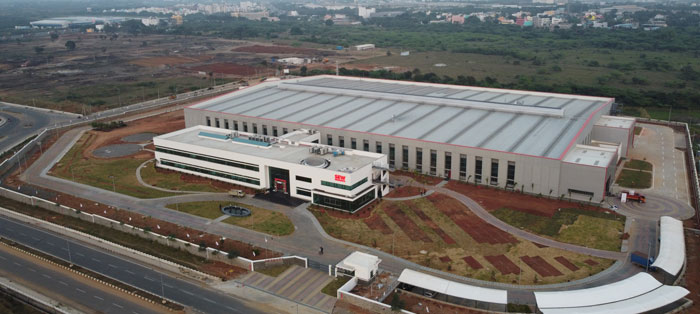
Near Muddapur village of Karnataka, we have a 3 MTPA plant which is based on Portland and slag cement. The Muddapur facility is equipped with the most advanced technology available in the global market, making it the most modern plant.
The Gotan facility at Rajasthan is a dual-process plant with the capability of manufacturing grey cement as well as white cement. The Gotan facility?s existing grey cement capacity stands at 0.5 MTPA. We were the first in India to build a white cement facility. The white cement plant was commissioned at Gotan in 1984, with an initial production capacity of 0.05 MTPA. Over the years, continuous process improvements and modifications have enhanced the plant?s production capacity to 0.6 MTPA. Our wall putty capacity was 30,000 tonnes per annum in 2005, which increased to 5 lakh tonnes in 2013. With the commissioning of the Katni unit, the capacity has surged to 7 lakh tonnes.
How has the consolidation phase in the cement industry progressed so far? Do you expect more consolidation to happen, or less, in the next 10 years?
I think in the year 2008 when I joined the cement industry, we saw the meltdown at the global level. Especially, I remember in a country like Spain, the cement consumption suddenly dropped to what it was 40 years back. But before that, the industry was doing very well from the global perspective. In India, the last couple of years have seen about 40 million tonnes of capacity changing hands. The reasons are many, but inability to service debt due to high infrastructure cost is one of the most prominent reasons. But mergers per se are not new to us. We saw the first consolidation taking place way back in 1936, where 10 existing cement companies came together under one umbrella in a historic merger and formed ACC. It is a matter of opportunity. Today, setting up a plant after acquisition of land has become extremely difficult. It makes more sense to acquire plants rather than build them. At present, there is huge surplus capacity over demand. In a wider sense, it helps the economy. The chances are that consolidation may make some players very strong, but it is taken care of by the Competition Commission laying down strict guidelines for acquisition. We, at JK, are watching the emerging opportunities and will take appropriate decisions when needed. As per my understanding, a reasonable amount of consolidation has already taken place, and while there may not be many big ticket acquisitions in the offing, standalone plants may still come up for sale.
Do you think there is a disconnect between the GDP numbers and the demand growth the cement industry is witnessing? At GDP growth of 7.6 per cent, the cement industry?s growth should have been more than 10 per cent…
The historic conversion ratio of cement industry growing at 2 to 2.5 per cent over GDP has seen a shift in the past decade or so. This may be attributable to a shift in the major drivers of cement demand growth; for example, there is a difference in the dependence of cement growth on infra today. Housing, being the biggest driver of growth, has seen a slowdown due to a number of unsold dwellings in the market. The large infra projects need a long gestation period and are now in the take-off phase. We, however, need to look at the Indian cement industry in context of the global scenario, wherein Indian growth is actually much higher than peers and developed economies. On a near-term analysis, with this year having good monsoons and the government infra push, we should see a positive impact. Over the long term, we should see road & highway projects, Smart Cities, ?Housing for All?, Metro projects, etc., driving growth.
Does JK Cement have any new market initiatives planned in the near future?
Customer orientation and service is our mission and we are constantly evaluating as to how we can improve our offerings to the customer. The first and foremost responsibility is to deliver a product that exceeds all quality parameters and we at JK Cement have the best quality monitoring systems in place. We are also taking a number of steps to improve our service to the customer. In terms of logistics, we are ensuring that we reach our network most efficiently. In the recent past, we have taken a number of steps to improve the capabilities of our own team, as well as our channel partners. Regular meetings with our channel partners are helping us understand the market needs correctly, and regular market visits by all in the hierarchy help us to be proactive in our service to the end customer. One area where we have made a paradigm shift is to separate the technical support activities for our grey cement and white cement divisions. With this, we are able to focus more diligently on the requirements of our respective customers. In continuation to this, we are also establishing concrete labs in different cities. We are also working on having a deeper penetration of our network. We have also planned various new initiatives in the near future, like we are working on a ?Go to Rural Market Model? to reach out to our rural customers. We have also recently launched a new influencer management scheme by which we hope to engage our influencers more meaningfully. Also, we will be adding various new value-added services for our customers and professionals looking at their needs, which will help them in building strong homes.
We have added a number of large infra players to our portfolio, and since the last year, JK Cement has been recognised as one of the major suppliers for big projects in the country. We have significantly increased our key account capability and this has also helped us get good brand visibility. Sustaining a good key account is not an easy task as we have to meet the expectations of various stakeholders in terms of product quality and supplies. Our product range is already approved by various agencies, which reflects the confidence of large buyers in our product quality. We also keep a close tab on the market to understand how our cement is performing in the hands of our customers. Our aim is to produce the best cement and provide the best service to our customers.
JK Cement has been ahead of others in power generation through Waste Heat Recovery (WHR); please give us some insight into how you have been doing it…
Our CMD, YP Singhania, is a great visionary. Living up to its reputation of pioneering many firsts in India, JK Cement became the first company to invest in installation of a WHR concept-based 10 MW power plant in India, in collaboration with TEC, Japan in 2008, and got carbon credit certificates under CDM, initiated by the World Bank, to reduce the carbon dioxide footprint. It was increased to 13.2 MW in the following years. As the plant capacity increased during the years due to upgradation in Nimbahera and new lines in Mangrol, we have today reached a total of 23.2 MW of WHR capability. In Muddapur, Karnataka, captive power plants were conceived along with the project and 2 x 25 MW coal based plants were installed.
Our current focus is to improve our capability to use AFR. Taking inspiration from the best companies in this field, we would like to improve our capabilities significantly. It makes good business sense, and it also helps the country.
How is the PAT scheme working for the industry, and more particularly, how is it working for JK Cement?
Perform Achieve and Trade is a scheme started by the Government of India under various international agreements to reduce the footprint of GHG (Green House Gases) by way of improving energy efficiency in energy intensive manufacturing sectors like steel, cement, etc. The Bureau of Energy Efficiency was set up under the Energy Ministry to look after this legally binding scheme. We have completed the 1st cycle of audit, and achieved our target. It is always easy to complete the first cycle. It is like an examination – getting up to 70 per cent of marks is fairly easy, but to increase the percentage from 80 to 85 is fairly difficult. We got the credit certificates for the first phase, but the 2nd cycle is going to be tough. We feel that the PAT scheme as such makes good business sense also; it?s not to be looked upon merely as a push from the government. In the second cycle, we are taking many small steps. Our focus is lowering electrical and thermal energy. We have planned investments accordingly – the major one being replacing drives with variable speed drives.
How has been the performance of JK Cement in the production of blended cements? Is JK planning to start production of composite cement? What do you think about the market for composite cements?
JK Super Cement is one of the premium grey cement brands in the country, available as Portland Pozzolana Cement (PPC). The product complies with quality standards specified by the Bureau of Indian Standards (BIS) and is much in demand, from both the retail and the institutional segments.
When I was at Bangladesh, we tried making a masonry cement while working with a Holcim plant. However, it was not a success because of improper use by the end customer. The regulatory system has to be in place and effective for application-based products. If the product is used for an incorrect purpose, then the results can be catastrophic.
We welcome the plan to introduce composite cements and we are evaluating the potential of this product. In Muddapur, we produce all three types of cement and can launch composite cement, if we find a demand for this product. We have started taking laboratory trials and evaluating all options.
We would like to know more on your dual-process plant, which can produce grey as well as white cement.
The white cement plant at Fujairah has been established with technical assistance of Taiheiyo Corporation, Japan. The company?s grey cement plant at Gotan in India is also of Taiheiyo technology and it can produce both grey and white cement. Similarly, the plant at Fujairah can produce both grey and white cement and the capacity is 0.6 MTPA of white cement or 1 MTPA of grey cement, or a combination of both. The changeover from white to grey or vice versa can be done in a short span of two to three days. However, presently the company is operating the plant at Fujairah only for production of white cement and has no immediate plans of producing grey cement, looking at the market conditions in the region.
Can you brief us on your CSR initiatives?
JK Group is known for its philanthropic initiatives in our country. The group has made many contributions to society by way of running schools, colleges, training facilities, ITIs, and building temples, etc. The JK temples in Kanpur and Nimbahera are much revered and are important religious places. We have built some of the best schools in the states in which we operate. LKSEC, Gotan (Rajasthan) is one such school where students from all parts of the country strive to get admission. We also have a university and a management college in Udaipur. At Nimbahera, we have constructed a new building for ITI this year, and it has received green building certification. We are running an RTC for the past few decades. Here, we not only train our own employees, but also those from other companies as well. In addition, we take a number of initiatives to improve the living conditions of our plant neighbourhood like vocational training, supply of water to villages, etc. We also encourage architects by conducting one of the most prestigious competitions for Indian architects and those from neighbouring countries. AYA is now in its 25th year, and we have honoured almost all the leading architects of India during the last 25 years.
You may like
Concrete
Refractory demands in our kiln have changed
Published
3 days agoon
February 20, 2026By
admin
Radha Singh, Senior Manager (P&Q), Shree Digvijay Cement, points out why performance, predictability and life-cycle value now matter more than routine replacement in cement kilns.
As Indian cement plants push for higher throughput, increased alternative fuel usage and tighter shutdown cycles, refractory performance in kilns and pyro-processing systems is under growing pressure. In this interview, Radha Singh, Senior Manager (P&Q), Shree Digvijay Cement, shares how refractory demands have evolved on the ground and how smarter digital monitoring is improving kiln stability, uptime and clinker quality.
How have refractory demands changed in your kiln and pyro-processing line over the last five years?
Over the last five years, refractory demands in our kiln and pyro line have changed. Earlier, the focus was mostly on standard grades and routine shutdown-based replacement. But now, because of higher production loads, more alternative fuels and raw materials (AFR) usage and greater temperature variation, the expectation from refractory has increased.
In our own case, the current kiln refractory has already completed around 1.5 years, which itself shows how much more we now rely on materials that can handle thermal shock, alkali attack and coating fluctuations. We have moved towards more stable, high-performance linings so that we don’t have to enter the kiln frequently for repairs.
Overall, the shift has been from just ‘installation and run’ to selecting refractories that give longer life, better coating behaviour and more predictable performance under tougher operating conditions.
What are the biggest refractory challenges in the preheater, calciner and cooler zones?
• Preheater: Coating instability, chloride/sulphur cycles and brick erosion.
• Calciner: AFR firing, thermal shock and alkali infiltration.
• Cooler: Severe abrasion, red-river formation and mechanical stress on linings.
Overall, the biggest challenge is maintaining lining stability under highly variable operating conditions.
How do you evaluate and select refractory partners for long-term performance?
In real plant conditions, we don’t select a refractory partner just by looking at price. First, we see their past performance in similar kilns and whether their material has actually survived our operating conditions. We also check how strong their technical support is during shutdowns, because installation quality matters as much as the material itself.
Another key point is how quickly they respond during breakdowns or hot spots. A good partner should be available on short notice. We also look at their failure analysis capability, whether they can explain why a lining failed and suggest improvements.
On top of this, we review the life they delivered in the last few campaigns, their supply reliability and their willingness to offer plant-specific custom solutions instead of generic grades. Only a partner who supports us throughout the life cycle, which includes selection, installation, monitoring and post-failure analysis, fits our long-term requirement.
Can you share a recent example where better refractory selection improved uptime or clinker quality?
Recently, we upgraded to a high-abrasion basic brick at the kiln outlet. Earlier we had frequent chipping and coating loss. With the new lining, thermal stability improved and the coating became much more stable. As a result, our shutdown interval increased and clinker quality remained more consistent. It had a direct impact on our uptime.
How is increased AFR use affecting refractory behaviour?
Increased AFR use is definitely putting more stress on the refractory. The biggest issue we see daily is the rise in chlorine, alkalis and volatiles, which directly attack the lining, especially in the calciner and kiln inlet. AFR firing is also not as stable as conventional fuel, so we face frequent temperature fluctuations, which cause more thermal shock and small cracks in the lining.
Another real problem is coating instability. Some days the coating builds too fast, other days it suddenly drops, and both conditions impact refractory life. We also notice more dust circulation and buildup inside the calciner whenever the AFR mix changes, which again increases erosion.
Because of these practical issues, we have started relying more on alkali-resistant, low-porosity and better thermal shock–resistant materials to handle the additional stress coming from AFR.
What role does digital monitoring or thermal profiling play in your refractory strategy?
Digital tools like kiln shell scanners, IR imaging and thermal profiling help us detect weakening areas much earlier. This reduces unplanned shutdowns, helps identify hotspots accurately and allows us to replace only the critical sections. Overall, our maintenance has shifted from reactive to predictive, improving lining life significantly.
How do you balance cost, durability and installation speed during refractory shutdowns?
We focus on three points:
• Material quality that suits our thermal profile and chemistry.
• Installation speed, in fast turnarounds, we prefer monolithic.
• Life-cycle cost—the cheapest material is not the most economical. We look at durability, future downtime and total cost of ownership.
This balance ensures reliable performance without unnecessary expenditure.
What refractory or pyro-processing innovations could transform Indian cement operations?
Some promising developments include:
• High-performance, low-porosity and nano-bonded refractories
• Precast modular linings to drastically reduce shutdown time
• AI-driven kiln thermal analytics
• Advanced coating management solutions
• More AFR-compatible refractory mixes
These innovations can significantly improve kiln stability, efficiency and maintenance planning across the industry.
Concrete
Digital supply chain visibility is critical
Published
3 days agoon
February 20, 2026By
admin
MSR Kali Prasad, Chief Digital and Information Officer, Shree Cement, discusses how data, discipline and scale are turning Industry 4.0 into everyday business reality.
Over the past five years, digitalisation in Indian cement manufacturing has moved decisively beyond experimentation. Today, it is a strategic lever for cost control, operational resilience and sustainability. In this interview, MSR Kali Prasad, Chief Digital and Information Officer, Shree Cement, explains how integrated digital foundations, advanced analytics and real-time visibility are helping deliver measurable business outcomes.
How has digitalisation moved from pilot projects to core strategy in Indian cement manufacturing over the past five years?
Digitalisation in Indian cement has evolved from isolated pilot initiatives into a core business strategy because outcomes are now measurable, repeatable and scalable. The key shift has been the move away from standalone solutions toward an integrated digital foundation built on standardised processes, governed data and enterprise platforms that can be deployed consistently across plants and functions.
At Shree Cement, this transition has been very pragmatic. The early phase focused on visibility through dashboards, reporting, and digitisation of critical workflows. Over time, this has progressed into enterprise-level analytics and decision support across manufacturing and the supply chain,
with clear outcomes in cost optimisation, margin protection and revenue improvement through enhanced customer experience.
Equally important, digital is no longer the responsibility of a single function. It is embedded into day-to-day operations across planning, production, maintenance, despatch and customer servicing, supported by enterprise systems, Industrial Internet of Things (IIoT) data platforms, and a structured approach to change management.
Which digital interventions are delivering the highest ROI across mining, production and logistics today?
In a capital- and cost-intensive sector like cement, the highest returns come from digital interventions that directly reduce unit costs or unlock latent capacity without significant capex.
Supply chain and planning (advanced analytics): Tools for demand forecasting, S&OP, network optimisation and scheduling deliver strong returns by lowering logistics costs, improving service levels, and aligning production with demand in a fragmented and regionally diverse market.
Mining (fleet and productivity analytics): Data-led mine planning, fleet analytics, despatch discipline, and idle-time reduction improve fuel efficiency and equipment utilisation, generating meaningful savings in a cost-heavy operation.
Manufacturing (APC and process analytics): Advanced Process Control, mill optimisation, and variability reduction improve thermal and electrical efficiency, stabilise quality and reduce rework and unplanned stoppages.
Customer experience and revenue enablement (digital platforms): Dealer and retailer apps, order visibility and digitally enabled technical services improve ease of doing business and responsiveness. We are also empowering channel partners with transparent, real-time information on schemes, including eligibility, utilisation status and actionable recommendations, which improves channel satisfaction and market execution while supporting revenue growth.
Overall, while Artificial Intelligence (AI) and IIoT are powerful enablers, it is advanced analytics anchored in strong processes that typically delivers the fastest and most reliable ROI.
How is real-time data helping plants shift from reactive maintenance to predictive and prescriptive operations?
Real-time and near real-time data is driving a more proactive and disciplined maintenance culture, beginning with visibility and progressively moving toward prediction and prescription.
At Shree Cement, we have implemented a robust SAP Plant Maintenance framework to standardise maintenance workflows. This is complemented by IIoT-driven condition monitoring, ensuring consistent capture of equipment health indicators such as vibration, temperature, load, operating patterns and alarms.
Real-time visibility enables early detection of abnormal conditions, allowing teams to intervene before failures occur. As data quality improves and failure histories become structured, predictive models can anticipate likely failure modes and recommend timely interventions, improving MTBF and reducing downtime. Over time, these insights will evolve into prescriptive actions, including spares readiness, maintenance scheduling, and operating parameter adjustments, enabling reliability optimisation with minimal disruption.
A critical success factor is adoption. Predictive insights deliver value only when they are embedded into daily workflows, roles and accountability structures. Without this, they remain insights without action.
In a cost-sensitive market like India, how do cement companies balance digital investment with price competitiveness?
In India’s intensely competitive cement market, digital investments must be tightly linked to tangible business outcomes, particularly cost reduction, service improvement, and faster decision-making.
This balance is achieved by prioritising high-impact use cases such as planning efficiency, logistics optimisation, asset reliability, and process stability, all of which typically deliver quick payback. Equally important is building scalable and governed digital foundations that reduce the marginal cost of rolling out new use cases across plants.
Digitally enabled order management, live despatch visibility, and channel partner platforms also improve customer centricity while controlling cost-to-serve, allowing service levels to improve without proportionate increases in headcount or overheads.
In essence, the most effective digital investments do not add cost. They protect margins by reducing variability, improving planning accuracy, and strengthening execution discipline.
How is digitalisation enabling measurable reductions in energy consumption, emissions, and overall carbon footprint?
Digitalisation plays a pivotal role in improving energy efficiency, reducing emissions and lowering overall carbon intensity.
Real-time monitoring and analytics enable near real-time tracking of energy consumption and critical operating parameters, allowing inefficiencies to be identified quickly and corrective actions to be implemented. Centralised data consolidation across plants enables benchmarking, accelerates best-practice adoption, and drives consistent improvements in energy performance.
Improved asset reliability through predictive maintenance reduces unplanned downtime and process instability, directly lowering energy losses. Digital platforms also support more effective planning and control of renewable energy sources and waste heat recovery systems, reducing dependence on fossil fuels.
Most importantly, digitalisation enables sustainability progress to be tracked with greater accuracy and consistency, supporting long-term ESG commitments.
What role does digital supply chain visibility play in managing demand volatility and regional market dynamics in India?
Digital supply chain visibility is critical in India, where demand is highly regional, seasonality is pronounced, and logistics constraints can shift rapidly.
At Shree Cement, planning operates across multiple horizons. Annual planning focuses on capacity, network footprint and medium-term demand. Monthly S&OP aligns demand, production and logistics, while daily scheduling drives execution-level decisions on despatch, sourcing and prioritisation.
As digital maturity increases, this structure is being augmented by central command-and-control capabilities that manage exceptions such as plant constraints, demand spikes, route disruptions and order prioritisation. Planning is also shifting from aggregated averages to granular, cost-to-serve and exception-based decision-making, improving responsiveness, lowering logistics costs and strengthening service reliability.
How prepared is the current workforce for Industry 4.0, and what reskilling strategies are proving most effective?
Workforce preparedness for Industry 4.0 is improving, though the primary challenge lies in scaling capabilities consistently across diverse roles.
The most effective approach is to define capability requirements by role and tailor enablement accordingly. Senior leadership focuses on digital literacy for governance, investment prioritisation, and value tracking. Middle management is enabled to use analytics for execution discipline and adoption. Frontline sales and service teams benefit from
mobile-first tools and KPI-driven workflows, while shop-floor and plant teams focus on data-driven operations, APC usage, maintenance discipline, safety and quality routines.
Personalised, role-based learning paths, supported by on-ground champions and a clear articulation of practical benefits, drive adoption far more effectively than generic training programmes.
Which emerging digital technologies will fundamentally reshape cement manufacturing in the next decade?
AI and GenAI are expected to have the most significant impact, particularly when combined with connected operations and disciplined processes.
Key technologies likely to reshape the sector include GenAI and agentic AI for faster root-cause analysis, knowledge access, and standardisation of best practices; industrial foundation models that learn patterns across large sensor datasets; digital twins that allow simulation of process changes before implementation; and increasingly autonomous control systems that integrate sensors, AI, and APC to maintain stability with minimal manual intervention.
Over time, this will enable more centralised monitoring and management of plant operations, supported by strong processes, training and capability-building.
Concrete
Cement Additives for Improved Grinding Efficiency
Published
3 days agoon
February 20, 2026By
admin
Shreesh A Khadilkar discusses how advanced additive formulations allow customised, high-performance and niche cements—offering benefits while supporting blended cements and long-term cost and carbon reduction.
Cement additives are chemicals (inorganic and organic) added in small amounts (0.01 per cent to 0.2 per cent by weight) during cement grinding. Their main job? Reduce agglomeration, prevent pack-set, and keep the mill running smoother. Thus, these additions primarily improve, mill thru-puts, achieve lower clinker factor in blended cements PPC/PSC/PCC. Additionally, these additives improve concrete performance of cements or even for specific special premium cements with special USPs like lower setting times or for reduced water permeability in the resultant cement mortars and concrete (water repellent /permeation resistant cements), corrosion resistance etc.
The cement additives are materials which could be further differentiated as:
Grinding aids:
• Bottlenecks in cement grinding capacity, such materials can enhance throughputs
• Low specific electrical energy consumption during cement grinding
• Reduce “Pack set” problem and improve powder flowability
Quality improvers:
• Opportunity for further clinker factor reduction
• Solution for delayed cement setting or strength development issues at early or later ages.
Others: materials which are used for specific special cements with niche properties as discussed in the subsequent pages.
When cement additives are used as grinding aids or quality improvers, in general the additives reduce the inter-particle forces; reduce coating over grinding media and mill internals. Due to creation of like charges on cement particles, there is decreased agglomeration, much improved flowability, higher generation of fines better dispersion of particles in separator feed and reduction of mill filling level (decrease of residence time). However, in VRM grinding; actions need to be taken to have stable bed formation on the table.
It has been reported in literature and also substantiated by a number of detailed evaluations of different cement additive formulations in market, that the cement additive formulations are a combination of different chemical compounds, typically composed of:
- Accelerator/s for the hydration reaction of cements which are dependent on the acceleration effect desired in mortar compressive strengths at early or later ages, the choice of the materials is also dependent on clinker quality and blending components (flyash / slag) or a mix of both.
- Water reducer / workability / wet-ability enhancer, which would show impact on the resultant cement mortars and concrete. Some of the compounds (retarders) like polysaccharide derivatives, gluconates etc., show an initial retarding action towards hydration which result in reducing the water requirements for the cements thus act as water reducers, or it could be some appropriate polymeric molecules which show improved wet-ability and reduce water demand. These are selected based on the mineral component and type of cements (PPC/PSC /PCC).
- Grinding aids: Compounds that work as Grinding Aid i.e. which would enhance Mill thru-put on one hand as well as would increase the early strengths due to the higher fines generation/ or activation of cement components. These compounds could be like alkanol-amines such as TIPA, DEIPA, TEA etc. or could be compounds like glycols and other poly-ols, depending on whether it is OPC or PPC or PSC or PCC manufacture.
Mechanism of action — Step By Step—
- Reduce Agglomeration, Cement particles get electrostatically charged during grinding, stick together, form “flocs”, block mill efficiency, waste energy. Grinding aid molecules adsorb onto particle surfaces, neutralise charge, prevent re-agglomeration.
- Improve Powder Flowability, Adsorbed molecules create a lubricating layer, particles slide past each other easier, better mill throughput, less “dead zone” buildup.
Also reduces caking on mill liners, diaphragms, and separator screens, less downtime for cleaning. - Enhance Grinding Efficiency (Finer Product Faster), By preventing agglomeration, particles stay dispersed more surface area exposed to grinding media, finer grind achieved with same energy input, Or: same fineness achieved with less energy, huge savings.
Example:
• Without aid ? 3500 cm²/g Blaine needs 40 kWh/ton
• With use of optimum grinding aid same fineness at 32 kWh/ton 20 per cent energy savings - Reduce Pack Set and Silo Caking Grinding aids (GA) inhibit hydration of free lime (CaO) during storage prevents premature hardening or “pack set” in silos. especially critical in humid climates or with high free lime clinker.
It may be stated here that Overdosing of GA can cause: – Foaming in mill (especially with glycols) reduces grinding efficiency, retardation of cement setting (especially with amines/acids), odor issues (in indoor mills) – Corrosion of mill components (if acidic aids used improperly)
The best practice to optimise use of GA is Start with 0.02 per cent to 0.05 per cent dosage test fineness, flow, and set time adjust up/down. Due to static charge of particles, the sample may stick to the sides of sampler pipe and so sampling need to be properly done.
Depending on type of cements i.e. OPC, PPC, PSC, PCC, the grinding aids combinations need to be optimised, a typical Poly carboxylate ether also could be a part of the combo grinding aids
Cement additives for niche properties of the cement in concrete.
The cement additives can also be tailor made to create specific niche properties in cements, OPC, PPC, PSC and PCC to create premium or special brands. The special niche properties of the cement being its additional USP of such cement products, and are useful for customers to build a durable concrete structure with increased service life.
Such properties could be:
• Additives for improved concrete performance of cements, high early strength in PPC/PSC/PCC, much reduced water demand in cement, cements with improved slump retentivity in concrete, self-compacting, self levelling in concrete, cements with improved adhesion property of the cement mortar
• Water repellence / water proofing, permeability resistance in mortars and concrete.
• Biocidal cement
• Photo catalytic cements
• Cements with negligible ASR reactions etc.
Additives for cements for improved concrete performance
High early strengths: Use of accelerators. These are chemical compounds which enhance the degree of hydration of cement. These can include setting or hardening accelerators depending on whether their action occurs in the plastic or hardened state respectively. Thus, the setting accelerators reduce the setting time, whereas the hardening accelerators increase the early age strengths. The setting accelerators act during the initial minutes of the cement hydration, whereas the hardening accelerators act mainly during the initial days of hydration.
Chloride salts are the best in class. However, use of chloride salts as hardening accelerators are strongly discouraged for their action in promoting the corrosion of rebar, thus, chloride-free accelerators are preferred. The hardening accelerators could be combinations of compounds like nitrate, nitrite and thiocyanate salts of alkali or alkaline earth metals or thiosulphate, formate, and alkanol amines depending on the cement types.
However, especially in blended cements (PPC/PSC/PCC the increased early strengths invariably decrease the 28 day strengths. These aspects lead to creating combo additives along with organic polymers to achieve improved early strengths as well as either same or marginally improved 28 days strengths with reduced clinker factor in the blended cement, special OPC with reduced admixture requirements. With use of appropriate combination of inorganic and organic additives we could create an OPC with substantially reduced water demand or improved slump retentivity. Use of such an OPC would show exceptional concrete performance in high grade concretes as it would exhibit lower admixture requirements in High Grade Concretes.
PPC with OPC like properties: With the above concept we could have a PPC, having higher percentage flyash, with a combo cement additive which would have with concrete performance similar to OPC in say M40/M50 concrete. Such a PPC would produce a high-strength PPC concrete (= 60 MPa @ 28d) + improved workability, durability and sustainability.
Another interesting aspect could also be of using ultrafine fine flyash /ultrafine slags as additions in OPC/PPC/PSC for achieving lower clinker factor as well as to achieve improved later age strengths with or without a combo cement additive.
The initial adhesion property at sites of especially PPC/PSC/PCC based mortars can be improved through use of appropriate organic polymers addition during the manufacture of these cements. Such cements would have a better adhesion property for plastering/brick bonding etc., as it has much lower rebound loss of their mortars in such applications.
It is needless to mention here that with use of additives, we could also have cement with viscosity modifying cement additives, for self-compaction and self-leveling concrete performance.
Use of Phosphogypsum retards the setting time of cements, we can use additive different additive combos to overcome retardation and improve the 1 day strengths of the cements and concretes.
About the author:
Shreesh Khadilkar, Consultant & Advisor, Former Director Quality & Product Development, ACC, a seasoned consultant and advisor, brings over 37 years of experience in cement manufacturing, having held leadership roles in R&D and product development at ACC Ltd. With deep expertise in innovative cement concepts, he is dedicated to sharing his knowledge and improving the performance of cement plants globally.
Refractory demands in our kiln have changed
Digital supply chain visibility is critical
Redefining Efficiency with Digitalisation
Cement Additives for Improved Grinding Efficiency
Digital Pathways for Sustainable Manufacturing
Refractory demands in our kiln have changed
Digital supply chain visibility is critical
Redefining Efficiency with Digitalisation
Cement Additives for Improved Grinding Efficiency
Digital Pathways for Sustainable Manufacturing
Trending News
-
Concrete4 weeks agoAris Secures Rs 630 Million Concrete Supply Order
-
Concrete4 weeks agoNITI Aayog Unveils Decarbonisation Roadmaps
-
Economy & Market3 weeks agoBudget 2026–27 infra thrust and CCUS outlay to lift cement sector outlook
-
Concrete3 weeks agoJK Cement Commissions 3 MTPA Buxar Plant, Crosses 31 MTPA