Concrete
Changing normal concrete into durable concrete for tunnelling application


In this second part of the two-part series paper, the author EugenKleen of Mc-Bauchemie Mueller GmbH and Co.KG looks at the materials required to change normal concrete to durable media resistant concrete for use in tunnelling application.The main materials, which can help change normal concrete to durable aggressive media resistant concrete, are:??New generation PCE based admixtures??Condensed silica fume or microsilica slurry or??Latest generation aluminosilicatePCE based admixturesMost of the new generation superplasticizers are from the Acrylic Polymer (AP) family. Polycarboxylate is a common term for the substances that are specifically used as Polyacrylate or Polycarboxylate ether (PCE). The PCE based Super Plasticizers are by far superior to the conventional once with respect to initial slumping as well as slump retention with time. The efficient working of these plasticizers is due to the new type of molecule designs. PCE based superplasticizers produce excellent properties when used with cementitious materials. The disadvantages associated with longer setting times of conventional superplasticizers is offset by PCE based super plasticizer and therefore its use in concrete can also attain high early strengths. The development of highly effective superplasticizers with long and consistent duration of action is therefore an important precondition for the production durable concrete, due to low water contents and high early strength requirements.Concrete additives based on PCE offer advantages like:Significant reduction of the water demand of the mix??Little loss of consistency??Short setting times??High early strengths??Low tendency to segregationThe advantages of these new generation polymers are very clear, not only in terms of performance but also in terms of the dosages used for similar conditions and this factor balances the disadvantages in economy, as new generation superplasticizers are relatively expensive per unit price.Condensed Silica Fume/Microsilica:The term ‘microsilica’ is adopted to characterise the silica fume, which is used for the production of concrete. Microsilica or Condensed Silica Fume (CSF) is a by-product resulting from reduction of high purity quartz with coal in the electric arc furnaces used in manufacture of silicon, ferrosilicon and other alloys of silicon.There are three main reasons for the incorporation of silica fume as an additive for HPC. Microsilica has a filter effect i.e. very fine particle distributed itself in the space between the materials in the concrete in a homogenous way to give rise to more dense concrete. Silica fume improves the strength of the transition zone between cement paste and aggregates. CSF is highly pozzolanic in combination with Portland cement.During cement hydration there is surplus of calcium hydroxide. The added condensed silica fume’s SiO2 reacts with surplus of calcium hydroxide, which are greater amounts of calcium silicate hydrate, which are denser and stronger than calcium hydroxide. The pozzolanic reaction and the filler-effect lead to a compaction of the cement paste and the conversion of CH crystals into CSH gel leads to homogenous paste. The phenomenon of dense packing in the interface zone of aggregates also contributes to increase the strength of the concrete on account of aggregates fully contributing their strength of concrete with silica fume is greater than those of the matrix, indicating the contribution of the aggregate of microsilica (50:50 with water) have all the benefits in transportation, dispensing methods, mixing times and dispersions to get the desired effect in durable concrete for tunnelling segments.New Generation Aluminosilicates:New generation aluminosilicates based on special nano-crystalizers have been developed. These new materials improve the properties that are crucial for the durability of high performance concrete. In addition to reducing chloride migration, an exceptional chemical and resistance to aggressive media of the concrete can be achieved with aluminosilicates. The concrete structure is simultaneously reinforced right down to nanoscale, density is improved and compressive and flexure strength as well as abrasion resistance of the high-performance concrete is increased. There is also a significant reduction of micro-crack formation, which makes it particularly suitable for the production of tunnelling concrete. Aluminosilicate reduce the proportion of portlandite by way of a pozzolanic reaction that changes it into the aluminosilicate crystals into calcium silicate hydrate. In addition to the unique resistance against acids a crystalline micro-reinforcement within the concrete structure is achieved. This reduces the risk of micro-crack formation, rendering concrete impermeable.Due to high homogeneity and reduced tackiness compared with microsilica based concrete, workability is improved significantly. In many instances this enables the production of high-performance concrete that can be pumped. In addition, a distinct improvement of the building structure’s aesthetics is gained due to the fair appearance of the concrete surface. Aluminosilicates perform over some of the disadvantages of microsilica:??Graded for dispersion in concrete??Graded particle size??Optimises mixing time within concrete??Good dispersion reduces unreacted material in the mix and increases passivation by C-S-H gel on aggregate surface??Material if agglomerated improve strength of the mix??Reduces risk of alkali silica reaction by agglomeration of aluminosilicate particles.All in all, the use of PCE admixtures and microsilica or aluminosilicate slurries in addition to the standard ingredients in concrete, plus excellent mix-design practices can facilitate the production of high performance concretes resistant to aggressive media, suitable for use in tunnelling applications.
|
|
Microsilica |
|
Aluminosilica |
|
1 |
By-product of |
1 |
Manufactured product. It |
|
2 |
Quantities are depending |
2 |
Quantities are not |
|
3 |
Quality of the product |
3 |
High quality standards |

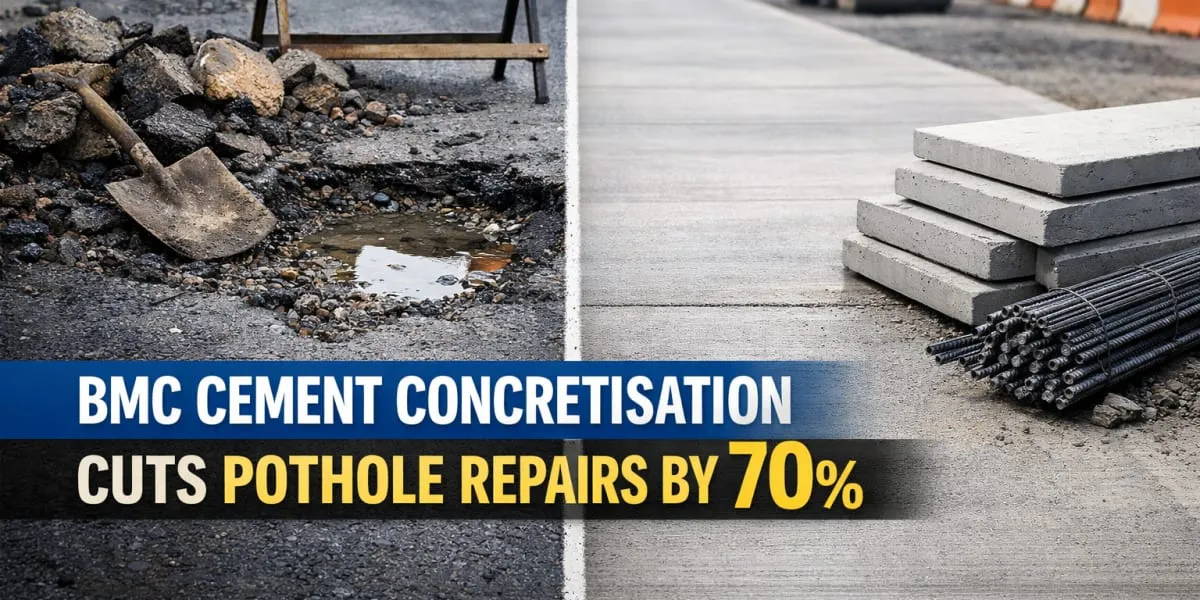




BMC Cement Concretisation Cuts Pothole Repairs By 70 Per Cent

Shree Cement Approves Rs 1,800 Crore Meghalaya Plant

WCA Welcomes SiloConnect as associate corporate member

TotalEnergies and Holcim Launch Floating Solar Plant in Belgium

Cortec® Corporation applauded for its strong safety performance
BMC Cement Concretisation Cuts Pothole Repairs By 70 Per Cent
Shree Cement Approves Rs 1,800 Crore Meghalaya Plant
WCA Welcomes SiloConnect as associate corporate member
TotalEnergies and Holcim Launch Floating Solar Plant in Belgium