Technology
Cement Machinery Industry
Published
14 years agoon
By
admin
The cement machinery industry in India has evolved over the years keeping pace with the technological developments overseasThe Indian cement machinery industry is engaged in the manufacture of complete cement plants with capacities upto 10,000 TPD. based on dry processing and pre-calcination technology. The thrust on infrastructure projects by the Indian government augurs well for the cement industry and, in turn, for the cement machinery industry.Cement companies have already expanded their capacities in anticipation of demand from the housing and infrastructure sectors. However, since the demand has not materialised, there is excess capacity in the cement industry. But this is deemed to be a passing phase, and the demand is expected to pick up once the economy turns around. Once this happens, the cement manufacturers are expected to once again go into expansion mode and this is where the machinery manufacturers can play a vital role by catering to the need latest for the technology machines, equipments and products for cement manufacturers.According to the Ministry of Heavy Industries, presently there are 18 units in the organised sector for the manufacture of cement plant machinery. Modern cement plants are designed for high product quality, higher output with lower energy consumption and zero downtime. Presently, in India, cement is manufactured through dry process, wet process or semi-wet/semi-dry process. The dry process is considered superior because of its high fuel economy. Hence, many of the older wet process plants are being converted to dry process.The technological collaborations of Indian companies with international cement machinery manufacturers have made it possible for Indian cement companies to procure plant, machinery and equipments for large sized plant with capacities of 3,000 TPD and more. The industry has been delicensed and foreign direct investment upto 100 per cent along with technological collaboration is allowed under the automatic route.EvolutionThe cement plant and machinery industry has evolved over the years, moving from the wet process technology to the dry process based on pre-heater and pre-calciner technology, thereby improving fuel efficiency. The size of the dry process kilns ranges from 1,500 TPD to as much as 10,000 TPD. For grinding raw materials, vertical roller mills have replaced ball mills, use of continuous homogenising silos for homogenisation of raw meal, use of pre-blending stockpile, roller presses and high-efficiency separators, electronic packing machines, bag loading machine and advanced process control and instrumentation are some of the major changes observed in cement plant and machinery manufacture.The dry process cement plants are equipped with efficient pollution control measures to meet the stringent pollution control norms laid down by various state pollution control boards. Some of the pollution control equipments include fabric bag dust collectors, gravel bed filters, electrostatic precipitators, etc.The mini cement plants are based on vertical shaft kiln technology or rotary kiln technology. The vertical shaft kiln is suitable for mini cement plants as low capacity plant fabricated by small workshops can be installed at a lower cost. Also, it requires less space and has lower maintenance and refractory cost. The rotary kiln plant is based on dry process with suspension pre-heater and can be designed indigenously.AMCL MachineryA-1/1, MIDC, Butibori, Dist – Nagpur, Maharashtra – 441 122. Tel.: 7104 – 265723, 265 724 Fax: 7104- 265 893, 265 725 www.amcl.inC K Somany, ChairmanAMCL Machinery is a group company of Hindustan National Glass & Industries. Based in Butibori, Nagpur the firm spreads across 5000 square metres. AMCL is in the business of design, manufacturing, supply & installation of vertical roller pre-grinding mill, tri-lobe blowers. The organisation also manufactures complete range of rubber & tyre machinery. It is also engaged in supply and installation of mechanical equipments in these industries. AMCL was founded in 1975 as a joint venture company of ACC and Leonh Herbert Machinfabrik (ThyssenGroup Company), Germany, with 74 per cent stake of ACC with manufacturing unit in Kalwe, Mumbai. In 1995, ACC bought over 26 per cent equity from Leonh Herbert and AMCL become wholly owned subsidiary of ACC. In 1995 second manufacturing unit was set up at Madukkarai, Coimbotore. In March, 2008 HNG (Hindustan National Glass) group purchased 100 per cent shares of AMCL with a vision of entering in the engineering business. The company is certified with ISO 9001:2000.Enexco502, Udyog Vihar, Phase-III, Gurgaon – 122 016.Tel: +124-400 1301/ 02/ 03/ 04/ 05 Fax: +91-124-400 1306 www.enexco.comK G Puetz, Managing DirectorEnvisioned in May 1995, Enexco Teknologies has emerged as a successful business enterprise. With an aim of serving the cement industry and other core sectors with an array of engineering products and services, the company has grown significantly over the years. The firm operates in Gurgaon and has material handling units, process , packing and loading equipments. Spread across an area of more than 22,000 sq mtrs, the firm is an organized set up capable of manufacturing supply of complete cement plant, grinding units, packing plant and material handling components apart from regular processing equipments. Apart from this, the company also manufactures a wide range of material processing equipments for the cement industry like silos, bucket elevators, and clinker conveyor etc. Capitalizing on the vast growth potential that India has on offer and riding on its technological brilliance, Enexco is constantly delivering cost effective performance oriented solutions.FL SmidthFLSmidth House, 34, Egatoor, Kelambakkam Rajiv Gandhi Salai, Chennai – 603 103.Tel: 44-4748 1000 / 2741 1000 Fax: 44- 2747 0301/0302 www.flsmidth.comBjarne Moltke Hansen, Managing DirectorFLSmidth is one of the leading suppliers of equipment and services to the global cement and minerals industries. The company supplies everything from single machinery to complete cement plants and minerals processing facilities including services before, during and after the construction backed with by tailored consultancy and support services. The firm offers full service solutions in six core focus industries: coal, iron ore, fertilizers, copper, gold and cement. FLSmidth supplies the minerals and cement industries globally with everything from engineering, single machines and complete processing plants, to maintenance, support services and operation of processing facilities. The core technologies and services range from material handling in the quarry throughout processing to end product. Headquartered in Copenhagen, Denmark the firm has its offices in more than 50 countries. The organisation was established in the year 1882 in Copenhagen, Denmark by Frederik L?ssoe Smidth and has become a leading supplier to the global cement industry.KHD Humboldt WedagA-36, Mehtab House, Mohan Co-operative Industrial Estate, Mathura Road, New Delhi 110 044.Tel: 011-4210 1110 www.khd.comMartin Gierse, CSC HeadKHD first entered the Indian cement market in 1982, in collaboration with Cimmco Birla Ltd. At the end of 2000, a dedicated cement division was established in New Delhi to directly cater to the requirements of customers in the Indian and Asian sub-continent. With over 155 years of experience in the cement industry, KHD is a global leader in cement plant technology, equipment, and services. KHD offers a wide spectrum of products and aftermarket services for the cement industry, and is a leader in energy-efficient and environmentally friendly products for the grinding and pyro-processing sections of cement plants. The technology-focused group includes process engineering and project management among its core competencies. The company has registered its presence in the countries like USA, Russia and China.Promac EngineeringAlahalli, Off Kanakapura Road, Anjanapura Post, Bangalore, Karnataka 560 062Tel: 080-2632 0372 www.promacindia.comJ. Surendra Reddy, Chairman & Managing DirectorPromac caters to all kinds of heavy engineering, fabrication and machining requirements through the heavy and medium machine shop comprising machines like VTL’s, (up to 10.5 mtr , 100 tons and 3 mtr height), Gear hobbing machines (up to 7 mtr , 40 module and 1 mtr face width), floor boring machines, heavy duty lathes, Italian make Rolling machine for cold rolling thickness upto 120mm, Robot Plasma Cutting Machine etc. and is supported by a light machine shop with several lathes, radial drilling and grinding machines. The facilities at Promac Unit – I are spread over 30,000 sq. meters. A new fabrication centre, Promac Unit- II, in a government developed industrial area in close proximity to the above shop is constructed on an area of over 50,000. sq. metres and it is equipped with heavy facilities like 150 T EOT crane, sand blasting facility, Heat treatment furnace, modern paint shop, etc. The organisation was established in the year 1972 in Bangalore.Putzmeister Concrete MachinesPlot N4 Phase IV, Verna Industrial Estate, Verna, Salcette GoaPhone: +91-832-6696-000 Fax: +91-832-6696-300Michael Schmid-Lindenmayer, Managing DirectorOver 3,900 employees ensure that equipment to the value of around ??1 billion ($ 1.5 billion) is produced annually in the Putzmeister group works and delivered to customers in 154 countries on all five continents. This includes 3,400 concrete pumps, a variety of booms in more than 40 covering size and specification, over 4,300 mortar pumps, almost 2,500 screed conveyors and well over 700 high-pressure cleaners.Schwing Stetter IndiaF71, F72 SIPCOT Industrial Estate, Irungattukottai, Sriperumpudur, Kanchipuram District – 602 105, Tamil NaduTel.: +91 44 27156780/1, 27156537/8, 47108100, 37178100 Fax No : +91 44 27156539Anand Sundaresan, Managing DirectorSchwing Stetter India, a 100 per cent subsidiary of the Schwing Group of companies GMBH was incorporated in the year 1998. We are the pioneers of Indian Concrete Construction equipment industry catering to the Indian customers with world class concrete conctruction equipments. Schwing Stetter India has introduced path breaking products in the Indian concrete pumping industry such as BP 350 concrete pumps, CP 30 batching plants and the 6 M3 Truck mixers which became synonymous with the RMC industry. Today, with an unprecedented growth, Schwing Stetter India has successively dedicated manufacturing bases for its three core product range namely Concrete Batching plant, Concrete Pump and Transit Mixer. It employs more than 1400 experienced and skilled personnel working in the 3 factories and 12 branches all over India catering to the diverse customer needs from its centralized world class design centre.Sinoma InternationalNo.16 Wangjing North Road, Beijing, China Post Code 100035Tel:+86-10-64399518 Fax:+86-10-64399510 Http: www.sinoma.com.cnWang Wei, PresidentSinoma International Engineering Co. was founded in December 2001. Sinoma International is mainly engaged in domestic and overseas large-scale project general contract integration services ranging from engineering consultancy, engineering design, construction and erection, equipment manufacturing, supply, commissioning, operation and maintenance etc. Basing on the succession and integration of the superior resources accumulated in Chinese cement industry over the past 50 years, the company is now looking at developing and expanding overseas. The hundreds of large-scale cement production line executed by Sinoma International are reaching over 30 countries in Europe, Asia, Africa, and America.Takraf India94 / 3, TTK Road, Alwarpet, Chennai 600 018.Tel: 44-2499 5514 Fax: 44-2499 6451 www.takraf.co.inK Gopal, Director-SalesTakraf India was incorporated in 1995 to cater to Material Handling and Mining projects in India with an aim to provide engineering solutions. Hailing from the Tenova Takraf group the company has its references of over 200 equipment and systems to satisfy the customer need in India and across the world. The company specializes in producing mining, port and yard equipments.ThyssenKrupp Industries India Pimpri, Pune 411 018 Tel:020- 6612 4001 Fax: 020- 2742 5821 www.thyssenkruppindia.comHeinz Dickens, Managing DirectorThyssenKrupp is a diversified industrial group. ThyssenKrupp generated sales of more than ??9 billion. For the company, innovations and technical progress are key factors in managing global growth and using finite resources in a sustainable way. Backed by engineering expertise in the areas of material, mechanical and plant, the customers have gained an edge in the global market and manufacture innovative products in a cost and resource efficient way. The ties between India and ThyssenKrupp date back to 1860. The first cement factory in India was established in the year 1914 in the city of Porbandar. In the year 1929, Krupp estended its involvement by setting up a construction plant in India. Currently, with sales of about ??20 Million India is the second largest market for ThyssenKrupp in Asia-Pacific with diversified business activities carried out by the local Group companies. Headquartered in Germany, the organisation has its offices in Nashik, Mumbai, Pune, Hyderabad and Bangalore and internationally it operates in over 80 countries.Universal Construction Machinery & EquipmentUniversal House, Warje Naka, Pune-411029Tel : +91-20-2523 0777, Fax : +91-20- 2523 1777 www.uceindia.comRanjeet R. More, Managing DirectorThe Universal Group, an ISO-9001:2000 Company, is among India’s leading engineering conglomerates. A major player in construction and material handling equipment industry, Universal has emerged as a one- stop-shop for providing end-to-end solutions for the construction industry. Universal is a pioneer in manufacturing of reversible mini mobile batching machine with the state ahead technology of load cell based in-built system, water measuring system, admixture dosing system. The machine is available in the capacity of 550 ltrs, 800 ltrs, 1050 ltrs. The company also manufactures planetary concrete mixers. The Universal mast climbing works platform is yet another addition to Universal’s inventory and is a substitute for bamboo and steel scaffoldings. The front end tipping Tough Rider is used to carry material where truck and tractors cannot move. Tough Rider is used to carry cement, bags from go down to mixing yard, concreting of industrial sheds, Tunnel Jobs. Universal’s bar bending and cutting machines have electro-hydraulic rigid technology which offers unique advantages such as more power to weight ratio, ease of operation and maintenance.
You may like
Concrete
Turning Downtime into Actionable Intelligence
Published
6 hours agoon
February 19, 2026By
admin
Stoppage Insights instantly identifies root causes and maps their full operational impact.
In cement, mining and minerals processing operations, every unplanned stoppage equals lost production and reduced profitability. Yet identifying what caused a stoppage remains frustratingly complex. A single motor failure can trigger cascading interlocks and alarm floods, burying the root cause under layers of secondary events. Operators and maintenance teams waste valuable time tracing event chains when they should be solving problems. Until now.
Our latest innovation to our ECS Process Control Solution(1) eliminates this complexity. Stoppage Insights, available with the combined updates to our ECS/ControlCenter™ (ECS) software and ACESYS programming library, transforms stoppage events into clear, actionable intelligence. The system automatically identifies the root cause of every stoppage – whether triggered by alarms, interlocks, or operator actions – and maps all affected equipment. Operators can click any stopped motor’s faceplate to view what caused the shutdown instantly. The Stoppage UI provides a complete record of all stoppages with drill-down capabilities, replacing manual investigation with immediate answers.
Understanding root cause in Stoppage Insights
In Stoppage Insights, ‘root cause’ refers to the first alarm, interlock, or operator action detected by the control system. While this may not reveal the underlying mechanical, electrical or process failure that a maintenance team may later discover, it provides an actionable starting point for rapid troubleshooting and response. And this is where Stoppage Insights steps ahead of traditional first-out alarm systems (ISA 18.2). In this older type of system, the first alarm is identified in a group. This is useful, but limited, as it doesn’t show the complete cascade of events, distinguish between operator-initiated and alarm-triggered stoppages, or map downstream impacts. In contrast, Stoppage Insights provides complete transparency:
- Comprehensive capture: Records both regular operator stops and alarm-triggered shutdowns.
- Complete impact visibility: Maps all affected equipment automatically.
- Contextual clarity: Eliminates manual tracing through alarm floods, saving critical response time.
David Campain, Global Product Manager for Process Control Systems, says, “Stoppage Insights takes fault analysis to the next level. Operators and maintenance engineers no longer need to trace complex event chains. They see the root cause clearly and can respond quickly.”
Driving results
1.Driving results for operations teams
Stoppage Insights maximises clarity to minimise downtime, enabling operators to:
• Rapidly identify root causes to shorten recovery time.
• View initiating events and all affected units in one intuitive interface.
• Access complete records of both planned and unplanned stoppages
- Driving results for maintenance and reliability teams
Stoppage Insights helps prioritise work based on evidence, not guesswork:
• Access structured stoppage data for reliability programmes.
• Replace manual logging with automated, exportable records for CMMS, ERP or MES.(2)
• Identify recurring issues and target preventive maintenance effectively.
A future-proof and cybersecure foundation
Our Stoppage Insights feature is built on the latest (version 9) update to our ACESYS advanced programming library. This industry-leading solution lies at the heart of the ECS process control system. Its structured approach enables fast engineering and consistent control logic across hardware platforms from Siemens, Schneider, Rockwell, and others.
In addition to powering Stoppage Insights, ACESYS v9 positions the ECS system for open, interoperable architectures and future-proof automation. The same structured data used by Stoppage Insights supports AI-driven process control, providing the foundation for machine learning models and advanced analytics.
The latest releases also respond to the growing risk of cyberattacks on industrial operational technology (OT) infrastructure, delivering robust cybersecurity. The latest ECS software update (version 9.2) is certified to IEC 62443-4-1 international cybersecurity standards, protecting your process operations and reducing system vulnerability.
What’s available now and what’s coming next?
The ECS/ControlCenter 9.2 and ACESYS 9 updates, featuring Stoppage Insights, are available now for:
- Greenfield projects.
- ECS system upgrades.
- Brownfield replacement of competitor systems.
Stoppage Insights will also soon integrate with our ECS/UptimeGo downtime analysis software. Stoppage records, including root cause identification and affected equipment, will flow seamlessly into UptimeGo for advanced analytics, trending and long-term reliability reporting. This integration creates a complete ecosystem for managing and improving plant uptime.
(1) The ECS Process Control Solution for cement, mining and minerals processing combines proven control strategies with modern automation architecture to optimise plant performance, reduce downtime and support operational excellence.
(2) CMMS refers to computerised maintenance management systems; ERP, to enterprise resource planning; and MES to manufacturing execution systems.
Economy & Market
From Vision to Action: Fornnax Global Growth Strategy for 2026
Published
1 month agoon
January 19, 2026By
admin
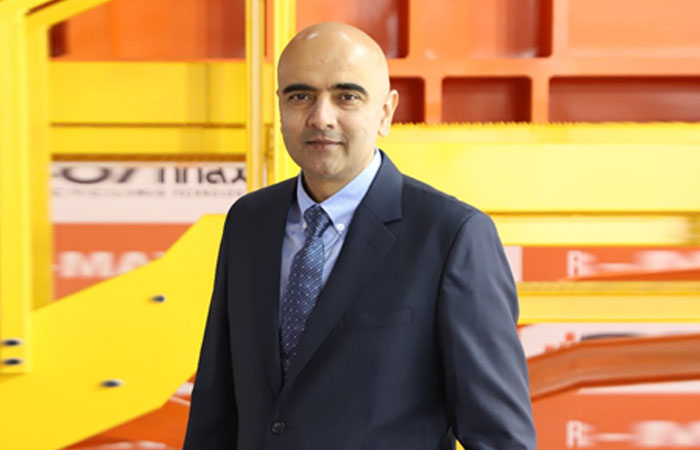
Jignesh Kundaria, Director & CEO, Fornnax Recycling Technology
As 2026 begins, Fornnax is accelerating its global growth through strategic expansion, large-scale export-led installations, and technology-driven innovation across multiple recycling streams. Backed by manufacturing scale-up and a strong people-first culture, the company aims to lead sustainable, high-capacity recycling solutions worldwide.
As 2026 begins, Fornnax stands at a pivotal stage in its growth journey. Over the past few years, the company has built a strong foundation rooted in engineering excellence, innovation, and a firm commitment to sustainable recycling. The focus ahead is clear: to grow faster, stronger, and on a truly global scale.
“Our 2026 strategy is driven by four key priorities,” explains Mr. Jignesh Kundaria, Director & CEO of Fornnax.
First, Global Expansion
We will strengthen our presence in major markets such as Europe, Australia, and the GCC, while continuing to grow across our existing regions. By aligning with local regulations and customer requirements, we aim to establish ourselves as a trusted global partner for advanced recycling solutions.
A major milestone in this journey will be export-led global installations. In 2026, we will commission Europe’s highest-capacity shredding line, reinforcing our leadership in high-capacity recycling solutions.
Second, Product Innovation and Technology Leadership
Innovation remains at the heart of our vision to become a global leader in recycling technology by 2030. Our focus is on developing solutions that are state-of-the-art, economical, efficient, reliable, and environmentally responsible.
Building on a decade-long legacy in tyre recycling, we have expanded our portfolio into new recycling applications, including municipal solid waste (MSW), e-waste, cable, and aluminium recycling. This diversification has already created strong momentum across the industry, marked by key milestones scheduled to become operational this year, such as:
- Installation of India’s largest e-waste and cable recycling line.
- Commissioning of a high-capacity MSW RDF recycling line.
“Sustainable growth must be scalable and profitable,” emphasizes Mr. Kundaria. In 2026, Fornnax will complete Phase One of our capacity expansion by establishing the world’s largest shredding equipment manufacturing facility. This 23-acre manufacturing unit, scheduled for completion in July 2026, will significantly enhance our production capability and global delivery capacity.
Alongside this, we will continue to improve efficiency across manufacturing, supply chain, and service operations, while strengthening our service network across India, Australia, and Europe to ensure faster and more reliable customer support.
Finally: People and Culture
“People remain the foundation of Fornnax’s success. We will continue to invest in talent, leadership development, and a culture built on ownership, collaboration, and continuous improvement,” states Mr. Kundaria.
With a strong commitment to sustainability in everything we do, our ambition is not only to grow our business, but also to actively support the circular economy and contribute to a cleaner, more sustainable future.
Guided by a shared vision and disciplined execution, 2026 is set to be a defining year for us, driven by innovation across diverse recycling applications, large-scale global installations, and manufacturing excellence.
Concrete
Technology plays a critical role in achieving our goals
Published
2 months agoon
December 24, 2025By
admin
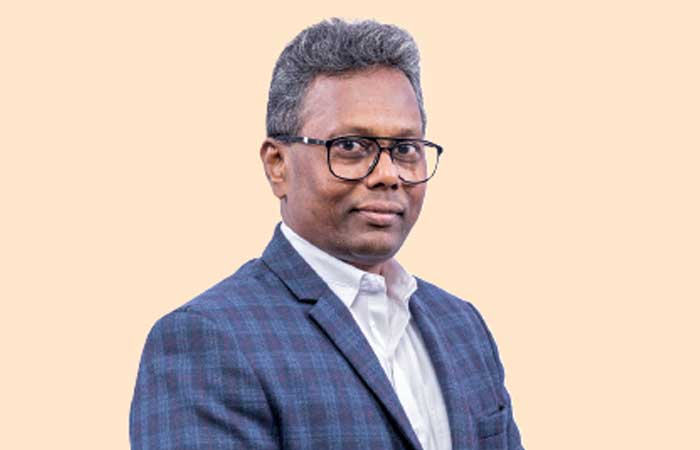
Arasu Shanmugam, Director and CEO-India, IFGL, discusses the diversification of the refractory sector into the cement industry with sustainable and innovative solutions, including green refractories and advanced technologies like shotcrete.
Tell us about your company, it being India’s first refractory all Indian MNC.
IFGL Refractories has traditionally focused on the steel industry. However, as part of our diversification strategy, we decided to expand into the cement sector a year ago, offering a comprehensive range of solutions. These solutions cover the entire process, from the preheater stage to the cooler. On the product side, we provide a full range, including alumina bricks, monolithics, castables, and basic refractories.
In a remarkably short span of time, we have built the capability to offer complete solutions to the cement industry using our own products. Although the cement segment is new for IFGL, the team handling this business vertical has 30 years of experience in the cement industry. This expertise has been instrumental in establishing a brand-new greenfield project for alumina bricks, which is now operational. Since production began in May, we are fully booked for the next six months, with orders extending until May 2025. This demonstrates the credibility we have quickly established, driven by our team’s experience and the company’s agility, which has been a core strength for us in the steel industry and will now benefit our cement initiatives.
As a 100 per cent Indian-owned multinational company, IFGL stands out in the refractory sector, where most leading players providing cement solutions are foreign-owned. We are listed on the stock exchange and have a global footprint, including plants in the United Kingdom, where we are the largest refractory producer, thanks to our operations with Sheffield Refractories and Monocon. Additionally, we have a plant in the United States that produces state-of-the-art black refractories for critical steel applications, a plant in Germany providing filtering solutions for the foundry sector, and a base in China, ensuring secure access to high-quality raw materials.
China, as a major source of pure raw materials for refractories, is critical to the global supply chain. We have strategically developed our own base there, ensuring both raw material security and technological advancements. For instance, Sheffield Refractories is a leader in cutting-edge shotcreting technology, which is particularly relevant to the cement industry. Since downtime in cement plants incurs costs far greater than refractory expenses, this technology, which enables rapid repairs and quicker return to production, is a game-changer. Leading cement manufacturers in the country have already expressed significant interest in this service, which we plan to launch in March 2025.
With this strong foundation, we are entering the cement industry with confidence and a commitment to delivering innovative and efficient solutions.
Could you share any differences you’ve observed in business operations between regions like Europe, India, and China? How do their functionalities and approaches vary?
When it comes to business functionality, Europe is unfortunately a shrinking market. There is a noticeable lack of enthusiasm, and companies there often face challenges in forming partnerships with vendors. In contrast, India presents an evolving scenario where close partnerships with vendors have become a key trend. About 15 years ago, refractory suppliers were viewed merely as vendors supplying commodities. Today, however, they are integral to the customer’s value creation chain.
We now have a deep understanding of our customers’ process variations and advancements. This integration allows us to align our refractory solutions with their evolving processes, strengthening our role as a value chain partner. This collaborative approach is a major differentiator, and I don’t see it happening anywhere else on the same scale. Additionally, India is the only region globally experiencing significant growth. As a result, international players are increasingly looking at India as a potential market for expansion. Given this, we take pride in being an Indian company for over four decades and aim to contribute to making Aatma Nirbhar Bharat (self-reliant India) a reality.
Moving on to the net-zero mission, it’s crucial to discuss our contributions to sustainability in the cement industry. Traditionally, we focused on providing burnt bricks, which require significant fuel consumption during firing and result in higher greenhouse gas emissions, particularly CO2. With the introduction of Sheffield Refractories’ green technology, we are now promoting the use of green refractories in cement production. Increasing the share of green refractories naturally reduces CO2 emissions per ton of clinker produced.
Our honourable Prime Minister has set the goal of achieving net-zero emissions by 2070. We are committed to being key enablers of this vision by expanding the use of green refractories and providing sustainable solutions to the cement industry, reducing reliance on burnt refractories.
Technology is advancing rapidly. What role does it play in helping you achieve your targets and support the cement industry?
Technology plays a critical role in achieving our goals and supporting the cement industry. As I mentioned earlier, the reduction in specific refractory consumption is driven by two key factors: refining customer processes and enhancing refractory quality. By working closely as partners with our customers, we gain a deeper understanding of their evolving needs, enabling us to continuously innovate. For example, in November 2022, we established a state-of-the-art research centre in India for IFGL, something we didn’t have before.
The primary objective of this centre is to leverage in-house technology to enhance the utilisation of recycled materials in manufacturing our products. By increasing the proportion of recycled materials, we reduce the depletion of natural resources and greenhouse gas emissions. In essence, our focus is on developing sustainable, green refractories while promoting circularity in our business processes. This multi-faceted approach ensures we contribute to environmental sustainability while meeting the industry’s demands.
Of course, this all sounds promising, but there must be challenges you’re facing along the way. Could you elaborate on those?
One challenge we face is related to India’s mineral resources. For instance, there are oxide deposits in the Saurashtra region of Gujarat, but unfortunately, they contain a higher percentage of impurities. On the magnesite side, India has deposits in three regions: Salem in Tamil Nadu, Almora in Uttarakhand, and Jammu. However, these magnesite deposits also have impurities. We believe the government should take up research and development initiatives to beneficiate these minerals, which are abundantly available in India, and make them suitable for producing high-end refractories. This task is beyond the capacity of an individual refractories company and requires focused policy intervention. While the government is undertaking several initiatives, beneficiation of minerals like Indian magnesite and Indian oxide needs to become a key area of focus.
Another crucial policy support we require is recognising the importance of refractories in industrial production. The reality is that without refractories, not even a single kilogram of steel or cement can be produced. Despite this, refractories are not included in the list of core industries. We urge the government to designate refractories as a core industry, which would ensure dedicated focus, including R&D allocations for initiatives like raw material beneficiation. At IFGL, we are taking proactive steps to address some of these challenges. For instance, we own Sheffield Refractories, a global leader in shotcrete technology. We are bringing this technology to India, with implementation planned from March onwards. Additionally, our partnership with Marvel Refractories in China enables us to leverage their expertise in providing high-quality refractories for steel and cement industries worldwide.
While we are making significant efforts at our level, policy support from the government—such as recognising refractories as a core industry and fostering research for local raw material beneficiation—would accelerate progress. This combined effort would greatly enhance India’s capability to produce high-end refractories and meet the growing demands of critical industries.
Could you share your opinion on the journey toward achieving net-zero emissions? How do you envision this journey unfolding?
The journey toward net zero is progressing steadily. For instance, even at this conference, we can observe the commitment as a country toward this goal. Achieving net zero involves having a clear starting point, a defined objective, and a pace to progress. I believe we are already moving at an impressive speed toward realising this goal. One example is the significant reduction in energy consumption per ton of clinker, which has halved over the past 7–8 years—a remarkable achievement.
Another critical aspect is the emphasis on circularity in the cement industry. The use of gypsum, which is a byproduct of the fertiliser and chemical industries, as well as fly ash generated by the power industry, has been effectively incorporated into cement production. Additionally, a recent advancement involves the use of calcined clay as an active component in cement. I am particularly encouraged by discussions around incorporating 12 per cent to 15 per cent limestone into the mix without the need for burning, which does not compromise the quality of the final product. These strategies demonstrate the cement industry’s constructive and innovative approach toward achieving net-zero emissions. The pace at which these advancements are being adopted is highly encouraging, and I believe we are on a fast track to reaching this critical milestone.
– Kanika Mathur
Our strategy is to establish reliable local partnerships
Power Build’s Core Gear Series
Compliance and growth go hand in h and
Turning Downtime into Actionable Intelligence
FORNNAX Appoints Dieter Jerschl as Sales Partner for Central Europe
Our strategy is to establish reliable local partnerships
Power Build’s Core Gear Series
Compliance and growth go hand in h and
Turning Downtime into Actionable Intelligence