Connect with us

Economy & Market

We have plans to double our turnover in next 3 years

Published

on

Shares

In an exclusive interview with Indian Cement Review, Anil Counto, Managing Director of Alcon Group comments on the trends and market of cement and RMC in Goa.The Alcon Group has number of businesses apart from development of residential and commercial properties and infrastructure. How, when and with what business did it all begin?Nanda Shadashiv Naiq Counto alis Anil Counto Managing Director of Alcon Group passed his Civil Engineering in year 1966, which was after liberation of Goa, the initial period of infrastructure development and real estate development in Goa. He thought it was the best time to enter in the construction business and accordingly he started working in construction & mining companies for first five years including two years in PWD and thereafter he established Alcon Construction in a partnership in 1971.What is the rationale behind the forward and backward integration of various construction and property development businesses?Having initial success in construction business the next step was naturally hotel business whose main requirement was construction of the hotel buildings and the other ancillary works connected with the civil engineering works and being a civil engineer and having a logical approach to any problem opposed potential in hotel industry and started the first hotel. Having successful launching of the first hotel project in 1981 and eventually two more hotels, we decided to have forward and backward integration of various construction materials namely cement and ready mix concretes.What kind of tie-up does Alcon have with ACC and what kind of mutual benefits does this partnership provide to both the parties? Does ACC holds stake in Alcon?From the inception of the plant in 1992 Alcon Cement Company (ACCPL) had marketing and technical collaboration with ACC. From 2008 onwards ACCPL became a JV company with ACC. The quality of cement produced by ACCPL is as per ACC standards and marketing of the cement is done exclusively through ACC.The benefits for Alcon are that the product is having a brand of a market leader in cement business in India and marketing of the product is taken care of by ACC. ACC has the benefit that it can cater Goa market with fresh produced cement manufactured in Goa. Alcon’s goodwill also helped the JV companies to have higher percentage of market share in both products. ACC has minority share holding in ACCPL.What kind of cement do you manufacture and how is the cement business doing in Goa? What is your current capacity and do you have any plans to expand it?
We manufacture Portland Slag Cement (PSC) & Ordinary Porland Cement (OPC) at our plant.Cement business in Goa is growing. At present our cement production capacity is 1.80 lakh tonnes annually. We are in the process of expanding the existing capacity to 5 lakh tonnes per year.You have two RMC manufacturing facilities at Ponda and Margao. How is the business for RMC in Goa?The present requirement of cement in Goa is about 50000 tn per month out of which 20000 tn is for concrete and thus we have huge potential of use of RMC in Goa. Presently we are having 4 RMC plants operating in Goa which caters to concrete requirement to all parts of Goa. We set up our initial RMC plant in Kundaim, Taluka Ponda, and it was the first of its kind in Goa. It was followed by our second plant at Margao, third plant at Vasco and forth plant at Dhargal.RMC business in Goa is growing. From one RMC plant in 2004, at present there are 9 RMC plant in operation in Goa.What is the production capacity of both RMC plants and how do you maintain consistency of quality in RMC?Production capacity of Kundaim plant is 6,000 cu.m. per month. For Margao plant it is 6,000 cu.m. per month. Vasco plant has 10,000 cu.m. production capacity per month. And Dhargal plant has 10,000 cu.m. production capacity per month.We maintain consistency of RMC quality which is of prime importance by strict quality control. We have right type and quality conscious people which is the heart of any RMC plant and we give maximum importance to quality front.What are the special features and benefits of the microfine products manufactured by Alcon?Our microfine products are designed for achieving high performance concrete and sustainable concrete and also for having grouting solutions for stabilizing the soil/soft strata mainly in the construction of hydro power tunneling. Our product is also used in strengthening the foundation strata. This product is not only for high rise buildings but is also mainly used in constructions for having 50Mpa strength and above at 28 days.With scientific blending of microfine cementations materials it is possible to achieve solutions for any type of construction works where you require strength of concrete more than 50 Mpa, pumping of concrete at more than 200 metre height and also to reduce heat of hydration in huge raft foundation.What are the advantages of using GGBS manufactured by your company in concrete and mortar mixes?The product GGBS has got special qualities of chloride and sulfide resistance in the soil. GGBS when blended with OPC cement in right properties gives much high strength which continuously goes on gaining strength.The cement produced with GGBS is mainly used in the coastal area like Goa and Konkan, as this cement has got sulfate/chloride resisting qualities of soil. We ventured in this cement/GGBS mainly to have sustainable and durable concrete in the state of Goa.Which are the major construction and infrastructure projects completed by you till date in Goa? Which other projects are in the pipeline this fiscal?We are in business for last 40 year and our most of the projects in Goa like residential and infrastructural development projects are using our cement and ready mix concrete. We have got approximately 60% market share of RMC supply of Goa. We have constructed number of dry docks, jetties, roads and also associated in the initial development of MPT and number of hotels built by us in Goa.Which are the major residential and commercial projects completed by Alcon in Goa? Which other projects are under construction or on the anvil in future?We have constructed many residential and commercial buildings in the state of Goa in the seventies, eighties & nineties. The constructions of number of cinema theaters, was constructed by us. We have also number of other land development done by us.To which segment do your residential projects cater – premium, mid-level or low cost?We cater for all the three segments of residential projects. We are in cement, ready mix concrete and microfine products. We with the combination of above three products can cater for all the today’s need of the state of Goa in all construction fronts. We are also in position to build very low cost housing in the state of Goa with our three products, if the government gives us the land and the number of low cost tenement to be built is high.You have three hospitality properties in Goa. Are these properties built, owned and managed by you? How are these hotels and resorts doing?Our hotels Ronil Beach Resort in Baga and Hotel Delmon in Panaji were built by us. The same are owned and managed by us. Our specialist restaurant O’ Coquiro was taken over by us from the earlier owner. Presently it is owned and managed by us. Our hotels and restaurant are doing quite well. Hospitality business in Goa will give good GDP growth to the state of Goa. We have plans to construct a five start hotel and we have got land for the same at one of the prestigious beach front of Goa.Your business activities are mostly Goa-based. Are you planning to go to other states, regions or cities in India?Although our business activities at present are Goa based, we are looking forward to a suitable opportunity to spread our wings to other states of India.However some of our microfine products are exported to Far East countries, Middle East countries and to all the metros of our country. We had a joint venture in construction at Middle East (Bahrain) in late seventies and early eighties.What are your future plans and how do you propose to implement them?We would like to venture into artifacts business in a big way. We also want to have a knowledge village in Goa as I feel Goa is right destination for education hub. We also want to venture into health care business in coming years. We have plans to double our turnover in next 3 years.

Continue Reading
Click to comment

Leave a Reply

Your email address will not be published. Required fields are marked *

Concrete

Our strategy is to establish reliable local partnerships

Published

on

By

Shares

Jean-Jacques Bois, President, Nanolike, discusses how real-time data is reshaping cement delivery planning and fleet performance.

As cement producers look to extract efficiency gains beyond the plant gate, real-time visibility and data-driven logistics are becoming critical levers of competitiveness. In this interview with Jean-Jacques Bois, President, Nanolike, we discover how the company is helping cement brands optimise delivery planning by digitally connecting RMC silos, improving fleet utilisation and reducing overall logistics costs.

How does SiloConnect enable cement plants to optimise delivery planning and logistics in real time?
In simple terms, SiloConnect is a solution developed to help cement suppliers optimise their logistics by connecting RMC silos in real time, ensuring that the right cement is delivered at the right time and to the right location. The core objective is to provide real-time visibility of silo levels at RMC plants, allowing cement producers to better plan deliveries.
SiloConnect connects all the silos of RMC plants in real time and transmits this data remotely to the logistics teams of cement suppliers. With this information, they can decide when to dispatch trucks, how to prioritise customers, and how to optimise fleet utilisation. The biggest savings we see today are in logistics efficiency. Our customers are able to sell and ship more cement using the same fleet. This is achieved by increasing truck rotation, optimising delivery routes, and ultimately delivering the same volumes at a lower overall logistics cost.
Additionally, SiloConnect is designed as an open platform. It offers multiple connectors that allow data to be transmitted directly to third-party ERP systems. For example, it can integrate seamlessly with SAP or other major ERP platforms, enabling automatic order creation whenever replenishment is required.

How does your non-exclusive sensor design perform in the dusty, high-temperature, and harsh operating conditions typical of cement plants?
Harsh operating conditions such as high temperatures, heavy dust, extreme cold in some regions, and even heavy rainfall are all factored into the product design. These environmental challenges are considered from the very beginning of the development process.
Today, we have thousands of sensors operating reliably across a wide range of geographies, from northern Canada to Latin America, as well as in regions with heavy rainfall and extremely high temperatures, such as southern Europe. This extensive field experience demonstrates that, by design, the SiloConnect solution is highly robust and well-suited for demanding cement plant environments.

Have you initiated any pilot projects in India, and what outcomes do you expect from them?
We are at the very early stages of introducing SiloConnect in India. Recently, we installed our
first sensor at an RMC plant in collaboration with FDC Concrete, marking our initial entry into the Indian market.
In parallel, we are in discussions with a leading cement producer in India to potentially launch a pilot project within the next three months. The goal of these pilots is to demonstrate real-time visibility, logistics optimisation and measurable efficiency gains, paving the way for broader adoption across the industry.

What are your long-term plans and strategic approach for working with Indian cement manufacturers?
For India, our strategy is to establish strong and reliable local partnerships, which will allow us to scale the technology effectively. We believe that on-site service, local presence, and customer support are critical to delivering long-term value to cement producers.
Ideally, our plan is to establish an Indian entity within the next 24 months. This will enable us to serve customers more closely, provide faster support and contribute meaningfully to the digital transformation of logistics and supply chain management in the Indian cement industry.

Continue Reading

Economy & Market

Power Build’s Core Gear Series

Published

on

By

Shares

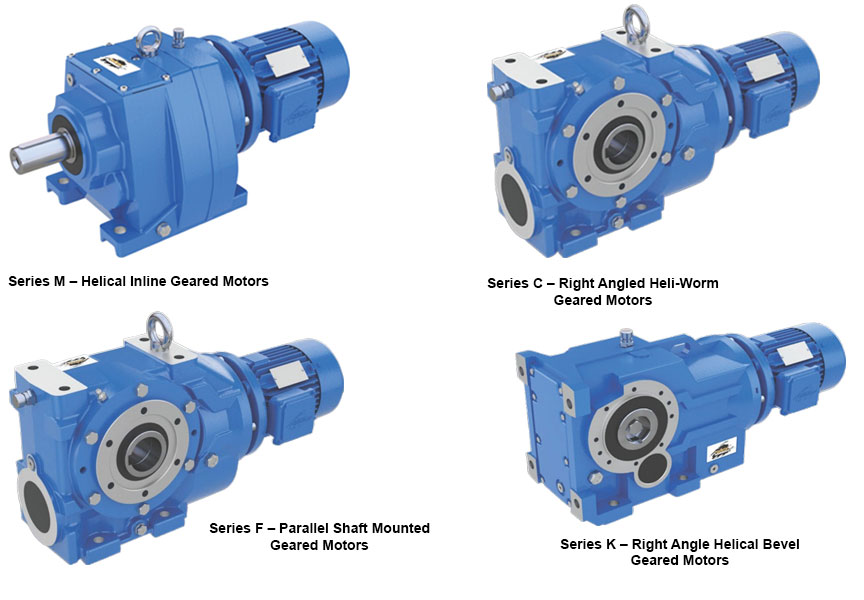
A deep dive into Core Gear Series of products M, C, F and K, by Power Build, and how they represent precision in motion.

At the heart of every high-performance industrial system lies the need for robust, reliable, and efficient power transmission. Power Build answers this need with its flagship geared motor series: M, C, F and K. Each series is meticulously engineered to serve specific operational demands while maintaining the universal promise of durability, efficiency, and performance.

Series M – Helical Inline Geared Motors
Compact and powerful, the Series M delivers exceptional drive solutions for a broad range of applications. With power handling up to 160kW and torque capacity reaching 20,000 Nm, it is the trusted solution for industries requiring quiet operation, high efficiency, and space-saving design. Series M is available with multiple mounting and motor options, making it a versatile choice for manufacturers and OEMs globally.

Series C – Right Angled Heli-Worm Geared Motors
Combining the benefits of helical and worm gearing, the Series C is designed for right-angled power transmission. With gear ratios of up to 16,000:1 and torque capacities of up to 10,000 Nm, this series is optimal for applications demanding precision in compact spaces. Industries looking for a smooth, low-noise operation with maximum torque efficiency rely on Series C for dependable performance.

Series F – Parallel Shaft Mounted Geared Motors
Built for endurance in the most demanding environments, Series F is widely adopted in steel plants, hoists, cranes and heavy-duty conveyors. Offering torque up to 10,000 Nm and high gear ratios up to 20,000:1, this product features an integral torque arm and diverse output configurations to meet industry-specific challenges head-on.

Series K – Right Angle Helical Bevel Geared Motors
For industries seeking high efficiency and torque-heavy performance, Series K is the answer. This right-angled geared motor series delivers torque up to 50,000 Nm, making it a preferred choice in core infrastructure sectors such as cement, power, mining and material handling. Its flexibility in mounting and broad motor options offer engineers the freedom in design and reliability in execution.
Together, these four series reflect Power Build’s commitment to excellence in mechanical power transmission. From compact inline designs to robust right-angle drives, each geared motor is a result of decades of engineering innovation, customer-focused design and field-tested reliability. Whether the requirement is speed control, torque multiplication or space efficiency, Radicon’s Series M, C, F and K stand as trusted powerhouses for global industries.

http://www.powerbuild.in
Call: +919727719344

Continue Reading

Concrete

Compliance and growth go hand in h and

Published

on

By

Shares

Pankaj Kejriwal, Whole Time Director and COO, Star Cement, on driving efficiency today and designing sustainability for tomorrow.

In an era where the cement industry is under growing pressure to decarbonise while scaling capacity, Star Cement is charting a pragmatic yet forward-looking path. In this conversation, Pankaj Kejriwal, Whole Time Director and COO, Star Cement, shares how the company is leveraging waste heat recovery, alternative fuels, low-carbon products and clean energy innovations to balance operational efficiency with long-term sustainability.

How has your Lumshnong plant implemented the 24.8 MW Waste Heat Recovery System (WHRS), and what impact has it had on thermal substitution and energy costs?
Earlier, the cost of coal in the Northeast was quite reasonable, but over the past few years, global price increases have also impacted the region. We implemented the WHRS project about five years ago, and it has resulted in significant savings by reducing our overall power costs.
That is why we first installed WHRS in our older kilns, and now it has also been incorporated into our new projects. Going forward, WHRS will be essential for any cement plant. We are also working on utilising the waste gases exiting the WHRS, which are still at around 100 degrees Celsius. To harness this residual heat, we are exploring systems based on the Organic Rankine Cycle, which will allow us to extract additional power from the same process.

With the launch of Star Smart Building Solutions and AAC blocks, how are you positioning yourself in the low-carbon construction materials segment?
We are actively working on low-carbon cement products and are currently evaluating LC3 cement. The introduction of autoclaved aerated concrete (AAC) blocks provided us with an effective entry into the consumer-facing segment of the industry. Since we already share a strong dealer network across products, this segment fits well into our overall strategy.
This move is clearly supporting our transition towards products with lower carbon intensity and aligns with our broader sustainability roadmap.

With a diverse product portfolio, what are the key USPs that enable you to support India’s ongoing infrastructure projects across sectors?
Cement requirements vary depending on application. There is OPC, PPC and PSC cement, and each serves different infrastructure needs. We manufacture blended cements as well, which allows us to supply products according to specific project requirements.
For instance, hydroelectric projects, including those with NHPC, have their own technical norms, which we are able to meet. From individual home builders to road infrastructure, dam projects, and regions with heavy monsoon exposure, where weather-shield cement is required, we are equipped to serve all segments. Our ability to tailor cement solutions across diverse climatic and infrastructure conditions is a key strength.

How are you managing biomass usage, circularity, and waste reduction across
your operations?

The Northeast has been fortunate in terms of biomass availability, particularly bamboo. Earlier, much of this bamboo was supplied to paper plants, but many of those facilities have since shut down. As a result, large quantities of bamboo biomass are now available, which we utilise in our thermal power plants, achieving a Thermal Substitution Rate (TSR) of nearly 60 per cent.
We have also started using bamboo as a fuel in our cement kilns, where the TSR is currently around 10 per cent to 12 per cent and is expected to increase further. From a circularity perspective, we extensively use fly ash, which allows us to reuse a major industrial waste product. Additionally, waste generated from HDPE bags is now being processed through our alternative fuel and raw material (AFR) systems. These initiatives collectively support our circular economy objectives.

As Star Cement expands, what are the key logistical and raw material challenges you face in scaling operations?
Fly ash availability in the Northeast is a constraint, as there are no major thermal power plants in the region. We currently source fly ash from Bihar and West Bengal, which adds significant logistics costs. However, supportive railway policies have helped us manage this challenge effectively.
Beyond the Northeast, we are also expanding into other regions, including the western region, to cater to northern markets. We have secured limestone mines through auctions and are now in the process of identifying and securing other critical raw material resources to support this expansion.

With increasing carbon regulations alongside capacity expansion, how do you balance compliance while sustaining growth?
Compliance and growth go hand in hand for us. On the product side, we are working on LC3 cement and other low-carbon formulations. Within our existing product portfolio, we are optimising operations by increasing the use of green fuels and improving energy efficiency to reduce our carbon footprint.
We are also optimising thermal energy consumption and reducing electrical power usage. Notably, we are the first cement company in the Northeast to deploy EV tippers at scale for limestone transportation from mines to plants. Additionally, we have installed belt conveyors for limestone transfer, which further reduces emissions. All these initiatives together help us achieve regulatory compliance while supporting expansion.

Looking ahead to 2030 and 2050, what are the key innovation and sustainability priorities for Star Cement?
Across the cement industry, carbon capture is emerging as a major focus area, and we are also planning to work actively in this space. In parallel, we see strong potential in green hydrogen and are investing in solar power plants to support this transition.
With the rapid adoption of solar energy, power costs have reduced dramatically – from 10–12 per unit to around2.5 per unit. This reduction will enable the production of green hydrogen at scale. Once available, green hydrogen can be used for electricity generation, to power EV fleets, and even as a fuel in cement kilns.
Burning green hydrogen produces only water and oxygen, eliminating carbon emissions from that part of the process. While process-related CO2 emissions from limestone calcination remain a challenge, carbon capture technologies will help address this. Ultimately, while becoming a carbon-negative industry is challenging, it is a goal we must continue to work towards.


Continue Reading

Trending News

SUBSCRIBE TO THE NEWSLETTER


Don't miss out on valuable insights and opportunities to connect with like minded professionals.


    This will close in 0 seconds