Bad news never comes singly. India’s economic growth has slumped to its lowest in more than two years while output expansion at key industries tumbled to a six-year low and even the finance minister, Pranab Mukherjee, has warned that there are tough times ahead. There has been a sharp deceleration in industrial growth with output growth in eight core industries, including steel, cement and coal, dropping to near-zero in October, a sharp decline from 7.2 per cent one year back. Under the circumstances, the cement sector needs to remain vigilant and while bracing itself for weaker growth, seek out newer strategies to ensure that targeted capacity and production stays on line while staying in line with environmental demands and limitations in raw material availability.It is worrying indeed that fiscal deficit for the first seven months of the year has already reached 75 per cent of the year’s estimate. Experts concur with the finance minister that a combination of domestic and international issues are going to impact the country’s growth. GDP data released by the government on in the last week of November 2011 has revealed broad-based weakness in the economy, with mining contracting 2.9 per cent and manufacturing rising by 2.7 per cent in the last quarter. Despite the gloomy outlook, the finance ministry is hopeful that the economy will recover some of its lost momentum and is expecting 7.3 per cent GDP as against last year’s 8.5 per cent.According to Research & Markets report on the Indian cement sector, economic recovery, which had gained momentum in the first half of FY11, started showing signs of moderation in the second half. The biggest hindrance to growth momentum, however, has been high inflation. Inflation refuses to abate and has forced RBI to pursue monetary tightening measures even at the cost of growth. Rising energy prices and interest rates will continue to pose a challenge for businesses in the near future. Despite these short term challenges, the overall economic sentiment remains healthy and a good growth rate for the next year is expected.FY11 was quite challenging for the cement industry. On the one hand, demand growth weakened due to lower realty and infrastructure spending, while on the other, extended monsoons and logistical constraints dampened construction activity.On the supply front, overcapacity continued to plague the industry. During the year, the industry witnessed capacity addition of around 28 million TPA in addition to the 60 million TPA added in the previous year. Industry capacity utilization was at 75 per cent against 84 per cent recorded in the previous year. Surplus cement scenario together with sluggish demand and volatile prices adversely impacted domestic realizations which were lower by 4 per cent as compared to the previous year. On the cost front, the higher price of both domestic and imported coal resulted in a 25 per cent increase in energy costs, which rose substantially from 671 per ton to 838 per ton. During the year, imported coal prices rose by 36 per cent from CIF $ 89 per ton to $ 121 per ton. In addition to the normal price hike in domestic coal, there was a further increase in domestic coal prices in the range of 30 per cent -150 per cent from 1st March, 2011, according to the report.While the larger economic issues play out a crucial role on the industry’s performance, it is left to the sector to analyse the various other shortcomings it faces and seek remedies for the same.PRESENT STATUS
The installed capacity of cement in the country has grown during the period 1991 to 2011 at an average rate of 8.3 per cent CAGR while the production has grown at the rate of 8 per cent during the same period. The table -1 gives the installed capacity and production of cement between 1991-2011.
The weighted average of thermal energy consumption of major 26 plants is shown in figure – 1. It would be seen that very little improvement is made over the years between 2005-2006 to 2007-2008. The world’s best ranges between 680-690 Kcal/kg clinker. Though there are some cement plants in India which are able to fall in this category but industry as a whole has challenge before it to further improve on this account.
- Electric Energy Efficiency:
The weighted average of consumption of electric energy of 26 plants is given in figure – 2. The electric consumption has virtually reached at plateau and showing very little further improvement. The best operated plants have brought down the consumption in the range of 65-68 kwh/t cement, however, industry as a whole has scope for further improvement. Environmental Performance of Cement Plants:The National Ambient Air Quality Requirement as per CPCB is given in table – 2.The modern cement plants are able to adhere to these norms. The new generation plants with capacity 8000TPD and above are even excelling the norms.
The Indian cement industry has undergone major shift in product mix especially during the last decade. The environmental and sustainability issues may demand same trend to continue in the future. The table -3 gives product mix during the different periods;CHALLENGES AHEAD
Lime stone will continue to be the life line of cement manufacture. As per thumb rule, for every ton of clinker produced, 1.75 tonnes mineable line stone deposits of proven variety should be available. For 350 million tons installed targeted capacity by the end of XI plan (2012), nearly 600 mn.t of cement grade lime stone have to be made available annually. Keeping in view the rapid expansion of Indian Cement Industry, NCB initiated the task of preparation of national inventory of cement grade lime stone. As on 31st March, 2002, India’s total reserves have been estimated as given in table – 4.Table – 4 Lime Stone ReservesSizable reserves are located in inaccessible areas, difficult terrains reserved forests, bio-zones and coastal regulatory Zones, etc. The proven category reserves are only 22,476mn.t which are likely to last for next 35 to 40 years at the present rate of production.Apart from limited availability of measured reserve for green field projects, about 27 per cent of total reserves are of marginal grade which can only be utilized with sweetener or after up-gradation through beneficiation. Availability of cement grade limestone will be becoming a major challenge for the cement industry in the future.
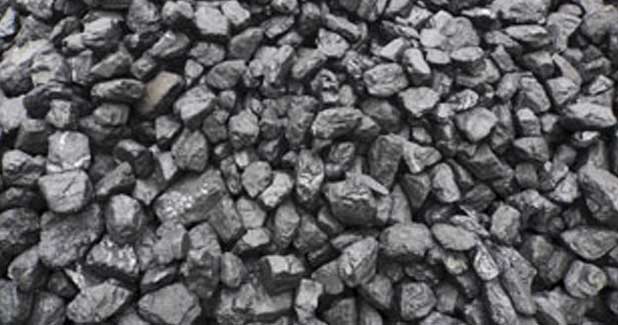
Availability of coal is proving another bottleneck in the growth of cement industry. The coal demand of cement industry is given in table -5.During the last decade the coal demand has gone almost four times. The infrastructure deficiencies at ports are causing problems in importing coal and availability of indigenous coal to cement industry is not assured. The first preference is being given to Thermal Power Plants and then to steel industry in allocation of coal by the Govt. The cost of coal is escalating every year and posing challenge before the cement industry. The situation is likely to aggravate in future.BLENDING MATERIALS
Large quality of fly ash is generated in India but in many cases, the location of major Thermal Power Plants is far away from cement plants and in absence of proper infrastructure for transportation and handing of fly ash, most of it cannot be utilized. The availability of fly ash is given in table – 6The cost of fly ash is continuously increasing due to transportation and permission given to thermal power plants to charge for it instead of giving free. The mega thermal plants located in East UP, West Bengal, North Bihar and generally in Eastern part of India have very few cement plants in close vicinity. The mismatch in location of Thermal Power Plants and cement plants is shown in Figure – 3The availability of good quality fly ash at reasonable cost is also going to be major factor before the cement industry in coming years.
Ground Granulated Blastfurnace Slag (GGBS) cement is a by-product of the steel industry. Molten slag lying on top of the molten iron in the blastfurnace comprises silicates (glass), and is the raw material for GGBS cement. The molten slag – of no use to the steel making process – is cooled and then finely ground to form GGBS cement. Currently around 200 kg of slag is generated for each ton of steel produced in India making it 11 to 12 mt slag annually. Most of the slag is produced in the eastern part of the country where it is used in production of slag cement. The availability of blast furnace slag will continue to remain limited and possibilities need to be explored to use slags other than blast furnace like zinc slag, copper slag, steel slag for manufacture of slag cement. At present these slags are not permitted by BIS for production of slag cement.HIGH INPUT COSTS AND INFRASTRUCTURAL WEAKNESS
At present, the cement industry is facing two fold problems of high input costs and infrastructural weakness. The inputs with spiraling cost increase are coal, power and transport by rail or road. The coal from public sector is of poor quality, high ash and low calorific value content and at times costlier than imported coal. There is need to introduce competition for improving quality, regularity in supply and reduced prices. The power from public utilities is of poor quality due to frequent power cuts and fluctuating voltage. Power sector reforms if taken up seriously will enable quality power to cement plants at reasonable cost.Transport by rail or road is a cost-intensive component and amounts to almost 15 per cent to 20 per cent of the delivered cost to the consumers. The railway tariff is high and need to be rationalized for an essential product like cement. Road transport on the other hand, provides limited alternative because of inadequacy of road network and rising cost of road transport due to continuously rising fuel cost. Inland water transport is a low investment, eco-friendly and cheap mode especially for bulk commodities like cement. Coastal shipping and inland waterways will help in bringing down the transportation cost. Due to increasing use of cement in bilk, more and more bulk terminals will be needed in the years to come and inland water transport and coastal shipping can be of great help in this regard.TO INCREASE USE OF CEMENTCement is not the end-use product for the consumer. Concrete and mortar are the real end-products. Use of concrete at present is very low, about 0.5t per head annually against World’s average of 1.0t. Use of concrete and cement based products need to be promoted especially in the following sectors to increase the demand of cement.
- Concrete roads
- White topping over existing bitumen roads
- Cement based bricks/blocks for walling in lieu of clay bricks
- Pre-fab components for mass housing in lieu of conventional systems for roofing, flooring, walling etc.
- Cement concrete lining to canals to reduce seepage losses.
- Development of inland water ways and linking of rivers.
The average consumption of cement per head is very low in India, in the range of 180-190 kg while world average is about 400kg and in developed countries it is 600-800kg. Cement-concrete is more durable than other conventional materials and the use of concrete in construction will bring down the life cycle of civil works and will be more eco-friendly and sustainable.ENVIRONMENTAL CONSCIOUSNESS AND CUSTOMER ORIENTATION
The main global concerns at present are conservation of energy and pollution control. In future pressure will mount on the industry to reduce energy and GHG emissions. The energy consumption of many of the cement plants in India is comparable with the "best practices". However, there is still a scope to bring down the energy consumption by improving operational efficiency and plant technology. Though many plants have won environmental excellence awards but industry as a whole can still achieve better results on this front.The future initiatives have to be directed for using hazardous or waste materials (pet coke, used tyres, municipal and agricultural waste etc.) as fuel and larger use of fly ash, ggbs and other industrial waster like Zinc-lead slag, copper slag, steel slag etc. Both these ventures would contribute to environmental improvement and legislative and statutory authorities should support these initiatives.The customers have to be educated in proper use of cement and to avoid wastages at site. The inhibition to use mineral admixtures like fly ash, ggbs and blended cements should be removed through proper training and demonstrations at construction sites. The new code on concrete mix proportioning IS 10262 has been issued by BIS in 2009, rationalizing the use of binding materials and to avoid excessive use of cementing materials in concrete. The good construction practices should be encouraged by upgrading the skills of construction professionals for increasing the life of construction and to avoid the wasteful consumption of materials in repairs and rehabilitation. The mechanization in construction is another area which would need focus in future. The promotion of RMC during the last decade has brought numerous benefits in making concrete more reliable, durable and cost effective material. Similarly the pre-cast industry, which is in very nascent stage has potential to provide speed, quality and sustainability to construction projects. Promotion of these technologies and practices would provide additional impetus to the growth of cement industry in the coming decade.TOUGH TIMES CALL FOR TOUGH MEASURESThe industry has to overcome new challenges to be vibrant and healthy in future. The major hurdles are likely to be availability of quality raw materials at reasonable cost, energy sources, compatible infrastructure for movement of raw materials and finished goods, skilled man power and commensurate financial resources for continued technological up-gradations and innovations to meet the future aspirations of the construction industry and the society at large. These challenges can be met by combined efforts of industry friendly legislative frame work, boost of infrastructure by government, adoption of technologies to increase demand for cement and the cement industry by continuously striving for technological excellence and innovations in all fields of its operation. The Indian cement industry will emerge stronger, more efficient, sustainable and vibrant in future by virtue of its dedication and an intense urge to serve the construction industry in best possible manner.A.K. Jain is Technical Advisor, Ultratech Cement Ltd












 Concrete4 weeks ago
 Concrete3 weeks ago
 Concrete2 weeks ago
 Concrete4 weeks ago