Connect with us

Technology

Fly ash | From Trash to Cash

Published

on

Shares

Many civil engineers are attracted to fly ash today, mostly due to commercial considerations. However, if it is looked upon as a performance improver, fly ash can solve many problems.

Fly ash is a by-product obtained while generating electrical power using coal as a fuel. For the last few decades, the demand for electricity has been increasing continually due to growing population and new industries being launched across the world.

During the year 2014-15; the total generation of fly ash has been 184.14 Million Tonnes out of which 102.54 Million tonnes is used, i.e.about 55.69 per cent of generated fly ash. (Information sourced from Central Electricity Authority, Govt. of India) But since fly ash contains a lot of heavy metals, its production causes problems to the environment. Because of this reason, it has become necessary to invent some newer aspects for utilising fly ash, rather than stick to the conventional ways. Fly ash disposal is a serious environmental concern due to its hazardous properties, impact on agriculture and long-term risks to both ecosystems and human beings. Fly ash is a coal-combustion product, composed of the fine particles that are driven out of the boiler with the flue gases. Ash that falls in the bottom of the boiler is called bottom ash. In modern coal-fired power plants, fly ash is generally captured by electrostatic precipitators or other particle filtration equipment before the flue gases reach the chimneys. Together with bottom ash removed from the bottom of the boiler, it is known as coal ash.

Depending upon the source and makeup of the coal being burned, the chemical composition of fly ash will vary considerably; but in general, all fly ash includes substantial amounts of silicon dioxide (SiO2) – both amorphous and crystalline, aluminium oxide (Al2O3) and calcium oxide (CaO), the main mineral compounds in coal-bearing rock strata.

Past Processes
In the past, fly ash was generally released into the atmosphere, but air pollution control standards now require that it be captured prior to release by fitting pollution control equipment. In many countries, fly ash is either stored at coal power plants or placed in landfills. A substantial part of fly ash goes to the cement industry as a cement substituting material, to produce hydraulic cement or hydraulic plaster and a replacement or partial replacement for Portland cement in concrete production. Pozzolans ensure the setting of concrete and plaster and provide concrete with more protection from wet conditions and chemical attack.

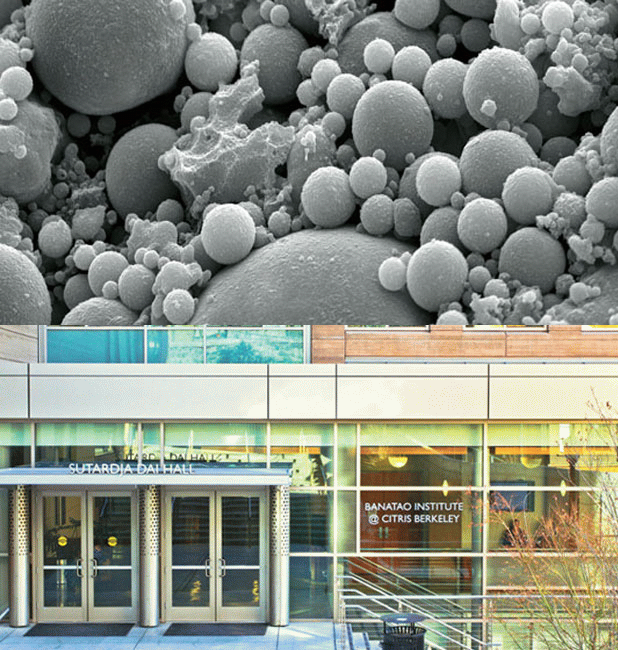
Cenospheres are the most important ingredient of fly ash. These are unique free-flowing powders composed of hard-shelled, hollow, minute spheres. Cenospheres are made up of silica, iron and alumina. These have a size range from 1 to 500 microns with an average compressive strength of 3000+ psi. Colours range from white to dark grey.

Chemical composition
Fly ash particles are generally spherical in shape and range in size from 0.5?m to 300?m. The major consequence of the rapid cooling is that few minerals have time to crystallise, and that mainly amorphous, quenched glass remains. Nevertheless, some refractory phases in the pulverised coal do not melt entirely, and remain crystalline. In consequence, fly ash is a heterogeneous material. SiO2, Al2O3, Fe2O3 and occasionally CaO are the main chemical components present in fly ash. The mineralogy of fly ash is very diverse. The main phases encountered are a glass phase, together with quartz, mullite and the iron oxides hematite, magnetite and/or maghemite. Other phases often identified are cristobalite, anhydrite, free lime, periclase, calcite, sylvite, halite, portlandite, rutile and anatase. The Ca-bearing minerals anorthite, gehlenite, akermanite and various calcium silicates and calcium aluminates identical to those found in Portland cement can be identified in Ca-rich fly ash. The mercury content can reach 1 ppm, but is generally included in the range 0.01 – 1 ppm for bituminous coal. The concentrations of other trace elements vary as well according to the kind of coal combusted to form it.

The fineness or the particle size of fly ash is a very critical property. The commercial value of fly ash depends on the particles and percentage of unburned carbon. A total of 75 per cent of the ash must have a fineness of 45 -?m or less, and have carbon content, measured by the loss on ignition (LOI), of less than 4 per cent. The quality of fly ash also depends on the type of technology used in the boiler and the quality of coal. Indian coal generally has high percentage of ash compared to either Australian or South African coal.

The bottom ash, which is still a neglected portion of the same waste, can also find its way into concrete, replacing the stone aggregates. But a lot needs to be done on this material in our country.

Benificiation, the value addition
By using air separators, the fly ash can be divided into different grades depending on the particle size. The best example is that of Dirk India, a company which is only into selling of fly ash, and thriving. Dirk sources its fly ash from state electricity generating companies, and by using air classifiers, produces four different varieties of fly ash which have a good demand in the market.

Challenges in handling fly ash
In a typical fly ash handling system, the material that is generated as a result of combustion is captured by an electrostatic precipitator (ESP) or a bag house before the flue gases reach the stack. These ESPs and bag houses generally have multiple pyramidal hoppers at the bottom, in which the ash is collected by gravity and is then transferred to a storage silo. These storage silos generally have provisions for a truck load-out to carry the fly ash for disposal or reuse. As a result of the frictional nature and fine particle size distribution, fly ash handling systems often experience problems if they are designed without following a prudent engineering approach.

Flow rate limitation
The permeability of fly ash is typically very low, due to its fine particle size distribution. As a result, when de-aerated, fly ash provides considerable resistance to the flow of air or other gases. During discharge from a silo or hopper outlet, air counter-flow through the fly ash bed provides an opposing force to gravity. This air ingress occurs as a result of the natural expansion of the ash bed within the hopper as it flows, or simply due to leakage from the conveying system below. As a result, fly ash hoppers and silos are limited in terms of the maximum discharge rates that they can provide by gravity alone.

Flooding or uncontrolled flow
As a fine powder, fly ash can behave like a fluid when sufficient air is present. Flooding can result, particularly when the handling rate is too high to allow sufficient time for the entrained air to escape. In this case, the fly ash may become fluidised and flush through the outlet unless the feeder can contain it. Flooding not only creates a challenge in metering the discharge, it can also lead to serious environmental, health and safety concerns.

Wear
The presence of a significant portion of silicon dioxide makes fly ash very abrasive and frictional. As a result of material sliding and impacting within the handling equipment, wall surfaces undergo tremendous wear.

Dust generation
Dusting can particularly occur at transfer points where the air entrained in the powder is suddenly expelled, carrying these finer particles with it. Dust generation also occurs when local air currents have sufficient velocity to pick up particles from the surface of a pile. Dust by itself is a nuisance and, more importantly, it can result in safety concerns including the health effects of operator exposure and the potential for explosions.

Other problems
Agglomerated lumps of fly ash and foreign materials can create flow problems, especially when handling fly ash with air slides or aerated bin bottoms. Therefore handling of fly ash always requires proper engineering inputs. The progress made so far has been reasonable, but a lot still needs to be done considering the potential of the material. Let us look at some of the possibilities.

Fly ash as cement replacement and high-volume fly ash concrete
Indian codes permit use of fly ash up to 35 per cent as cement replacement in cement manufacturing. However, in the case of concrete, the percentage will depend on the mix design recipe. If we see the practise abroad, up to 65 per cent of fly ash can be used in concrete.

Two researchers, Dr PK Mehta and Dr VM Malhotra, have made a significant contribution to the engineering community. Dr Mehta is well known for his work on high-volume fly ash concrete. Here is an extract from one of his papers called ?Cement & Concrete Mixtures for Sustainability?:

"For a variety of reasons, the concrete construction industry is not sustainable. First, it consumes huge quantities of virgin materials. Second, the principal binder in concrete is Portland cement, the production of which is a major contributor to greenhouse gas emissions that are implicated in global warming and climate change. Third, many concrete structures suffer from lack of durability which has an adverse effect on the resource productivity of the industry. Because the high-volume fly ash concrete system addresses all three sustainability issues, its adoption will enable the concrete construction industry to become more sustainable."

In this paper, a brief review is presented of the theory and construction practice with concrete mixtures containing more than 50 per cent fly ash by mass of the cementitious material. Dr Mehta is a champion of using more than 50 per cent fly ash by mass of the cementitious material. Mechanisms are discussed by which the incorporation of high volume of fly ash in concrete reduces the water demand, improves the workability, minimises cracking due to thermal and drying shrinkage, and enhances durability to reinforcement corrosion, sulfate attack, and alkali-silica expansion. For countries like China and India, this technology can play an important role in meeting the huge demand for infrastructure in a sustainable manner, says Dr Mehta.

High-performance concrete (HVFA)
As per Dr Mehta, the characteristics defining a HVFA concrete mixture are, minimum of 50 per cent of fly ash by mass of the cementitious materials must be maintained, low water content, generally less than 130 kg/m3 is mandatory and for cement content, generally no more than 200kg/m3 is desirable. For concrete mixtures with specified 28-day compressive strength of 30 MPa or higher, slumps more than 150 mm, and water-to-cementitious materials ratio of the order of 0.30, the use of high-range water-reducing admixtures (super-plasticizers) is mandatory. For concrete exposed to freezing and thawing environments, the use of an air-entraining admixture resulting in adequate air-void spacing factor is mandatory. For concrete mixtures with slumps less than 150 mm and 28-day compressive strength of less than 30 MPa, HVFA concrete mixtures with a water-to-cementitious materials ratio of the order of 0.40 may be used without super-plasticizers. Dr Mehta further concludes in his paper, that throughout the world, waste-disposal costs have escalated greatly. At the same time, the concrete construction industry has realised that coal fly ash is a relatively inexpensive and widely available by-product that can be used for partial cement replacement to achieve excellent workability in fresh concrete mixtures.

Consequently, in the modern construction practice, 15 to 20 per cent of fly ash by mass of the cementitious material is now commonly used in North America. Higher amounts of fly ash in the order of 25-30 per cent are recommended when there is a concern over thermal cracking, alkali-silica expansion or sulfate attack. Such high proportions of fly ash are not readily accepted by the construction industry due to a slower rate of strength development at an early age.

The high-volume fly ash concrete system overcomes the problems of low early strength to a great extent through a drastic reduction in the water-cementitious materials ratio by using a combination of methods, such as taking advantage of the super-plasticizing effect of fly ash when used in a large volume, with the use of a chemical super-plasticizer, and a judicious aggregate grading.

Consequently, properly cured high-volume concrete products are very homogenous in microstructure, virtually crack-free, and highly durable. Because there is a direct link between durability and resource productivity, the increasing use of high-volume concrete will help to enhance the sustainability of the concrete industry.

In conclusion, high-volume fly ash concrete offers a holistic solution to the problem of meeting the increasing demands for concrete in the future in a sustainable manner and at a reduced or no additional cost. At the same time, it reduces the environmental impact of two industries that are vital to economic development – the cement industry and the coal-fired power industry. The technology of high-volume fly ash concrete is especially significant for countries like China and India, where, given the limited amount of financial and natural resources, the huge demand for concrete needed for infrastructure and housing can be easily met in a cost-effective and ecological manner.

Continue Reading
Click to comment

Leave a Reply

Your email address will not be published. Required fields are marked *

Economy & Market

From Vision to Action: Fornnax Global Growth Strategy for 2026

Published

on

By

Shares

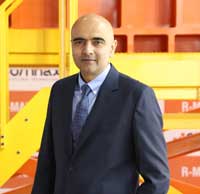
Jignesh Kundaria, Director & CEO, Fornnax Recycling Technology

As 2026 begins, Fornnax is accelerating its global growth through strategic expansion, large-scale export-led installations, and technology-driven innovation across multiple recycling streams. Backed by manufacturing scale-up and a strong people-first culture, the company aims to lead sustainable, high-capacity recycling solutions worldwide.

As 2026 begins, Fornnax stands at a pivotal stage in its growth journey. Over the past few years, the company has built a strong foundation rooted in engineering excellence, innovation, and a firm commitment to sustainable recycling. The focus ahead is clear: to grow faster, stronger, and on a truly global scale.

“Our 2026 strategy is driven by four key priorities,” explains Mr. Jignesh Kundaria, Director & CEO of Fornnax.

First, Global Expansion

We will strengthen our presence in major markets such as Europe, Australia, and the GCC, while continuing to grow across our existing regions. By aligning with local regulations and customer requirements, we aim to establish ourselves as a trusted global partner for advanced recycling solutions.

A major milestone in this journey will be export-led global installations. In 2026, we will commission Europe’s highest-capacity shredding line, reinforcing our leadership in high-capacity recycling solutions.

Second, Product Innovation and Technology Leadership

Innovation remains at the heart of our vision to become a global leader in recycling technology by 2030. Our focus is on developing solutions that are state-of-the-art, economical, efficient, reliable, and environmentally responsible.

Building on a decade-long legacy in tyre recycling, we have expanded our portfolio into new recycling applications, including municipal solid waste (MSW), e-waste, cable, and aluminium recycling. This diversification has already created strong momentum across the industry, marked by key milestones scheduled to become operational this year, such as:

  • Installation of India’s largest e-waste and cable recycling line.
  • Commissioning of a high-capacity MSW RDF recycling line.

“Sustainable growth must be scalable and profitable,” emphasizes Mr. Kundaria. In 2026, Fornnax will complete Phase One of our capacity expansion by establishing the world’s largest shredding equipment manufacturing facility. This 23-acre manufacturing unit, scheduled for completion in July 2026, will significantly enhance our production capability and global delivery capacity.

Alongside this, we will continue to improve efficiency across manufacturing, supply chain, and service operations, while strengthening our service network across India, Australia, and Europe to ensure faster and more reliable customer support.

Finally: People and Culture

“People remain the foundation of Fornnax’s success. We will continue to invest in talent, leadership development, and a culture built on ownership, collaboration, and continuous improvement,” states Mr. Kundaria.

With a strong commitment to sustainability in everything we do, our ambition is not only to grow our business, but also to actively support the circular economy and contribute to a cleaner, more sustainable future.

Guided by a shared vision and disciplined execution, 2026 is set to be a defining year for us, driven by innovation across diverse recycling applications, large-scale global installations, and manufacturing excellence.

Continue Reading

Concrete

Technology plays a critical role in achieving our goals

Published

on

By

Shares

Arasu Shanmugam, Director and CEO-India, IFGL, discusses the diversification of the refractory sector into the cement industry with sustainable and innovative solutions, including green refractories and advanced technologies like shotcrete.

Tell us about your company, it being India’s first refractory all Indian MNC.
IFGL Refractories has traditionally focused on the steel industry. However, as part of our diversification strategy, we decided to expand into the cement sector a year ago, offering a comprehensive range of solutions. These solutions cover the entire process, from the preheater stage to the cooler. On the product side, we provide a full range, including alumina bricks, monolithics, castables, and basic refractories.
In a remarkably short span of time, we have built the capability to offer complete solutions to the cement industry using our own products. Although the cement segment is new for IFGL, the team handling this business vertical has 30 years of experience in the cement industry. This expertise has been instrumental in establishing a brand-new greenfield project for alumina bricks, which is now operational. Since production began in May, we are fully booked for the next six months, with orders extending until May 2025. This demonstrates the credibility we have quickly established, driven by our team’s experience and the company’s agility, which has been a core strength for us in the steel industry and will now benefit our cement initiatives.
As a 100 per cent Indian-owned multinational company, IFGL stands out in the refractory sector, where most leading players providing cement solutions are foreign-owned. We are listed on the stock exchange and have a global footprint, including plants in the United Kingdom, where we are the largest refractory producer, thanks to our operations with Sheffield Refractories and Monocon. Additionally, we have a plant in the United States that produces state-of-the-art black refractories for critical steel applications, a plant in Germany providing filtering solutions for the foundry sector, and a base in China, ensuring secure access to high-quality raw materials.
China, as a major source of pure raw materials for refractories, is critical to the global supply chain. We have strategically developed our own base there, ensuring both raw material security and technological advancements. For instance, Sheffield Refractories is a leader in cutting-edge shotcreting technology, which is particularly relevant to the cement industry. Since downtime in cement plants incurs costs far greater than refractory expenses, this technology, which enables rapid repairs and quicker return to production, is a game-changer. Leading cement manufacturers in the country have already expressed significant interest in this service, which we plan to launch in March 2025.
With this strong foundation, we are entering the cement industry with confidence and a commitment to delivering innovative and efficient solutions.
Could you share any differences you’ve observed in business operations between regions like Europe, India, and China? How do their functionalities and approaches vary?
When it comes to business functionality, Europe is unfortunately a shrinking market. There is a noticeable lack of enthusiasm, and companies there often face challenges in forming partnerships with vendors. In contrast, India presents an evolving scenario where close partnerships with vendors have become a key trend. About 15 years ago, refractory suppliers were viewed merely as vendors supplying commodities. Today, however, they are integral to the customer’s value creation chain.
We now have a deep understanding of our customers’ process variations and advancements. This integration allows us to align our refractory solutions with their evolving processes, strengthening our role as a value chain partner. This collaborative approach is a major differentiator, and I don’t see it happening anywhere else on the same scale. Additionally, India is the only region globally experiencing significant growth. As a result, international players are increasingly looking at India as a potential market for expansion. Given this, we take pride in being an Indian company for over four decades and aim to contribute to making Aatma Nirbhar Bharat (self-reliant India) a reality.
Moving on to the net-zero mission, it’s crucial to discuss our contributions to sustainability in the cement industry. Traditionally, we focused on providing burnt bricks, which require significant fuel consumption during firing and result in higher greenhouse gas emissions, particularly CO2. With the introduction of Sheffield Refractories’ green technology, we are now promoting the use of green refractories in cement production. Increasing the share of green refractories naturally reduces CO2 emissions per ton of clinker produced.
Our honourable Prime Minister has set the goal of achieving net-zero emissions by 2070. We are committed to being key enablers of this vision by expanding the use of green refractories and providing sustainable solutions to the cement industry, reducing reliance on burnt refractories.

Technology is advancing rapidly. What role does it play in helping you achieve your targets and support the cement industry?
Technology plays a critical role in achieving our goals and supporting the cement industry. As I mentioned earlier, the reduction in specific refractory consumption is driven by two key factors: refining customer processes and enhancing refractory quality. By working closely as partners with our customers, we gain a deeper understanding of their evolving needs, enabling us to continuously innovate. For example, in November 2022, we established a state-of-the-art research centre in India for IFGL, something we didn’t have before.
The primary objective of this centre is to leverage in-house technology to enhance the utilisation of recycled materials in manufacturing our products. By increasing the proportion of recycled materials, we reduce the depletion of natural resources and greenhouse gas emissions. In essence, our focus is on developing sustainable, green refractories while promoting circularity in our business processes. This multi-faceted approach ensures we contribute to environmental sustainability while meeting the industry’s demands.

Of course, this all sounds promising, but there must be challenges you’re facing along the way. Could you elaborate on those?
One challenge we face is related to India’s mineral resources. For instance, there are oxide deposits in the Saurashtra region of Gujarat, but unfortunately, they contain a higher percentage of impurities. On the magnesite side, India has deposits in three regions: Salem in Tamil Nadu, Almora in Uttarakhand, and Jammu. However, these magnesite deposits also have impurities. We believe the government should take up research and development initiatives to beneficiate these minerals, which are abundantly available in India, and make them suitable for producing high-end refractories. This task is beyond the capacity of an individual refractories company and requires focused policy intervention. While the government is undertaking several initiatives, beneficiation of minerals like Indian magnesite and Indian oxide needs to become a key area of focus.
Another crucial policy support we require is recognising the importance of refractories in industrial production. The reality is that without refractories, not even a single kilogram of steel or cement can be produced. Despite this, refractories are not included in the list of core industries. We urge the government to designate refractories as a core industry, which would ensure dedicated focus, including R&D allocations for initiatives like raw material beneficiation. At IFGL, we are taking proactive steps to address some of these challenges. For instance, we own Sheffield Refractories, a global leader in shotcrete technology. We are bringing this technology to India, with implementation planned from March onwards. Additionally, our partnership with Marvel Refractories in China enables us to leverage their expertise in providing high-quality refractories for steel and cement industries worldwide.
While we are making significant efforts at our level, policy support from the government—such as recognising refractories as a core industry and fostering research for local raw material beneficiation—would accelerate progress. This combined effort would greatly enhance India’s capability to produce high-end refractories and meet the growing demands of critical industries.

Could you share your opinion on the journey toward achieving net-zero emissions? How do you envision this journey unfolding?
The journey toward net zero is progressing steadily. For instance, even at this conference, we can observe the commitment as a country toward this goal. Achieving net zero involves having a clear starting point, a defined objective, and a pace to progress. I believe we are already moving at an impressive speed toward realising this goal. One example is the significant reduction in energy consumption per ton of clinker, which has halved over the past 7–8 years—a remarkable achievement.
Another critical aspect is the emphasis on circularity in the cement industry. The use of gypsum, which is a byproduct of the fertiliser and chemical industries, as well as fly ash generated by the power industry, has been effectively incorporated into cement production. Additionally, a recent advancement involves the use of calcined clay as an active component in cement. I am particularly encouraged by discussions around incorporating 12 per cent to 15 per cent limestone into the mix without the need for burning, which does not compromise the quality of the final product. These strategies demonstrate the cement industry’s constructive and innovative approach toward achieving net-zero emissions. The pace at which these advancements are being adopted is highly encouraging, and I believe we are on a fast track to reaching this critical milestone.

– Kanika Mathur

Continue Reading

Technology

ARAPL Reports 175% EBITDA Growth, Expands Global Robotics Footprint

Affordable Robotic & Automation posts strong Q2 and H1 FY26 results driven by innovation and overseas orders

Published

on

By

Shares

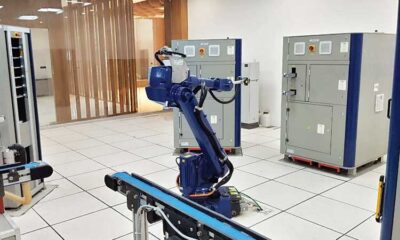
Affordable Robotic & Automation Limited (ARAPL), India’s first listed robotics firm and a pioneer in industrial automation and smart robotic solutions, has reported robust financial results for the second quarter and half year ended September 30, 2025.
The company achieved a 175 per cent year-on-year rise in standalone EBITDA and strong revenue growth across its automation and robotics segments. The Board of Directors approved the unaudited financial results on October 10, 2025.

Key Highlights – Q2 FY2026
• Strong momentum across core automation and robotics divisions
• Secured the first order for the Atlas AC2000, an autonomous truck loading and unloading forklift, from a leading US logistics player
• Rebranded its RaaS product line as Humro (Human + Robot), symbolising collaborative automation between people and machines
• Expanded its Humro range in global warehouse automation markets
• Continued investment in deep-tech innovations, including AI-based route optimisation, autonomy kits, vehicle controllers, and digital twins
Global Milestone: First Atlas AC2000 Order in the US

ARAPL’s US-based subsidiary, ARAPL RaaS (Humro), received its first order for the next-generation Atlas AC2000 autonomous forklift from a leading logistics company. Following successful prototype trials, the client placed an order for two robots valued at Rs 36 million under a three-year lease. The project opens opportunities for scaling up to 15–16 robots per site across 15 US warehouses within two years.
The product addresses an untapped market of 10 million loading docks across 21,000 warehouses in the US, positioning ARAPL for exponential growth.

Financial Performance – Q2 FY2026 (Standalone)
Net Revenue: Rs 25.7587 million, up 37 per cent quarter-on-quarter
EBITDA: Rs 5.9632 million, up 396 per cent QoQ
Profit Before Tax: Rs 4.3808 million, compared to a Rs 360.46 lakh loss in Q1
Profit After Tax: Rs 4.1854 lakh, representing 216 per cent QoQ growth
On a half-year basis, ARAPL reported a 175 per cent rise in EBITDA and returned to profitability with Rs 58.08 lakh PAT, highlighting strong operational efficiency and improved contribution from core businesses.
Consolidated Performance – Q2 FY2026
Net Revenue: Rs 29.566 million, up 57% QoQ
EBITDA: Rs 6.2608 million, up 418 per cent QoQ
Profit After Tax: Rs 4.5672 million, marking a 224 per cent QoQ improvement

Milind Padole, Managing Director, ARAPL said, “Our Q2 results reflect the success of our innovation-led growth strategy and the growing global confidence in ARAPL’s technology. The Atlas AC2000 order marks a defining milestone that validates our engineering strength and accelerates our global expansion. With a healthy order book and continued investment in AI and autonomous systems, ARAPL is positioned to lead the next phase of intelligent industrial transformation.”
Founded in 2005 and headquartered in Pune, Affordable Robotic & Automation Ltd (ARAPL) delivers turnkey robotic and automation solutions across automotive, general manufacturing, and government sectors. Its offerings include robotic welding, automated inspection, assembly automation, automated parking systems, and autonomous driverless forklifts.
ARAPL operates five advanced plants in Pune spanning 350,000 sq ft, supported by over 400 engineers in India and seven team members in the US. The company also maintains facilities in North Carolina and California, and service centres in Faridabad, Mumbai, and San Francisco.

Continue Reading

Trending News