Economy & Market
Cement industry has accepted vacuum system as the best alternative to manual…
Published
12 years agoon
By
admin
Raja Mukherjee, National Head – Training, Technical and Marketing, Eureka Forbes.
With most of the regulations following international standards, it is not far that internationally accepted cleaning systems would be a part and parcel of the cement plants across India. In the production process, many majors like Ultratech, Shree cement, Ambuja, Lafarge, have already made inroads into this concept, says Raja Mukherjee, National Head – Training, Technical and Marketing, Eureka Forbes. Excerpts from the interview…
What is the growth potential for industrial vacuum cleaning system from cement plants?
Material spillage in the manufacturing process is the major challenge which affects the machinery, the production process and poses health and safety concerns for the employees. With the ever-growing depletion of non-renewable resources in the cement industry, recycling of raw material (and processed material) is the order of the day. Traditionally, backhoe loaders or other manual processes are used to remove spilled material from production and stock areas and they are tedious, labour oriented and ineffective thus costly.
Sometimes spillages in production areas, say for example on conveyor belts, can cause the production to stop burning a hole in the treasury due to the downtime of the machinery.
A vacuum cleaning system, whether online, offline or mobile truck-mounted, is an effective system which enables hundred percent collection of debris and material with proper ?customised? collection mechanisms which gel in with the plant infrastructure. There are possibilities of single point collection and multiple point collection all controlled remotely. Hence when you have an option of pure collection, recycling option, prevention of safety hazards and provision of a dust-free work environment, the ?vacuum concept? has a growth potential.
What is the percentage of cement plants that have opted for these advanced systems?
Cement industries have now begun to accept the vacuum systems as the best possible alternative to manual and blowing methods. Though less in percentage, but majors in this segment have already started interacting with vendors for similar solutions.
Are the existing statutory requirements good enough that these pollution/cleaning control systems are a must in a cement plant?
With the advent of new fugitive norms of emission, one has to minimise the dust content that occur due to spillages and the conveying systems. Even plant areas and access roads need to be kept dust free as per the norms which requires efficient vacuum sweeping systems. With most of the regulation following international standards, it is not far that internationally accepted cleaning systems would be a part and parcel of the cement plants across India.
Brief us on the range of cleaning system solutions offered by Eureka Forbes for cement plants?
Eureka Forbes has been pioneering the concept of health and hygiene in India with its vacuum systems and water purification systems. Its institutional arm called Forbes Professionals has up scaled these products to customised ones for the industries. The vacuum cleaning systems range from industrial vacuum cleaners for point use to centralised vacuum systems for remote multipoint collection. In some cases one may require mobile systems to enable them to collect material from different plants hence we have a truck mounted vacuum system.
Outdoor floor cleaning solutions in the form of mechanical and vacuum sweepers and auto scrubber dryers too find place in cement plants. High pressure water cleaners too create an impactful cleaning option for various outdoor areas with pressures ranging from 160-230 bar with single phase, three phase and engine driven variants.
What are the major advantages of these systems?
Thanks to our long experience, we have developed technical solutions and vacuum equipment specific for this field. All our equipment, thanks to the high suction capacity, allows a short return on the investment. In particular they allows:
1) clean easily and quickly the combustion lines
2) keep the production site clean and increase the safety of the operators
3) keep the production lines clean and reduce the stops of production for failure
4) Make maintenance intervention quickly and in a safe way
5) Clean the plant with just one or two internal operators
6) To respect the environmental rules
Could you brief us on the durability /maintenance aspects of the systems, especially the change over time for filters used?
The systems offered by us have a service life of 8-10 years if run as per the SOPs provided in the user manuals. Since this a closed loop system, there is bare minimum maintenance parameters which is the USP of the system. Filter cleaning is automatic during the processes enabled through a compressed air purging system which enhance the life of the filter. This in addition to the periodic filter cleaning at prescribes intervals makes its replacement interval long.
All the pipings are metal with chromium plated or steel (as per requirement) which enhances the life of the carrier system Hence a system which requires minimum consumables and delivers enhanced productivity, is a system to adopt in today?s environment conscious cement plants.
What are the parameters one has to look into when opting for a particular type of cleaning system to suit the work environment?
To decide on a particular system, a proper site survey is conducted to understand the needs of the customers and a rough sketch of the solution is prepared. A 3D model is created and the machine is selected based on the type of material to be collected like its size, density, whether corrosive, whether inflammable, collection rate, number of collection points, distance of collection points, type of discharge/removal, whether recycling of collected material is required etc. No major infrastructural changes are required for the commissioning as this form a part of the present system.
To what extent these solutions offered help enhance productivity and process optimisation in cement plants?
The catch is not to let your production process stop due to spillages that ultimatelyeffects the conveyors, its rollers causing jams and breakdowns. A day of breakdown maintenance is a huge expense as compared to the investment. The reduction of labours in today?s times is itself a major saving on the overheads and they could be utilised in some other productive work.
The recycling of the spilled material (or raw material) back into the production process would land up providing additional savings to the total production process. Adhering to the environmental norm and keeping the work places free from dust is a major intangible benefit which increases productivity of the employees and plays a role in the process optimisation.
In the entire production chain which all areas these systems are required?
Going by the setup of a traditional cement plant, centralised vacuum systems could be installed at the conveyor connecting the crusher house to the storage yard, then at the conveyor connecting the storage yard to the raw mill. It could be used to collect fly ash at the incinerators, and it could be widely used in packing and loading areas. In non-production areas like connecting roads integrated sweepers could keep them dust free. The admin block could be kept clean and hygienic with auto scrubber dryers and specialised cleaning chemicals.
In a nut shell, since cleaning is the key to increased productivity (as per 5S and Kaizen) specialised equipment is also necessary to maintain the standards required for productive output.
To what extent cement manufacturers have accepted the use of these cleaning systems? Is cost a deterrent?
All new systems face road blocks initially, but when the basic idea of inception is evident and correlated to enhance productivity its acceptance would be logical and necessary. The initial investment of the system is negligible as compared to the tangible and intangible benefits that this provides to the production process.
What are the major challenges as a solution provider you face?
Majority of the cleaning and spillage management related challenges of the cement industries are catered by us. Hence the only ones left for us are acceptance of the concept by the plant owners and taking this forward.
What differentiate Eureka Forbes from competition?
There are very few solution providers for these systems in India, but Eureka Forbes has many differentiating factors. Eureka Forbes is the only company that provided an ATEX certified machine that is required for handling fine dust as cement. This gives the machines and the system protection against any hazardous explosion. It unmatched technical competency would be able to suggest the right machine for the right application. Its Pan India ?own? service network enable multiple and frequent touch points for the users. Its state of the art European certified product has a good life cycle adding to the ROI.
How do you assess the future scenario?
The way the government has initiated the ?Swachch Bharat? mission sends a clear signal as to where the county is poised and where the government intends to take it. In the production process, majors players have already made inroads into this concept. Eureka Forbes has had various expressions of interest for this concept which definitely sends us positive vibes from this segment of industry.
You may like
The future of India’s roads took centrestage at RAHSTA Expo 2026, where policymakers, contractors and industry leaders came together under one roof. The event blended thought leadership, technology showcase and industry recognition into a single powerful platform.
India’s roads and highways community gathered in full strength at the Jio World Convention Centre, Mumbai, for the 16th edition of the RAHSTA Expo (Roads and Highways Sustainable Technologies & Advancement). Over two action-packed days, the event brought together policymakers, contractors, consultants, developers, equipment manufacturers, material suppliers, technology providers and investors to deliberate on the future of India’s ,infrastructure while showcasing the latest innovations driving the sector.
The event culminated in the prestigious RAHSTA Awards, where Shri. Ajay Tamta, Union Minister of State for Road Transport & Highways, felicitated organisations and professionals for their outstanding contributions to road construction, engineering, safety, sustainability and technology. With leading contractors, senior government officials, industry veterans and technology providers under one roof, the event reaffirmed RAHSTA’s position as one of India’s most influential platforms for the roads, highways, bridges and tunnels ecosystem.
Organised by FIRST Construction Council in association with ASAPP Info Global Group, RAHSTA has steadily evolved beyond an exhibition into a platform where policy, technology, engineering and business converge to address the opportunities and challenges shaping India’s next generation of transport infrastructure.
Beyond expansion, towards value
The conference opened with a thought-provoking address by Pratap Padode, Founder and Editor-in-Chief, Construction World, who observed that India’s highways sector has reached an important inflection point. Introducing this year’s theme – ‘From Expansion to Value: The Next Phase of India’s Highways’ – he noted that while the country has successfully expanded its road network over the past two decades, the industry’s priorities are now shifting towards building infrastructure that delivers greater lifecycle value, durability, safety and operational efficiency. With funding pressures, asset monetisation and evolving project models changing the sector’s dynamics, he said the focus must now move beyond kilometres constructed to the quality and long-term performance of every asset.
Dr Brijesh Dixit, Managing Director, Maharashtra State Infrastructure Development Corporation (MSIDC), reminded delegates that successful infrastructure delivery is ultimately a collective effort. Emphasising on collaboration between government, industry and engineering professionals, he remarked, “There is no loser in a winning team, and there is no winner in a losing team,” urging stakeholders to work together to deliver projects with quality, financial sustainability and technological excellence.
Delivering the keynote address, Bidur Kant Jha, Director, New Technologies for Highway Development, Ministry of Road Transport & Highways (MoRTH), outlined the Government’s long-term vision for India’s highway network. Highlighting the country’s 6.26 million km roads network, he spoke about the growing adoption of digital planning tools such as BIM and GIS, bridge health monitoring systems and Integrated Smart Transport Corridors under the Vision 2047 roadmap. He emphasised that while India remains open to global innovations, every new technology must be adapted to Indian conditions before large-scale deployment.
Addressing the gathering during the awards ceremony, Tamta underlined the increasing role of specialised equipment and modern construction technologies in executing complex infrastructure projects across diverse terrains. Referring to challenging tunnel projects in Uttarakhand, he noted how advanced machinery has transformed execution capabilities, while also acknowledging the rapid evolution of Indian contractors into globally competitive infrastructure companies. Recognising excellence through industry awards, he said, motivates organisations to continually raise performance standards and embrace innovation.
Meanwhile, Dr Sanjay Mukherjee, IAS, Metropolitan Commissioner, MMRDA, highlighted that infrastructure development must increasingly focus on integrated urban mobility. Reflecting on Mumbai’s engineering journey – from its historic underground utility network to the Coastal Road and other transformative projects – he underlined that future infrastructure planning must seamlessly integrate roads, metro systems and public transport to create efficient, multimodal cities.
Uttar Pradesh takes centrestage
One of the highlights of the second day was Uttar Pradesh’s comprehensive presentation on its infrastructure-led industrial transformation.
Srihari Pratap Shahi, IAS, Additional CEO, Uttar Pradesh Expressways Industrial Development Authority (UPEIDA), demonstrated how the state’s expanding expressway network is evolving into a catalyst for industrial development through integrated manufacturing and logistics clusters. Expressways, he noted, are no longer merely transport corridors but engines of economic competitiveness.
Building on this narrative, Deeksha Jain, IAS, Additional Chief Executive Officer, Uttar Pradesh State Industrial Development Authority (UPSIDA), showcased the state’s rapidly expanding industrial ecosystem supported by extensive expressway connectivity, dedicated freight corridors, airports, industrial townships and investor-friendly policies. She highlighted Uttar Pradesh’s strong manufacturing growth, expanding industrial land bank, plug-and-play infrastructure and increasing use of digital governance to facilitate investments.
Further underlining the significance of the platform, Deepak Kumar, IAS, Infrastructure & Industrial Development Commissioner, Government of Uttar Pradesh, remarked, “RAHSTA provides an excellent platform for states to showcase our infrastructure progress and investment ecosystem. Uttar Pradesh has transformed significantly over the past decade, backed by more than 34 investor-friendly industrial policies, and platforms like RAHSTA help communicate these developments to industry stakeholders from across the country.”
Ideas that shaped the industry conversation
The two-day conference featured seven panel discussions, each examining a critical dimension of India’s evolving roads and highways sector.
The opening discussion on ‘Financing Roads & Highways in a Capital-Constrained Era’ brought together experts from Cube Highways, NIIF, SBI Capital Markets, Centrum Capital and Bandhan Infra Fund, who examined how the financing landscape is changing. Discussions revolved around asset monetisation, InvITs, institutional investments and new funding structures, with panellists agreeing that better project preparation, transparent governance and predictable returns will be crucial for attracting long-term capital into infrastructure.
Attention then shifted to execution realities during the panel on ‘Contractors’ Perspective: Execution Realities, Risks & the Quality Imperative.’ Representatives from GHV Infra Projects, PNC Infratech, NCC and Maccaferri candidly discussed the challenges of delivering projects amid contractual complexities, land acquisition delays, rising costs and tight timelines. While execution pressures remain significant, the discussion reinforced that better collaboration across the project value chain is essential for achieving both speed and quality.
Day 2 opened with a technically rich discussion on ‘Designing Roads for Sustainability, Durability & Climate Resilience’. Experts from CSIR-CRRI, IIT Bombay, IIT Madras, Zydex Group and SRMB Steel explored advanced pavement technologies, recycled materials, climate-resilient designs and scientific construction practices that can significantly improve durability while lowering lifecycle costs. Sustainability, they agreed, must become an integral part of road design rather than an afterthought.
The subsequent session on ‘Bridges & Tunnels: Complex Engineering, Safety & Future Readiness’ highlighted the growing complexity of India’s infrastructure projects. Panellists discussed advances in structural engineering, digital monitoring, risk management and safety practices that are enabling the successful delivery of increasingly ambitious bridge and tunnel projects across the country.
Technology remained a recurring theme during the discussion on ‘Technology as a Risk-Mitigation Tool for Developers & Investors’. Experts explained how AI, BIM, drones, predictive analytics, digital twins and intelligent monitoring systems are helping improve project planning, minimise execution risks, strengthen quality assurance and enhance asset management throughout the infrastructure lifecycle.
The construction equipment panel brought together leading industry experts to examine how technology, sustainability and digitalisation are redefining construction equipment in an era of rising cost pressures. Discussions centred on enhancing productivity, reducing lifecycle costs and preparing the industry for India’s infrastructure ambitions leading up to 2047.
The conference concluded with an engaging CXO Forum on ‘Rebuilding Confidence in India’s Roads & Highways Sector’, where senior industry leaders emphasised that stronger governance, better project preparation, digitalisation, transparent contracting and closer public-private collaboration will be essential to sustain India’s infrastructure growth over the coming decades.
Technology and recognition under one roof
Beyond the conference halls, RAHSTA Expo reflected the technological transformation underway across India’s road infrastructure ecosystem. Leading equipment manufacturers, technology companies and material suppliers showcased advanced construction equipment, intelligent digital platforms, pavement technologies, structural materials and productivity-enhancing solutions designed to improve project efficiency and asset performance. The exhibition created valuable opportunities for contractors, consultants, government agencies and project developers to evaluate new technologies while interacting directly with solution providers.
The event also served as a celebration of excellence through the RAHSTA Awards 2026, which recognised outstanding achievements across road construction, contracting, materials, equipment, technology, safety, sustainability and infrastructure development. Presented by Minister Tamta, the awards honoured organisations that are setting new benchmarks for quality, innovation and execution across India’s roads sector.
RAHSTA Expo 2026 also received extensive support from across the infrastructure ecosystem. Alongside leading corporate sponsors, the event was backed by industry bodies including the Builders Association of India (BAI), Construction Equipment Rental Association (CERA), Consulting Engineers Association of India (CEAI), International Road Federation (IRF), CSIR-CRRI, CILT India, All India Transporters Welfare Association, Hydraulic Trailer Owners Association (HTOA), Gujarat Contractors Association, Bitumen Forum, Fluid Power Society of India, Indian Institute of Material Management, Ministry of Ports, Shipping and Waterways, Gati Shakti Vishwavidyalaya and Mumbai First, reflecting the industry’s collective commitment to advancing India’s road infrastructure.
As the curtains came down on the two-day event, one message resonated throughout the conference: India’s highways story is entering a new chapter. While expansion will continue, the future will increasingly be defined by smarter planning, stronger partnerships, digital transformation, sustainable engineering and long-term value creation. By bringing together the entire infrastructure value chain on a single platform, RAHSTA Expo 2026 once again demonstrated why it has become one of the country’s most influential forums for shaping the future of roads, highways, bridges and tunnels.
Economy & Market
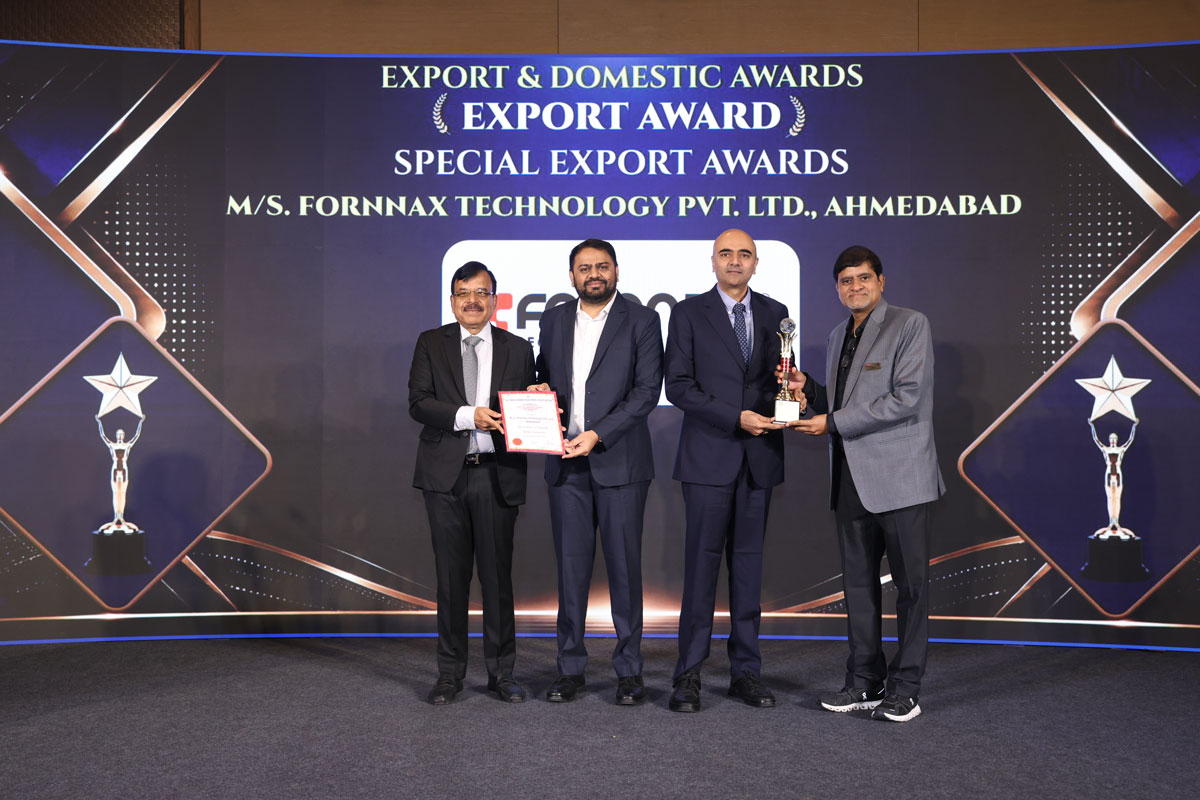
Fornnax Names Lukas Baur as Authorised Service Partner to Bolster EU Operations
Published
3 weeks agoon
July 23, 2026By
admin
Strapline: Fornnax Technology has appointed NOBA Maschinenservice’s Lukas Baur as its authorised service partner for the European Union, strengthening its commitment to delivering fast, reliable, and localised after-sales support across the region.
Fornnax Technology, a leading manufacturer of industrial shredding solutions, has announced the appointment of Mr. Lukas Baur of NOBA Maschinenservice as its authorised service partner for the European Union. The partnership, formalised under the authorisation of Fornnax CEO Mr. Jignesh Kundaria, reinforces the company’s commitment to providing dependable, localised service support to its expanding customer base across Europe.
Strengthening Service Through Proven Expertise
With over two decades of experience in servicing, maintaining, and overhauling industrial shredders, Mr. Baur brings extensive technical expertise to the partnership. His capabilities span welding, hardfacing, shaft and knife rebuilding, complex assembly, hydraulics, and complete electrical engineering services, delivered in collaboration with a trusted partner company based in Halle/Saale.
Operating from Worbis, Germany, Mr. Baur is strategically positioned to provide emergency support across the European Union within 24 hours, covering an operational radius of approximately 1,000 kilometres.
Supporting this capability is a well-equipped service infrastructure comprising 12 Mercedes Sprinter service vans, a team of 24 skilled technicians, specialised bearing-change tools, a fully equipped hydraulic workshop, and a 1,000-square-metre facility with a five-ton crane track. Together, these resources position his team to manage the complete spectrum of Fornnax’s European service requirements efficiently and reliably.
Partnership Driven by Industry Insight
Having spent years servicing Eldan, Lindner, and Vecoplan shredders across the European recycling industry, Mr. Baur’s decision to collaborate with Fornnax is rooted in his understanding of market needs and customer expectations. His experience has provided valuable insight into what recycling plant operators require—not only from their machinery but also from the service teams supporting them.
According to Mr. Baur, Fornnax’s reputation for robust machine construction, superior wear protection, and maintenance-friendly design made the partnership a natural fit.
The collaboration comes at a time when Europe’s tyre recycling industry is facing mounting challenges, including rising cost pressures, shrinking margins, delayed investments, and a shortage of skilled labour. Mr. Baur believes these conditions reinforce the need for technically strong service partners capable of delivering rapid, dependable support.
Commenting on the partnership, he said, “Fornnax, with its exceptional price-performance ratio and superior quality, has the potential to become a market leader in Europe. We would like to be their service partner in this journey.”
Comprehensive Support Across the Equipment Lifecycle
As Fornnax’s authorised service partner, Mr. Baur will oversee the complete lifecycle support of the company’s equipment throughout the European Union. His responsibilities will include installation, commissioning, preventive maintenance, emergency repairs, and spare parts support across mechanical, hydraulic, and electrical systems.
Looking ahead, he also plans to develop a centralised spare parts distribution hub for European customers, particularly if Fornnax establishes a warehouse facility in Worbis to facilitate faster deliveries. To further strengthen service coverage, Mr. Baur intends to expand operations by adding two to three additional service teams and vehicles each year, progressively increasing capacity across the continent.
A Shared Commitment to Customer Excellence
Highlighting the strategic importance of the partnership, Mr. Jignesh Kundaria, Director and CEO of Fornnax, said:
“We strongly believe that by continuously improving our service quality and customer satisfaction index, we can build long-term relationships with our customers. Higher customer satisfaction leads to greater trust, which significantly increases repeat orders and ultimately drives sustained growth in our sales revenue.”
This customer-first philosophy underpins Fornnax’s strategy of building a dedicated European service partner network instead of relying solely on remote support. With Mr. Baur joining this network, customers across the European Union will benefit from faster response times, expert technical assistance, and dedicated on-ground support from a partner with extensive experience in high-throughput shredding operations.
Mr. Baur’s appointment also reflects Fornnax’s broader ambition to establish itself as the preferred shredding solutions provider for the European recycling industry, marking another important milestone in the company’s international growth strategy.
Concrete
Nuvoco Vistas launches Limla cement plant, expands Gujarat footprint
Published
1 month agoon
July 13, 2026By
admin
Nuvoco Vistas opens a 2 MMTPA grinding unit at Limla, entering Gujarat and advancing its target of 35 MMTPA capacity by FY 2028.
Surat (Gujarat)
Nuvoco Vistas Corporation Ltd, a part of Nirma Group and one of India’s leading building materials company, has inaugurated the Limla Cement Plant in Surat (Gujarat), one of Vadraj Cement Limited’s (VCL) principal manufacturing facilities. The commissioning represents a key milestone in Nuvoco’s acquisition and restoration of VCL, while supporting the company’s expansion across the Western Indian cement market.
Vadraj Cement Limited is a subsidiary of Nuvoco Vistas Corporation Limited and has installed cement capacity of 6 MMTPA across its assets. The Limla inauguration therefore represents the first operational step in the acquired platform’s wider revival, while the Kutch facilities provide clinker supply, mineral security and coastal logistics support for the western business.
Nuvoco completed its acquisition of Vadraj Cement Limited, then under the Corporate Insolvency Resolution Process, after paying a consideration of Rs 1,800 crore in June 2025. VCL’s asset portfolio comprises a clinker unit at Kutch and a grinding unit at Limla in Surat. It also includes high-quality captive limestone reserves and a captive jetty at Kutch, supporting more efficient logistics. Following the takeover, Nuvoco began an extensive programme of restoration, refurbishment and expansion at both locations, leading to the commissioning of the Limla plant.
The Limla Cement Plant is expected to support a phased increase in sales volumes across Gujarat. It will also help Nuvoco supply neighbouring markets in Western Maharashtra and release cement capacity from its northern plants, which can consequently be redirected towards markets in North India. The plant will manufacture a full portfolio comprising Ordinary Portland Cement, Portland Slag Cement, Portland Pozzolana Cement and Portland Composite Cement. It will additionally produce the complete Nuvoco Duraguard range, including the premium Nuvoco Duraguard Microfibre product. The acquisition is also expected to generate operational synergies with Nuvoco’s existing plants at Nimbol and Chittorgarh in Rajasthan, improving logistics optimisation and market reach across important regional markets.
The grinding unit at the Limla Cement Plant was completed ahead of schedule, with 2 MMTPA of capacity now inaugurated to expand Nuvoco’s operating scale and customer reach. After Vadraj Cement’s assets become fully operational, plants in North and West India are expected to account for nearly 40 per cent of Nuvoco’s total cement capacity. This will broaden the company’s manufacturing network, strengthen access to high-growth markets and support its plan to increase consolidated cement capacity to 35 MMTPA by FY 2028, reinforcing its longer-term growth strategy.
Commenting on the development, Jayakumar Krishnaswamy, Managing Director, Nuvoco Vistas Corp Ltd, said: “The inauguration of the Limla Grinding Unit in Surat is an important milestone in Nuvoco’s growth journey and demonstrates our commitment to disciplined, value-accretive expansion. Gujarat is strategically significant for Nuvoco, with substantial opportunities arising from infrastructure investment, industrial growth, rapid urbanisation and continuing demand from the housing and construction sectors. The facility strengthens our regional footprint, improves operational flexibility and increases our ability to serve customers across northern and western markets with greater reliability and efficiency.”
He added: “Through the Vadraj acquisition, we have refurbished and restarted a strategically important asset, returning it to operations in record time through strong execution and collaboration between teams. The achievement demonstrates our ability to create value from acquired assets, fulfil our commitments and retain the confidence of stakeholders. It also highlights the strength of our project delivery capabilities and our continued focus on building sustainable, profitable growth over the long term.”
Nuvoco Vistas Corporation Limited is a building materials company whose vision is to build a safer, smarter and more sustainable world. It is among the leading players in East India and has a significant presence across North and West India. Nuvoco began operations in 2014 with a greenfield cement plant at Nimbol, Rajasthan. It later acquired Lafarge India Limited, which had entered India in 1999, followed by Emami Cement Limited in 2020 and Vadraj Cement Limited in April 2025. The company has also announced an expansion in eastern India through a new grinding mill at the Arasmeta Cement Plant, supported by several debottlenecking programmes involving equipment upgrades, process improvements and internal capacity initiatives. These developments place Nuvoco on track to achieve total cement capacity of approximately 35 MMTPA. The company reported total income of Rs 11,362 crore in FY 2025-26, reflecting its continuing growth trajectory.
Nuvoco operates a diversified portfolio across three segments: Cement, Ready-Mix Concrete and Modern Building Materials. Its cement portfolio includes Concreto, Duraguard, Double Bull, PSC, Nirmax and Infracem, covering Ordinary Portland Cement, Portland Slag Cement, Portland Pozzolana Cement and Portland Composite Cement. Its pan-India RMX business provides value-added products under Concreto for performance concrete, Artiste for decorative concrete, InstaMix for ready-to-use bagged concrete, X-Con covering M20 to M60 grades, and Ecodure for specialised green concrete. Nuvoco has supplied materials to projects including the Mumbai-Ahmedabad Bullet Train, Birsa Munda Hockey Stadium in Rourkela, Aquatic Gallery at Science City in Ahmedabad, and metro railway projects in Delhi, Jaipur, Noida and Mumbai.
The Road Ahead Begins Here
Cement Makers’ Margins To Fall Rs 50-75 Per Tonne Amid West Asia Conflict
UltraTech Board Approves Rs 50 bn Fundraise Via NCDs
Fornnax Names Lukas Baur as Authorised Service Partner to Bolster EU Operations
Lokesh Lays Stone For Rs 31 Billion Cement Unit In Kadapa
The Road Ahead Begins Here
Cement Makers’ Margins To Fall Rs 50-75 Per Tonne Amid West Asia Conflict
UltraTech Board Approves Rs 50 bn Fundraise Via NCDs
Fornnax Names Lukas Baur as Authorised Service Partner to Bolster EU Operations