Connect with us

Concrete

Most of the manufacturers are in wait and watch mode

Published

on

Shares

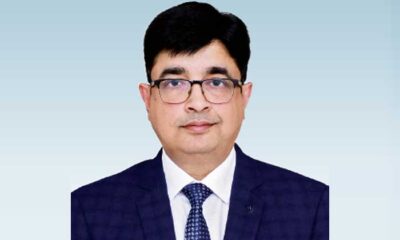
Vivek Taneja, Head of Business Development ( Power), Thermax Timely policy changes and a well thought out growth plan, fortified with incentives for energy conservation, will give a strong push to the cement industry. Although order books of most plant and machinery manufacturers didn`t look exciting in 2013, the year ahead holds more potential. Vivek Taneja, Head of Business Development ( Power), Thermax says that a lot depends on how we tap the opportunities. Excerpts from the interview.

Has the economic slowdown impacted production capacity augmentation or the setting up of new cement plants?
Although some cement majors are planning for the long term and will stay the course , the pace could be slower than anticipated. From our discussions with some manufacturers, it appears that most cement companies are adopting a strategy of wait and watch before moving ahead with their capacity expansion plans. So, to some extent, yes there has been an impact.

Are you optimistic about the growth of the cement sector?
From our discussions on captive power requirements, we understand that the total capacity addition predicted during the 12th Five Year Plan will depend on the infrastructure development facilitated by government policies. If the present economic policy stasis continues, future capacity addition is going to be limited. However, we are optimistic about the potential in this sector from the long- term perspective..

What policy changes will help the cement industry regain momentum from the year 2014 onwards?
On a near term basis, there could be faster decisions related to infrastructure projects like ports, roads, etc; lowering of interest rates to facilitate growth of consumption in housing; making available fuel for captive consumption of the cement industry (cement manufacturing as well as captive power generation); quicker MOEF and other clearances, etc. From a power perspective, the government could think of offering incentives to cement and other industries, to generate power from their large and available quantity of waste heat. This can be done by bringing power produced from waste heat under the ambit of renewable energy.

What new trends are emerging in the design of cement plans, plants and machinery, and other supporting systems ?
Designing cement plants that can harness their waste heat for power generation is being actively considered by the industry. Such a move, if backed by incentives available for renewable energy, can improve the profitability of the plants. Additionally, it will also help in better environment management as the waste heat after use for power generation will be let out at much lower temperatures.

Cement plants can reduce their overall carbon footprint and also help in reducing the national dependence on fossil fuel.

As an EPC service provider and supplier of critical plant and machinery, how has 2013 been for you?
This year has seen limited orders being finalised, and most of the manufacturers are in a wait and watch mode before the 2014 elections.

While we are optimistic on the long-term perspective, we expect industry growth to be subdued in the interim.

Continue Reading
Click to comment

Leave a Reply

Your email address will not be published. Required fields are marked *

Concrete

Dalmia Acquires Five Point Two MnTPA Cement Assets in Central Region

Acquisition adds capacity, power and rail access

Published

on

By

Shares

Dalmia Cement (Bharat) Limited (DCBL) executed a business transfer agreement on 21 May 2026 to acquire a cement undertaking from Jaiprakash Associates Limited (JAL) and Adani Infra (India) Limited. The assets include plants at Rewa in Madhya Pradesh and Churk, Chunar and Sadwa in Uttar Pradesh with five point two million tonnes per annum (mn tpa) cement capacity and three point three mn tpa clinker capacity, plus 99 megawatt (MW) thermal power and railway sidings. The transaction carries an enterprise value of Rs 28.5 billion (bn).

DCBL, a wholly owned subsidiary of Dalmia Bharat Limited (DBL), will see cement capacity rise to 54.7 mn tpa on completion. Ongoing expansions at Belgaum, Pune and Kadapa are expected to raise capacity to 66.7 mn tpa by the second to third quarter of fiscal 2028. The company said the transaction would be consummated within two weeks.

The deal follows a framework signed in December 2022 to settle long running disputes with JAL, including a long term clinker supply arrangement. Completion was delayed when JAL entered insolvency and the earlier sale did not finalise. Following approval of a resolution plan under the Insolvency and Bankruptcy Code, DCBL executed a fresh business transfer agreement to resolve pending legal and arbitral matters.

Company statements described the acquisition as strategic, accelerating access to central markets compared with a greenfield route and offering scope for expansion through debottlenecking and brownfield investment. Proximity to the company’s captive mines and established vendor relationships should support faster ramp up. The assets should augment EBITDA delivery and enhance returns by enabling entry into newer markets with relatively better prices.

Senior executives said the addition aligned with a long term plan to build a pan India presence and would provide a head start in central markets. They noted that familiarity with the plants under earlier tolling arrangements offers operational insight and strengthens channel relationships, supporting quicker market entry. Management expressed confidence that the assets’ expansion potential would generate value for stakeholders.

Continue Reading

Concrete

Ramco Cements Reports FY26 Revenue Growth And Higher Profit

Net debt reduced as exceptional items boost FY26 earnings

Published

on

By

Shares

Ramco Cements reported standalone audited results for FY26 with net revenue of Rs 90,560 million (mn) and profit after tax of Rs 6,940 mn. EBIDTA rose to Rs 14,820 mn and blended EBIDTA per tonne was Rs 788 on a two per cent volume rise to 18.81 million (mn) tonne (t). Cement revenue increased by five per cent and construction chemicals revenue rose by 66 per cent.

Raw material cost per tonne rose to Rs 1,023 from Rs 956 mainly due to a mineral bearing land tax of Rs 160 per t in Tamil Nadu, adding about Rs 86 per t. Power and fuel cost per tonne fell to Rs 1,098 from Rs 1,123 with petcoke mix down to 47 per cent and green power up to 40 per cent.

Profit before tax after exceptional items was Rs 8,790 mn. Net exceptional items were Rs 5,530 mn, including Rs 5,740 mn from sale of surplus land and Rs 200 mn of past service cost. The company monetised Rs 10,980 mn from non core asset sales over the past two years and recorded capex of Rs 9,970 mn, with guidance of Rs 8,000 mn for FY27.

Net debt fell by Rs 8,170 mn to Rs 36,640 mn at 31 March 2026 and cost of debt eased to 7.29 per cent, reducing net debt to EBIDTA to 2.47 times. Management indicated the full impact of higher fuel costs is expected from Q2 FY27, while packing and diesel cost increases will be visible in Q1 FY27. The board has proposed a dividend of Rs two point five zero per equity share and the company flagged risks from elevated fuel and logistics costs, commodity volatility and competitive pricing.

Continue Reading

Concrete

Dalmia Cement to Acquire 5.2 MnTPA Capacity

Deal covers cement assets in Madhya Pradesh and Uttar Pradesh

Published

on

By

Shares

Dalmia Cement (Bharat), a wholly owned subsidiary of Dalmia Bharat, has executed a Business Transfer Agreement with Jaiprakash Associates and Adani Infra (India) to acquire cement assets with 5.2 MnTPA capacity in the Central region.

The acquisition covers cement plants located at Rewa in Madhya Pradesh, and Churk, Chunar and Sadwa in Uttar Pradesh. The assets include 5.2 MnTPA cement capacity, 3.3 MnTPA clinker capacity, 99 MW thermal power capacity, railway sidings at Rewa and Chunar, and a common railway siding at Churk. The enterprise value of the transaction is Rs 28.5 billion.

Following completion of the transaction, Dalmia Bharat’s cement capacity will increase to 54.7 MnTPA. Its ongoing expansion projects at Belgaum, Pune and Kadapa are expected to further raise capacity to 66.7 MnTPA by the second or third quarter of FY28. The transaction is expected to be completed within two weeks.

Dalmia Cement had entered into a framework agreement with Jaiprakash Associates in December 2022 for the sale of business assets and related agreements, including a business transfer agreement and cement sale purchase agreement. The agreements were intended to settle disputes between the parties, including those under the long-term clinker supply agreement. However, the transaction could not be completed after Jaiprakash Associates was admitted to insolvency.

Following approval of the Adani Group’s resolution plan for Jaiprakash Associates under the Insolvency and Bankruptcy Code, Dalmia Cement requested that the earlier agreement be considered to settle pending disputes. The company has now executed a fresh Business Transfer Agreement with Jaiprakash Associates and Adani Infra (India) for the cement undertaking.

The acquisition supports Dalmia Bharat’s strategy to become a pan-India cement player and provides faster access to Central markets compared to a greenfield project. The assets also offer expansion potential through debottlenecking and brownfield development.

Puneet Dalmia, Managing Director and CEO, Dalmia Bharat, said the assets are a strong strategic fit and will help the company serve high-potential markets in the Central region. He added that the expansion potential of the assets and their proximity to Dalmia’s captive mines could help create a future capacity hub.

Continue Reading

Video Thumbnail

    SIGN-UP FOR OUR GENERAL NEWSLETTER


    Trending News