Connect with us

Concrete

“AI should predict bottlenecks.”

Published

on

Shares

Anuradha Parakala COO, Fleetronix Systems, discusses real-time visibility, predictive intelligence and proactive control in cement logistics.

As cement logistics becomes increasingly data-driven, fleet visibility is emerging as a critical lever for improving asset utilisation. Anuradha Parakala, COO, Fleetronix Systems, discusses how real-time tracking, AI-led anomaly detection and connected logistics ecosystems can help eliminate operational blind spots.

How can real-time fleet visibility help cement manufacturers eliminate blind spots and improve control from plant despatch to final delivery?
For decades, cement logistics has been run on blind faith and periodic phone calls. A truck rolls out of the plant gates, and management essentially crosses its fingers, waiting for an update that might come three hours too late. That is not supply chain management; that is operational gambling.
Let’s look at the economics. Real-time fleet visibility doesn’t just put a moving dot on a digital map—it forces discipline onto the balance sheet. When you have live tracking of arrival times, route adherence, and unwarranted stoppages, you remove the guesswork that bleeds capital.
Visibility isn’t about micro-managing drivers. It’s about converting a volatile cost centre into a predictable, accountable business process. In our deployment data at Fleetronix, absolute visibility cuts operational exceptions by over 20 per cent right out of the gate. That’s because we are tackling anomalies while they happen, not holding a post-mortem after the cement is already spoiled or missed its delivery window.

What are the biggest fleet-level inefficiencies in cement logistics today, and how can technology help address them?
The real cash drain happens long before the truck hits the highway.
The stagnation trap: Excessive idle times rotting away at plant loading bays and unloading sites.
The accountability vacuum: Fragmented communication loops between transporters, despatchers and yard managers.
The reconciliation waste: Finance teams wasting hundreds of man-hours manually matching proof of delivery with transit logs.
Technology shouldn’t just give you more dashboards; it should eliminate noise. AI-driven platforms act as an early-warning system for behavioural abnormalities. AI should predict bottlenecks,
before they snowball into heavy financial losses.
The companies winning tomorrow aren’t the ones scaling up their fleet size blindly—they are the ones extracting double-digit productivity out of the assets they already own.

How can digital fleet management strengthen cargo security and proactively identify risks such as theft, route deviations and unauthorised halts?
In heavy building materials, cargo security is no longer just a local transport concern. It is a direct line item affecting brand reputation and business continuity. Traditional security reacts after a pilferage or highway theft is reported. That is too late.
Modern digital architecture deploys smart geofencing, tamper-proof sensor integration, and anomaly detection algorithms. If a truck stops in an unapproved high-risk corridor for longer than a designated threshold, the system flags it instantly. Security isn’t a passive logbook; it is an active deterrent. True ROI comes from intervention before a loss occurs.

What will the fully connected end-to-end logistics ecosystem of the future look like, and what role will data and AI play in transforming cement transportation?
The market leaders of the future won’t necessarily be the giants with the largest physical fleets. They will be the ones with the most intelligent nervous systems. We are moving toward a fully integrated ecosystem where plants, trucks, inventory pipelines, and customer destinations talk to each other in real time.
Artificial intelligence will ingest millions of data points to automate dispatch planning, streamline preventive maintenance, and execute dynamic routing without human friction. The future of cement logistics is not about tracking where your truck is right now. It is about knowing what is bound to go wrong three hours from now, and fixing it automatically before it ever happens.

Concrete

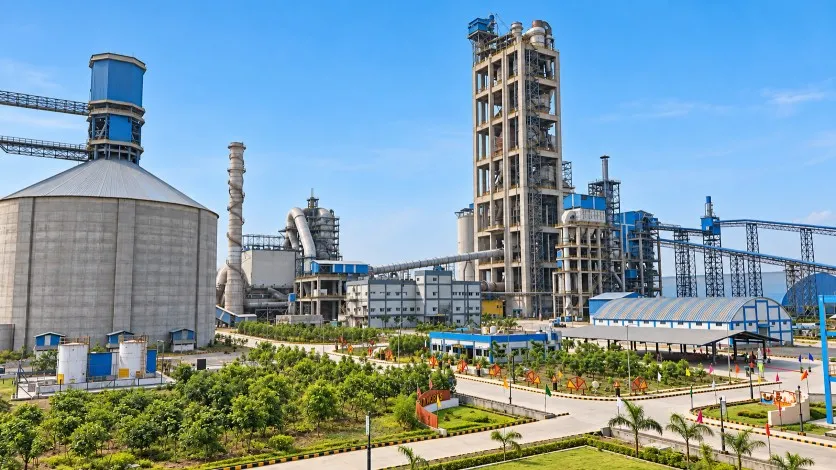
UltraTech’s Kukurdih unit runs fully on green energy

The Chhattisgarh plant has met 100 per cent of its electricity needs through green energy since April 2026.
Published

on

By

Shares


UltraTech Cement’s Kukurdih Cement Works in Chhattisgarh has met 100 per cent of its electricity requirement through green energy every month since April 2026. Commissioned in 2024, the integrated cement manufacturing unit has an installed grey cement capacity of 3.3 million tonnes per annum.
The plant meets its electricity requirement through a combination of renewable power sourcing and Waste Heat Recovery Systems (WHRS). UltraTech said the combination enables the unit to meet its power needs through green energy while maintaining operational reliability.
Since April 2026, nearly a third of UltraTech’s 76 manufacturing units in India have maintained green energy utilisation above 50 per cent of their electricity requirement. Five units, including Kukurdih, have exceeded 95 per cent green energy utilisation.
The company is also progressively deploying Battery Energy Storage Systems (BESS) across its manufacturing network to support greater integration of renewable energy. UltraTech said it has not invested in new captive thermal power capacity at its integrated units, including greenfield projects and brownfield expansions, for more than 10 years.
As of Q1FY27, UltraTech’s captive green energy capacity stood at 1,897 MW, comprising 1,463 MW of renewable capacity from solar, wind and hybrid sources, and 434 MW of WHRS capacity.
Under its RE100 commitment, the company aims to increase the share of green power in its total power mix to 85 per cent by 2030 and 100 per cent by 2050.

Continue Reading

Concrete

Cement Prices Rise Rs. 7 per Bag in September; October Hikes Expected

Cement prices rose in September as companies weighed further increases.

Published

on

By

Shares


Cement companies may seek to raise prices by Rs. 5 to Rs. 20 per bag across most markets in October, although the ability to sustain the increases will depend on demand recovery and dealer acceptance, according to a report by Centrum Broking. The outlook follows a pickup in pricing momentum during September after largely stable prices in July and August.

The all-India average trade price increased by Rs. 7 per bag month-on-month to Rs. 356 in September. Centrum Broking’s channel checks indicated gains across both trade and non-trade segments, with non-trade prices recording sharper increases in most markets. However, higher company billing rates were not fully passed on to customers in several regions because dealers continued selling at earlier prices to meet quarter-end volume targets.

The brokerage said demand weakness in Q2FY27 was less pronounced than the usual seasonal trend, with construction activity improving in several markets towards the end of the quarter. Demand remained range-bound across several markets in July and August, while September produced mixed regional trends. Higher rainfall affected activity in some areas, whereas lower rainfall supported construction work elsewhere.

South India recorded the largest price increase in September, at Rs. 11 per bag, followed by West India at Rs. 9. Central, East and North India each reported increases of Rs. 5 per bag. Despite the September recovery, the average all-India trade price for Q2FY27 stood at Rs. 351 per bag, down Rs. 1 sequentially, as weaker pricing in July and August offset the later gains.

Centrum Broking said the success of any October increases would depend on the pace of demand recovery and dealers’ willingness to accept higher prices. Fuel prices have also risen sharply in recent weeks, making the implementation and sustainability of price increases a key factor for the cement industry’s pricing outlook.

Continue Reading

Concrete

Andhra Pradesh Clears Rs. 30 bn My Home Cement Plant

Project receives incentives of up to Rs. 11.29 bn from state

Published

on

By

Shares


The Andhra Pradesh government has approved a greenfield cement project worth Rs. 30 bn by My Home Industries, along with incentives of up to Rs. 11.29 bn. The decision comes amid a political controversy in Telangana involving allegations about landholdings associated with My Home Group.

According to an Industries and Commerce Department order issued on September 25, 2026, the project is expected to create 2,000 jobs and begin commercial production by March 2029. The proposed facility will have capacity to produce 3.5 MTPA of clinker and 3.5 MTPA of cement.

The total investment includes fixed capital investment of Rs. 25.97 bn, pre-operative expenses of Rs. 2.23 bn, contingencies of Rs. 1.26 bn and working capital margin of Rs. 540 mn. The incentive package is capped at Rs. 11.29 bn, equivalent to up to 43.48 per cent of fixed capital investment, subject to completion of the committed investment by March 2029.

The package includes a capital subsidy of 39 per cent of eligible fixed capital investment, capped at Rs. 9.43 bn, payable over 10 years from the start of commercial production. It also provides reimbursement of Rs. 1 per unit on electricity purchased from distribution companies for 10 years, subject to a ceiling of Rs. 1.86 bn. A further incentive equivalent to 2 per cent of fixed capital investment is linked to the creation of the committed jobs and other policy conditions.

The state has approved the allotment of 27.19 acres through the Andhra Pradesh Industrial Infrastructure Corporation at actual cost. The project also involves land linked to two temples and the realignment of a canal across approximately 9.93 acres, with conditions requiring alternative temple facilities and company-funded infrastructure work. Telangana Chief Minister A. Revanth Reddy has separately raised allegations concerning land associated with My Home Group, including 2,463 acres near Shamshabad. The allegations remain subject to verification through official records and any investigations.

Continue Reading

Video Thumbnail
▶

    SIGN-UP FOR OUR GENERAL NEWSLETTER

    Trending News

    SUBSCRIBE TO THE NEWSLETTER


    Don't miss out on valuable insights and opportunities to connect with like minded professionals.


      This will close in 0 seconds