Arvind Devaraj, COO, NICDC Logistics Data Services (NLDSL), emphasises that real competitive advantage of the next decade will belong to manufacturers who can turn fragmented information from road, rail, port, and government systems into connected supply chain intelligence.
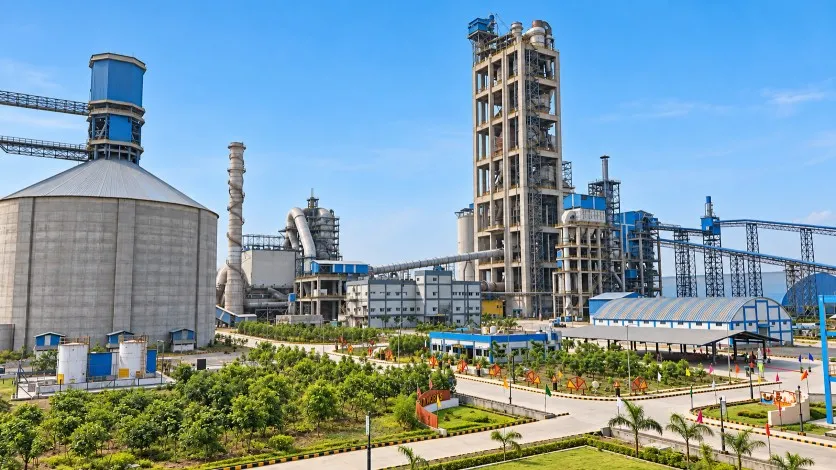
A cement consignment rarely travels through a single logistics system.
Between a manufacturing plant and its final destination, a shipment may interact with road transporters, rail networks, warehouses, terminals, ports and multiple government systems. Each participant may generate valuable information, yet much of that information has historically remained within separate digital environments. This fragmentation creates one of the central challenges of modern logistics: there may be abundant data across the ecosystem, but not always a simple mechanism to bring the relevant data together when a decision has to be made.
For India’s cement industry, where logistics operates at scale and transportation constitutes a critical part of the value chain, digital integration can therefore become as important as physical connectivity. The next stage of logistics transformation is not simply about digitising individual processes. It is about enabling different systems to communicate with one another.
Problem is fragmentation, not lack of data
Over the past decade, various parts of India’s logistics ecosystem have become increasingly digital. Vehicle information, toll movements, railway systems, port processes and other logistics activities generate enormous volumes of data. Large manufacturers have also invested in enterprise resource planning, transportation management and fleet-management systems. But digitisation within individual organisations does not automatically create an integrated
supply chain.
A cement manufacturer may have visibility within its own transportation system while a transporter operates another platform and government agencies maintain separate datasets. A logistics team may consequently spend considerable time moving between portals, verifying information or requesting updates from multiple parties. This is where digital integration becomes important. Instead of requiring every stakeholder to operate through a single monolithic system, an interoperable architecture can enable authorised information to move securely between existing systems.
India’s Unified Logistics Interface Platform (ULIP) represents this approach.
Developed under the National Logistics Policy (NLP), ULIP functions as a digital gateway through which logistics-related datasets available across multiple government systems can be accessed through API-based integration. The broader principle is significant: logistics systems do not necessarily have to be replaced to become connected. They need to be able to exchange information securely and in standardised formats.
What integration means for cement logistics
Consider a cement manufacturer managing despatches across several states. The company’s internal system may contain information about orders, inventory and dispatch schedules. Its transport partners may maintain fleet and consignment information. Other logistics data may exist across government platforms. When relevant information can be accessed through digital interfaces and incorporated into a manufacturer’s own logistics application, decision-making becomes significantly easier.
The supply-chain team no longer needs to treat every source of information as a separate digital island. This can enable practical use cases such as shipment tracking, verification of logistics-related information, route planning, estimated arrival information and improved inventory management.
Government information on ULIP has highlighted use cases including tracking and tracing of consignments, route optimisation, destination updates, vehicle and driver verification, reduced paperwork, inventory management and visibility of logistics assets. For a sector handling high shipment volume, even incremental improvements in these processes can become meaningful when multiplied across thousands of movements.
From data collection to decision intelligence
The larger opportunity, however, is not simply to aggregate information. Digitalisation creates maximum value when data improves decisions. Consider a cement distributor waiting to receive its stock at a depot. Knowing that the delivery will be sent is of little value but knowing when it will be received makes the task of managing inventories and client commitments much easier.
Similarly, a manufacturer coordinating multiple dispatches can benefit from understanding which shipments are progressing normally and which require intervention. Estimated time of arrival, route information and other logistics signals can eventually feed into inventory planning, warehouse scheduling and customer-service systems. This is the transition from supply-chain visibility to supply-chain intelligence. Instead of logistics data being reviewed only after an operational problem has occurred, connected digital systems can make information available while there is still time to act.
Multimodal logistics needs digital interoperability
India’s logistics future is increasingly multimodal.
For industries such as cement, the optimal movement of goods may involve a combination of road, rail and maritime transport depending on distance, volume, destination and infrastructure availability. Physical multimodality, however, works most efficiently when accompanied by digital interoperability. If a shipment changes transport modes but its information cannot move seamlessly between systems, operational silos remain even though the physical infrastructure is connected.
An integrated digital layer can help bridge this gap by allowing information from different logistics systems to be consumed through standard interfaces. ULIP’s architecture is relevant in this context because it is based on API-led access to logistics-related government datasets rather than requiring users to repeatedly navigate multiple independent systems.
The scale at which such an architecture is being adopted is also expanding. As of August 2026, ULIP has signed MoUs with 11 states and 2 union territories, and currently connects 13 ministries, 48 systems, 2,000+ data fields and 142 APIs, with 2,391 companies registered and 298 applications developed. The important point for industry is not the number of integrations itself. It is what these integrations can enable.
As more datasets become interoperable, businesses have the opportunity to build logistics applications around specific operational problems instead of constructing separate mechanisms to collect the underlying information.
A platform economy around logistics data
The digitalisation of logistics can also change how innovation occurs. Traditionally, large enterprises could invest significant resources in building proprietary technology and establishing individual integrations with multiple stakeholders. Smaller companies often faced higher barriers.
Common digital infrastructure can reduce some of these barriers. When authorised logistics data is available through standard APIs, technology companies, logistics service providers and manufacturers can develop applications for specific use cases on top of that infrastructure. One company may build a transport visibility solution. Another may focus on route optimisation. A third could develop an inventory-planning tool or an analytics application for a particular commodity.
The result is not one application trying to solve every logistics problem, but an ecosystem in which different applications can use a common digital foundation. For industries such as cement, this can encourage sector-specific innovation while allowing manufacturers to adopt solutions suited to their own supply-chain structures.
Integration must be accompanied by trust
As logistics becomes more data-driven, governance becomes equally important. Manufacturing and transportation data can contain commercially sensitive information. Companies therefore need clarity regarding what information is being accessed, who is authorised to use it and how it is protected. Digital logistics infrastructure must consequently be built around secure access, consent, standardisation and clearly defined data-sharing frameworks.
ULIP’s model of API-based integration within a secured environment illustrates one approach to such controlled information exchange. For businesses, trust in the digital architecture will ultimately determine how extensively these systems become embedded within everyday operations.
Coordination: The next competitive advantage
The cement industry’s logistics challenge cannot be solved only by adding more trucks, warehouses or terminals. Physical capacity remains essential, but efficiency also depends on how effectively existing capacity is coordinated. That coordination increasingly depends on data.
When manufacturers, transporters and logistics infrastructure operate with fragmented information, every handover creates the possibility of another blind spot. When digital systems become interoperable, those handovers can become data points in a connected journey. The long-term objective should therefore be a supply chain where information moves as seamlessly as the material itself.
India’s emerging digital logistics architecture provides the foundation for this transition. The opportunity for the cement industry is to translate that foundation into practical applications better shipment visibility, smarter route and inventory planning, faster verification and more coordinated multimodal operations.
The future of cement logistics will not be defined by digitalisation for its own sake. It will be defined by whether digital connectivity can reduce uncertainty across the value chain.
When fragmented data becomes connected intelligence, logistics moves from being a sequence of transactions to becoming an integrated network and that can ultimately be one of the strongest drivers of efficiency and competitiveness.
About the author:
Arvind Devaraj is the COO of NICDC Logistics Data Services (NLDSL), which is a joint venture between Government of India represented by National Industrial Corridor Development and Implementation Trust (NICDIT) and Japanese IT major NEC Corporation. Devaraj brings over 25 years of diverse professional experience across India and the USA, spanning technology leadership, digital transformation, entrepreneurship, and program management. He has successfully led several large-scale transformation initiatives across both private and public sectors.





















 Concrete4 weeks ago
 Concrete4 weeks ago
 Concrete4 weeks ago
 Concrete3 weeks ago