Connect with us

Concrete

Steel: Shielded or Strengthened?

CW explores the impact of pro-steel policies on construction and infrastructure and identifies gaps that need to be addressed.

Published

on

Shares

Going forward, domestic steel mills are targeting capacity expansion
of nearly 40 per cent through till FY31, adding 80-85 mt, translating
into an investment pipeline of $ 45-50 billion. So, Jhunjhunwala points
out that continuing the safeguard duty will be vital to prevent a surge
in imports and protect domestic prices from external shocks. While in
FY26, the industry operating profit per tonne is expected to hold at
around $ 108, similar to last year, the industry’s earnings must
meaningfully improve from hereon to sustain large-scale investments.
Else, domestic mills could experience a significant spike in industry
leverage levels over the medium term, increasing their vulnerability to
external macroeconomic shocks.(~$ 60/tonne) over the past one month,
compressing the import parity discount to ~$ 23-25/tonne from previous
highs of ~$ 70-90/tonne, adds Jhunjhunwala. With this, he says, “the
industry can expect high resistance to further steel price increases.”

Domestic HRC prices have increased by ~Rs 5,000/tonne
“Aggressive
capacity additions (~15 mt commissioned in FY25, with 5 mt more by
FY26) have created a supply overhang, temporarily outpacing demand
growth of ~11-12 mt,” he says…

To read the full article Click Here

Concrete

JK Cement Commissions 3 MTPA Buxar Plant, Crosses 31 MTPA

Company becomes India’s fifth-largest grey cement producer

Published

on

By

Shares

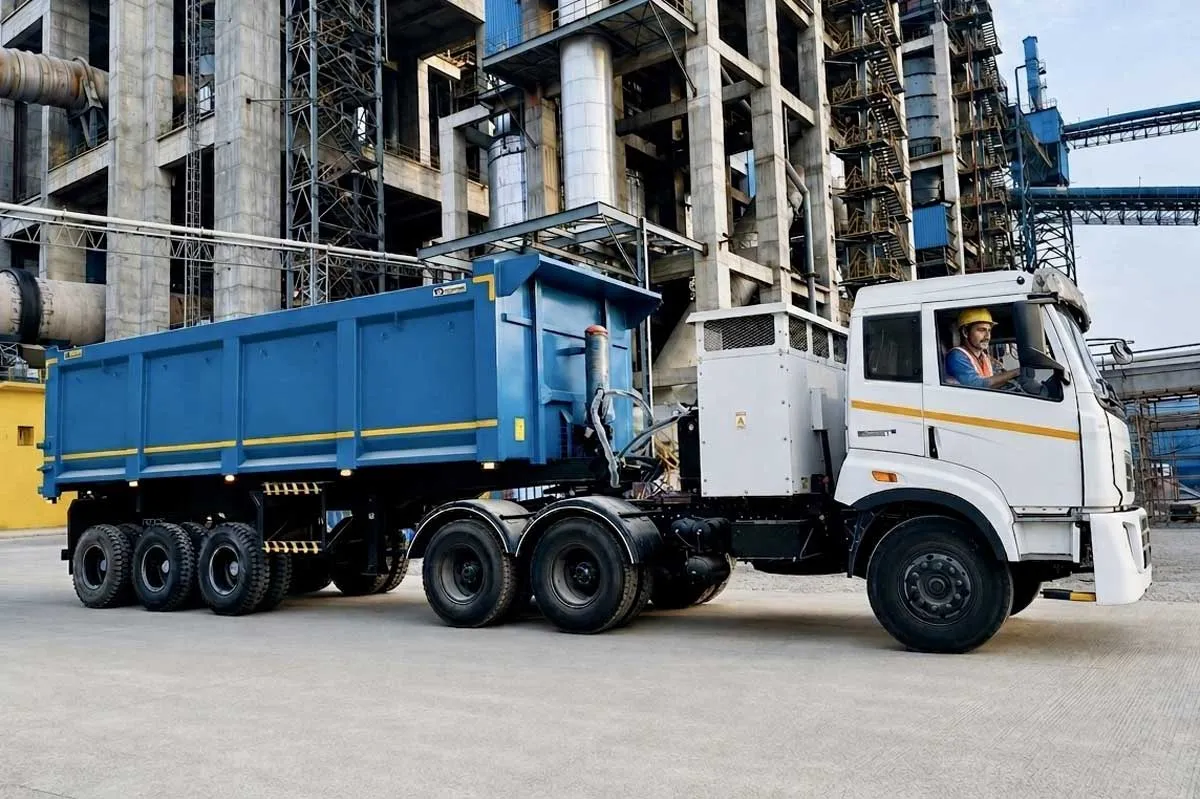
JK Cement  has commissioned its new 3 MTPA grey cement plant in Buxar, Bihar, taking the company’s total installed capacity to 31.26 million tonnes per annum (MTPA) and moving it past the 30 MTPA milestone. With this addition, JK Cement now ranks among the top five grey cement manufacturers in India, strengthening its national presence.

Commenting on the development, Dr Raghavpat Singhania, Managing Director, JK Cement, said, “Crossing 31 MTPA is a significant turning point in JK Cement’s expansion and demonstrates the scale, resilience, and aspirations of our company. In addition to making a significant contribution to Bihar’s development vision, the commissioning of our Buxar plant represents a strategic step towards expanding our national footprint. We are committed to developing top-notch manufacturing capabilities that boost India’s infrastructure development and generate long-term benefits for local communities.”

Spread across 100 acres, the Buxar plant is located on the Patna–Buxar highway, enabling efficient distribution across Bihar and neighbouring regions. While JK Cement entered the Bihar market last year through supplies from its Prayagraj plant, the new facility will allow local manufacturing and deliveries within 24 hours across the state.

Mr Madhavkrishna Singhania, Joint Managing Director & CEO, JK Cement, said, “JK Cement is now among India’s top five producers of grey cement after the Buxar plant commissioning. Our capacity to serve Bihar locally, more effectively, and on a larger scale is strengthened by this facility. Although we had already entered the Bihar market last year using Prayagraj supplies, local manufacturing now enables us to be nearer to our clients and significantly raise service standards throughout the state. Buxar places us at the center of this chance to promote sustainable growth for both the company and the region in Bihar, a high-growth market with strong infrastructure momentum.”

The project has involved an investment of Rs 5 billion. Commercial production began on 29 January 2026, following construction commencement in March 2025. The company said the plant is expected to generate significant direct and indirect employment and support ancillary industrial development in the region.

Continue Reading

Concrete

JK Cement Crosses 31 MTPA Capacity with Commissioning of Buxar Plant in Bihar

Published

on

By

Shares

JK Cement has commissioned a 3 MTPA Grey Cement plant in Buxar, Bihar, taking its total capacity to 31.26 MTPA and placing it among India’s top five grey cement producers. The ₹500 crore investment strengthens the company’s national footprint while supporting Bihar’s infrastructure growth and local economic development.

JK Cement Ltd., one of India’s leading cement manufacturers, has announced the commissioning of its new state-of-the-art Grey Cement plant in Buxar, Bihar, marking a significant milestone in the company’s growth trajectory. With the commissioning of this facility, JK Cement’s total production capacity has increased to 31.26 million tonnes per annum (MTPA), enabling the company to cross the 30 MTPA threshold.

This expansion positions JK Cement among the top five Grey Cement manufacturers in India, strengthening its national footprint and reinforcing its long-term growth strategy.

Commenting on the strategic achievement, Dr Raghavpat Singhania, Managing Director, JK Cement, said, “Crossing 31 MTPA is a significant turning point in JK Cement’s expansion and demonstrates the scale, resilience, and aspirations of our company. In addition to making a significant contribution to Bihar’s development vision, the commissioning of our Buxar plant represents a strategic step towards expanding our national footprint. We are committed to developing top-notch manufacturing capabilities that boost India’s infrastructure development and generate long-term benefits for local communities.”

The Buxar plant has a capacity of 3 MTPA and is spread across 100 acres. Strategically located on the Patna–Buxar highway, the facility enables faster and more efficient distribution across Bihar and adjoining regions. While JK Cement entered the Bihar market last year through supplies from its Prayagraj plant, the Buxar facility will now allow the company to serve the state locally, with deliveries possible within 24 hours across Bihar.

Sharing his views on the expansion, Madhavkrishna Singhania, Joint Managing Director & CEO, JK Cement, said, “JK Cement is now among India’s top five producers of grey cement after the Buxar plant commissioning. Our capacity to serve Bihar locally, more effectively, and on a larger scale is strengthened by this facility. Although we had already entered the Bihar market last year using Prayagraj supplies, local manufacturing now enables us to be nearer to our clients and significantly raise service standards throughout the state. Buxar places us at the center of this chance to promote sustainable growth for both the company and the region in Bihar, a high-growth market with strong infrastructure momentum.”

The new facility represents a strategic step in supporting Bihar’s development vision by ensuring faster access to superior quality cement for infrastructure, housing, and commercial projects. JK Cement has invested approximately ₹500 crore in the project. Construction began in March 2025, and commercial production commenced on January 29, 2026.

In addition to strengthening JK Cement’s regional presence, the Buxar plant is expected to generate significant direct and indirect employment opportunities and attract ancillary industries, thereby contributing to the local economy and the broader industrial ecosystem.

Continue Reading

Concrete

NITI Aayog Unveils Decarbonisation Roadmaps

Cement, aluminium and MSMEs targeted for green transition

Published

on

By

Shares

NITI Aayog has released reports outlining decarbonisation roadmaps for the cement, aluminium and micro, small and medium enterprise sectors, highlighting the need to balance emission reduction with sustained economic growth and competitiveness.

Speaking at the launch event in New Delhi, NITI Aayog Vice Chairman Suman Bery emphasised the critical role of the MSME sector in India’s development, describing it as a key driver of employment, innovation and inclusive growth. He stressed the importance of strengthening the sector to support long-term economic expansion.

NITI Aayog Chief Executive Officer BVR Subrahmanyam said the aluminium and cement industries are among the most energy-intensive sectors and major contributors to industrial emissions. He noted that decarbonisation across these sectors is essential for meeting India’s climate commitments while maintaining long-term economic competitiveness.

According to Subrahmanyam, the roadmaps provide a strategic vision to help the aluminium, cement and MSME sectors reduce emissions while continuing to grow and remain globally competitive. For MSMEs, the roadmap focuses on improving access to affordable green finance, technology and capacity building to ensure an inclusive and smooth transition.

The report recommends prioritising the use of refuse-derived fuels, increasing clinker substitution, scaling up carbon capture, utilisation and storage, and strengthening the implementation of the carbon credit trading scheme to enable deep decarbonisation in the cement and aluminium sectors.

It also outlines a green transition pathway for MSMEs built around three key levers: deployment of energy-efficient equipment, adoption of alternative fuels, and integration of green electricity into operations.

Continue Reading

Trending News

SUBSCRIBE TO THE NEWSLETTER


Don't miss out on valuable insights and opportunities to connect with like minded professionals.


    This will close in 0 seconds