Connect with us

Concrete

Branding Concrete with Virtual and Augmented Reality

Published

on

Shares

Agnes Rozario, Brand and Product Marketing Manager, Techurate Systems, assesses the role of new-age branding tools, such as new virtual and augmented reality technologies, in transforming the image of the Indian cement and concrete industry.

The cement industry is often seen as a humdrum sector lacking innovation or creativity. However, new virtual and augmented reality technologies are poised to transform how cement companies build their brand and connect with customers. Forward-thinking firms are beginning to leverage VR and AR to showcase the versatility, sustainability and design potential of their products.
These new digital tools allow customers to experience concrete in engaging, multi-sensory ways not possible before. Architects and builders can now visualise how different mixes and textures of concrete will look and feel in a finished building or structure. They can see how light will interact with the material or how it handles under extreme weather conditions – all without pouring a single slab.
For an industry that has traditionally relied on fairly static marketing materials like product catalogs, VR and AR offer an opportunity to revamp brand image and bring products to life for customers. As more cement firms adopt virtual and augmented reality, it may not be long before these technologies become a necessity to stay competitive. Brands that embrace VR and AR as a way to actively engage customers and highlight the dynamic potential of their products will likely gain a key advantage. While the cement industry is often characterised as unexciting, the strategic use of new digital tools could help forward-looking brands build a reputation as innovative trendsetters in their field.

Current State of Branding
The cement industry has typically struggled with branding its products. Cement is seen as a commodity by most consumers, with little differentiation between suppliers and brands. However, new technologies like virtual and augmented reality (VR and AR) may provide an opportunity for cement companies to strengthen their branding.
Currently, branding in the cement industry focuses primarily on business-to-business marketing to contractors, builders and architects. Branding is limited to company and product names, logos and basic product information. There are few opportunities for end consumers to interact with and experience different cement brands.
VR and AR allow cement companies to give customers a chance to visualise and experience
their products in a whole new way. For example, homebuyers could view virtual 3D models of
houses built with a company’s cement and see their quality and appearance. Contractors could access interactive digital manuals for working with different types of cement.
These technologies provide a means for cement brands to build emotional connections and memorable experiences with customers. By showcasing the unique properties, quality, and applications of their cement, companies can differentiate themselves and gain a competitive advantage. Brand stories and narratives can be woven through interactive VR and AR content.
Overall, VR and AR are poised to revolutionise cement industry branding by humanising products, forming emotional bonds between brands and customers, and highlighting key product benefits and differences. Cement companies that embrace these technologies will be best positioned to strengthen their brand in the digital age. The future of cement industry branding is virtual and augmented.

Why are VR and AR the Game Changers for Concrete Brands

  • Immersive experiences: VR and AR create immersive environments that allow customers to visualise how different concrete products would appear in real-world settings. This helps in making purchasing decisions and building brand loyalty.
  • Personalised interactions. VR and AR enable personalised interactions where customers can customise concrete products to their needs and view the results in real time. This customisation strengthens the customer-brand relationship.
  • Memorable encounters: The multisensory nature of VR and AR leads to memorable encounters with brands that leave lasting impressions on customers. Concrete companies can leverage this to build brand awareness and position themselves as leaders in innovation.
  • Data insights: VR and AR provide data on how customers engage with concrete products that brands can analyse to make improvements. This data is key to optimising customer experiences and tailoring products to market needs.
  • Cost efficiency: Although implementing VR and AR requires initial investments, they reduce costs in the long run. Brands save money through lower return rates, fewer physical prototypes and streamlined design processes.

VR and AR will transform how concrete brands reach and interact with customers. Companies that adopt these technologies early will gain a competitive advantage in an industry ripe for disruption. The future of concrete is virtual and progressive brands are poised to reap the benefits.

How are Leading Cement Companies Using VR and AR
LafargeHolcim
LafargeHolcim launched a VR experience for its new cement Ultracem product in Colombia. Customers can view a virtual construction site showcasing the cement’s strength and durability. The immersive experience provides an innovative way for customers to interact with and engagingly understand the company’s products.

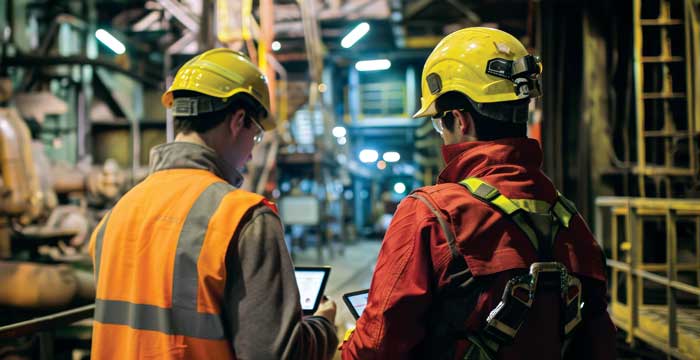
A VR programme can train workers on safety procedures when handling cement.

HeidelbergCement
HeidelbergCement, a multinational building materials company, developed an AR app for customers to explore the composition and properties of different cement types. The app provides 3D visualisations and animations demonstrating how each cement is made. It helps customers gain valuable insights into the company’s sustainable production processes and how cements can be optimised for their building projects. The immersive and interactive experience establishes HeidelbergCement as an innovative, forward-thinking company.

Dalmia Cement
Dalmia Cement launched an AR app to help customers choose the right cement for their needs. Users can view 3D models of buildings and structures to see how different cements impact overall quality. The app recommends products based on factors like cost, performance, and sustainability. It offers an engaging customer experience with additional information on each cement’s composition, specifications, and applications. The app positions Dalmia as a customer-centric company focused on service and support.
In summary, major cement companies are leveraging VR and AR to:

  • Educate customers on their products and production processes
  • Provide an immersive brand experience that builds loyalty
  • Recommend the most suitable cement for customers’ needs
  • Establish themselves as innovative, forward-thinking companies
  • Deliver superior customer service through interactive technologies

The applications of VR and AR show significant promise for revamping branding and marketing in the cement industry. With further advancements, these technologies may transform how companies engage with and support their customers.

Future of VR and AR

  1. VR and AR Enable Immersive Brand Experiences
    VR and AR technologies are poised to transform brand marketing in the cement industry. These immersive technologies can create engaging customer experiences that bring brands to life in new ways.
  2. Reaching New Audiences
    VR and AR expand the reach of brand messaging by appealing to new audiences like the tech-savvy younger generation. Studies show that Gen Z and millennials prefer interactive and visual content. VR and AR can make the cement industry more attractive and relevant to these groups.
  3. Brand Storytelling and Emotional Connections
    Immersive experiences are highly effective for storytelling and making emotional connections with audiences. They can transport people into a brand’s world, evoking emotions and memories. Cement companies can use VR and AR to share their brand story and values in an impactful way. These technologies can forge deeper bonds between brands and customers that translate to increased brand loyalty and advocacy.
  4. Lead Generation and Conversion
    VR and AR are useful for generating and converting leads. Immersive brand experiences can be leveraged at trade shows and events to attract prospects and move them through the sales funnel. Cement companies can use VR and AR to demonstrate products engagingly, address customer questions, and prompt interest in follow-up conversations. Studies show that VR, in particular, leads to higher lead conversion rates.
    The cement industry has an opportunity to revamp its brand marketing by adopting VR and AR technologies. These immersive tools can transform how cement companies reach, engage and convert customers. They represent the future of impactful and memorable brand experiences that drive real business results. With VR and AR, the cement industry’s brand stories can come to life.

Getting Started With VR and AR
To remain competitive, cement brands should explore virtual and augmented reality (VR/AR) to enhance their marketing and branding. VR/AR technologies are transforming industries by providing immersive digital experiences. Cement companies can leverage VR/AR in the following ways:
Product Visualisation: Using VR/AR, customers can visualise cement products in a simulated environment. For example, an AR app can allow customers to see how different concrete mixes would appear in their construction project. This helps customers select products that meet their needs and preferences.
Interactive Training: Cement brands can develop VR/AR training modules for employees and customers. For instance, a VR programme can train workers on safety procedures when handling cement. AR apps can provide interactive guidance to customers on how to properly prepare, pour and finish concrete. These engaging learning experiences are more effective than traditional methods.
Enhanced Marketing: VR/AR amplifies digital marketing campaigns for cement brands. For example, a 360-degree VR video can transport viewers into a cement production facility, showcasing the manufacturing process. An AR-enabled print ad or billboard can activate an immersive AR experience when viewed through a mobile device. These highly visual and interactive mediums capture attention and leave a lasting impression on audiences.
To implement VR/AR, cement companies should:

  1. Identify key use cases that align with business goals
  2. Partner with VR/AR developers to build customised solutions
  3. Promote VR/AR experiences through social media and marketing channels
  4. Provide training to employees and customers on accessing and using the technology
  5. Continuously improve VR/AR applications based on user feedback
    VR and AR are innovative tools cement brands can leverage to strengthen their brand identity and gain a competitive advantage. With interactive and visually stunning experiences, VR and AR make brands and products come alive in new ways. Cement companies that adopt VR/AR will be poised to attract and retain more customers in today’s increasingly digital world.

Cement companies that embrace VR and AR will be best positioned to strengthen their brand in the digital age.

Conclusion
The cement industry would be well served to embrace the innovative technologies of virtual and augmented reality. As a historically low-tech industry, cement manufacturing has an opportunity to revamp its image through strategic branding and customer engagement initiatives powered by VR and AR. By transporting customers and stakeholders to an immersive experience of how cement is made and used, the industry can build new connections and strengthen existing relationships. VR and AR also provide platforms to demonstrate sustainability and environmental initiatives in an impactful way. For an industry that is the foundation of infrastructure and community, technology may be the key to reinforcing the importance of cement in the future. Leadership that is open to new tools and willing to invest in rebranding will position their companies at the forefront of the next revolution in building materials. The cement industry’s future is being built day by day and virtual and augmented reality can help construct a path to success.

ABOUT THE AUTHOR

Agnes Rozario has an experience in the consumer tech industry. She has been a brand and product marketing manager crafting campaigns for the UK, US and MENA markets.


Concrete

Cement Industry Backs Co-Processing to Tackle Global Waste

Industry bodies recently urged policy support for cement co-processing as waste solution

Published

on

By

Shares


Leading industry bodies, including the Global Cement and Concrete Association (GCCA), European Composites Industry Association, International Solid Waste Association – Africa, Mission Possible Partnership and the Global Waste-to-Energy Research and Technology Council, have issued a joint statement highlighting the cement industry’s potential role in addressing the growing global challenge of non-recyclable and non-reusable waste. The organisations have called for stronger policy support to unlock the full potential of cement industry co-processing as a safe, effective and sustainable waste management solution.
Co-processing enables both energy recovery and material recycling by using suitable waste to replace fossil fuels in cement kilns, while simultaneously recycling residual ash into the cement itself. This integrated approach delivers a zero-waste solution, reduces landfill dependence and complements conventional recycling by addressing waste streams that cannot be recycled or are contaminated.
Already recognised across regions including Europe, India, Latin America and North America, co-processing operates under strict regulatory and technical frameworks to ensure high standards of safety, emissions control and transparency.
Commenting on the initiative, Thomas Guillot, Chief Executive of the GCCA, said co-processing offers a circular, community-friendly waste solution but requires effective regulatory frameworks and supportive public policy to scale further. He noted that while some cement kilns already substitute over 90 per cent of their fuel with waste, many regions still lack established practices.
The joint statement urges governments and institutions to formally recognise co-processing within waste policy frameworks, support waste collection and pre-treatment, streamline permitting, count recycled material towards national recycling targets, and provide fiscal incentives that reflect environmental benefits. It also calls for stronger public–private partnerships and international knowledge sharing.
With global waste generation estimated at over 11 billion tonnes annually and uncontrolled municipal waste projected to rise sharply by 2050, the signatories believe co-processing represents a practical and scalable response. With appropriate policy backing, it can help divert waste from landfills, reduce fossil fuel use in cement manufacturing and transform waste into a valuable societal resource.    

Continue Reading

Concrete

Industry Bodies Call for Wider Use of Cement Co-Processing

Joint statement seeks policy support for sustainable waste management

Published

on

By

Shares


Leading industry organisations have called for stronger policy support to accelerate the adoption of cement industry co-processing as a sustainable solution for managing non-recyclable and non-reusable waste. In a joint statement, bodies including the Global Cement and Concrete Association, European Composites Industry Association, International Solid Waste Association – Africa, Mission Possible Partnership and the Global Waste-to-Energy Research and Technology Council highlighted the role co-processing can play in addressing the growing global waste challenge.
Co-processing enables the use of waste as an alternative to fossil fuels in cement kilns, while residual ash is incorporated into cementitious materials, resulting in a zero-waste process. The approach supports both energy recovery and material recycling, complements conventional recycling systems and reduces reliance on landfill infrastructure. It is primarily applied to waste streams that are contaminated or unsuitable for recycling.
The organisations noted that co-processing is already recognised in regions such as Europe, India, Latin America and North America, operating under regulated frameworks to ensure safety, emissions control and transparency. However, adoption remains uneven globally, with some plants achieving over 90 per cent fuel substitution while others lack enabling policies.
The statement urged governments and institutions to formally recognise co-processing in waste management frameworks, streamline environmental permitting, incentivise waste collection and pre-treatment, account for recycled material content in national targets, and support public-private partnerships. The call comes amid rising global waste volumes, which are estimated at over 11 billion tonnes annually, with unmanaged waste contributing to greenhouse gas emissions, pollution and health risks.

Continue Reading

Concrete

Why Cement Needs CCUS

Published

on

By

Shares


Cement’s deep decarbonisation cannot be achieved through efficiency and fuel switching alone, making CCUS essential to address unavoidable process emissions from calcination. ICR explores if with the right mix of policy support, shared infrastructure, and phased scale-up from pilots to clusters, CCUS can enable India’s cement industry to align growth with its net-zero ambitions.

Cement underpins modern development—from housing and transport to renewable energy infrastructure—but it is also one of the world’s most carbon-intensive materials, with global production of around 4 billion tonnes per year accounting for 7 to 8 per cent of global CO2 emissions, according to the GCCA. What makes cement uniquely hard to abate is that 60 to 65 per cent of its emissions arise from limestone calcination, a chemical process that releases CO2 irrespective of the energy source used; the IPCC Sixth Assessment Report (AR6) therefore classifies cement as a hard-to-abate sector, noting that even fully renewable-powered kilns would continue to emit significant process emissions. While the industry has achieved substantial reductions over the past two decades through energy efficiency, alternative fuels and clinker substitution using fly ash, slag, and calcined clays, studies including the IEA Net Zero Roadmap and GCCA decarbonisation pathways show these levers can deliver only 50 to 60 per cent emissions reduction before reaching technical and material limits, leaving Carbon Capture, Utilisation and Storage (CCUS) as the only scalable and durable option to address remaining calcination emissions—an intervention the IPCC estimates will deliver nearly two-thirds of cumulative cement-sector emission reductions globally by mid-century, making CCUS a central pillar of any credible net-zero cement pathway.

Process emissions vs energy emissions
Cement’s carbon footprint is distinct from many other industries because it stems from two sources: energy emissions and process emissions. Energy emissions arise from burning fuels to heat kilns to around 1,450°C and account for roughly 35 to 40 per cent of total cement CO2 emissions, according to the International Energy Agency (IEA). These can be progressively reduced through efficiency improvements, alternative fuels such as biomass and RDF, and electrification supported by renewable power. Over the past two decades, such measures have delivered measurable gains, with global average thermal energy intensity in cement production falling by nearly 20 per cent since 2000, as reported by the IEA and GCCA.
The larger and more intractable challenge lies in process emissions, which make up approximately 60 per cent to 65 per cent of cement’s total CO2 output. These emissions are released during calcination, when limestone (CaCO3) is converted into lime (CaO), inherently emitting CO2 regardless of fuel choice or energy efficiency—a reality underscored by the IPCC Sixth Assessment Report (AR6). Even aggressive clinker substitution using fly ash, slag, or calcined clays is constrained by material availability and performance requirements, typically delivering 20 to 40 per cent emissions reduction at best, as outlined in the GCCA–TERI India Cement Roadmap and IEA Net Zero Scenario. This structural split explains why cement is classified as a hard-to-abate sector and why incremental improvements alone are insufficient; as energy emissions decline, process emissions will dominate, making Carbon Capture, Utilisation and Storage (CCUS) a critical intervention to intercept residual CO2 and keep the sector’s net-zero ambitions within reach.

Where CCUS stands today
Globally, CCUS in cement is moving from concept to early industrial reality, led by Europe and North America, with the IEA noting that cement accounts for nearly 40 per cent of planned CCUS projects in heavy industry, reflecting limited alternatives for deep decarbonisation; a flagship example is Heidelberg Materials’ Brevik CCS project in Norway, commissioned in 2025, designed to capture about 400,000 tonnes of CO2 annually—nearly half the plant’s emissions—with permanent offshore storage via the Northern Lights infrastructure (Reuters, Heidelberg Materials), alongside progress at projects in the UK, Belgium, and the US such as Padeswood, Lixhe (LEILAC), and Ste. Genevieve, all enabled by strong policy support, public funding, and shared transport-and-storage infrastructure.
These experiences show that CCUS scales fastest when policy support, infrastructure availability, and risk-sharing mechanisms align, with Europe bridging the viability gap through EU ETS allowances, Innovation Fund grants, and CO2 hubs despite capture costs remaining high at US$ 80-150 per tonne of CO2 (IEA, GCCA); India, by contrast, is at an early readiness stage but gaining momentum through five cement-sector CCU testbeds launched by the Department of Science and Technology (DST) under academia–industry public–private partnerships involving IITs and producers such as JSW Cement, Dalmia Cement, and JK Cement, targeting 1-2 tonnes of CO2 per day to validate performance under Indian conditions (ETInfra, DST), with the GCCA–TERI India Roadmap identifying the current phase as a foundation-building decade essential for achieving net-zero by 2070.
Amit Banka, Founder and CEO, WeNaturalists, says “Carbon literacy means more than understanding that CO2 harms the climate. It means cement professionals grasping why their specific plant’s emissions profile matters, how different CCUS technologies trade off between energy consumption and capture rates, where utilisation opportunities align with their operational reality, and what governance frameworks ensure verified, permanent carbon sequestration. Cement manufacturing contributes approximately 8 per cent of global carbon emissions. Addressing this requires professionals who understand CCUS deeply enough to make capital decisions, troubleshoot implementation challenges, and convince boards to invest substantial capital.”

Technology pathways for cement
Cement CCUS encompasses a range of technologies, from conventional post-combustion solvent-based systems to process-integrated solutions that directly target calcination, each with different energy requirements, retrofit complexity, and cost profiles. The most mature option remains amine-based post-combustion capture, already deployed at industrial scale and favoured for early cement projects because it can be retrofitted to existing flue-gas streams; however, capture costs typically range from US$ 60-120 per tonne of CO2, depending on CO2 concentration, plant layout, and energy integration.
Lovish Ahuja, Chief Sustainability Officer, Dalmia Cement (Bharat), says, “CCUS in Indian cement can be viewed through two complementary lenses. If technological innovation, enabling policies, and societal acceptance fail to translate ambition into action, CCUS risks becoming a significant and unavoidable compliance cost for hard-to-abate sectors such as cement, steel, and aluminium. However, if global commitments under the Paris Agreement and national targets—most notably India’s Net Zero 2070 pledge—are implemented at scale through sustained policy and industry action, CCUS shifts from a future liability to a strategic opportunity. In that scenario, it becomes a platform for technological leadership, long-term competitiveness, and systemic decarbonisation rather than merely a regulatory burden.”
“Accelerating CCUS adoption cannot hinge on a single policy lever; it demands a coordinated ecosystem approach. This includes mission-mode governance, alignment across ministries, and a mix of enabling instruments such as viability gap funding, concessional and ESG-linked finance, tax incentives, and support for R&D, infrastructure, and access to geological storage. Importantly, while cement is largely a regional commodity with limited exportability due to its low value-to-weight ratio, CCUS innovation itself can become a globally competitive export. By developing, piloting, and scaling cost-effective CCUS solutions domestically, India can not only decarbonise its own cement industry but also position itself as a supplier of affordable CCUS technologies and services to cement markets worldwide,” he adds.
Process-centric approaches seek to reduce the energy penalty associated with solvent regeneration by altering where and how CO2 is separated. Technologies such as LEILAC/Calix, which uses indirect calcination to produce a high-purity CO2 stream, are scaling toward a ~100,000 tCO2 per year demonstrator (LEILAC-2) following successful pilots, while calcium looping leverages limestone chemistry to achieve theoretical capture efficiencies above 90 per cent, albeit still at pilot and demonstration stages requiring careful integration. Other emerging routes—including oxy-fuel combustion, membrane separation, solid sorbents, and cryogenic or hybrid systems—offer varying trade-offs between purity, energy use, and retrofit complexity; taken together, recent studies suggest that no single technology fits all plants, making a multi-technology, site-specific approach the most realistic pathway for scaling CCUS across the cement sector.
Yash Agarwal, Co-Founder, Carbonetics Carbon Capture, says, “We are fully focused on CCUS, and for us, a running plant is a profitable plant. What we have done is created digital twins that allow operators to simulate and resolve specific problems in record time. In a conventional setup, when an issue arises, plants often have to shut down operations and bring in expert consultants. What we offer instead is on-the-fly consulting. As soon as a problem is detected, the system automatically provides a set of potential solutions that can be tested on a running plant. This approach ensures that plant shutdowns are avoided and production is not impacted.”

The economics of CCUS
Carbon Capture, Utilisation and Storage (CCUS) remains one of the toughest economic hurdles in cement decarbonisation, with the IEA estimating capture costs of US$ 80-150 per tonne of CO2, and full-system costs raising cement production by US$ 30-60 per tonne, potentially increasing prices by 20 to 40 per cent without policy support—an untenable burden for a low-margin, price-sensitive industry like India’s.
Global experience shows CCUS advances beyond pilots only when the viability gap is bridged through strong policy mechanisms such as EU ETS allowances, Innovation Fund grants, and carbon Contracts for Difference (CfDs), yet even in Europe few projects have reached final investment decision (GCCA); India’s lack of a dedicated CCUS financing framework leaves projects reliant on R&D grants and balance sheets, reinforcing the IEA Net Zero Roadmap conclusion that carbon markets, green public procurement, and viability gap funding are essential to spread costs across producers, policymakers, and end users and prevent CCUS from remaining confined to demonstrations well into the 2030s.

Utilisation or storage
Carbon utilisation pathways are often the first entry point for CCUS in cement because they offer near-term revenue potential and lower infrastructure complexity. The International Energy Agency (IEA) estimates that current utilisation routes—such as concrete curing, mineralisation into aggregates, precipitated calcium carbonate (PCC), and limited chemical conversion—can realistically absorb only 5 per cent to 10 per cent of captured CO2 at a typical cement plant. In India, utilisation is particularly attractive for early pilots as it avoids the immediate need for pipelines, injection wells, and long-term liability frameworks. Accordingly, Department of Science and Technology (DST)–supported cement CCU testbeds are already demonstrating mineralisation and CO2-cured concrete applications at 1–2 tonnes of CO2 per day, validating performance, durability, and operability under Indian conditions.
However, utilisation faces hard limits of scale and permanence. India’s cement sector emits over 200 million tonnes of CO2 annually (GCCA), far exceeding the absorptive capacity of domestic utilisation markets, while many pathways—especially fuels and chemicals—are energy-intensive and dependent on costly renewable power and green hydrogen. The IPCC Sixth Assessment Report (AR6) cautions that most CCU routes do not guarantee permanent storage unless CO2 is mineralised or locked into long-lived materials, making geological storage indispensable for deep decarbonisation. India has credible storage potential in deep saline aquifers, depleted oil and gas fields, and basalt formations such as the Deccan Traps (NITI Aayog, IEA), and hub-based models—where multiple plants share transport and storage infrastructure—can reduce costs and improve bankability, as seen in Norway’s Northern Lights project. The pragmatic pathway for India is therefore a dual-track approach: utilise CO2 where it is economical and store it where permanence and scale are unavoidable, enabling early learning while building the backbone for net-zero cement.

Policy, infrastructure and clusters
Scaling CCUS in the cement sector hinges on policy certainty, shared infrastructure, and coordinated cluster development, rather than isolated plant-level action. The IEA notes that over 70 per cent of advanced industrial CCUS projects globally rely on strong government intervention—through carbon pricing, capital grants, tax credits, and long-term offtake guarantees—with Europe’s EU ETS, Innovation Fund, and carbon Contracts for Difference (CfDs) proving decisive in advancing projects like Brevik CCS. In contrast, India lacks a dedicated CCUS policy framework, rendering capture costs of USD 80–150 per tonne of CO2 economically prohibitive without state support (IEA, GCCA), a gap the GCCA–TERI India Cement Roadmap highlights can be bridged through carbon markets, viability gap funding, and green public procurement.
Milan R Trivedi, Vice President, Shree Digvijay Cement, says, “CCUS represents both an unavoidable near-term compliance cost and a long-term strategic opportunity for Indian cement producers. While current capture costs of US$ 100-150 per tonne of CO2 strain margins and necessitate upfront retrofit investments driven by emerging mandates and NDCs, effective policy support—particularly a robust, long-term carbon pricing mechanism with tradable credits under frameworks like India’s Carbon Credit Trading Scheme (CCTS)—can de-risk capital deployment and convert CCUS into a competitive advantage. With such enablers in place, CCUS can unlock 10 per cent to 20 per cent green price premiums, strengthen ESG positioning, and allow Indian cement to compete in global low-carbon markets under regimes such as the EU CBAM, North America’s buy-clean policies, and Middle Eastern green procurement, transforming compliance into export-led leadership.”
Equally critical is cluster-based CO2 transport and storage infrastructure, which can reduce unit costs by 30 to 50 per cent compared to standalone projects (IEA, Clean Energy Ministerial); recognising this, the DST has launched five CCU testbeds under academia–industry public–private partnerships, while NITI Aayog works toward a national CCUS mission focused on hubs and regional planning. Global precedents—from Norway’s Northern Lights to the UK’s HyNet and East Coast clusters—demonstrate that CCUS scales fastest when governments plan infrastructure at a regional level, making cluster-led development, backed by early public investment, the decisive enabler for India to move CCUS from isolated pilots to a scalable industrial solution.
Paul Baruya, Director of Strategy and Sustainability, FutureCoal, says, “Cement is a foundational material with a fundamental climate challenge: process emissions that cannot be eliminated through clean energy alone. The IPCC is clear that in the absence of a near-term replacement of Portland cement chemistry, CCS is essential to address the majority of clinker-related emissions. With global cement production at around 4 gigatonnes (Gt) and still growing, cement decarbonisation is not a niche undertaking, it is a large-scale industrial transition.”

From pilots to practice
Moving CCUS in cement from pilots to practice requires a sequenced roadmap aligning technology maturity, infrastructure development, and policy support: the IEA estimates that achieving net zero will require CCUS to scale from less than 1 Mt of CO2 captured today to over 1.2 Gt annually by 2050, while the GCCA Net Zero Roadmap projects CCUS contributing 30 per cent to 40 per cent of total cement-sector emissions reductions by mid-century, alongside efficiency, alternative fuels, and clinker substitution.
MM Rathi, Joint President – Power Plants, Shree Cement, says, “The Indian cement sector is currently at a pilot to early demonstration stage of CCUS readiness. A few companies have initiated small-scale pilots focused on capturing CO2 from kiln flue gases and exploring utilisation routes such as mineralisation and concrete curing. CCUS has not yet reached commercial integration due to high capture costs (US$ 80-150 per tonne of CO2), lack of transport and storage infrastructure, limited access to storage sites, and absence of long-term policy incentives. While Europe and North America have begun early commercial deployment, large-scale CCUS adoption in India is more realistically expected post-2035, subject to enabling infrastructure and policy frameworks.”
Early pilots—such as India’s DST-backed CCU testbeds and Europe’s first commercial-scale plants—serve as learning platforms to validate integration, costs, and operational reliability, but large-scale deployment will depend on cluster-based scale-up, as emphasised by the IPCC AR6, which highlights the need for early CO2 transport and storage planning to avoid long-term emissions lock-in. For India, the GCCA–TERI India Roadmap identifies CCUS as indispensable for achieving net-zero by 2070, following a pragmatic pathway: pilot today to build confidence, cluster in the 2030s to reduce costs, and institutionalise CCUS by mid-century so that low-carbon cement becomes the default, not a niche, in the country’s infrastructure growth.

Conclusion
Cement will remain indispensable to India’s development, but its long-term viability hinges on addressing its hardest emissions challenge—process CO2 from calcination—which efficiency gains, alternative fuels, and clinker substitution alone cannot eliminate; global evidence from the IPCC, IEA, and GCCA confirms that Carbon Capture, Utilisation and Storage (CCUS) is the only scalable pathway capable of delivering the depth of reduction required for net zero. With early commercial projects emerging in Europe and structured pilots underway in India, CCUS has moved beyond theory into a decisive decade where learning, localisation, and integration will shape outcomes; however, success will depend less on technology availability and more on collective execution, including coordinated policy frameworks, shared transport and storage infrastructure, robust carbon markets, and carbon-literate capabilities.
For India, a deliberate transition from pilots to practice—anchored in cluster-based deployment, supported by public–private partnerships, and aligned with national development and climate goals—can transform CCUS from a high-cost intervention into a mainstream industrial solution, enabling the cement sector to keep building the nation while sharply reducing its climate footprint.

– Kanika Mathur

Continue Reading

Trending News

SUBSCRIBE TO THE NEWSLETTER


Don't miss out on valuable insights and opportunities to connect with like minded professionals.


    This will close in 0 seconds