Connect with us

Concrete

Ignore at Your Own Peril

Published

on

Shares

ICR looks at the impact of various methods such as use of alternative fuel and raw materials, tackling the emissions issue and encouraging carbon capture in a bid to make green cement and progress towards Net Zero goals.

The analytical journey is long past its prime when it comes to diagnosing the emission problem pertaining to cement and concrete. There is no denying the fact that the problem is too big.
If concrete was a country, it would be the biggest production centre as all other commodities put together will not even come close to the 30 billion tonnes of concrete that the world produces every year. If cement was a country, it would be the third highest emitter of CO2 in the world. But the efforts have been to find an approach that would force corporations to either limit and progressively reduce over time the impact on the environment through a slew of measures directed at reducing the carbon footprint of cement.
The chart attached shows the distribution of the CO2 emission based on the processing steps for making cement from limestone.

United efforts
The last five years has seen acceleration in the efforts towards finding significant pathways for reducing carbon footprint in cement production around the world. The progress on substantial reduction has been positive with concentration in the following areas:

  • Focus on Calcination Emission: Reducing clinkering by adding alternative materials that can replace clinker
  • Focus on Fossil Fuel Emission: Efficiency improvement in a number of areas that reduce the use of fossil fuels per unit of cement output, together with the use of alternative fuel.
    Under the first category, we see a rise in the use of fly ash from the coal-based power plants that replace clinker during grinding and the percentage increase in the last five years on this count would be around 2 per cent (31 per cent moving to 33 per cent with the balance being clinker). Alternatively, the use of blast furnace slag has seen a rise of 5 per cent (50 per cent moving to 55 per cent with the balance being clinker). Both of these actions have taken the total CO2 emission to 860 kg per tonne for some of the best operating plants of the world.
    The challenges for the future in this regard is that fly ash will remain a constantly depleting resource as all fresh investments into coal fired power plants are scrutinised and it is most likely that the current generation of fly ash will not move up in the coming years. This poses some challenges for the future as the emission pathways that consider use of fly ash as a potential lever for replacing clinker would have to find new pathways as a countermeasure. The use of blast furnace slag also has the same problem brewing at large as steel production is slated for overall sustainability improvement measures, which ordains reduced output of blast furnace slag as a definitive measure.

Tackling the emissions issue
This leaves the focus on alternative use of other non-fossil fuels for producing cement, where the actual progress is almost entirely hinged on renewable sources producing electricity that would be used for clinkerisation as well as for grinding. While the latter has progressed well, the former is still at a stage where a handful of cement units have signed up for the alternative technology in kilns.
Most of the technologies so far have progressed little towards solving the real issue of emission stemming from the clinkerisation process itself, as the molecular structure change from limestone to clinker involves generation of CO2 quite inevitably. The solutions therefore looked at ways of capturing carbon from the emission process, somewhat similar to the photo-synthesis process in plants as Professor Dr Aldo Seinfeld from ETH Zürich has shown. However, the progress is still at a laboratory scale and to find an economic solution will still take some time. For example, most cement kilns today produce close to 2.5 million tonnes of clinker and the sizing is only moving up, which means the amount of CO2 generation from these kilns per year would be close to 2 million tonnes. To get CO2 capturing systems to scale up to these levels would need many years.

Putting carbon to good use
The question is how can we help to scale up the capacity to sequester and store carbon from the emissions from cement kilns? The problem needs to be approached scientifically to make the process economical, which is where the current focus is. But more than the laboratories where this progress is well grounded, we need the cement corporations to set aside funds for investments that need to be made for all future kilns that have the provisions for carbon capture.
The next question is to look at how the stored carbon can be put to use in production of concrete? This requires more than the usual scientific research, as the supply chain of concrete making must factor in ways and means of finding pathways for using stored carbon in the concrete making. The Economist reports that companies like CarbonCure, a Canadian firm, are doing this. They have fitted equipment, which injects CO2 into ready-mixed concrete to more than 400 plants around the world. Its system has been used to construct buildings that include a new campus in Arlington, Virginia, for Amazon, an online retailer (and also a shareholder in CarbonCure), and an assembly plant for electric vehicles, for General Motors in Spring Hill, Tennessee.

Piloting new technologies
One of the other areas of focus has been to find an alternative route to clinkerisation that is based on electricity.
Calix, based in Sydney, Australia, is working on an electrically powered system, which heats the limestone indirectly, from the outside of the kiln rather than the inside. That enables pure CO2 to be captured without having to clean up combustion gases from fuel burnt inside the kiln—so, if the electricity itself came from green sources, the resulting cement would be completely green.
A pilot plant using this technology has run successfully as part of a European Union research project on a site in Belgium operated by Heidelberg Cement, a German firm that is one of the world’s biggest cement-makers. A larger demonstration plant is due to open in 2023, in Hanover, to help scale up the technology.
Almost all of this would need sacrifice from many stakeholders, as the cost of making cement and concrete will rise as investments have to be made in new technology. Bill Gates’ book, ‘How to Avoid a Climate Disaster,’ projected an increase of the cement making cost from the current $125 per tonne to a range of $219 to $300 if the CO2 emissions have to be taken care of for achieving Net Zero. However, the price of cement is already much above $125 per tonne even without factoring any of the carbon capture and sequestration measures, so the real rise could be much more.
A community of stakeholders, starting with the corporation making cement, the community near the cement kilns, the customers, the suppliers and the government, all have a role to play to find a solution how this increase in costs would have to be borne and distributed. Carbon taxes have always been the time-tested path to decarbonisation. Stringent use of taxes as a potent tool has seen better progress, especially in Europe, where some serious progress has happened. Recycling of cement from the demolition waste is one great example.
The best example of coordination and collaboration is captured in the initiatives of the world’s largest kiln near Wuhan, where one would witness how the city municipality came forward to proactively recycle the entire city municipal waste into the kiln of the cement unit situated on the Yangtze river. The waste is transported by barges and through a pipeline taken directly into the cement kiln. Such collaboration could replace the hard stand of putting penalties, which after all could be regressive at times.

-Procyon Mukherjee

Concrete

JK Lakshmi Cement Begins Rs 110 Billion Assam Plant Project

The 2.5 MTPA integrated cement plant is expected to be completed by FY2029.

Published

on

By

Shares


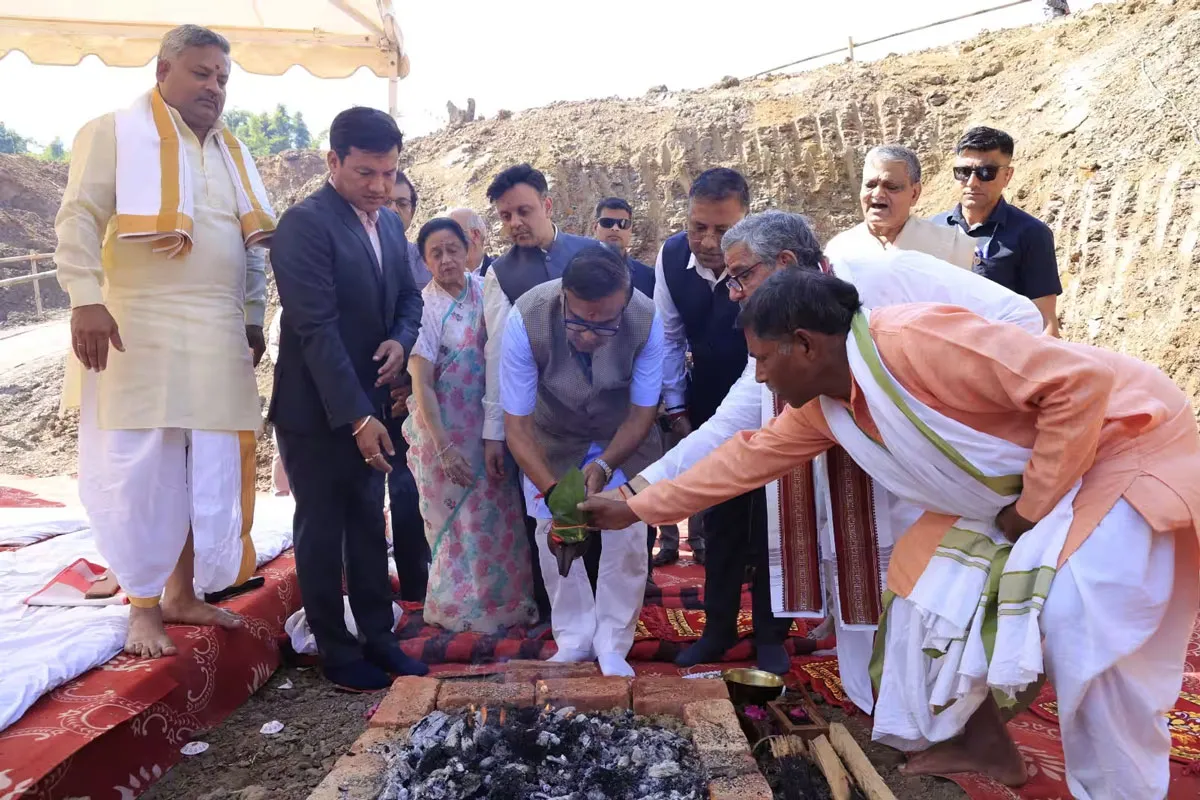
JK Lakshmi Cement has recently laid the foundation stone for Project Kamakshi, its first integrated cement manufacturing facility in Assam, marking its entry into Northeast India. The groundbreaking ceremony was held at Umrangso village in Dima Hasao district in the presence of Assam Chief Minister Himanta Biswa Sarma.
The project involves an investment of Rs 110 billion, including the mining lease, and will have an annual cement production capacity of 2.5 million tonnes, supported by a 1 million tonne clinkerisation unit. Scheduled for completion by FY2029, the facility is expected to generate employment for over 2,000 people while catering primarily to the growing Northeast market.
The integrated plant will feature dedicated railway sidings to facilitate efficient transportation of raw materials and finished cement, strengthening supply chain reliability and regional distribution.
Vinita Singhania, Chairperson and Managing Director, JK Lakshmi Cement, said, “”Project Kamakshi is the start of a long-term relationship with Assam and the wider North East. This is a region that is building fast, and it deserves quality cement made close to home. With this plant, we want to bring scale, jobs, and dependable supply to the region. At JK Lakshmi Cement, we believe that building a stronger India goes beyond infrastructure. It is also about growing together with the communities we serve.””
The investment aligns with the company’s strategy to expand into high-growth markets beyond its established presence in Northern, Western and Eastern India. The project is also expected to support regional economic development and infrastructure growth.
JK Lakshmi Cement aims to pursue its expansion plans while working towards its long-term target of achieving net-zero emissions by 2047.

Continue Reading

Concrete

JK Lakshmi Cement to Expand EV Fleet to 120 Vehicles by March 2027

JK Lakshmi Cement has deployed more than 70 EVs across its logistics network.

Published

on

By

Shares


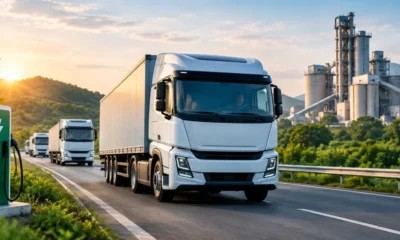
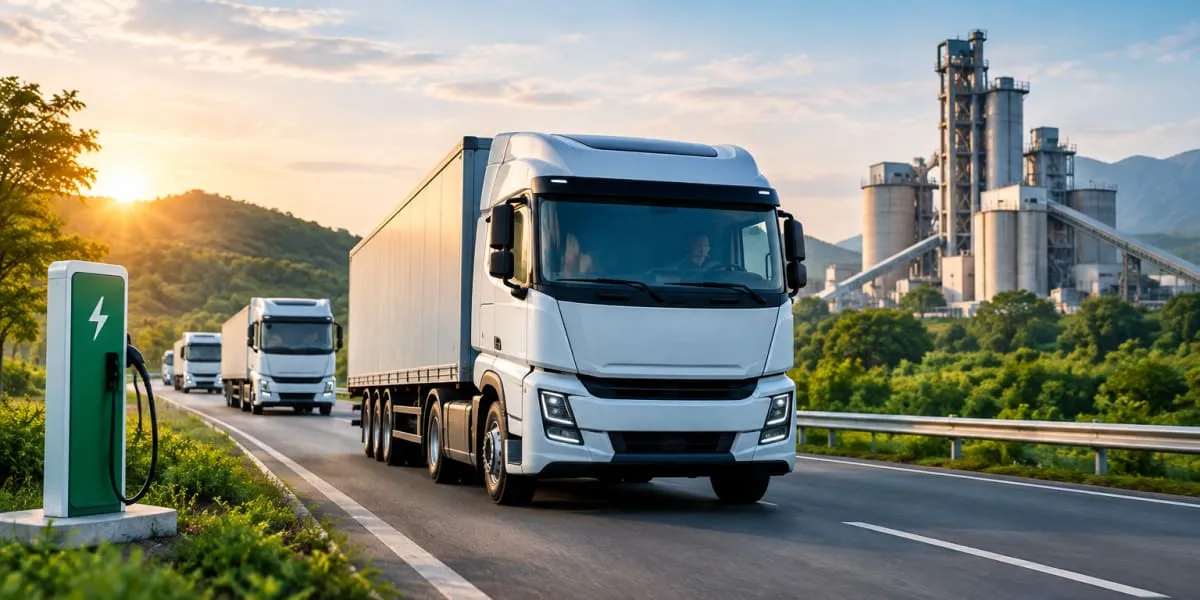
JK Lakshmi Cement has deployed more than 70 electric vehicles (EVs) across its logistics network and plans to increase the fleet to 120 vehicles by March 2027. The expansion is part of its decarbonisation strategy, which aims to reduce transport-related emissions and improve operational efficiency.

The company has achieved nearly 100 per cent EV-based clinker dispatches from its Sirohi plant in Rajasthan to the Kalol Grinding Unit in Gujarat. The transition marks an increased use of electric mobility for long-haul cement transportation and is intended to lower the environmental impact of logistics operations.

The existing fleet operates on routes connecting the Sirohi plant with the Kalol Grinding Unit, Palanpur Unit and Surat Grinding Unit. JK Lakshmi Cement is working with electric vehicle logistics providers SwitchLabs and Billion E to support fleet deployment and manage transportation requirements across these routes.

The company expects the planned expansion to increase the use of electric mobility throughout its logistics network for moving cement and clinker. Chairperson and Managing Director Vinita Singhania said the programme reflected the integration of sustainable practices with the company’s focus on long-term business efficiency, while describing the Sirohi–Kalol transition as an important step in its wider decarbonisation strategy.

The EV programme forms part of JK Lakshmi Cement’s green logistics and sustainability roadmap, alongside initiatives to improve efficiency and reduce emissions across its value chain. The company has set a long-term target of achieving net-zero emissions by 2047. It is part of the JK Organisation and operates integrated cement plants in Rajasthan and Chhattisgarh, along with grinding units in Gujarat, Haryana and Odisha. The company has an annual turnover of more than Rs. 60 bn, combined cement capacity of approximately 18 mn t per annum and a target to raise capacity to 30 mn t by 2030. Its portfolio includes ready-mix concrete, gypsum plaster, wall putty, primer, adhesives and fly ash blocks.

Continue Reading

Concrete

Martin Engineering Appoints Ashwini Khunte as India General Manager

Published

on

By

Shares

Martin Engineering names Ashwini Khunte India General Manager to strengthen operations and drive growth across key bulk material handling sectors.

Pune

Martin Engineering, a global provider of bulk material handling solutions, has appointed Ashwini Khunte as General Manager of its India business, strengthening its leadership as the company expands its presence across the country’s cement, mining, steel, power and infrastructure sectors.

Khunte brings more than a decade of experience with Martin Engineering, having joined its Indian operations in 2013 as a Design Engineer, shortly after the company established its presence in the country in 2012.

A mechanical engineer by qualification, she spent her initial five years developing bulk material handling solutions in collaboration with the company’s operations team. During this period, she gained extensive experience addressing operational challenges in the steel, cement and coal industries. She subsequently moved into project engineering, managing major engineering, procurement and construction (EPC) and original equipment manufacturer (OEM) projects from initial enquiry to commissioning. Her responsibilities later expanded to overseeing Martin Engineering’s conveyor product portfolio in India, involving customer engagement, technical presentations and site visits across heavy industries.

In 2024, Khunte was promoted to Head of Sales & Marketing for the company’s Europe, Middle East, Africa and India (EMEAI) region. The position broadened her international market exposure and strengthened her strategic and commercial leadership capabilities.

Commenting on her appointment, Ashwini Khunte, General Manager, Martin Engineering India, said: “India represents a tremendous opportunity for Martin Engineering. The country’s continued investment in cement, mining, steel, power and infrastructure is creating increasing demand for safer, cleaner and more productive bulk material handling, and that’s exactly what we do. My priority will be to build on the strong foundations already established in India, while continuing to develop our people, strengthen customer relationships and bring practical solutions to the challenges faced by our industry.”

Robert Whetstone, Area Vice President – EMEAI, Martin Engineering, highlighted Khunte’s technical expertise, market understanding and leadership experience.

“Ashwini brings an exceptional combination of technical understanding, customer knowledge and commercial leadership. She has grown as Martin Engineering has grown, and has consistently demonstrated outstanding capability to transform her expertise into practical solutions. Her knowledge of the Indian market, together with her international experience, makes her ideally suited to lead our India business through its next stage of growth for years to come.”

Since establishing its Indian business in 2012, Martin Engineering has expanded its local workforce, manufacturing capabilities and dealership network. The company supplies conveyor products, transfer point solutions, material flow aids, training and technical support to bulk material handling industries. Khunte’s appointment positions the company to further strengthen customer relationships and expand its solutions portfolio in India’s growing industrial and infrastructure markets.


Continue Reading

Video Thumbnail
▶

    SIGN-UP FOR OUR GENERAL NEWSLETTER

    Trending News

    SUBSCRIBE TO THE NEWSLETTER


    Don't miss out on valuable insights and opportunities to connect with like minded professionals.


      This will close in 0 seconds