Manoj Rustagi, Executive Vice President and Chief Sustainability and Innovation Office, JSW Cement, delves into the different aspects of manufacturing cement that has less or no impact on the environment while remaining a profitable business.
As part of JSW Cement’s carbon reduction strategy, one of the levers, which they are pursuing is using alternative fuels and raw materials. Currently they are replacing ~8 per cent of their thermal energy requirement (known as thermal substitution rate or TSR) with waste materials serving as alternative fuels. For this, they are co-processing many types of waste such as liquid hazardous waste, plastic, MSW, RDF,
biomass such as rice husk, groundnut shells etc. as alternative fuels.
Last year, they consumed almost 35000 T of waste, which includes ~9000 T of biomass. They have a target of reaching 30 per cent TSR by 2030. It is a bit expensive to use the industrial wastes and other alternative fuels in the cement plant as separate facilities are needed for pre-processing and co-processing of the waste. Also there are quality challenges, which need to be addressed. For this, the company is making required investments at their clinker plants.
They process alternative raw materials like ladle furnace slag, flue gas dust, red mud etc., which are industrial waste.
While use of alternative fuels leads to reduction of CO2 emissions and conserving coal, it may also lead to marginal increase in thermal energy intensity, especially when we operate at a higher percentage of Thermal Substitution Rate (TSR). But with upgraded technologies, advanced systems and fuel optimisation, this challenge may be addressed significantly. Also, it has been demonstrated well through a number of trials and case studies that AF utilisation reduces the overall production cost and can achieve higher thermal energy efficiency thus increasing plant performance and output, given consistent quality in the alternative fuels.
Circular Economy
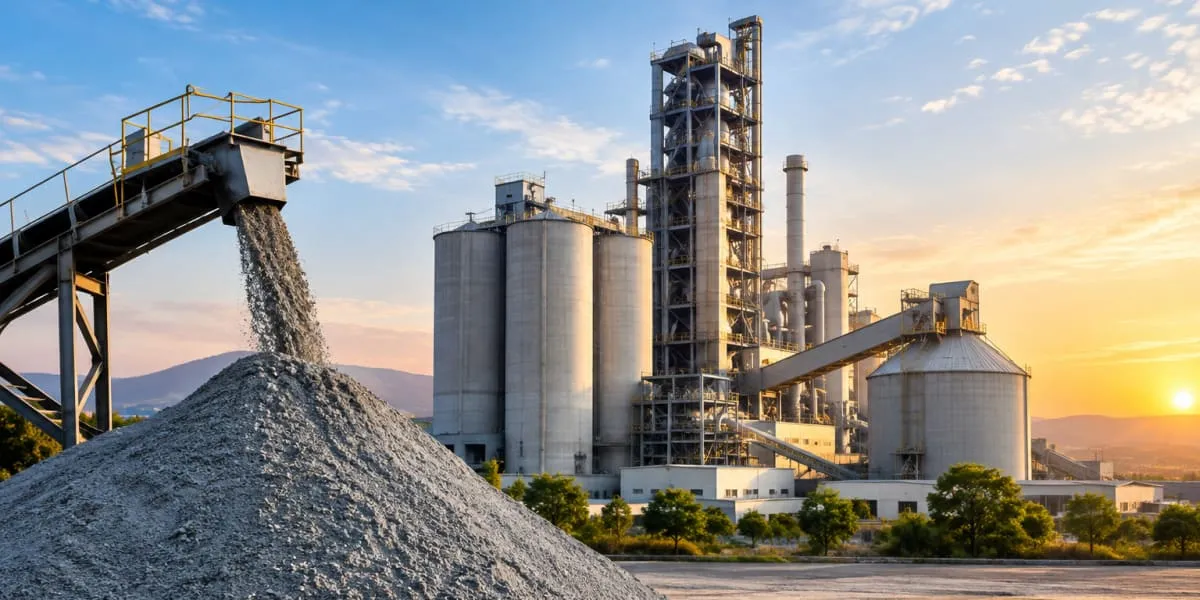
Cement production is an energy- and material-intensive process. The primary raw material – limestone – is crushed, ground and then heated to a temperature as high as ~1400°C in a cement kiln. The hot material is then cooled to form a clinker, an intermediate product. Subsequently, the clinker is further ground and blended with gypsum to make Ordinary Portland Cement (OPC). When we replace clinker with supplementary cementitious materials (SCM) such as slag or fly ash, JSW Cement produces blended cements. Working towards the philosophy of circular economy since its inception, JSW Cement, today, has positioned itself as the world’s most eco-friendly cement manufacturing company having ~90 per cent of its products primarily using slag, a by-product generated from steel plants. Their flagship product Ground Granulated Blast Furnace Slag (GGBS) is solely based on the principle of circular economy, produced from blast furnace slag. This has helped the company to achieve the lowest net scope -1 CO2 emissions intensity of 220 kg/T of cementitious materials, which is less than 40 per cent of the global average of cement Industry. Two-third of the company’s total raw materials are alternative materials.
Another area where they are quite focused is research and innovation where they are continuously innovating to develop greener products, enhance efficiency and quality, ensure safe workplaces and enable long-term business sustainability while creating value for their stakeholders. Even for new product development also, use of slag remains at the centre of all innovations. Thus they have entered into the business vertical of Construction Chemicals (Krystal Leakproof, Enduroplast or Ready Mix Plaster and Durafloor) and aggregates (Slag Sand) where the base material is slag. These products are conserving the natural river sand, which is used in traditional ready mix plaster and aggregates.
Managing Carbon Emissions
JSW Cement is committed to Net Zero Carbon emission by 2050. Currently their CO2 emission intensity is 220 kg/T equivalent to ~40 per cent of the national average and this was achieved through different identified levers as explained below:
- Clinker Substitution: At JSW Cement, clinker is blended with other SCM like slag to produce Portland Slag Cement (PSC), having a much lower carbon footprint than OPC. Both GGBS and PSC contain a significant amount of slag, which not only reduces their clinker factor and CO2 emissions, but also conserves virgin resources such as limestone.
- Using More Alternative Fuels and Raw Materials: This lever has the most potential for improvement especially in Indian cement companies. Over the last few years, they have been co‑processing liquid hazardous waste from pharmaceutical industries, plastic waste and biomass waste such as rice husk. In FY 2021‑22, their TSR was 7.1 per cent wherein they co-processed ~35,000 T, including ~9,000 T of biomass waste, resulting in ~70 per cent increase in TSR over previous year. This has also reduced our CO2 emissions by ~40,000 T and saved ~15,000 T of coal.
- Increased Clean and Green Energy Portfolio: They are gradually increasing their renewable power through solar and wind power plants, Waste Heat Recovery Systems (WHRS), sourcing renewable energy through Power Purchase Agreements (PPA). Currently ~4 per cent of their power portfolio is coming from renewable energy. With all the interventions and projects under implementation, they aim to take this percentage to close to 20 per cent in the next two years.
- Low Carbon Products Development and Innovation: Research and development plays a vital role in introduction of new technologies and products to the industry. To align with this, they have established a full-fledged R&D centre, which helps them with innovative ways to develop sustainable and low carbon products. They are currently working on LC3 cement, Super Sulphated Cement and Geopolymer Cement/Concrete, which will help them reduce their emissions further. They are working with top academic institutes – IITs and others and global research institutes like FEhS and Ecomaister for utilisation of other types of slags like AOD, EAF and LD slag in cement manufacturing by chemical transformation and slag atomisation techniques.
To give further impetus to their sustainability journey, they have partnered and collaborated with different industry associations and signed various commitments. These partnerships represent various networking and engagement opportunities, learning platforms and catalyse businesses to drive policy ambition and accelerate their efforts towards a sustainable and low carbon future. They are also working with academic institutes on various
projects. They have recently signed an MoU with IIT Guwahati to develop environment friendly premix for 3D printing.
Technology and Decarbonisation
Automation and technology will certainly play a role for decarbonisation and JSW Cement is working on many digital projects to increase energy efficiency and productivity.
Automation helps immensely in increasing energy productivity i.e. to promote more with less energy. In their recently commissioned clinker plant, they have implemented ‘Robolab’ for online testing, which will ensure best quality product at optimised cost and raw material consumption.
At the Group level, the company conducts monthly webinars, which are themed around different topics of sustainability. These webinars, led by internal and external experts, are conducted to apprise their employees about their sustainability goals and initiatives and to create awareness about new topics, latest trends and updates. They have got all the policies updated on their website. They also celebrate conservation day (earth day, environment day) for creative general awareness about sustainability and how each one can contribute to sustainability at their individual levels. Sustainability is well embedded into their business strategy thus, in most of the meetings, they talk about sustainability related elements and their goals, targets and efforts.
There are other mediums of communication – intranet portal, emails, social media handles, which are used extensively to keep their employees informed.
Challenging the Status Quo
- Transition to a low carbon economy is a highly collaborative transformation effort and not going to be easy. The industry needs collaboration between government, industry associations, academics, technology providers, financiers etc.;
- It needs innovative financial products to fund the transition, particularly for new technologies like CCUS;
- It needs enabling policy support like Green Procurement for public projects to increase awareness and promote usage of low
- carbon products;
- The general awareness is increasing for sustainable and green construction, and with the support of suitable public procurement policies to provide ‘pull’ for low carbon products will cascade ESG compliances to the lowest end of the value chain.
- The industry may need to work towards the transition from the prescriptive standards to performance/application based standards for cement and concrete.
- Currently, in Green Building Rating Systems, a significant weightage is assigned to operational carbon. So, there is a need to have more points for embodied carbon.
Sustainably Speaking
Given the durability, strength and resilience of cement as a building material, cement and concrete would likely remain the construction material of choice globally and in India. Currently there is no substitute for cement. However, in future, the scenario may change considering the visible impacts of climate change and increased pressure on industry to decarbonise the sector. Companies have to think strategically for a new business model or diversify the business verticals which is promoting
green cements.
Currently ~75 per cent of total cement is blended cements which comprise PPC, PSC and Composite Cement. But one-fourth still remains the OPC. Also among the blended cements portfolio, PSC, which has the least CO2 footprint of ~325 kg/T, only represents 10 per cent. Thus in future, there is a need to increase the blended cement portfolio, in particular the PSC.
Since the clinker manufacturing is the most energy and emission intensive phase of cement manufacturing process, a new business model focusing on producing cement using less clinker possible, will certainly help companies improve their sustainability performance. This can be done through product innovation and developing new products such as Geopolymer Cement and Limestone Calcined Clay Cement (LC3), using the least or no clinker.
ABOUT THE AUTHOR:
Manoj Rustagi, Executive Vice President and Chief Sustainability and Innovation Office, JSW Cement, is a business leader with sectoral expertise in Metals and Mining, and Building Materials.












 Concrete4 weeks ago
 Concrete2 weeks ago
 Concrete2 weeks ago
 Concrete4 weeks ago